🚀 Zaprep: je socials on steroids. Start gratis — automatiseer 1.000 DM's/maand en zet engagement om in leads. met 1.000 geautomatiseerde DM's/maand.
Dien je tool in
PoweredByAI.app is een AI-toolsdirectory die individuen, bedrijven en creators helpt de beste AI-tools te ontdekken voor schrijven, coderen, design, productiviteit en meer.
© 2026 , Een product van011BQ. Alle rechten voorbehouden.

After theirdramatic falling-out, it doesn’t seem as though Anthropic and the Pentagon are getting back together. Instead, the Pentagon is building tools to replace Anthropic’s AI, according toa Bloomberg conversationwith Cameron Stanley, the chief digital and AI officer at the Pentagon. “The Department is actively pursuing multiple LLMs into the appropriate government-owned environments,” he said. “Engineering work has begun on these LLMs, and we expect to have them available for operational use very soon.” Anthropic’s $200 million contract with the Department of Defense (DOD) broke down over the last several weeks after the two parties failed to come to an agreement over the degree to which the military could obtainunrestricted accessto Anthropic’s AI. While Anthropic sought to include a contractual clause that prohibits the Pentagon from using its AI for mass surveillance of Americans or to deploy weapons that can fire without human intervention, the Pentagon didn’t budge. Instead, OpenAI swooped in andmade its own agreementwith the Pentagon. The Department of Defense — known under the Trump administration as the Department of War — also signed an agreement with Elon Musk’s xAIto use Grok in classified systems. It makes sense, then, why the Pentagon would be working on phasing Anthropic’s technology out of its workflows. While some reports said there was a smallpossibilitythat Anthropic would reconcile with the Pentagon, this news suggests that the government is preparing to forge ahead without them. In fact, Defense Secretary Pete Hegseth has declared Anthropic asupply-chain risk, a designation usually reserved for foreign adversaries, which bars companies that work with the Pentagon from working with Anthropic as well. Anthropic ischallengingthis designation in court.
View

Gamma, a platform that lets you use AI to create presentations and websites, is launching a new image-generation product for making marketing assets as it seeks to better compete with the likes ofCanvaandAdobe. The company says its new product, called Gamma Imagine, will let users employ text prompts to create brand-specific assets like interactive charts and visualizations, marketing collateral, social graphics, and infographics. Gamma currently provides more than 100 templates, which you can use alongside its AI tools to build the kind of assets that you need. To power its data-driven asset generation features, the company is integrating with tools like ChatGPT, Claude, Make, Zapier, Atlassian, n8n, and Superhuman Go. “As we started working with a lot of our early users, we realized that in the presentations they want to create, there was a variety of graphical design use cases that they all also had,” Grant Lee, Gamma’s CEO and co-founder, told TechCrunch. “So we worked alongside them to develop basically a new set of tools that allows them to go far beyond just the traditional presentation format,” he said. Lee believes Gamma sits well between tools for professionals like Adobe or Figma, and legacy tools like Microsoft PowerPoint. “We think we can serve the very long tail of knowledge workers and business professionals whose demand for their job is to communicate visually, but they just don’t have the tools. They need to pull in a design resource to be able to help with this stuff, and we want to make an-AI native approach that serves their needs in the sort of middle that we feel is really underserved,” he said. Last November, Gamma raised $68 million in a Series B round led by a16z, at a $2.1 billion valuation. At that time, the company said it had ARR of$100 million, and 70 million users. The company told TechCrunch that it is approaching 100 million users now.
View

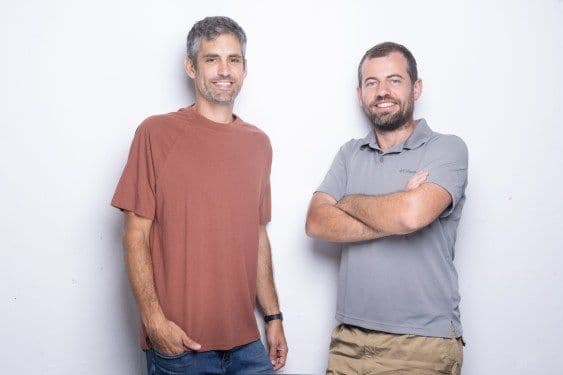
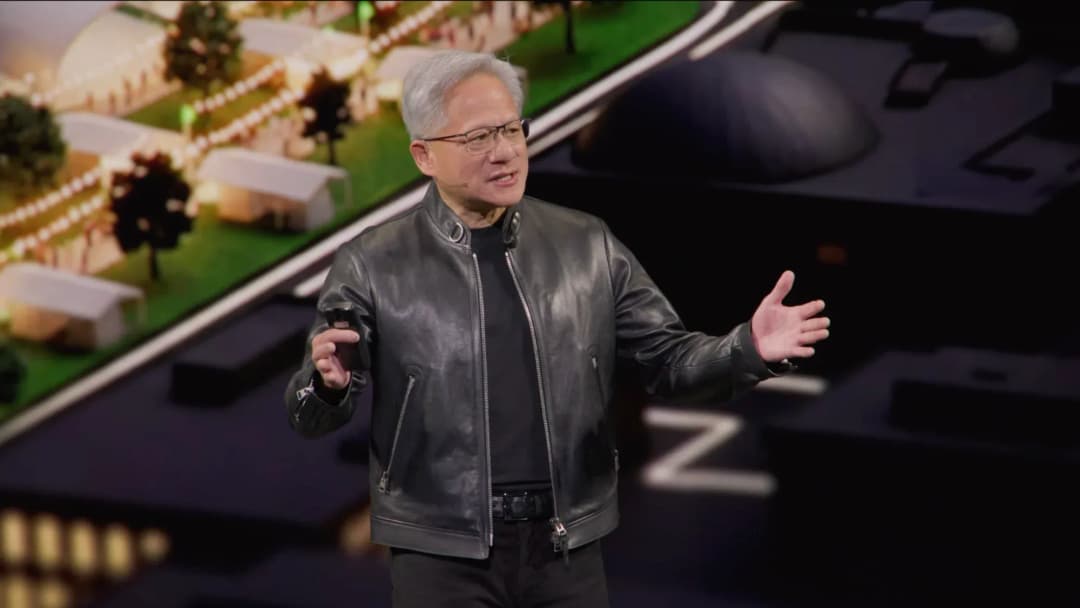
Electricity is a key raw material for artificial intelligence, but new processing techniques outstrip the ability of data center operators to manage their relationship with the power grid, forcing them to throttle down by as much as 30%. “There is so much power squandered in these AI factories,” Nvidia CEO Jensen Huang said during a keynote speech at the company’s annual GTC customer conference. “Every unused watt is revenue lost,” the company proclaimed during the annual presentation. Today, start-up Niv-AI has emerged from stealth with $12 million in seed funding to solve this problem by precisely measuring GPU power use with new sensors and developing tools to manage it more efficiently. The Tel Aviv-based start-up was founded last year by CEO Tomer Timor and CTO Edward Kizis, and is backed by Glilot Capital, Grove Ventures, Arc VC, Encoded VC, Leap Forward, and Aurora Capital Partners. The company declined to share its valuation. As frontier labs operate thousands of GPUs in concert to train and run advanced models, there are frequent, millisecond-scale power demand surges as the processors switch between computation tasks and communicating with other GPUs. These surges make it difficult for data centers to manage the power they draw from the grid. To avoid being left without sufficient electricity, data centers pay for temporary energy storage to cover surges, or throttle their GPU usage. Both cases reduce the return on investments in expensive chips. “We just can’t continue building data centers the way we build them now,” Lior Handlesman, a partner at Grove Ventures who sits on Niv’s board. The first step in Niv’s roadmap understanding what’s going on; the company is now deploying rack-level sensors that detect power usage at the millisecond level on GPUs that it owns and alongside design partners. The goal is to understand the specific power profiles of different deep learning tasks, and develop mitigation techniques that allow data centers to unlock more of their existing capacity. Naturally, the engineers expect to build an AI model on the data they collect, with the goal of training it to predict and synchronize power loads across the data center—a “copilot” for data center engineers. Niv expects to have an operational system in a handful of US data centers in the next six to eight months. It’s an attractive idea as hyperscalers trying to build new data centers face difficult land-use and supply chain hiccups. The founders see their ultimate product as a missing “intelligence layer” between data centers and the electrical grid. “The grid is actually afraid of the data center consuming too much power at a specific time,” Timor told TechCrunch. “The problem we’re looking at is a problem with two sides of the rope. One is to try to help the data centers utilize more GPUs, and hopefully make more of the power that they’re already paying for. On the other hand, you can also create much more responsible power profiles in between the data centers and the grid.”

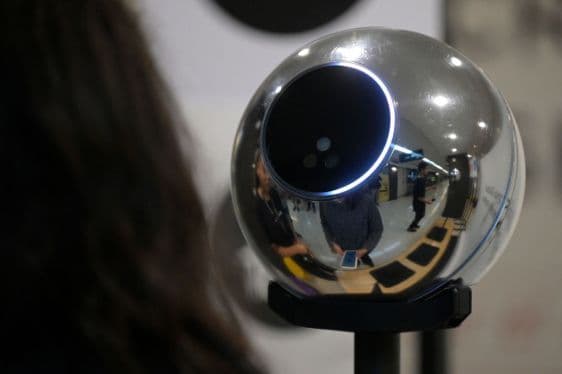
World, co-founded by Sam Altman, is dedicated to creating what it calls “proof of human” tech—ID verification tools for an internet increasingly overrun by AI-generated content of dubious quality. The connection isn’t lost that Altman’s other company, OpenAI,has been widely blamedfor creating a whole lot of that slop (though one could argue he saw the problem coming when he founded World). This week, Tools for Humanity (“TFH”), the startup behind World, released the beta of a new verification tool—this one designed to support the build-out of agentic commerce, the fast-growing practice of using AI programs to browse the web and make purchases on a user’s behalf. More and more consumers are using AI agents to surf websites and buy stuff for them. The trend promises a certain amount of automated convenience, but it has also raised the specter ofnew forms of fraud, spam, and other forms of large-scale internet abuse. On Tuesday, World announced its purported solution: AgentKit, a software development tool geared toward commercial websites that allows for the inclusion of a new verification system that let’s those sites verify a real human is behind an agent’s purchasing decisions. AgentKit relies on World ID, which is the linchpin of TFH’s verification system. The most secure version of the ID is derived from a scan of a user’s eyes via World’sOrb device. The Orb converts an iris into a unique and encrypted digital code—the verified World ID—which can then be used to access TFH’s ecosystem of services via the company’s World app. AgentKit allows a user’s World ID to be integrated into a recently launched payment system known asthe x402 protocol. Developed by Coinbase and Cloudflare, x402 is a blockchain-based open standard to allow automated computer programs totransact with each otherdirectly online — without human intervention at each step. To use AgentKit, users merely register their AI agents with their World ID, which then communicates to websites—via the x402 system—that a distinct and verified human approves of the agent’s purchasing decisions. “AgentKit is built as a complementary extension to the x402 v2 protocol, in coordination with Coinbase,” Tools for Humanity said in a statement. “The integration is designed so that any website already using x402 can enable proof of unique human verification alongside (or instead of) micropayments.” In an interview with TechCrunch, TFH Chief Product Officer, Tiago Sada, compared the new function to delegating “power of attorney” to an agent. By verifying that the AI program is acting on behalf of a particular user, a website can decide whether to trust the transactions initiated by those agents or not, Sada said. “What the World ID badge tells you is that someone is a real and a unique human,” he said, noting that websites can still choose to block particular users they think are operating in bad faith. AgentKit is currently being offered in beta to developers, with the hope that feedback will refine it over time. Sada also noted that consumers will need to have a verified World ID, derived from an Orb scan, to qualify for this kind of verification. It’s a timely move. Major e-commerce sites and financial services have already begun embracing agentic commerce. Last year, companies likeAmazonandMasterCardintroduced automated buying capabilities to their platforms, and Google recentlylaunched its own protocoldesigned to support the trend. As the field grows, the industry is obviously going to want safeguards that ensure it remains reliable and stable. World is clearly attempting to position itself as the de facto provider of that stability.

AI scientist,entrepreneur, and investor Rana el Kaliouby is worried that AI could become another “boys’ club” in the tech industry. At the SXSW conference in Austin on Sunday, el Kaliouby shared her view that a lack of diversity in the field could lead to economic disadvantages for women in tech, with further ramifications. “I think AI today is a boys’ club. I think diversity is not a very popular conversation topic these days, but I think it’s so important because AI is creating incredible economic opportunity,” el Kaliouby said onstage, when asked if the perception of AI being a boys’ club was a myth. (The interviewer showed a series of headlines from TechCrunch showcasing AI startups with male founders to demonstrate the point.) El Kaliouby, whosold her emotion-detection software company Affectiva in 2021and is now co-founder and general partner at Blue Tulip Ventures, said that three out of four investments at her firm are in startups with women CEOs. “I don’t ‘just’ invest in women,” she clarified. “But I really try to seek these women founders and support them, if not by a check, but in other ways, because they’re not getting the opportunity that they should and they need.” “If women are left out — because they’re not founding these companies, because they’re not getting the funding, because they’re not even investing in the funds that are investing in these companies — we’re going to look back five years from now or a decade from now, and…we’re going to have widened the economic gap like crazy. So this is something that really concerns me,” el Kaliouby noted. Her reference to the current “unpopularity” of the topic of diversity follows the Trump administration’srollbackof Diversity, Equity, and Inclusion (DEI)programs and initiatives, which thenspilled over to the tech industry. These changes don’t just impact how tech companies hire, but also how their products are developed. In AI, for instance,companies may feel pressureto align their models’ outputs with the White House’s priorities. For el Kaliouby, a lack of diversity isn’t just about the potential for economic disadvantage, she said — it’s also about the outcome. “I do think we are living in a very exciting time. But I also feel strongly that if we don’t intervene, like, if we don’t really stand up for what we care about like ethics and diversity of thought and perspective, and prioritizing this idea of centering around the humans…the outcome may not be great,” she added. “So I feel like it’s a very critical moment to use our voices and our leadership to shape where this is going.”

OpenAI signed a deal to work with Amazon Web Services (AWS) to sell its AI products to the U.S. government for classified and unclassified work,according to The Information. The partnership comes after OpenAIsigned a deal with the Pentagonto allow the military to use its AI models in its classified network — a win that came in the midst of conflict between Anthropic and the Defense Department. Anthropic has since been named a supply chain risk by the DOD after it refused to back down on allowing its tech to be used for mass surveillance of Americans and to power fully autonomous weapons. Anthropichas suedthe Pentagon in response. OpenAI’s AWS deal sees the AI giant stepping onto Anthropic’s home turf. Amazon hasinvested at least $4 billionin Anthropic, and as such,Anthropic uses AWSas its main cloud provider. Claude models are integrated into Amazon Bedrock, AWS’s AI platform for enterprise and government customers, and Claude is one of themost deeply integratedfrontier models in AWS GovCloud forpublic sector use. The tie-up also expands OpenAI’s federal footprint well beyond its Pentagon deal, positioning the company to serve multiple government agencies through AWS’s existing cloud infrastructure. AWS, a major cloud provider to U.S. agencies, has agreed to distribute OpenAI products across its public-sector customer base, The Information reported, citing sources familiar. The deal could unlock more enterprise contracts, since companies often see government contracts as a stamp of trust and reliability. OpenAI and Amazon Web Services did not immediately respond to TechCrunch’s requests for comment.
View

From chips to software, physical AI, and space data centres, NVIDIA lays out its next phase of AI infrastructure and agent-led computing.
View

“If we create the infrastructure of building these agents and expose the context they need, anyone can build solutions.”
View

Both models are released under an Apache License 2.0 and designed for open deployment across enterprise and developer environments.
View

Anthropic’s rise from research lab to $380 billion AI giant tests whether principled guardrails can survive Silicon Valley’s fierce innovation race.
View

The programme will support 160 girls and women over three years.
View

Despite the rapid growth of AI startups in India, access to capital remains a critical challenge facing deep tech ventures.
View
View
View
View