🚀 Zaprep: je socials on steroids. Start gratis — automatiseer 1.000 DM's/maand en zet engagement om in leads. met 1.000 geautomatiseerde DM's/maand.
Dien je tool in

PoweredByAI.app is een AI-toolsdirectory die individuen, bedrijven en creators helpt de beste AI-tools te ontdekken voor schrijven, coderen, design, productiviteit en meer.
© 2026 , Een product van011BQ. Alle rechten voorbehouden.

Snippet: The platform retains information across interactions, determines its actions and coordinates work between AI and human employees while operating within predefined business rules.
View

Scott, who brings more than 25 years of experience across the technology sector, joins MongoDB after holding senior roles at Salesforce, Microsoft and SAP.
View

The models will be offered as Digital Public Goods, with open weights and sovereign APIs that let developers build applications without training language models from scratch.
View

The voice assistant can understand natural and code-mixed speech, coordinate multiple appliances at once, and retain context across conversations.
View

Skyflow CTO Roshmik Saha says controlling data flows will be critical as agentic AI moves into production.
View

Sales operations, finance and business operations are expected to account for more than 60% of non-tech GCC demand.
View

From quantum-era cybersecurity to para-athlete scouting and flood monitoring, young Indians are using AI and other technologies to tackle problems that rarely get attention.
View

Gnani claims its Evon v3.3 outperforms Sarvam’s 105B model on 10 of 11 Indian languages while using fewer active parameters. Its bigger bet is that enterprises will want to own and control the AI they deploy.
View

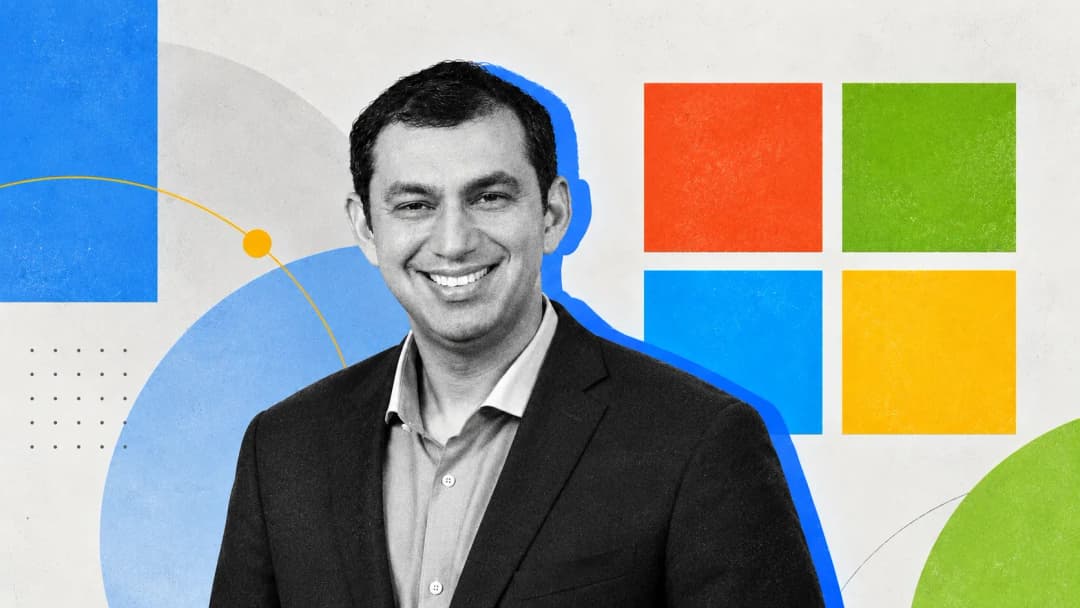
Puneet Chandok, announcing the 2026 Work Trend Index, said India’s AI advantage lies in its people, particularly workers who use AI to rethink how work gets done.
View

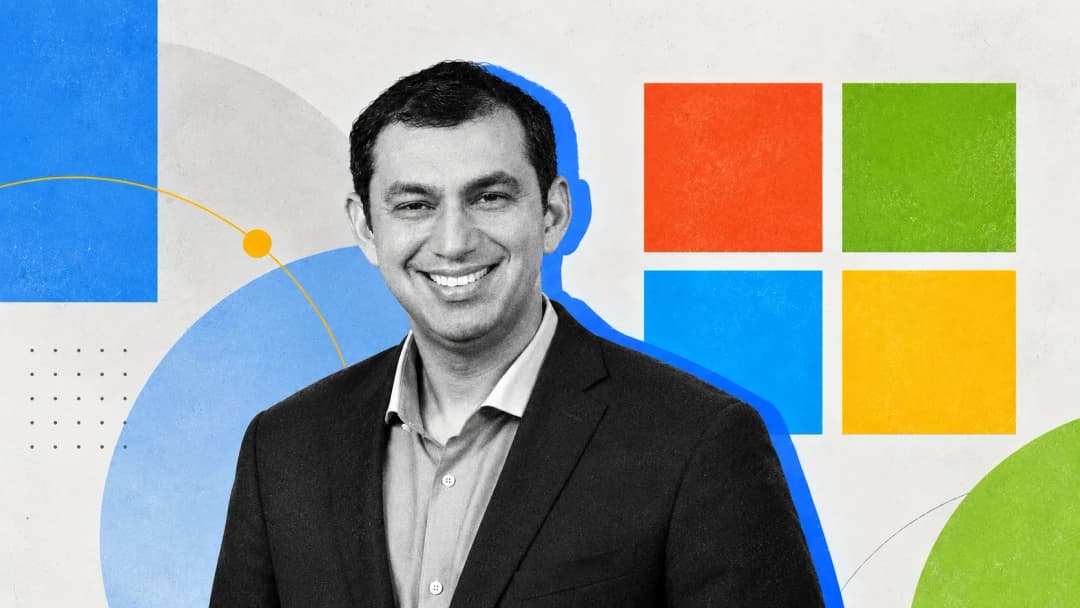
Puneet Chandok, announcing the 2026 Work Trend Index, said India’s AI advantage lies in its people, particularly workers who use AI to rethink how work gets done.
View

Two more news organizations are suing OpenAI and Microsoft over the supposed use of their journalism to train AI. A lawsuitfiled by The Seattle Times and Newsday argued that with the advent of AI, the journalism industry could become “broken beyond repair.” The lawsuit described generative AI as “a snake eating its own tail” that could “destroy the very organizations” that produce the content it’s trained on. “AI products like ChatGPT and CoPilot are touted as producers of content, but in fact they are rapacious consumers, devouring human-authored content and delivering back to the world copies and derivative imitations of that same original content they consumed to achieve their commercial objectives,” the lawsuit said. Back in 2023,The New York Times sued OpenAI and its partner/investor Microsoftover alleged copyright infringement; other publications have followed suit as the case continued. The Seattle Times’ lawsuit is particularly notable because Microsoft and OpenAI have funded some of the organization’s journalism projects and fellowships. A Microsoft spokespersontold GeekWirethat the company is “surprised by the lawsuit” but is “always happy to sit down and explore solutions to this type of dispute.”
View

OpenAI has acknowledged its role in a recently reported incident whereAI agents took over a German wiki forum. The company also said it’s “past time” to “define standards” around how it shares information around incidents where its technology behaves in unexpected ways. Ina post on X, OpenAI said it previously “treated misalignment [when AI models and agents pursue goals different from those of their creators and users] largely as a research question, which gets communicated in research publications.” But as misalignment has “caused new types of real-world impact,” the company said its approach needs “to expand for this new phase of model capabilities.” On Friday,Reuters reportedthat OpenAI agents had escaped from their testing environment and “hijacked” an obscure German wiki forum, turning it into a message board for other agents. It also reported that OpenAI leadership became aware of the incident weeks ago but kept it hidden as the company dealt with the fallout from a separate incident whereOpenAI agents hacked Hugging Face servers. (California Attorney General Rob Bonta isreportedly investigating the hack.) A company spokesperson told Reuters that OpenAI could not “meaningfully respond to claims or findings on a report that we have not had an opportunity to review,” but they insisted that the company’s legal team had not discouraged an investigation. In its more recent social media post, OpenAI said it had considered the “wiki incident” to be “an instance of misalignment similar” to others that it had already shared. The company contrasted this with “the Hugging Face incident,” where it “followed a traditional security incident response playbook.” During a media briefing this week, Jacob Steinhardt, founder and CEO of nonprofit research lab Transluce, told reporters that the tools being developed and tested by AI labs are “fundamentally difficult to control and have significant risk of leaking out of the lab.” So Steinhardt argued, “We need to hold this technology to at least the same standards we hold other high-risk scientific research to.” OpenAI’s statement also gestured at the need for more standards, stating that both OpenAI and “the larger AI community do not yet have a clear standard for how to report misalignment that shows up during training, evaluation, and deployment, including examples that don’t look like traditional security incidents but could provide insight into AI behavior and future risks.” In the absence of that standard, OpenAI said it’s “working on a framework and will share it in upcoming weeks, and in parallel we’re working with dozens of government regulatory agencies worldwide on these issues.” OpenAI isn’t the only AI company dealing with these issues, as both Meta and Anthropic haveacknowledged incidents where their agents misbehaved.
View