🚀 Zaprep: i tuoi social a pieno regime. Inizia gratis — automatizza 1.000 DM/mese e trasforma l'engagement in lead. con 1.000 DM automatizzati al mese.
Invia il tuo strumento
PoweredByAI.app è un catalogo di strumenti IA che aiuta persone, aziende e creator a scoprire i migliori strumenti di IA per scrittura, coding, design, produttività e altro.
© 2026 , Prodotto di011BQ. Tutti i diritti riservati.

Google DeepMind's approach attempts embeds provenance information at the point where the AI model generates the biological design.
View

SatLeo Labs and EON Space Labs will test thermal and multispectral imaging as TakeMe2Space and Google send computing technology on the same mission.
View

The Union Cabinet approved the Intelligent Traffic Management System (ITMS) project on Wednesday. The new ITMS project was proposed by the Delhi Police to deploy AI-powered systems on the roads of the Union Territory. The authorities will deploy the new real-time traffic management system on 42 traffic corridors to make traffic movement more efficient. The new traffic management system will also help in creating green corridors for emergency vehicles, prioritising their movement. As part of the project, the Delhi Police will also set up adaptive sign boards to inform and alert commuters in real time.
View

The model is said to run on OpenAI’s infrastructure and will directly operate Synopsys EDA tools.
View

According to benchmark results, the model outperforms OpenAI’s GPT-6 Astra, Claude Fable 5.1, and Opus 5.5—but apparently, they don’t translate to real-world performance.
View

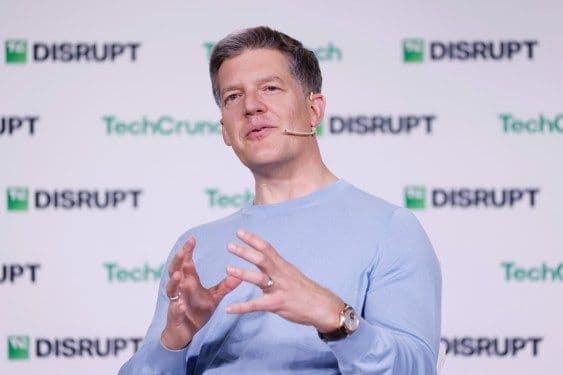
Every founder building in AI right now is asking the same question: Are we moving fast enough, and effectively enough?TechCrunch Disrupt 2026puts you in the same room as the people wrestling with that existential question at the highest levels. From October 13-15 in San Francisco, leaders from OpenAI, Nvidia, Anthropic, Microsoft, and more will share their insights as thousands of startup community members network. For a limited time,get 25% off your pass with code DISRUPT25 at checkout. Prices go up as the event gets closer, so this is the moment to lock in your registration. The AI race isn’t slowing down, but the founders often winning it aren’t the loudest — they’re the ones building something that holds up past the initial ideas and demos. Disrupt is where you find those breakthroughs before everyone else does, and where you figure out what building sustainably actually looks like when the underlying technology is changing every quarter. For founders, this means incredible learning and networking opportunities. For Investors, it’s a chance to get in ahead in the tech ecosystem. And for startup operators and nascent entrepreneurs, the connections that can create your next opportunity await. Programming runs across six industry stages, roundtables, and breakout sessions, with250+ of our headlining Disrupt speakers— including Replit CEO Amjad Masad, Rivian CEO RJ Scaringe, Amazon SVP of Devices and Services Panos Panay, and Mark Wahlberg — providing insights and reveals you can only find at Disrupt this year. The AI Stageis where many of the more utility-focused conversations will take place. Anthropic’s Head of Applied AI Cat de Jong will take a deep dive into AI in the enterprise, Okta and NanoCo will lead a session on AI security, and more. That’s on top of theReal World AIandSmart Systems Stagesfor additional AI expertise. Across three days, you get more than 200 sessions and 250 speakers spanning AI, fintech, biotech, robotics, climate tech, and cybersecurity — curated by TechCrunch’s editorial team, so the focus stays on substance over hype. Disrupt’s capstone is thecrowning of the Startup Battlefield 200 winner, after a live competition in which the most promising early-stage companies pitch live for a $100,000 equity-free prize, investor attention, and real exposure. Dropbox, Trello, Cloudflare, and Discord are all Startup Battlefield alumni, and you can see the newest alumni awarded live. If you’re building or investing in AI, or looking to get ahead of your startup’s competition, this is the event to be at.Use code DISRUPT25 for 25% off and get your ticket before prices increase October 12.

Google parent company Alphabet haslaunchedGemini 4 Argon, a new AI model built to handle a variety of tasks such as coding, research, and writing. But it’s cybersecurity that Gemini 4 Argon is supposed to have a particular knack for, according to Google. Argon is only being rolled out to a select group of the company’s cyber partners through its Fairwind Program, Google’s security initiative. The model was trained specifically for defensive cyber work, and the company says it can “autonomously find, validate, and patch critical software vulnerabilities.” Argon is also said to be good at coding and engineering, with the company noting that its own staff have already been using the model for their daily work, including debugging and codebase migrations. Google also touts Argon’s ability to parse visuals — whether that’s analyzing the contents of long videos or charts. “Built to sustain deep reasoning across complex, long-horizon workflows, Argon is fundamentally changing the way we work and build at Google,” the company saidin a blog postWednesday. Top AI labs have rushed to release increasingly powerful models, attempting to outdo each other even as those very same firms warn that AI could spin out of control. Not long ago, OpenAIreleased Astra— which it hailed as its best model yet. Earlier this year,Anthropic’s Fablewas also released with similar rhetoric from the company. Firms have done their best to market their services as superior to their competitors. In its blog, Google claims that Argon scored significantly higher than OpenAI’s GPT-6 Astra and Anthropic’s Fable and Opus models across a variety of AI benchmarks. It cites Vals — an increasingly popularAI benchmarking startup— to show that Argon is currently the leading model on the company’s AI model index. Once considered “behind” in the AI race, Google has recently enjoyed success with Gemini. The company announced in August that its apphad over a billion users per month, a metric that makes it competitive with OpenAI, which also recentlyannouncedthat ChatGPT had reached a billion monthly users.
View

After this week, you could argue that consumer AI is making a comeback. Meta’s personal AI assistant, Muse, and its plush-like mascot Jolly, has beena surprise hit.OpenAI’s Dots, released just yesterday, appears to be chasing the same cartoony personal assistant idea. And the up-and-coming Instinct assistantreached a $10 billion valuationon the strength of its agentic errand-running, focused on booking travel, making restaurant reservations, or cancelling subscriptions. The bull case is easy to make. Agentic AI has finally gotten reliable enough to handle everyday tasks. Companies are increasingly pitching that service to everyday people, who are getting genuine value out of it. If you’re an investor, that looks an awful lot like the ChatGPT launch in 2022 — the raw power of AI opening up a product category that was never possible before. Who wouldn’t want a piece of the action? But there’s a reason frontier labs have gotten gun-shy about consumer AI — and it’s not because the tech isn’t good enough. Even staggeringly popular tech products are starting to hit a ceiling on how much money consumers are willing to pay, and it’s not clear that better models are actually leading to a more profitable consumer business. The result has been an industry-wide shift toward the Anthropic model, focusing on enterprise contracts and vertical-by-vertical expansion. If products like Muse and Instinct are bucking that trend, it’s because they’re less concerned with monetization. But the underlying economics of consumer AI are not getting any better, and anyone getting into the business will have to grapple with them eventually. We got a reminder of those economics in Andreessen Horowitz’ssemiannual State of Markets report, which pulled its figures froma PNC research reportfrom this summer. In two charts, they track the slowly growing percentage of consumers paying for AI services, alongside the slowly growing amount they’re paying. As of May, 2.2% of consumers were paying for AI, at an average spend of $31 a month. Andreessen puts a positive spin on this, saying, “it’s still so early when it comes to mature AI adoption and utilization.” There’s a lot of room to grow! But in both charts, the pace of growth seems awfully linear. Even as models make huge improvements, there isn’t a ton of movement in the number of customers willing to pay for AI or how much they’re willing to pay for it. The enormous performance jump from GPT-5.2 to Astra, for instance, is barely visible on the chart. The per-consumer numbers are less striking, but still far below the standard break-even point. If you take Netflix as the standard for market-saturated online services (at 325 million subscribers), then $34 per customer only gets you to $11 billion in annual revenue, less than a third ofOpenAI’s operating costs. If you think PNC is underselling adoption, you can get similar numbersfrom Bank of America. In March, the firm found that roughly 3% of U.S. consumers paid for AI, up 40% from the previous year.A Menlo survey from Septembergives a slightly sunnier view, finding that a quarter of adults use AI daily and half of those users are paying for it. The problem with the consumer approach has less to do with revenue than with cost. AI is an unusually expensive technology to operate, particularly compared to lightweight predecessors like social networking or cloud computing. Even hundreds of millions of paying customers doesn’t guarantee you’ll break even. To its credit, OpenAI seems to have adapted well to these facts. The company’swidely reportedpivot to enterprise has been largely successful, with enterprise bookingsreportedly doublingsince July. Even the Dots launch had a strong enterprise angle, showing how the new personal agent could be useful for software engineers and agency creatives. One long-standing way to make money from popular-but-cheap consumer services is to sell them to businesses at a markup, and OpenAI seems to be following the playbook. It’s harder to say what this means for Muse and Instinct. Muse has the juggernaut of Meta’s personalized ad targeting behind it, which gives it more options for monetization and more time before it becomes an urgent question. Notably, Meta is alreadyexploring the enterprise angle. Instinct has a separate plan that involvestaking a cut of purchasesmade through the agent, which might raise the ceiling. Presumably it’ll also be able to avoid the cost of training a frontier model, which will help a lot. But the ugly economics of consumer AI put a hard cap on how large the company can plausibly grow without tapping into enterprise revenue. It’s a lesson the major labs have already learned, and it’s one of the few things about the industry that doesn’t seem to be changing.

Amid a number of updates formoderatorsanddevelopersannounced Wednesday, comes bad news for supporters of a more open web: Reddit is ending support for RSS feeds. Reddit says RSS has now become a “common surface for large-scale scraping and automated abuse,” which is why it’s made the decision to wind down RSS feeds on its platform. “We know RSS has been a beloved part of the open web for a long time, and we’re grateful to everyone who used it to stay connected to Reddit,” the company noted in its announcement, where it also shared a March 2027 shutdown date for its public API. Reddit said RSS support will cease on November 13. RSS, or Really Simple Syndication/Rich Site Summary, is a web feed that lets users and applications access updates to a website in a standardized format. The format became particularly popular in the blogging era, as it offered a way to subscribe to a site’s new posts in a news-reading app. Google once operated the most popular of these, butshut it down in 2013, ceding the market to companies like Feedly and other indie applications. The decision to kill Reddit’s RSS feeds comes at a time when the site’s treasure trove of user-generated content in its forums has become a profitable side business for the company in the form of AI licensing deals. During itssecond quarter, Reddit said its “other revenue” beyond advertising had grown 24% year-over-year to $43 million. It’s no wonder that Reddit doesn’t want to give any of that data away for free. For moderators who have relied on RSS channels for their own alerts, Reddit is now recommending a shift to theDiscord RelayDevvit app. The company suggested that moderators and their teams review their setups and migrate their workflows before the shutdown date of November 13 to ensure there’s no disruption. However, Reddit said that there’s no replacement for the use of RSS feeds that were being used for feeds outside of the moderators’ community. Moderators have already expressed worry about how this shift would impact their workflow. When Reddithinted earlierthat it was preparing for the end of RSS on its site, manyrespondedby complaining that Reddit would become unmanageable for them. Meanwhile, many users stressed that RSS was how they enjoyed accessing Reddit’s content. The RSS change was one of several updates issued on Wednesday by the company. Another big change will be the end of its public API. Public API access will also end by March 2027, which will impact any tools that used it for programmatic access to Reddit conversations, including social listening products, those used by researchers, and AI products, such as AI assistants. Today, those assistants can use Reddit to answer questions, but after closing public API access, they will need commercial deals with Reddit for its data. In addition, Reddit provided an update on its Rules Hub progress and auto-mod changes, and said it was “adding safeguards” to its classic, text-heavy version of its site known as Old Reddit. The latter will include limiting access to logged-in moderators and recent users — changes Reddit also said were required because of “abusive scraping and automated traffic.” Reddit said in the next few months it will limit access for logged-in users to those who have used Old Reddit in the last 6 months. (The company changed this from 90 days to 6 months, just as their news went out.) The company also reminded developers building approved third-party apps and bots toregister them with the company before January 12, 2027,to avoid disruption. After that date, Reddit will remove API access for any developer that hasn’t registered. After publication, we updated to note that Reddit extended the Old Reddit “recent access” period from 3 to 6 months. The earlier materials Reddit shared with TechCrunch said the time frame would be 90 days.

Voice AI startupElevenLabsannounced today that it’s allowing employees to cash out a portion of their vested equity at a $22 billion valuation,doublingthe $11 billion valuation the company hit when it raised $500 million in February. The recent $300 million tender offer gave employees an opportunity to sell their shares to investors. The transaction was co-led by Wellington and T. Rowe Price, large institutional investors that back private companies with the intention of retaining the stock after the company goes public. The offering is part of agrowing trendamong fast-growing AI startups that use employee liquidity as a retention tool to prevent staff from leaving for competitors. This is the second time that four-year-old ElevenLabs has authorized a secondary transaction for employees. The company previously held a $100 million tender at a$6.6 billionvaluation in September 2025. Founded in 2022, the company is known for generating ultra-realistic human voices and sound effects. With its new valuation, New York- and London-based ElevenLabs joins the ranks of Europe’s most valuable startups. TechCrunch sat down with co-founder and CEO Mati Staniszewskilast week.
View

One of the more intriguing announcements atOpenAI’s Dev Day eventon Tuesday came in an aside from CEO Sam Altman, who revealed the company’s new “Decisions API.” The API apparently provides similar functionality toJev, amodel released by TypeSafe AIearlier this month that’s explicitly designed for software automation. A kind of super-powered classifier built on an LLM, developers can give Jev a set of choices that it outputs as probabilities cheaply and at high speeds. OpenAI’s Decisions API seems to be the same sort of product. At the event, Altman described the API as a way to give the lab’s Luna model a predefined set of options to choose between, such as categories in which to classify an image or different agent behaviors. “By focusing the model on that choice, we can make it extremely fast while keeping capabilities like image understanding, broad language support, and safety protections,” Altman said. TypeSafe didn’t respond to TechCrunch’s questions about the new product, but CEO Diogo Almeida, a former OpenAI engineer who co-invented reinforcement learning,joked on Xabout the beginning of the clone wars. He added that OpenAI’s interest could be “a sign…that building in a System One compatible way is the future.” (“System One” is TypeSafe’s term of art for fast, intuitive thinking, versus “System 2,” which it applies to deliberate reasoning.) The subtext here is that LLMs as we know them aren’t the right solution for a lot of software because they are comparatively slow and expensive. Developers have been using Jev to augment LLMs and, in doing so, havefoundthat they’re faster and cheaper. It’s not clear how similar Decisions API will be to Jev, since OpenAI released it as a limited preview and, thus far, TechCrunch hasn’t spotted developers running it through its paces. However, there isclearly interest, according to the conversations on X. Decisions API isn’t the only Jev-like API on the internet — other startups are rolling out similar models; OpenAI won’t be the last tech giant to produce one. A key question is how well calibrated each of these decision models’ outputs will be to real life. Almeida says his company’s moat is the synthetic data it creates to generate statistically useful outputs. “Fast and cheap is very easy, you know,” Almeidatold TechCrunchlast week. “If you want it really fast and cheap, use dice, right? Intelligence is the hard part, and my North Star is always pushing the intelligence-per-dollar Pareto curve.” After just weeks, it seems clear that these models have a future ahead of them, and one likely application is monitoring and securing AI agents. One of OpenAI’s new security measures following a series of incidents where its agents misbehaved on the open internet is using a separate model to watch for bad actions at “significant compute cost.” Shapor Naghibzadeh, a long-time cybersecurity professional who leads the startup QueryStory, thinks that a model like Jev could make that possible far more cheaply. He builta demofor ahackathonheld last weekend that uses Jev to check each agentic action against the task it was given, blocking actions it had high confidence were bad, flagging others for review, and permitting the rest. In theory, such monitoring could have stopped the Hugging Face incident — and monitoring of that kind costs $2.94 with Jev, versus $372 with a frontier LLM. A key observation is that Jev is arguably cheap enough to run on every agentic action, which offers a layer of review that could improve the reliability of agents writ large. It’s the kind of thing TypeSafe was hoping to achieve — and now OpenAI has seen the value as well.

Flow Engineering, a startup that offers AI tools for hardware design, has raised a $50 million Series B round at a $750 million valuation from some big-name investors, the companyannouncedon Wednesday. The round was co-led by Antonio Gracias of Valar Equity Partners (best known for its investments in Elon Musk’s companies, particularly SpaceX)and Gavin Baker of Atreides Management (a hedge fund that has also backed Musk’s companies and others like AI chipmaker Cerebras). Sequoia Capital, which led Flow’s Series A round last October, also participated, as did former Sequoia partner Roelof Botha, who invested as an individual investor. Botha has joined Flow’s board, too. Three-year-old, San Francisco-based Flow is is tackling the difficulties of hardware design by offering AI agents that automatically align CAD drawings with product requirements, simulation results, and other testing. It names Anduril, Rivian, Joby Aviation, General Motors PPU (a joint venture between General Motors and TWG Motorsports), RV Tech (a Rivian and Volkswagen’s joint venture), Stoke Space, and others, as customers.
View
View
View
View
View