🚀 Zaprep: i tuoi social a pieno regime. Inizia gratis — automatizza 1.000 DM/mese e trasforma l'engagement in lead. con 1.000 DM automatizzati al mese.
Invia il tuo strumento
PoweredByAI.app è un catalogo di strumenti IA che aiuta persone, aziende e creator a scoprire i migliori strumenti di IA per scrittura, coding, design, produttività e altro.
© 2026 , Prodotto di011BQ. Tutti i diritti riservati.

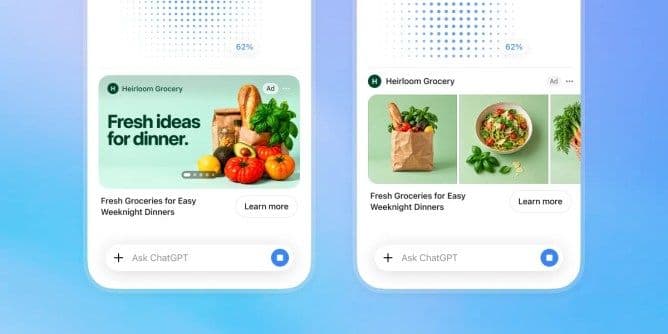
ChatGPT is getting more ads. Specifically, OpenAI is adding visual display ads to its ad product line-up so that ads will appear alongside images that users ask ChatGPT to generate. In addition, the company is expanding its ad measurement tools and partnerships, and developing new ways to determine brand suitability. The new ads will begin to appear later this month in the U.S. only for now, and will feature products and services from an initial test group of advertisers. The ads will also be clearly labeled and won’t influence the answers ChatGPT provides, the company notes. The move follows the launch of Meta’s Muse, an agentic AI app which is free to everyone and a growing competitor for leading AI chatbots, like ChatGPT. OpenAIintroduced adsearlier this year to support its free and low-cost subscription tiers, andexpanded them to Indiain August. Now, the plan is to woo online advertisers who want to appeal to their potential customers by using more visual imagery to tell their stories. Eventually, those ads will allow them to target ChatGPT’s 1.2 billion weekly users, once they roll out globally. However, integrating such ads could also prove disruptive to the user experience. But perhaps that’s partly the point, as the ads could push more casual users to pay for a subscription in order to avoid them. Alongside the display ads, OpenAI said it is expanding its measurement tools and partner ecosystem, which now includes click attribution solutions, AppsFlyer, Triple Whale, Adjust, DV Rockerbox, Northbeam, Branch, Singular, Kochava, Airbridge, and Tenjin, as well as full-funnel, advanced measurement partners Fospha, Measured, and INCRMNTAL. OpenAI has also partnered with Haus, Measured, and WorkMagic to help advertisers explore “geo-based” experiments around ads. The company said it’s working on developing brand suitability evaluation pilots with help from DoubleVerify (DV) and Integral Ad Science (IAS), which will help advertisers better understand the ChatGPT ads environment. Combined, the moves see OpenAI working to make ChatGPT a viable ad-supported business for those on free and low-cost plans.
View

What happens when AI moves from helping job candidates to evaluating them?HackerRank, a platform used by companies to assess and hire developers, is offering a glimpse at what that future of job interviews could look like withChakra, an AI agent that conducts interviews, observes candidates as they work, and evaluates not just their answers but also how they got there. After around six months in beta, HackerRank is making Chakra generally available to its customers on Monday. The startup says the AI interviewer has already conducted more than 500,000 interviews during testing, with companies including Snowflake, Snorkel, and Capgemini among those that tried it, while HackerRank also tested the product internally. AI has been a staple in job interviewsfor some time, with companies using voice agents and other automated tools to screen candidates and make the hiring process more efficient. Job seekers, meanwhile, have increasingly gained their own AI tools to help them navigate interviews, sometimes without employers knowing. With Chakra, HackerRank is betting AI can change not only how interviews are conducted, but also what employers can measure. Beyond whether someone arrives at the right answer, the startup wants to assess harder-to-capture signals such as critical thinking and judgment, as well as what it calls “AI fluency” — how well a candidate frames a problem for AI, judges its output, and steers it toward a solution. “The previous modality of evaluation was evaluating the output,” HackerRank co-founder and CEO Vivek Ravisankar said in an interview. “Now, because of AI, anybody can produce an artifact.” The question for employers, he said, becomes whether they can understand the thinking and judgment that went into producing it. In practice, a Chakra interview is designed to look more like doing the job than taking a traditional coding test. A candidate gets a task involving a real-world code repository, and they work through it in a canvas that includes an AI assistant. As the candidate works, Chakra can use the context of what they are doing to ask follow-up questions, such as why they chose one approach over another, or how their solution would change if a new constraint were introduced. Ravisankar told TechCrunch that Chakra is changing the basic structure of the hiring process itself. What previously involved three separate rounds, comprising a recruiter screen, take-home assessment, and follow-up interview with an engineer, is now combined into a single Chakra interview, he said. Giving candidates access to AI during an interview might seem to make it easier to cheat. However, HackerRank says it found the opposite. Suspicious-activity flags, Ravisankar said, were 70% to 80% lower in Chakra interviews than in comparable traditional HackerRank assessments, though the rate varied depending on factors such as geography and seniority. Ravisankar told TechCrunch that giving candidates access to AI reduces the incentive to secretly use outside tools that can feed them answers during an interview. Launchedat TechCrunch Disrupt in 2012, HackerRank built its business around coding challenges, eventually helping companies assess and hire developers based on their technical skills. The Y Combinator-backed startup now has more than 3,000 business customers, including Amazon, Nvidia, Clay, and Replit, and a community of over 30 million developers worldwide. Chakra represents a bet against the kind of technical assessment business HackerRank spent years building. Its traditional product largely tested whether developers could solve coding problems correctly. Nonetheless, Ravisankar believes AI has made HackerRank’s earlier model less useful to measure engineering ability. Ravisankar compared the transition internally to Apple moving from the iPod to the iPhone, as the old product still has value, but the new one represents where the startup believes the market is headed. “Chakra is going to be the headline,” he said. “It’s going to be the way that we’re going to move forward.” However, giving AI a deeper role in evaluating candidates raises a different set of questions, particularly around how much of a hiring decision companies should delegate to an algorithm. Ravisankar told TechCrunch that Chakra is designed to score candidates rather than make the final hiring decision, which remains with humans. AI, he said, can handle more structured parts of an interview by consistently applying criteria set by an employer, while human interviewers can spend more time determining whether they actually want to work with a candidate and answering questions about the company, team, and role. “AI is way less biased than humans, if you tune it properly,” Ravisankar said, arguing that an AI system can be instructed to follow the same rubric for every candidate rather than being influenced by factors such as a candidate’s background or education. Applying the same criteria consistently, however, does not necessarily make an AI system free of bias. Automated hiring tools can inherit or amplify biases from the data, models, and criteria used to build them, prompting regulators to scrutinize their use in employment decisions. The use of AI in hiring is already drawing regulatory scrutiny. New York City, for instance, requires employers using certain automated employment decision tools to subject them to an independent bias audit and provide notice to candidates before using them. Ravisankar acknowledged that hiring is a regulated area and said complying with such requirements is part of what HackerRank has had to build for.

OpenAI is offering a limited-time free trial of its ChatGPT Plus subscription in India. With this move, the San Francisco-based AI company is providing eligible users with access to the paid tier of the AI chatbot without the usual monthly charge. The offer is currently visible to select users and provides one month of the ChatGPT Plus plan at no cost. However, the promotion does not appear to be available to every account.
View

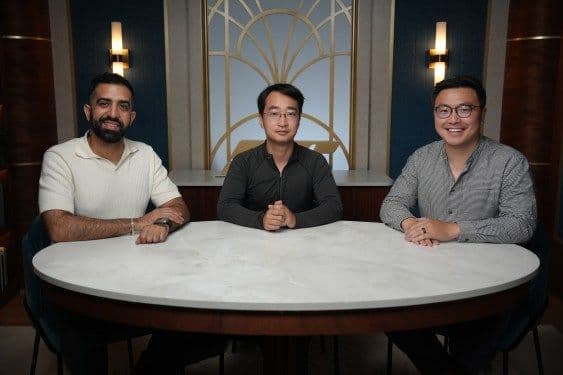
The big trend in robots is handing the keys over to a generative AI model, but that brings with it a problem: that architecture isn’t predictable the way traditional algorithms are. How can you be sure your brand new humanoid will be safe? Dr. Ding Zhao, who directs the Safe AI lab at Carnegie Mellon University, has been working on this problem for almost his entire career. Now, along with veteran startup executive Kyle Wong and machine learning engineer Simo Rachidi, he’s founded a company, Safeworld, intended to solve it. “The safety challenge that we’re talking about is a combination of, one, really advanced generative AI probabilistic evals — how do you underwrite the risk of a probabilistic system?” Zhao says. “The second part that’s really hard is the trust part, and you need both to deploy a robot.” Safeworldis emerging from stealth today with a seed round of more than $12 million, led by Shine Capital and a16z Speedrun, with additional investment from Box Group, Carnegie Mellon University Endowment, Innovation Endeavors and SV Angel. “The time to build an industry safety standard is now while robots are being designed and deployed,” a16z Speedrun partner Jonathan Lai told TechCurnch. “By the time you have robots in households colliding with kids and causing safety incidents, that’s way too late.” Safeworld’s specialty is evaluating a robotic control system in simulations that are populated with realistic human models. It’s akin to the challenge faced by companies like Tesla or Wayve, which must ensure that their vehicles respond appropriately to a variety of surprising incidents they may encounter on the road. But that will be more difficult for robots, Zhao argues, because they work in unstructured environments, and because each facility they are in will have different safety standards. “One of the most common areas is if there is a blind corner in this particular factory,” Wong said. “What is the speed or what is the stopping distance that you need to make sure that this robot will not collide with a particular human? If a human is carrying boxes, for example, will the robot detect the human or not?” To answer that question, Safeworld will build a digital version of that corner in a model like Genesis or MuJoCo, insert a simulation of the robot it is evaluating, driven by its real software, and then run thousands of scenarios where human models encounter the robot. That’s harder than it seems, per Zhao, because people are unpredictable. “Tripping and falling is also a good example of something that we do a lot of testing with the simulation,” Wong said. “Otherwise, you would have to go and trip and fall for the robot, which is like a hard thing to be doing all the time.” There are definite similarities between the platform that Safeworld is building and the tools being used internally by robot builders. The founders, however, believe that beyond their specific expertise, robot-makers will want a third-party to validate their work, if only to share information about safety cases between competitors. “A lot of people are underestimating how hard some of these edge cases are going to be to solve,” Zhao said. “It is not the robot in the vacuum, in the demo, that we are worried about. It is the robot that is deployed at scale, with people who potentially never operated a robot before.” Vishal Dugar, the CTO ofGritt Robotics, is developing the AI brain for robots that currently help workers install photovoltaic panels at industrial-scale solar farms, and aspires to take on more complex construction tasks. His company is partnering with Safeworld as they develop their safety simulations. “The difficulty with most of our systems is it’s very hard to formally prove it by doing some math, writing some equations, and saying yeah, the system is verified to be safe,” Dugar says. “It necessarily has to be done empirically.” His robots operate alongside human workers, and ensuring that a robotic arm doesn’t hit them is obviously top of mind. To verify that in practice requires considering all kinds of potential scenarios. “Humans have many kinds of appearances,” Dugar points out. “Their bodies can be in different configurations. They could be kneeling, standing. They could be tripping and falling potentially. They could be crouching. They could be running. You have to respond to all these behaviors that humans could potentially exhibit on these sites, along with the variety of variations in human appearance, you know, clothes, size, shape, height, skin color, everything else.” It’s still early days for both Safeworld and generative AI in robotics, and the company is still figuring out the best model for its product — a platform for external users, or a services-based approach? — but the team is confident they are taking on the right problem. “We’ll probably be the first profitable company in this field,” Zaho says. “Because if anyone wants to deploy, they need to pay us to handle the situation.”

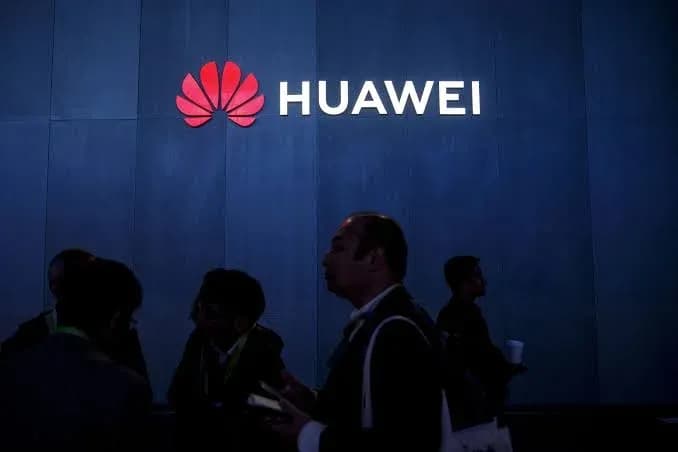
The deal is Huawei's first patent licensing agreement with Qualcomm that covers 5G technologies.
View

Yotta, Emergent, Sarvam, and Freehand accounted for 90% of disclosed funding in the third quarter of 2026, as capital moves toward AI infrastructure, foundation models, and enterprise AI.
View

Coforge’s approach adds goals, constraints, governance controls, and escalation paths to enterprise AI agent design.
View

Claude Opus 5, Sonnet 5 and Haiku 4.5 are now available through Amazon Bedrock’s India endpoint, with inference processed within AWS’ Mumbai and Hyderabad regions.
View

With AI squeezing traditional IT services growth, HCLTech is betting on a separate model to capture mid-market AI spending. But the segment is not easy to crack.
View

Razorpay said Engage will assess whether a brand’s catalogue is ready for ChatGPT Ads.
View

Zoho is launching products across seven sectors—automotive, financial services, healthcare, education, retail, real estate, and restaurants.
View
View
View