🚀 Zaprep: i tuoi social a pieno regime. Inizia gratis — automatizza 1.000 DM/mese e trasforma l'engagement in lead. con 1.000 DM automatizzati al mese.
Invia il tuo strumento
PoweredByAI.app è un catalogo di strumenti IA che aiuta persone, aziende e creator a scoprire i migliori strumenti di IA per scrittura, coding, design, produttività e altro.
© 2026 , Prodotto di011BQ. Tutti i diritti riservati.

On Tuesday, Anthropic announced an expansion of its Claude for Startups program, offering subsidized access to its AI models and a variety of other benefits to qualifying companies. The new version of the program, which launched as part ofAnthropic’s SF Tech Week event, provides a free year of Claude Team, Anthropic’s paid plan for groups, with up to five premium seats, as well as $1,000 in API credits for building with Claude. Companies will also get access to Claude Marketplace, which lets them build plug-ins for the service. Companies can also book virtual office hours with Anthropic’s Applied AI team. “We created this program because we believe the benefits of AI will reach most people through the companies that build on top of models, rather than through the models alone,” Anthropic said in an announcement. “That makes partnering closely with founders and developers central to our mission.” Companies are eligible if they were founded in the last five years or received funding in the last two years. Interested companies can apply through theClaude for Startupsprogram page.
View

Startups that promise to predict how humans will behave are having a moment. Over the past year,Simile raised $200 millionat a $2 billion valuation;Aaru raised $88 millionat a $1 billion valuation; and Humans&, an AI startup that announced a massive$480 million seed roundin January at a $4.48 billion valuation, launchedPersimmonto model human behavior. The status quo for human behavior prediction today relies heavily on large language models (LLMs) that are prompted or fine-tuned to role-play as a target demographic. But two-year-old, San Francisco-basedMirror Particlethinks that approach is fundamentally broken. “It’s like bringing a super soaker to Niagara Falls,” says Abhivyakti Ahuja, co-founder and CEO of Mirror Particle, which provides brands with an AI engine that predicts consumer behavior and the reasons behind it. “LLMs have been trained on hundreds of billions of data points. How much can you influence its behavior by [fine-tuning] with such a small amount of data? It’s still stuck in the past.” Ahuja doesn’t think LLMs see the world the way a human does. “LLMs are modeling written language, but humans are made of visual perception, spatial reasoning, social intelligence.” Relying on them, she says, means getting insights based on what humansdon’tnotice, which is beside the point when trying to predict human behavior. Mirror Particle is taking another approach: building a foundation model, or as Ahuja describes it, a world model built from scratch that simulates why humans do what they do and how human behavior changes over time. “We don’t want to capture the static person,” Ahuja said. “We want to capture the changing person. That means capturing the longitudinal data on how people are changing, what triggers are changing them and to what degree.” If they aren’t changing, she added, “that’s also a signal.” Mirror Particle has already raised an angel round and says it’s close to closing its first venture round. The company is also competing next week inStartup Battlefield 200, TechCrunch’s renowned startup competition taking place atTechCrunch Disrupt 2026in San Francisco on October 13-15. The startup relies on a proprietary combination of data that includes its clients’ customer data, current events, pop culture, social media, and more to model a demographic segment, thinking of it as a system that evolves over time and tracking how motivations shift as it moves through experiences. Much of the focus is on “revealed behavior” — what people actually do rather than self-reported survey answers. Like its rivals, Mirror Particle’s initial go-to-market strategy focuses on where budgets already exist for these kinds of insights: market research and brand and product strategy. Mirror might, for instance, help a beauty brand not just write better ad copy for makeup that would appeal to Gen Z, but also determine if that demographic even wants that product. “What if [the target demographic] doesn’t want eyeshadow palettes?” Ahuja said. “Maybe blush is a better option to go for if you want to sell a product to this market.” Mirror Particle’s prediction engine also provides customers with the “why” behind current or future behavior — the motivations, constraints, and additional context that justify its recommendation, helping brands make smarter decisions. In one early pilot, a well-known pet food brand wanted to know what imagery to put on the packaging to boost sales. Chicken? Beef? Vegetables? Mirror’s technology found that the brand was asking the wrong question. The imagery didn’t matter. The problem was that the brand was so recognizable that it was considered mass market and cheap, and sales would plateau until it addressed that perception issue. “The way we see our model evolving is like how a baby learns about the world,” Ahuja said, noting that babies move from vision to language to body awareness to social intelligence. That fundamental interest in modeling the human brain comes from Ahuja’s background studying neuroscience and computer science. Originally from India, she ended up studying at the University of Toronto, where she became inspired by AI pioneer Geoffrey Hinton’s contributions to neural networks. After school, Ahuja ended up at Amazon Robotics building robots that build other robots. That’s where she met her co-founders, Will Song and Thomson Yen. Song has spent a chunk of his career building sales personalization engines, and Yen focused on using deep learning to learn about how AI agents understand human behavior. The startup’s long-term vision is to be the “general layer for anticipating human behavior” and moving from broader population-level analyses to individual-level insights. “We just need a better model of humans if we’re going to work alongside AI and with each other,” Ahuja said. Check out Mirror Particle and many other innovative startups that have been vetted by TechCrunch’s editorial team next week atDisrupt in downtown San Francisco. The winner of this year’s Startup Battlefield will be decided by our slate of VC judges on the afternoon of Thursday, October 15.

IIT Madras, IIT Madras Research Park, and Unicorn India Ventures recently achieved the first close of a ₹1,000 crore fund for early-stage deeptech startups.
View

The GIGA initiative intends to provide a more permanent entry point into Karnataka's technology ecosystem.
View

The new unit will focus on engineering, service, and quality and regulatory workflows, with CYiNGINE serving as its common data and AI foundation.
View

In an interview, OpenAI CEO Sam Altman said he wouldn’t accept “zero hacks” or “zero scams” as the price of caution, as he believes AI’s benefits outweigh risks.
View

Indian IT stocks enter the Q2 earnings season with strong deal bookings but muted revenue growth as AI creates new work while pressuring the economics of existing contracts.
View

OpenAI is all set to introduce invisible watermarks for text generated by its AI models. This latest move will make it easier for readers to identify AI-generated content. This feature will be initially available in the European Union, in response to the EU AI Act, which requires providers of generative AI systems to make machine-generated content identifiable. Additionally, ChatGPT will show more ads in the coming days. The new ads will appear alongside images that users ask ChatGPT to generate.
View

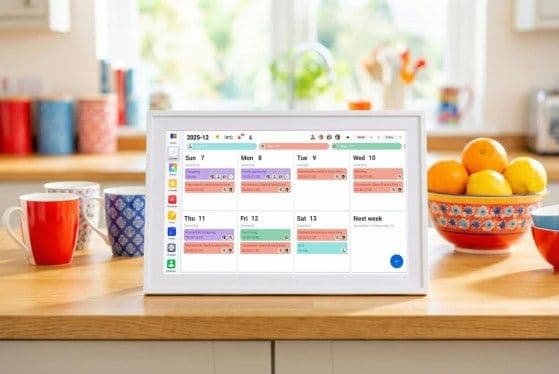
With back-to-school season approaching (or already here in some places), keeping track of everyone’s schedules can get pretty chaotic. Between work, school, appointments, sports, chores, and everything else going on, a regular paper calendar just doesn’t cut it. That’s whereLinkdaze’ssmart digital calendar comes in — a touchscreen tablet built specifically to organize a household rather than a single person. One of Linkdaze’s biggest strengths is its calendar compatibility. The system can synchronize calendars from popular services, including Google, iCloud, Outlook, Yahoo, and Cozi, which is a dedicated family-organizing app. This is particularly useful for families where different members use different platforms. Instead of asking everyone to switch to a single calendar app, Linkdaze brings multiple schedules together and uses color coding to make individual family members easy to identify. Launched last December, Linkdaze is available in15.6-inchand10.1-inchmodels (both discounted at Amazon for itsPrime Deal Days, ends October 7), giving you some flexibility depending on how much wall space you have. Beyond calendars and appointments, you can use it for chores and rewards, meal planning, shopping lists, and other family organization. It can even double as a digital photo frame for displaying family photos. The most interesting feature, however, is Linkdaze’s AI meal planner with “Snap-to-Sync.” Instead of manually entering everything into a meal-planning app, you can take a photo of a paper recipe or your kid’s school lunch menu. Linkdaze will turn that information into a digital meal plan and generate a shopping list from it. While not an entirely new idea, it’s a useful feature that helps Linkdaze stand out from a basic digital calendar. Another big plus is that Linkdaze doesn’t require a monthly subscription for its main features. It’s an interesting choice in a category where recurring revenue has become the default. Skylight, a competing smart-calendar brand, offers additional features through its $79 per year subscription. For a hardware company entering a crowded smart-display market, that decision is either going to differentiate its product or look like a lost revenue stream. Linkdaze is also less expensive up front, with the 10.1-inch model priced at $119.99 compared with Skylight’s 10-inch model starting at $149.99 (if you pay for the subscription.) Overall, this device could make a practical gift for busy parents who are trying to keep everyone’s schedules in one place. It could also be a great fit for college apartments, where roommates can use it to coordinate chores, study schedules, shared meals, and other household responsibilities. It’s also very helpful for those of us juggling interviews, deadlines, meetings, and story assignments. This post originally publishedAugust 20, 2026and has since been updated to reflected updated pricing and discounts.

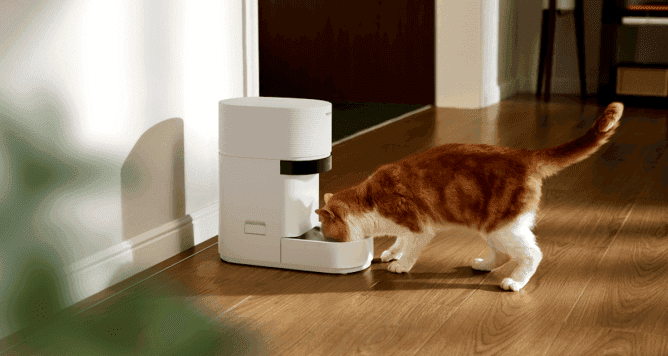
Smart feeders have become one of the most crowded categories in pet tech, with companies racing to add AI cameras and health tracking to devices that used to just dispense food on a schedule. I enjoyed testing Petlibro’swet food dispensera couple of years ago, so this time I wanted to try something from the company’s newest automatic feeder lineup: the Granary 2 series, designed specifically for dry food. I was not disappointed. Building on the brand’s Granary line, theGranary 2 serieslineup is designed to give cat parents a clearer picture of what their pets are actually eating, from how much food they consume to how long they spend eating and whether their habits change over time. The series includes four models, priced from $129.99 to $249.99. TheGranary 2is the entry-level option, offering app-controlled feeding, precise portioning, and intake tracking. The $189.99Granary 2 Vision, which is the one I tested, adds an AI-powered camera capable of recognizing up to 10 cats and tracking each pet’s individual eating habits. The $199.99Vision Duois aimed at multi-pet households, with two separate dispensing chutes and bowls so each pet can receive its own portion, and the company says that its most expensive model, the Granary 2 X ($249.99), uses AI recognition to provide individualized portioning for pets with specific dietary needs. Right now, every model from the Granary 2 series isdiscounted at Amazonas part of its Prime Deal Days (ends October 7). The biggest upgrade across the Granary 2 series is its built-in scale. The feeder can measure food in the tray, allowing it to track not only how much food was dispensed but also how much remains in the bowl. That gives it a better way to estimate how much your pet actually ate. While a traditional automatic feeder can tell you that it released a meal at 7 p.m., it can’t necessarily tell you whether your cat ate it, how much it ate, or how long it took to finish. The Granary 2 tracks intake, eating duration, feeding frequency, as well as favorite eating times and eating speed. Over time, the companion app builds a picture of your pet’s normal eating patterns, with daily, weekly, monthly and yearly views, which could make it easier to notice subtle changes in appetite or routine that might otherwise go unnoticed. For pet parents who closely monitor weight, portion sizes, or eating behavior, this could be the feature that makes the Granary 2 worth considering. The Granary 2 offers two primary feeding modes: Smart Refill Mode and Scheduled Mode. Smart Refill Mode keeps the bowl supplied with smaller, fresh portions throughout the day while automatically stopping once the daily food limit you’ve set has been reached. This could be particularly useful for cats that prefer to graze rather than eat one or two larger meals. Scheduled Mode offers more traditional control, allowing you to set specific feeding times and portion sizes. There’s also a manual feeding button for those times when you want to dispense food outside of the normal schedule. The version I tested adds another neat layer, with an AI-powered camera that can recognize which pet is eating and automatically associate the meal with the correct profile, which is especially useful in a multi-pet household. If one cat is on a special diet, needs to manage their weight, or has different nutritional requirements from the others, being able to track individual meals is super helpful. It will only open the feeder when the correct pet is recognized by the camera. The 1080p camera also includes night vision, allowing you to check in on your cat while you’re away and see what’s happening around the feeder. There’s two-way audio as well, so you can communicate with your pet remotely. And if you’re the type of pet parent who likes to call your cat to dinner, you can record a short message that plays directly from the feeder. Additionally, the feeder can send instant app alerts for issues such as low battery power, low food levels, and if food jams in the feeder. Those notifications provide some added reassurance when you’re away from home, since you don’t have to wonder whether the feeder is still working properly or whether a problem has prevented your pet from getting its meal. It also has a built-in rechargeable backup battery for when there’s a power outage. It’s important to note, however, that some of the Granary 2’s more advanced features are tied to Petlibro’s subscription services. Certain health tracking and monitoring features require a Petlibro Care subscription (starting at $59.99 per year), while cloud recording and playback on camera-equipped models require paying for a Video Cloud plan ($119.99 per year). Overall, I do think this is one of the best feeders I’ve tested, but if you’re looking for a more affordable option, the closest comparison isPawsync’s $79.99 feeder. It uses a built-in scale to ensure accurate portions, along with settings designed to help prevent both underfeeding and overfeeding. This post originally published Sept 21 and has since been updated to reflected updated pricing and discounts.

For financial institutions, the biggest concern may not be whether an AI agent makes an isolated mistake, but whether it can be allowed to continue.
View

Prix AI is trained on insights from more than 1 billion collections conversations and supports voice agents across 12 Indian languages.
View
View
View
View