🚀 Zaprep: i tuoi social a pieno regime. Inizia gratis — automatizza 1.000 DM/mese e trasforma l'engagement in lead. con 1.000 DM automatizzati al mese.
Invia il tuo strumento
PoweredByAI.app è un catalogo di strumenti IA che aiuta persone, aziende e creator a scoprire i migliori strumenti di IA per scrittura, coding, design, produttività e altro.
© 2026 , Prodotto di011BQ. Tutti i diritti riservati.

In a post on Truth Social, President Trump directed federal agencies to cease use of all Anthropic products after the company’spublic dispute with the Department of Defense. The president allowed for a six-month phase-out period for departments using the products, but emphasized that Anthropic was no longer welcome as a federal contractor. “We don’t need it, we don’t want it, and will not do business with them again,” the president wrote in the post. pic.twitter.com/B51SWfn81N Notably, the President’s post does not mention any plans to designate Anthropic as a supply chain risk, as had been previously mentioned as a consequence. However,a subsequent tweetfrom Secretary of Defense Pete Hegseth made good on the threat. “In conjunction with the President’s directive for the Federal Government to cease all use of Anthropic’s technology, I am directing the Department of War to designate Anthropic a Supply-Chain Risk to National Security,” Secretary Hegseth wrote. “Effective immediately, no contractor, supplier, or partner that does business with the United States military may conduct any commercial activity with Anthropic.” The Pentagon dispute centered on Anthropic’s refusal to allow its AI models to be used to power either mass domestic surveillance or fully autonomous weapons, which Secretary Hegseth found unduly restrictive. CEO Dario Amodei reiterated his stancein a public post on Thursday, refusing to compromise on the two points. “Our strong preference is to continue to serve the Department and our warfighters — with our two requested safeguards in place,” Amodei wrote at the time. “Should the Department choose to offboard Anthropic, we will work to enable a smooth transition to another provider, avoiding any disruption to ongoing military planning, operations, or other critical missions.”
View

Anthropic has reached a stalemate with the United States Department of War over the military’srequest for unrestricted accessto the AI company’s technology. But as the Pentagon’sFriday afternoon deadlinefor Anthropic’s compliance approaches, more than 300 Google employees and over 60 OpenAI employees have signedan open letterurging the leaders of their companies to support Anthropic and refuse this unilateral use. Specifically, Anthropic stood in opposition to the use of AI for domestic mass surveillance and autonomous weaponry. The open letter’s signatories seek to encourage their employers to “put aside their differences and stand together” to uphold the boundaries Anthropic has asserted. “They’re trying to divide each company with fear that the other will give in,” the letter says. “That strategy only works if none of us know where the others stand.” The letter specifically calls on executives at Google and OpenAI to maintain Anthropic’s red lines against mass surveillance and fully automated weaponry. “We hope our leaders will put aside their differences and stand together to continue to refuse the Department of War’s current demands.” Leaders at the companies have not yet formally reponded to the letter. TechCrunch has reached out to Google and OpenAI for comment. However, informal statements suggest both companies are sympathetic to Anthropic’s side of the case. In an interview with CNBC on Friday morning, OpenAI CEO Sam Altmansaidthat he doesn’t “personally think the Pentagon should be threatening DPA against these companies.” According to a CNN reporter, an OpenAI spokespersonconfirmedthat the company shares Anthropic’s red lines against autonomous weapons and mass surveillance. Agreed. Mass surveillance violates the Fourth Amendment and has a chilling effect on freedom of expression. Surveillance systems are prone to misuse for political or discriminatory purposes.https://t.co/f2JRHAhjTW Google DeepMind has not formally addressed the conflict, but Chief Scientist Jeff Dean, presumably speaking as an individual, did express opposition to mass surveillance by the government. “Mass surveillance violates the Fourth Amendment and has a chilling effect on freedom of expression,” Deanwroteon X. “Surveillance systems are prone to misuse for political or discriminatory purposes.” According to anAxiosreport, the military currently can use X’s Grok, Google’s Gemini, and OpenAI’s ChatGPT for unclassified tasks, and has been negotiating with Google and OpenAI to bring its technology over for use in classified work. While Anthropic has an existing partnership with the Pentagon, the AI company has remained firm in maintaining the boundary that its AI be used for neither mass domestic surveillance, nor fully autonomous weaponry. Defense Secretary Pete Hegsethtold Anthropic CEO Dario Amodeithat if his company doesn’t concede, the Pentagon will either declare Anthropic a “supply chain risk” or invoke the Defense Production Act (DPA) to force the company to comply with military demands. Ina statement on Thursday, Amodei maintained his company’s position. “These latter two threats are inherently contradictory: one labels us a security risk; the other labels Claude as essential to national security,” the statement reads. “Regardless, these threats do not change our position: we cannot in good conscience accede to their request.”

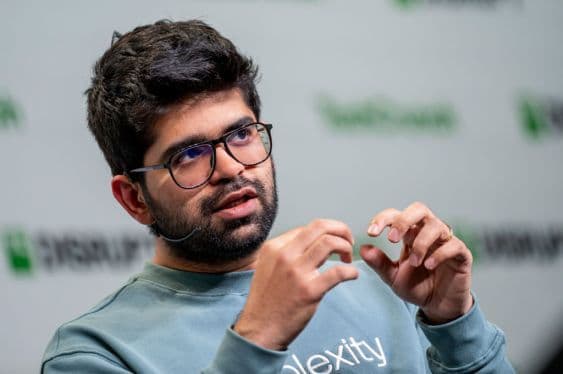
Starting this week, Perplexity subscribers will have a new agentic tool at their disposal. Perplexity Computer, in the company’s words, “unifies every current AI capability into a single system.” More specifically, Perplexity says it is a computer user agent that can execute complex workflows independently using 19 different AI models, even creating subagents to handle specific problems. The tool is available now, only on the company’s highest subscription tier, the $200/month Perplexity Max. It runs entirely in the cloud, which might spare it some of the security concerns of other agentic tools like OpenClaw. TechCrunch hasn’t done a hands-on demo of the new tool, but inexample workflowson Perplexity’s website, it is shown handling tasks that involve collecting statistics, financial, or legal data; creating analysis; and sharing its findings as finished websites or visualizations. Perplexity invited the press to a background briefing with executives last week to discuss the product and lay out the agenda for the year. The event was intended to include a demonstration of the tool, but the company cancelled the demo because of flaws found in the product hours before the event. This tool represents the evolution of Perplexity, which made a splash early in the AI boom by wrapping frontier models in familiar user interfaces, particularly its search-engine-like answer service. It then moved on to launch its Comet web browser last summer. Competitors like Google have now changed their products to be more like those built at Perplexity, one executive said, but that’s a threat as much as a compliment. The company is changing in response to a shifting ecosystem: One of the first AI companies to offer advertising, it abandoned that business late last year, saying last week that it undermined users’ trust in their answers’ accuracy. But Perplexity’s total user base—in the tens of millions of users—pales in comparison to that of OpenAI, which claims 800 million weekly users and began testing ads in ChatGPT this year. Now, Perplexity executives say they are aiming for a more boutique set of users, with products that serve people making “GDP-moving decisions.” Executives in the briefing, who asked not to be identified by name, described prioritizing enterprise subscriptions, particularly for deep research. “You don’t hear us talk about MAUs ever, because we’re not actually on a mission to get as many users as possible,” one executive said. Perplexity recently released a new benchmark for complex research tasks, called Draco, where (no surprise) its own deep research offering beats out competitors like Gemini. Perplexity says it is no longer reliant on other companies’ APIs for its web index and now has its own AI-optimized search API. But the company is doubling down on packaging frontier models in a consumer-friendly user experience, arguing that there is value in orchestrating multiple third-party LLMs to obtain the most cost-effective and accurate answers to queries. “Multi-model is the future,” one Perplexity exec argued. Models, in their view, are specializing, not commoditizing. The company has found that its users frequently switch between models to obtain the results they are looking for, with December 2025 queries for visual outputs most often sent to Gemini Flash, software engineering done by Claude Sonnet 4.5, and medical research in GPT-5.1. If one LLM is better at coding tasks and another does a better job drafting marketing copy, Perplexity’s software can automatically choose the ideal one. Another example, executives said, is running Perplexity’s own modified open-source Chinese-built LLMs to answer queries more cheaply, a technique the company got dinged for hiding from its customers last year. But done transparently, the technique could prove an efficient way to optimize LLM queries. The company also offers users the opportunity to query multiple models at once, in a feature called Model Council. But the unit economics of offering multiple queries at flat subscription rates aren’t entirely clear. Still, without expensive infrastructure projects on its books and with, the executives claimed, high margins on users fees, Perplexity believes it will remain competitive by allocating tokens to the best model for a purpose. And there is more coming: Perplexity Comet browser is coming to iOS next month, and the company is planning a developers’ conference, Ask, on March 11 in San Francisco to promote third-party use of its API. One executive said that instead of looking at the previous day’s number of queries each morning, he was now looking at the most recent revenue metrics. At least some customers are noticing a new focus on the bottom line, with the Perplexity subreddit featuring frequent complaints of new rate limits on free and subscription product tiers. However, the execs at the briefing dismisses such complaints. “Any discussions on the free tier being made worse or rate-limited is completely false,” an executive said.

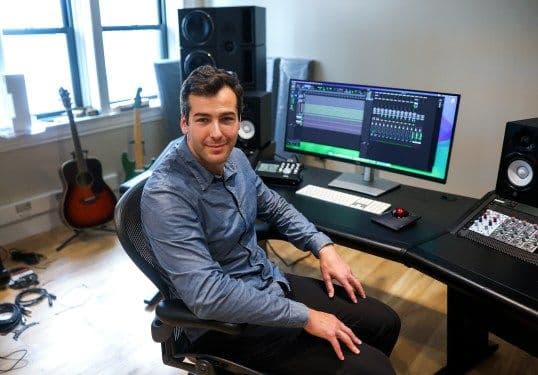
Sunoco-founder and CEO Mikey Shulmanshared on LinkedInthat the AI music generator has amassed 2 million paid subscribers and $300 million in annual recurring revenue. Just three months ago, Suno announced a$250 million funding roundthat valued the company at $2.45 billion. At the time, Suno told The Wall Street Journal that annual revenue had hit $200 million — that would indicate that the company has had some major growth in a short time frame. Suno lets users create music using natural language prompts, making it possible for people with little experience to generate audio with little effort. This has sparked concern from musicians and record labels, who have sued Suno for copyright infringement, since its AI model was likely trained on existing recorded music. But Warner Music Group recentlysettled its lawsuitand instead reached a deal that allows Suno to launch models that use licensed music from its catalog. Suno has generated synthetic music that sounds real enough to top charts on Spotify and Billboard. Telisha Jones, a 31-year-old in Mississippi, used Suno to turn her poetry into the viral R&B song “How Was I Supposed to Know” and signed a record deal with Hallwood Media in a deal reportedly worth$3 million. Still, many musicians havespoken outagainst the use of AI in music, including Billie Eilish, Chappell Roan, Katy Perry, and more.
View

The Pentagon isplaying chicken with Anthropicover who gets to control how the military uses AI while communities across the country areblocking data center construction. As the AI debate has been flattened to “doomers versus boomers,” one state legislator is attempting to walk a middle road. On this episode of TechCrunch’sEquitypodcast, Rebecca Bellan sits down with Alex Bores, a New York State Assemblymember and candidate for U.S. Congress. Bores sponsored New York’s first-of-its-kind AI safety lawthe RAISE Act— and quickly became the target of aSilicon Valley lobbying group with $125 million to spendon attack ads. Listen to the full episode to hear about: Subscribe to Equity onYouTube,Apple Podcasts,Overcast,Spotifyand all the casts. You also can follow Equity onXandThreads, at @EquityPod.
View

ChatGPT has reached 900 million weekly active users, OpenAIannouncedFriday, putting the AI chatbot within striking distance of 1 billion. OpenAI also shared that it now has 50 million paying subscribers. “Subscriber momentum accelerated meaningfully to start the year, with January and February on track to be the largest months for new subscribers in our history,” the company wrote in a blog post. “People use ChatGPT to learn, write, plan, and build. As usage scales, the product improves in ways people feel immediately: faster responses, higher reliability, stronger safety, and more consistent performance.” The new weekly active user figure marks a jump of 100 million users from the800 millionthat OpenAI reported in October 2025. OpenAI shared the new numbers as part of its announcement that it hasraised $110 billionin private funding, marking one of the largest private funding rounds in history. The new funding includes a $50 billion investment from Amazon, along with $30 billion each from Nvidia and SoftBank, at a $730 billion pre-money valuation. The round remains open, and the company expects more investors to join.
View

OpenAI has raised $110 billion in private funding, the companyannounced Friday morning, commencing one of the largest private funding rounds in history. The new funding consists of a $50 billion investment from Amazon as well as $30 billion each from Nvidia and SoftBank, against a $730 billion pre-money valuation. Notably, the round remains open, and OpenAI expects more investors to join as it proceeds. “We are entering a new phase where frontier AI moves from research into daily use at global scale,” OpenAI said. “Leadership will be defined by who can scale infrastructure fast enough to meet demand, and turn that capacity into products people rely on.” As part of the investment, OpenAI is launching significant infrastructure partnerships with both Amazon and Nvidia. As in previous rounds, it is likely that a significant portion of the dollar amount comes in the form of services rather than cash, although the precise split was not disclosed. The company’s previous round closed in March 2025, raising $40 billion against a $300 billion valuation. At the time, it wasthe largest private funding round on record. As part of itsAmazon partnership, OpenAI plans to develop a new “stateful runtime environment” where OpenAI models will run onAmazon’s Bedrock platform. The company will also expand itspreviously announced AWS partnership, which committed $38 billion in compute services, by $100 billion. OpenAI has committed to consuming at least 2GW of AWS Tranium compute as part of the deal, and also plans to build custom models to support Amazon consumer products. “We have lots of developers and companies eager to run services powered by OpenAI models on AWS,” said Amazon CEO Andy Jassy in a statement, “and our unique collaboration with OpenAI to provide stateful runtime environments will change what’s possible for customers building AI apps and agents.” The Information hadpreviously reportedthat $35 billion of Amazon’s investment could be contingent on the company either achieving AGI or making its IPO by the end of the year. OpenAI’s announcement confirms the funding split, but says only that the additional $35 billion will arrive “in the coming months when certain conditions are met.” OpenAI gave fewer details on the Nvidia partnership, but said it had committed to using “3GW of dedicated inference capacity and 2GW of training on Vera Rubin systems” as part of the deal. Nvidia’s participation in the round has been the subject of intense speculation, particularly as reports of a $100 billion investment in September gave way to reports of a smaller investment in the months that followed. In January,Huang dismissed the idea that Nvidia was backing away from OpenAI, saying, “we will invest a great deal of money. I believe in OpenAI. The work that they do is incredible.”

Today is it! When the clock hits11:59 p.m. PT, the lowest ticket rates of the year forTechCrunch Disrupt 2026go up. No extensions. No second chances. The same access will cost more tomorrow. If you’re planning to attend, this is your final window to lock inup to $680 off your passorup to 30% off group passes. After tonight, this year’s biggest savings disappear.Register now. If you’re raising capital, hiring top talent, launching your startup, or hunting for your next portfolio company, missing Disrupt from October 13–15 at San Francisco’s Moscone West isn’t just inconvenient. It’s a missed opportunity to move ahead while others hesitate. Here’s what you gain when you attend: Founder Pass: Get the insights, tools, and investor access you need to scale.Investor Pass: Discover breakout startups and expand your portfolio with curated matchmaking. Disrupthas long been a stage for founders and investors who define eras. The voices you’ll hear are candid, tactical, and often unfiltered. The 2026 agenda drops soon. Keep an eye on theevent site. Previous speakers have included leaders of industry-defining startups and top-tier venture firms, including: Tonight at 11:59 p.m. PT, the lowest ticket rates of the year to TechCrunch Disrupt 2026 are gone. After today, you pay more. Register now. Lock in up to $680 in savings. Or bring your team and save up to 30% withcommunity passesof four or more.
View

At the 7th Bengaluru GAFX, CM Siddaramaiah talked about implementing the AVGC-XR policy and roadmap to ethical AI.
View

NTT DATA will act as Ericsson’s global system integration and managed services provider.
View

“No translation layer, no schema, no overhead. MCPs are genuinely a solution looking for a problem that CLIs solved 40 years ago.”
View

Memory chip costs are expected to surge by 80% to 90% quarter-on-quarter during the first three months of this year alone.
View
View
View
View