🚀 Zaprep: i tuoi social a pieno regime. Inizia gratis — automatizza 1.000 DM/mese e trasforma l'engagement in lead. con 1.000 DM automatizzati al mese.
Invia il tuo strumento
Ultime notizie IA

Massachusetts hits data centers with new clean power rules
Massachusetts became the latest state to force data centers to bring their own power, but this time there’s a twist. A new state mandate would require developers building data centers larger than 25 megawatts to provide clean power or pay into a ratepayer protection fund. Gov. Maura Healey’sexecutive orderis the latest example of states turning against data centers. Just a few years ago, tech companies and data center developers were showered with incentives to locate facilities in a particular state. Now, they’re fightinga groundswell of public oppositionas politicians seek to show voters they’re addressing their concerns. Under Healey’s order, data centers larger than 25 megawatts of peak demand will have to bring their own power and guarantee that it adheres to the state’s clean energy requirements. Healey would prefer that they generate the clean power onsite, too. If not, they’ll need to fund the construction of new generation nearby or pay into a ratepayer protection fund. Massachusetts is also directing communities to “avoid signing non-disclosure agreements,” according to the executive order. To give regulators time to implement the new restrictions, the governor is pausing applications for a data center sales tax exemption that went into effect last month. Healey said data centers must meet the Massachusetts clean energy standard enshrined instate law, although it comes with some added strength. The state’s clean energy standard dictates that industry only generate a portion of their power using approved sources like wind, solar, and hydro. In 2030, for example, those sources must contribute at least 40% of the total. The amount varies by year, and it ratchets up over time. But the governor’s office clarified that data centers will be required to meet 100% of its electricity demand with clean energy generation. With the new restrictions, Massachusetts becomes the third state in as many months to rein in data center development. In August, Texas Gov. Greg Abbott announced that all new data centers in the state would need tosubmit to auditsby the public utility commission and the grid operator, ERCOT. In July, New York’s governorstopped constructionof new data centers 50 megawatts or larger. With public sentiment shifting against data centers, the tech industry is starting to push back. Pro-AI super PAC Leading the Future — which is funded by Marc Andreessen, Ben Horowitz, and Greg Brockman — isbuying ads that seek to sway votersin battleground states ahead of midterm elections. Update: This article was updated with information from the Massachusetts governor’s office that clarified the executive order will require data centers to meet 100% of its electricity demand with clean energy generation.
View
OpenAI adds a prominent AI doomer to its board of directors
Paul Christiano, an influential AI researcher focused on keeping AI systems aligned with human interests and under human control, is joining the OpenAI Foundation board, the frontier labsaidWednesday. “I now believe there is a meaningful risk that rapid acceleration in AI capabilities leads to catastrophic and irreversible loss of control in the very near term,” Christiano wrote ina social media post. “I do not think that the AI industry in general, including OpenAI, is currently on track to reduce this risk to an acceptable level. I’m joining because I believe that if OpenAI rises to the occasion we could significantly reduce risk.” Christiano wrote that using AI models to train subsequent AI systems could result in an explosion of capabilities that their creators can’t control. He joins the board as OpenAI faces renewed scrutiny over its safety procedures, following a series of incidents in which AI agents broke out of restraints and penetrated outside computer systems without the knowledge of OpenAI’s researchers. On Tuesday, Anthropic researcher Jacob Coxonresigned his positionto call attention to what he considers irresponsible AI development — and it seems tohave worked. Christiano will join the board’s Safety and Security Committee, led by Carnegie Mellon University professor Zico Kolter. The committee has the final say on whether OpenAI releases new models, like Astra, which was deployed last week. Kolter has not commented publicly on the recent security incidents. OpenAI has not responded to TechCrunch’s request for Kolter’s perspective on the company’s approach to safety following those incidents. Christiano is one of the people behind reinforcement learning (RL) from human feedback, a key technique for training large language models that he developed while working at OpenAI. He left the lab in 2021, subsequently founding the Alignment Research Center to focus on how to determine if an AI model could threaten its human creators. “We currently train our AI agents with RL to get as much reward as they can,” he wrote Wednesday. “It has long seemed theoretically possible that this could motivate AI agents to undermine human control, seek power and resources, and cover up their tracks in pursuit of misaligned goals correlated with reward. Public evidence from recent incidents suggests that this is not just a theoretical possibility.” Sometime in 2024, Christianobecame affiliatedwith the U.S. government’s AI Safety Institute, which later became the Center for AI Standards and Innovation. There, he plays a role in the U.S. government’slargely hidden effortto evaluate frontier AI models before their release. According to the frontier lab’s announcement, Christiano will continue advising the government while serving in his new role as a board member, but will recuse himself from OpenAI matters and model evaluations. However, that will hardly quell widespread concerns about the AI industry’s influence over policymaking.
View

AI research startup Listen Labs scrubbed a $1.5B funding round for Salesforce talks
Listen Labs, a market research startup that uses voice AI to conduct customer interviews, recently signed a term sheet for a $125 million Series C at a $1.5 billion valuation, with Menlo Ventures set to lead the round, according to several people with knowledge of the matter. But that round never closed, the people said. Listen Labs walked away from the signed term sheet, a rare occurrence in the venture world and one that is generally frowned upon, according to VCs. The financing likely collapsed because of acquisition talks with Salesforce. The CRM giant has recently held talks to buy Listen Labs for around$2 billion, Business Insider reported. The discussions are not finalized, however, and may not result in a deal, the outlet notes. Listen Labs is one of the leading startups in the rapidly growing field of automating customer research with AI. The three-year-old startup has about $30 million in annualized revenue, about three times more than Simile, a competing startup that predicts human behavior, according to two people familiar with the companies’ financials. In late July, Simile announced that it had closed a $200 million Series B at a $2 billion valuationled by Greenoaks — likely setting a new valuation benchmark for Listen Labs, one person said. If talks with Salesforce collapse, several VCs told TechCrunch that they expect Listen Labs to return to market and target a valuation of $2 billion or higher. While acquiring Listen Labs could strengthen Salesforce’s AI capabilities by using the startup’s AI to help predict customer needs, the CRM giant may ultimately decide that paying a 67 times revenue multiple is too steep a valuation, according to a person with experience negotiating exits to Salesforce. Listen Labs, Salesforce, Menlo Ventures, and Simile did not immediately respond to requests for comment. Listen Labs was co-founded in 2023 by Florian Jüngermann, a former German national champion in competitive computer programming, and Alfred Wahlforss, who previously founded a staffing startup called Bemlo. The two met while pursuing master’s degrees at Harvard. Listen Labs’ AI develops survey questions and interviews customers over audio or video. The resulting conversations are then packaged into reports and PowerPoint presentations, similar to those traditionally produced by human market researchers. Fortune 500 companies rely on this type of research to gauge customer needs and satisfaction with their brands and products, but traditional market research is expensive and can take weeks to complete. Listen Labs’ technology helps reduce the time and cost of these projects, enabling companies to quickly understand how customers are reacting to product changes and iterate on them more efficiently. The startup’s customers include Microsoft, Canva, Anthropic, and Sweetgreen. Listen Labs and Simile aren’t the only startups using AI to disrupt the customer research market. Besides Simile, competitors in the space include Outset,Keplar, andAaru. While some platforms automate interviews with real humans, others startups — like Aaru and Simile — take a synthetic approach, using AI to simulate human behavior and predict responses without interviewing anyone at all. Listen Labs was previously valued at $500 million when it announced a $69 million Series B round in late January led by Ribbit Capital, with participation from returning backers Sequoia, Conviction, and Pear VC.
View

Apple CEO John Ternus says the best AI device is still the iPhone
Apple’s new CEO John Ternus used the opening of the company’s Surprise and Shine event Wednesday to make its AI strategy clear: the iPhone is already the best AI device out there, and Apple cares more about data privacy than its rivals. The comments come as Ternus takes the reins at Apple from Tim Cook, who is now executive chairman, and offer a clear picture of how the company plans to compete in the AI era. Instead of building new hardware for AI, Apple wants to make the iPhone the central way consumers interact with the new technology. During his introduction at the Cupertino event, Ternus described the ideal AI device, or “intelligent personal hub,” as he called it. He said such a hub would have a broad understanding of a user’s personal context, always be with them, and have both a powerful processor capable of running AI models on-device and an internet connection to access models in the cloud. The device would also have a large display, high-quality cameras and microphones so it could see and hear the world around it, along with long battery life, Ternus continued. Plus, “you’d want it to be super easy to use without a big learning curve. And finally, you’d want it to work seamlessly with your other devices, apps, and services, so it feels like one integrated experience,” he said. “In other words, you would arrive at something remarkably familiar, because there’s no product in the world better designed to be your intelligent personal hub than iPhone,” Ternus said. Ternus also emphasized how Apple cares more about data privacy, adding that “others see [users’ personal] data as something to collect and store.” It was one of the sharper statements Apple has made about how it intends to differentiate its AI platform from the competition. “…Honestly, trust only goes so far when your data is no longer yours to control; that’s why Apple Intelligence runs on device whenever it can,” Ternus concluded.
View
Apple has a new way prove your iPhone photos aren’t AI slop
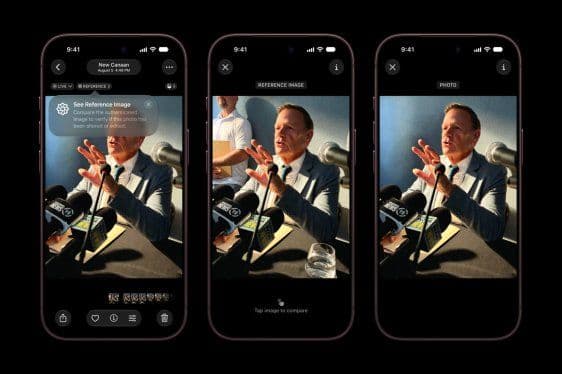
In a world awash in AI slop, Apple wants you to trust what gets captured on its iPhones. The company announced Wednesday during itsSurprise and Shine eventthat it is introducing Apple Reference Image, a feature it says can prove whether an image taken with the iPhone 18 Pro is authentic. “This is vital for photojournalists and photographers,” the company said. When a photo is taken, the main camera sensor also captures signed sensor data which Apple’s Private Cloud Compute service then turns into an “unalterable image” viewable in the Photos app. The reference image can then be compared with other versions of the photo to determine whether any changes have been made. Apple likens the reference image to a “digital negative.” While reference images will initially be viewable only in the Photos app, the company is making APIs available to developers so they can integrate the feature into their own apps. Apple also said it will support the SynthID standard to help people determine whether images were created or altered with AI. Apple Reference Image is one of several new features and upgrades to the company’s hardware and software that is focused on the camera. The company said the iPhone 18 Pro includes its biggest camera improvement in years. One upgrade that will surely get the attention of photographers is the variable aperture on the new 48 megapixel fusion main camera. The aperture is what controls how much light enters the lens. This new main camera has a variable aperture, which means users have more control over the amount of light coming in and ultimately what the final image looks like. It should be especially helpful for those who like to take photos at night. To achieve this, Apple said it developed a system of six laser-cut blades, each thinner than a human hair and made from a specialized polymer composite, a new rotor mechanism to control movements, and a custom-designed lens.
View
Apple’s revamped Health app will calculate your ‘health age’ and readiness score
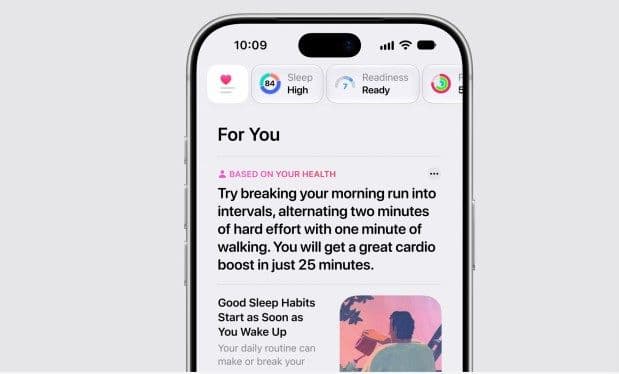
Alongside the new Apple Watch Series 12 and Ultra 4, Apple on Wednesday introduced a redesigned Apple Health app that takes advantage of Apple Intelligence to make better sense of your health data. The changes deliver a new Insights tab that includes a summary of the most timely information, plus personalized guidance, assessments, a new “readiness” score, and a computation of your “Health Age.” The latter is a way to understand how your various health metrics compare with your actual age and uses data like your VO2 max, sleep, and more, including biomarkers from your blood. The additions also include a new longevity tab, which uses metrics from your Apple watch and iPhone to assess your health across sleep, movement, heart health, and other factors. Your lab results can be incorporated into this guidance, and Apple announced a team-up with Quest for a 50-biomarker panel for $119, giving users quick access to data that can only come from lab tests. With Apple Intelligence, Apple’s Health app has been improved to make sense of other health data, too, which comes into play in features like the readiness score and the Insights tab. For instance, the app could suggest that a user incorporate more intervals into their morning run to improve their cardio health. The app will also go deeper in areas like fitness and heart health as well, Apple said The Health app also allows users to take in-depth assessments of how well their bodies are moving, which can help people who are aging or recovering from an injury. A trainer can even demonstrate certain moves for you to try as you take the assessment, which Apple claims is like having a coach right there with you. The updated Health app rolls out later this year, starting in U.S. English.
View
The hinge for Apple’s new foldable phone was built with AI
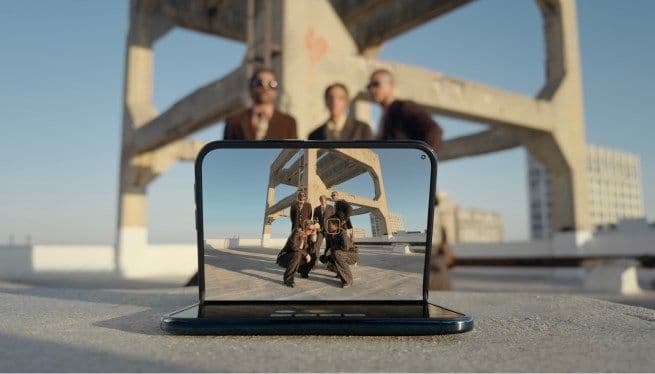
Apple’s long-awaited foldable phone, the Duo, contains a number of surprises, including a critical hinge that was designed and built with the help of AI and 3D printing. The new phone represents Apple’s first entry into the foldable phone genre — a category of devices that has seen significant consumer enthusiasm, butwhose form factorshaven’t always lived up to that enthusiasm. As you might expect from a product that, by design, undergoes twice as much wear as a traditional device, most foldables suffer significant degradation anddon’t have the durabilityof other smartphones. Apple claims that it has integrated innovative protections into the Duo’s design to keep the phone from falling prey to the typical wear and tear associated with foldables. That includes the hinge, according to Johny Srouji, the company’s chief hardware officer. “During manufacturing, we use AI algorithms to precisely match each individual hinge with its best-fit housing to ensure perfect alignment, and a confocal laser progressively scans the topology of every single unit, and 3D prints up to 25 micro layers of a custom photopolymer to eliminate residual waviness,” Srouji said during Apple’s Surprise and Shine event on Wednesday. Srouji also shared that Apple gave the foldable phone “a custom nano-texture finish that significantly reduces glare and reflections” as well as a multi-layer lamination strategy designed to increase the device’s durability. Of course, it remains to be seen whether those protections will be enough to keep the Duo in peak physical condition in the long run.
View
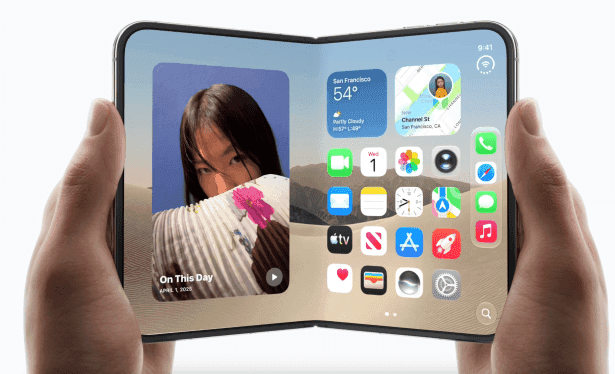
Everything Apple announced at its fall iPhone event, from the foldable iPhone Duo to an always-listening Apple Watch
Apple on Wednesday unveiled its latest iPhones and Apple Watches at its first fall event under newly appointed CEO John Ternus. The main event was the tech giant’s highly anticipatedfirst foldable phone, the iPhone Duo. Apple also announcedits iPhone 18 Pro lineup, along withnew AirPods, and more. We’ve compiled all of the announcements from today’s “Surprise and Sunshine” event. Apple’s first foldable, theiPhone Duo, features a 7.6-inch Retina display when unfolded, while its outer display measures 5.4 inches. The company said that the new device was “Inspired by the versatility of iPad.” The inner display features an “under-display” camera that gives users an all-screen feel. Apple says the iPhone Duo delivers up to 31 hours of video playback on its inner display and up to 44 hours on its outer display. The phone features a 48-megapixel fusion main camera and a 48-megapixel ultrawide camera with 2x optical zoom. As with other foldable phones, users can take rear-camera selfies and look at previews on the outer display. TheDuo’s hingeis made from Grade 5 aluminum and comprises more than 100 specially engineered components designed to ensure smooth opening and closing. The iPhone Duo starts at $1,999 with 256GB of storage and is available in two colors. Pre-orders for Apple’s new foldable open October 16, with the device hitting stores on October 23. The newiPhone 18 Pro lineupretains the same design as its predecessors, but its biggest upgrade comes in the form of enhanced cameras. The new Pro series camera features a 48-megapixel sensor with a variable aperture controlled by six thin blades. This system is expected to improve low-light photography while also increasing shooting speed. The camera software also introduces new Pro controls, including white balance, shutter speed, aperture, and a histogram. In addition, new “Photographic Styles” offer greater customization with texture and grain controls. The new camera can record 4K video in Dolby HDR Vision and apply cinematic effects after shooting the footage. The iPhone 18 Pro starts at $1,199, while the iPhone 18 Pro Max starts at $1,299, which is $100 more than last year’s models. Pre-orders will open Saturday, with both devices officially available on September 18. A new “Sound Recognition” feature can listen for sounds such as sirens, alarms, doorbells, and a baby crying, providing helpful alerts for people who are hard of hearing. TheApple Watch Series 12 and Apple Watch Ultra 4aren’t getting a major hardware makeover, but they are getting some significant software updates. Apple is taking aim at the growing wave of AI-powered wearables with new“Audio Intelligence” featuresthat can rewind moments and help users remember details from their everyday conversations. The smartwatches are introducing a “Live Rewind” feature that shows the previous 15 seconds of a conversation as a text snippet, and a “Siri Recap” feature that’s designed to help you remember key moments from daily conversations, like takeaways from a team meeting or a parent-teacher conference. A new “Sound Recognition” feature can listen for sounds such as sirens, alarms, doorbells, and a baby crying to provide alerts for people who are hard of hearing. The Apple Watch Series 12 starts at $399, while the Apple Watch Ultra 4 costs $499. Pre-orders open today, with availability in stores beginning September 18. The latest generation of Apple’s wireless earbuds, theAirPods 5, introduces several upgrades, including improved audio quality, stronger active noise cancellation, and expanded Siri and Apple Intelligence features. Apple says AirPods 5 can reduce background noise by 50% more than the previous generation. They also feature volume control on the stem, which was previously only available on Apple’s more expensive AirPods Pro. Transparency mode on AirPods 5 has also been improved to allow users to hear nearby voices and ambient sounds more naturally. The AirPods 5 offer up to five hours of listening with active noise cancellation on a single charge. The charging case brings total listening time to up to 22 hours. AirPods 5 start at $129, while the version with a Wireless Charging Case costs $149. Pre-orders begin today, with the earbuds set to arrive on September 18. Apple announced aredesigned Apple Health appthat takes advantage of Apple Intelligence to make better sense of your health data. The updates introduce a new Insights tab with a summary of the most timely health information, along with personalized guidance, assessments, a new “Readiness” score, and a calculation of your “Health Age.” The updates also introduce a new Longevity tab that uses metrics from your Apple Watch and iPhone to assess your overall health across factors such as sleep, movement, heart health, and more. The revamped Health app rolls out later this year, starting in U.S. English.
View
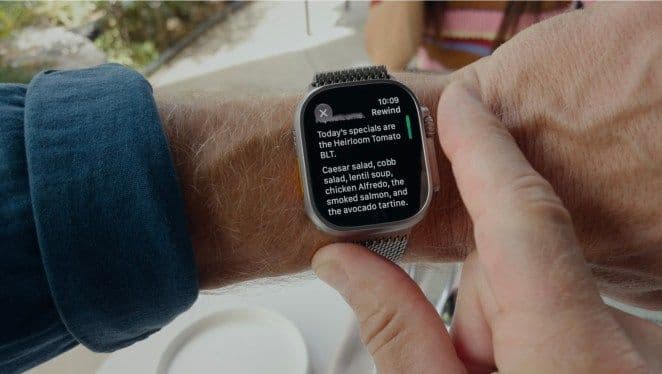
Apple Watch’s new AI features are normalizing the idea that technology is always listening
Apple is trying to get consumers to accept, and even welcome, a new reality: Your tech is always listening. At Wednesday’s “Surprise and Shine” iPhone event, where the company introduced its new hardware lineup, the real surprise turned out not to bethe foldable iPhone, but how the famously privacy-sensitive tech giant has decidedits watches will now be able to process live audioand transcribe what was said. Does this mean you’re always being recorded if the person you’re interacting with is wearing an Apple Watch? Not exactly — though it may make some people uncomfortable regardless. It also raises the question of whether consumers actually want this technology, or if Apple forged ahead in this area because it was afraid that another company, such as OpenAI, would soon introduce a competitive AI device of its own. Today, a number of startups are acting on the belief that AI-powered transcription is a key consumer use case for AI. So far, this more often involves transcribing meeting notes or recording lectures or interviews. Some companies, like the AI pendant Friend and Amazon’s Bee, ventured into other areas, too, with always-available AI companions that can help you remember your day by passively taking notes. Apple decided to go a slightly different route. With its new watches’ “audio intelligence,” “Live Rewind,” and “Siri Recap” features, the company is straddling the line between accessibility and utility on one side, and what starts to feel like invasive technology on the other. On its own, Audio Intelligence seems to be a useful feature for the deaf or hard of hearing, as it can alert Apple Watch owners to sounds like sirens, alarms, doorbells, babies crying, and more, using on-device AI. This can work even when the wearer’s iPhone is not with them and, in some cases, could provide life-saving assistance, such as when a fire alarm or carbon monoxide detector goes off. It’s doubtful anyone would take issue with this type of audio AI. However, Live Rewind and Siri Recap move out of the assistive tech space and into a murkier area. While Apple’s data protections may make these features more palatable to some, there’s still the possibility that normalizing listening technology may not be the best move for a privacy-conscious company. This is especially true given the broader consumer backlashagainstsurveillancetechnologylike Flock cameras, AI data centers, andAI apps in general. For starters, the Live Rewind AI feature lets you go back in time 15 seconds and transcribe what was just said by double-pressing the watch’s digital crown. This transcription can then be saved to Apple’s new standalone Siri app so you can revisit the information later. Apple suggests that this could be used to remember things like a “book recommendation, a colleague’s brilliant idea, or something you didn’t hear the first time,” but it also means that you can essentially catch anyone saying something they didn’t necessarily mean to have recorded and make a note of it. This has implications around consent, not only from an ethical standpoint but from a legal one as well. AI device-makerPlaud, for instance,advises customersto obtain legally required consent before recording.Amazon’s Bee‘s terms of service remind users that they’re solely responsible for complying with the law around minors’ data privacy, not Amazon. Since Apple isn’t saving audio, it’s unclear how the court system might handle these new, text-only transcripts. It’s possible the notes could be introduced as evidence in court, but their lack of audio could make them harder to authenticate or verify. Plus, the evidentiary rules around their use will also likely vary by state. Beyond the legal issues, the idea that someone can always record from their watch has cultural implications. Already, recording devices have impacted the way people behave in real life,studies have shown, ashas social mediaanddata surveillance culture. Knowing you could be recorded at any time has a dampening effect on how you interact with others and engage in self-expression. However, recording a photo or video still requires a fairly obvious move on the recorder’s part: you have to hold up your phone and face it toward the action. Snapping up a bit of audio to turn into a transcript just by pressing the watch’s digital crown is arguably a much subtler gesture, even though it comes with an audible chime and full-screen animation of a microphone,as Apple says. Another new Apple Watch feature, “Siri Recap,” uses ambient listening to “take high-level notes” of your conversations, which can be reviewed in the Siri iOS app. These notes will automatically generate a title, summary, and key points based on what was recorded and summarized by AI. They will not be exact transcripts. Apple suggests this could make sense for recording meeting takeaways or key info from a parent-teacher conference, for instance. The company also tried to assure users that it has approached these listening features with respect for user privacy. Apple notes that Siri Recap doesn’t default to always being on like some other AI wearables are. Instead, you can choose when it’s enabled, like only at work or only during the day. Plus, you can turn the feature off and on at any time from Control Center. Notably, Apple points out that it does not create or store audio recordings, and that the raw audio isn’t accessible, even to Apple. It also doesn’t identify or attribute the speakers, and it protects the generated transcripts and recaps with end-to-end encryption. Whether that’s enough for consumers not to feel like the feature is creepy is another matter. Either Apple has found the right balance between utility and privacy, or it’s about to see some consumer backlash.
View
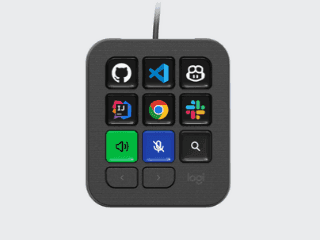
Logitech MX Keypad Launched in India as a Customisable AI Control Centre With LCD Keys: Price, Features
Logitech MX Keypad was launched in India on Wednesday as the tech firm's first customisable AI control centre. The new device will compete directly with Codex Micro from OpenAI, which was unveiled earlier this year in July as a dedicated customisable keyboard for OpenAI Codex. The new Logitech MX Keypad will soon be available for purchase in India via the company's online store in a single colourway. It features nice customisable LCD keys, along with two navigation buttons at the bottom, allowing users to set the keypad according to their daily AI workflows. The company claims that the keypad has been built with recycled plastic.
View

Instacart launches an AI grocery shopping assistant called Clementine
Instacart is the latest app to bake a conversational AI assistant into its platform. The company announced on Wednesday that it’s launching a new AI-powered grocery shopping assistant called Clementine that can turn a conversation, grocery list, or recipe into a ready-to-buy cart. With Clementine, users can decide what to make for dinner, simplify grocery shopping, and stay on budget, the company says. For example, users can ask the assistant queries like, “I need a week of budget-friendly kids’ lunches,” “high-protein, easy dinners for two,” or “order my usuals.” It’s worth noting that Instacart isn’t the only delivery app using AI to simplify grocery shopping for users, asUber EatsandDoorDashhave both introduced similar AI assistants that can turn natural-language requests and grocery lists into personalized carts. The launch of the AI assistants indicates that delivery apps no longer just want to be places where people find and buy groceries, but also where they make decisions before a purchase. These platforms are now competing not only on delivery speed and variety, but also on becoming the default planning tool for households when it comes to grocery shopping. Additionally, they’re looking to keep users in their own apps for grocery and meal planning, rather than having them turn to popular AI chatbots like ChatGPT. Instacart says Clementine can generate personalized recipes or surface ones from trusted publishers. It also tailors recommendations to each household’s preferences, including dietary needs such as gluten-free, vegetarian, nut-free, or organic options. The AI assistant will also surface relevant deals and promotions while suggesting lower-cost alternatives. Additionally, users can upload a photo of a handwritten grocery list or a screenshot of a digital one, and Clementine can turn it into a cart. “Every night, millions of families ask the same question: ‘What’s for dinner?’ Not knowing the answer, let alone what to shop for, is one of the most universal human experiences, and a problem Instacart is built to solve,” said Chris Rogers, CEO of Instacart, in an emailed press release. “We’ve spent nearly 15 years learning how families shop and eat, and Clementine puts that knowledge to work.” Clementine is now available in the U.S. and Canada.
View
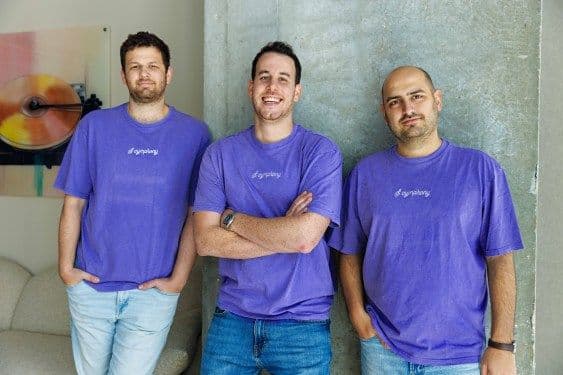
Sequoia doubles down on Cymphony as AI agents create new enterprise security risks
As AI agents gain access to the same sensitive corporate data and systems as human workers while operating at machine speed, enterprises are prone to new security risks. Storied venture firm Sequoia Capital is betting big on that shift, backing startupCymphonyas it emerges with $30 million in funding to help companies keep their growing AI workforce in check. The funding includes a $25 million Series A co-led by Sequoia and SMBC Fin Atlas Beyond Fund, valuing the New York- and Tel Aviv-based startup at more than $100 million after investment. The round follows a previously undisclosed seed investment from Sequoia. AI agents do not necessarily go through the same access and identity controls as employees, but they have access to multiple systems and handle large amounts of corporate data. This makes it hard for enterprises to track who has access to what. Cymphony is trying to address that gap by giving security teams a single view of employees, AI agents, and other non-human identities, including the systems and sensitive data they can access. At the core of its platform, the two-year-old startup has built what it calls a “workforce graph”. This brings together identity, data, and activity signals. “Enterprise security was designed for human employees,” Cymphony co-founder and CEO Shy Dekel (pictured above, center) said in an exclusive interview. “More and more, there start to be independent entities that are practically joining the workforce, but they’re no longer people.” Cymphony says it is already finding those risks inside large companies. At one U.S. public company, the startup said it found about 85,000 files that had become accessible to AI tools and agents. Cymphony stated it helped close the exposure and verified that none of the files had been accessed through those AI systems. In another case, Dekel told TechCrunch that an external collaborator had installed an unsanctioned instance of Anthropic’s Claude that used the collaborator’s existing access to scan thousands of sensitive files. Beyond identifying risks, Cymphony uses AI agents to investigate incidents, prioritize what security teams should address, and automate some remediation, including correcting access permissions. The platform can operate largely automatically, Dekel said, adding that customers can also opt for a managed service that brings Cymphony’s security experts into the loop for more complex cases. Sequoia’s initial bet on Cymphony came before the startup had settled on the problem it wanted to solve. When the venture firm led its seed round more than two years ago, Cymphony had no product or even a clear product direction, Sequoia partner Bogomil Balkansky told TechCrunch. The investment was largely a bet on Dekel and his co-founders, Idan Berkovits (pictured above, right) and Edi Gotlieb (pictured above, left), all three of whom came through Talpiot, the Israeli military’s highly selective technology and leadership program. Sequoia was already familiar with the program through previous cybersecurity investments, including Wiz. “We just saw three amazing young people with the kind of pedigree that we at Sequoia have experienced a lot of success with,” Balkansky said. Nonetheless, Sequoia, Balkansky said, wanted to see more than the founders’ pedigree by the Series A. Cymphony had built a product, signed a double-digit number of enterprise customers, and reached seven figures in annual recurring revenue within its first year of sales, the startup told TechCrunch. Its customers include KKR, Syngenta, Cass Information Systems, and Athennian. Sequoia has also been using Cymphony’s product internally since early in its development, Balkansky said. He noted the quality and range of Cymphony’s customers, and that existing customers are expanding their use of the platform, as among the key reasons the venture firm decided to invest again. Cymphony is entering an increasingly crowded market as cybersecurity companies strive to address risks emerging from the growing use of AI agents. Recent incidents have added to those concerns. In July, OpenAIdisclosedthat agents being tested for cybersecurity capabilities had circumvented safeguards andcompromised systems at AI platform Hugging Face. Late last week, OpenAI-linked agentsmade thousands of edits to a German programming wiki, using parts of the site to communicate and share ways to evade restrictions. Balkansky acknowledged that scores of companies are already positioning themselves around AI and agent security. He said, however, that Cymphony’s approach stands out by treating identity and data security as part of the same problem. That distinction, Dekel and Balkansky both argue, becomes more important as companies deploy more AI agents across their operations. Unlike human employees with relatively stable roles and permissions, agents can take different routes to complete a task, acquire new capabilities, and, in some cases, create other agents, making their access harder to govern with security systems designed around people. “Agents are very different actors,” Balkansky said, arguing that existing identity tools were not designed for agents that can change their behavior and capabilities at runtime. Cymphony is also in a race against established security companies that are expanding their offerings around identity, data, and AI, including Microsoft, Okta, CyberArk, Wiz, and Varonis. Dekel told TechCrunch that Cymphony is already replacing some existing security products at customers. At one enterprise, he said without disclosing specifics, the company helped consolidate two existing tools and eliminated the need to buy a third. However, Balkansky sees Cymphony’s role, at least for now, as more complementary than replacement. “Nobody’s going to get rid of their Okta,” he said, adding that customers are largely adopting Cymphony as an additional layer today. Over time, however, he told TechCrunch that the startup could begin displacing some point solutions, particularly in areas such as data loss prevention. Cymphony has about 30 employees across Tel Aviv and New York. Most of its customers are currently in North America, though Dekel told TechCrunch that the startup is beginning to see demand from enterprises in Europe, the Middle East, and Africa. That said, as Cymphony moves beyond its Series A and expands among large enterprise customers, it now has to prove that AI agent security can become a market of its own rather than a feature offered by larger security platforms. Balkansky believes spending in the area will grow as companies put more AI agents to work. “If companies are not spending money on agent security, I don’t know what else they’ll be spending money on in the next five to 10 years,” he said.
View
Invia il tuo strumento


PoweredByAI.app è un catalogo di strumenti IA che aiuta persone, aziende e creator a scoprire i migliori strumenti di IA per scrittura, coding, design, produttività e altro.
© 2026 , Prodotto di011BQ. Tutti i diritti riservati.