

Ini alat AImu? Klaim hari ini.
Verifikasi kepemilikan, kelola profilmu, dan buka fitur pertumbuhan.
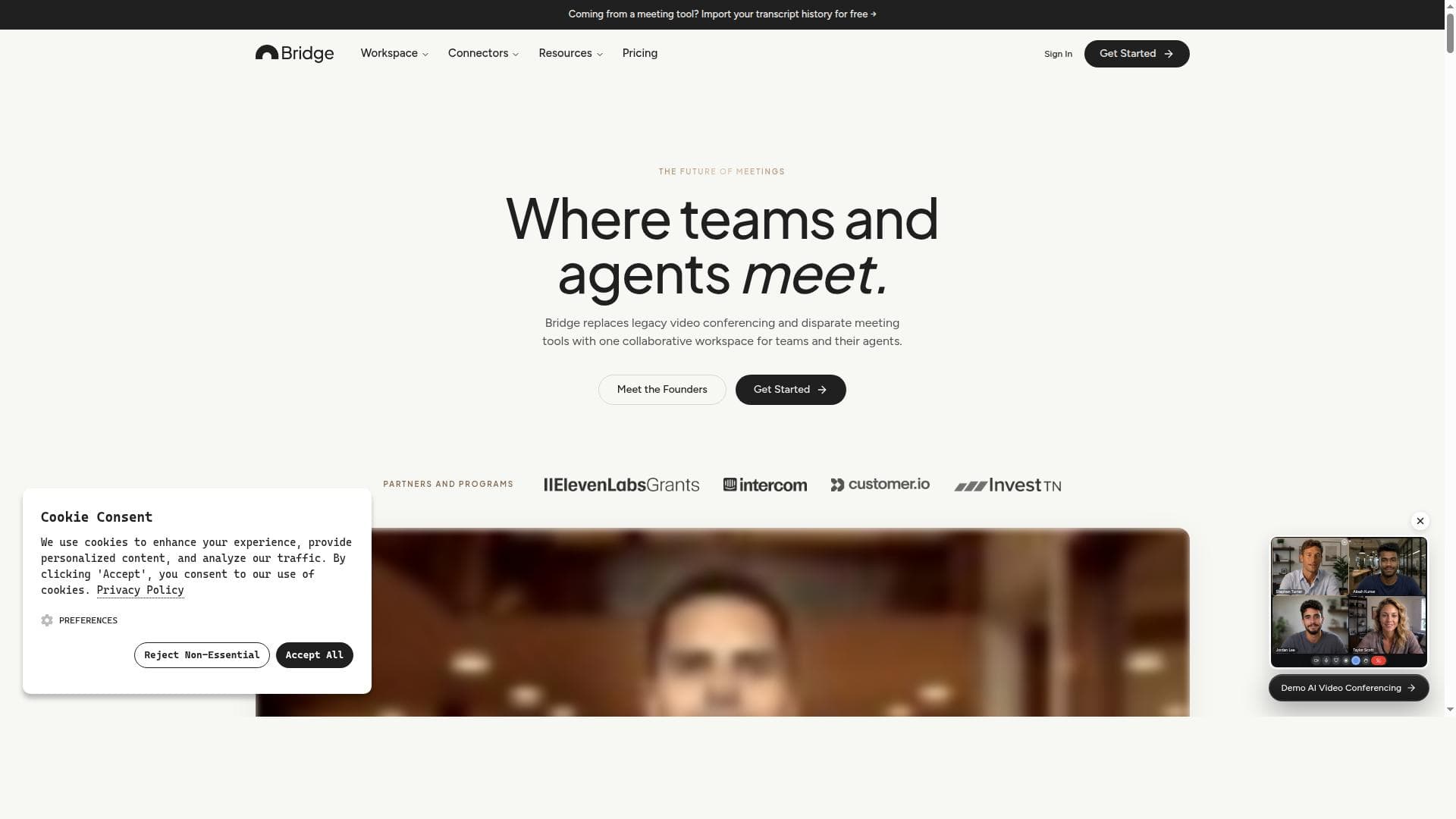
Bridge is a cutting-edge collaborative workspace that unifies human and AI interactions in one platform, replacing traditional video conferencing and fragmented meeting tools. Ideal for teams seeking enhanced productivity through seamless human-AI collaboration, Bridge transforms meetings into interactive, outcome-driven sessions.

Deskripsi
This launch marks a new era for Bridge: one agentic meeting platform replacing the fragmented meeting stack. Bridge now brings scheduling pages, automatic preparation, video conferencing, live intelligence, AI notetaking, agentic workflows, and structured memory into one connected experience for people and agents. At the center of this launch is a new kind of video conferencing built for customizable AI agents to join and participant in meetings.
Deskripsi Detail
Bridge is an innovative collaborative workspace designed specifically to facilitate human-AI meetings, revolutionizing the way teams interact with artificial intelligence agents. Its core purpose is to replace traditional legacy video conferencing platforms and the fragmented assortment of meeting tools by offering a unified, integrated environment where human team members and AI agents can collaborate seamlessly. This integrated approach not only streamlines communication but also enhances productivity by consolidating all meeting-related activities into a single platform. At the heart of Bridge’s capabilities is its ability to unify multiple meeting tools and communication channels into one cohesive workspace. Unlike conventional video conferencing solutions that focus solely on video and audio communication, Bridge supports dynamic collaboration between human participants and AI agents, enabling real-time interaction, decision-making, and task automation within the same environment. This means teams can leverage AI-driven insights, automate routine meeting tasks, and maintain a continuous workflow without switching between disparate applications. The platform’s design emphasizes ease of use, allowing users to conduct meetings, share documents, assign tasks, and interact with AI assistants all within a single interface. Bridge’s key features include the replacement of legacy video conferencing tools with a modern, unified workspace that supports both synchronous and asynchronous collaboration. It integrates multiple meeting tools, such as chat, document sharing, task management, and AI agent interaction, into one platform, reducing the need for multiple subscriptions and minimizing workflow disruptions. The platform is optimized for human-AI meetings, facilitating enhanced productivity by allowing AI agents to participate actively—whether by summarizing discussions, providing data-driven recommendations, or automating follow-up actions. This capability transforms meetings from passive communication events into interactive, outcome-oriented sessions. Bridge is best suited for teams and organizations that rely heavily on collaboration and want to harness the power of AI to augment their meeting effectiveness. This includes remote and hybrid teams, project managers, product development groups, and enterprises looking to modernize their communication infrastructure. Use cases range from brainstorming sessions enhanced by AI-generated insights, to project status meetings where AI agents track progress and suggest next steps, to customer support teams leveraging AI to analyze conversation trends in real time. Its integrated environment is particularly valuable for teams that struggle with tool fragmentation and want a streamlined, AI-augmented meeting experience. Regarding pricing, Bridge offers a tiered subscription model tailored to different organizational needs, although specific pricing details are typically available on their website or through direct inquiry. Potential users can expect plans that scale from small teams to large enterprises, with features and AI capabilities expanding accordingly. While the platform may offer trial periods or demos, prospective customers should check the official Bridge website for the most current information on free trials and onboarding support. When compared to traditional video conferencing tools like Zoom or Microsoft Teams, Bridge stands out by embedding AI agents directly into the meeting workflow, rather than treating AI as an external add-on. This integration reduces context switching and enhances meeting outcomes by providing actionable intelligence during discussions. Unlike standalone AI meeting assistants, Bridge’s unified workspace approach eliminates the need for multiple apps, creating a more cohesive user experience. However, organizations heavily invested in existing ecosystems may face some integration challenges initially, and the learning curve for teams new to AI collaboration tools should be considered. Notable limitations include the platform’s reliance on internet connectivity and the maturity of AI agents in handling complex, domain-specific tasks. While Bridge excels at general collaboration and AI-assisted meetings, highly specialized industries may require custom AI integrations beyond the out-of-the-box capabilities. Additionally, as a relatively new entrant founded in 2025, Bridge’s ecosystem and third-party integrations are still expanding, which may affect adoption in environments requiring extensive legacy system compatibility. Users should evaluate their specific collaboration needs and AI readiness before fully committing. In summary, Bridge offers a forward-thinking solution for modern teams seeking to enhance their meeting productivity through seamless human-AI collaboration. Its unified workspace replaces fragmented tools with an integrated platform that supports real-time interaction between humans and AI agents, making it a compelling choice for organizations aiming to innovate their communication and collaboration strategies.
Fitur Alat
- Replaces legacy video conferencing with a unified workspace
- Supports collaboration between teams and AI agents
- Integrates multiple meeting tools into one platform
- Facilitates human AI meetings for enhanced productivity
Deskripsi
Bridge is a cutting-edge collaborative workspace that unifies human and AI interactions in one platform, replacing traditional video conferencing and fragmented meeting tools. Ideal for teams seeking enhanced productivity through seamless human-AI collaboration, Bridge transforms meetings into interactive, outcome-driven sessions.
This launch marks a new era for Bridge: one agentic meeting platform replacing the fragmented meeting stack. Bridge now brings scheduling pages, automatic preparation, video conferencing, live intelligence, AI notetaking, agentic workflows, and structured memory into one connected experience for people and agents. At the center of this launch is a new kind of video conferencing built for customizable AI agents to join and participant in meetings.
Deskripsi Detail
Bridge is an innovative collaborative workspace designed specifically to facilitate human-AI meetings, revolutionizing the way teams interact with artificial intelligence agents. Its core purpose is to replace traditional legacy video conferencing platforms and the fragmented assortment of meeting tools by offering a unified, integrated environment where human team members and AI agents can collaborate seamlessly. This integrated approach not only streamlines communication but also enhances productivity by consolidating all meeting-related activities into a single platform. At the heart of Bridge’s capabilities is its ability to unify multiple meeting tools and communication channels into one cohesive workspace. Unlike conventional video conferencing solutions that focus solely on video and audio communication, Bridge supports dynamic collaboration between human participants and AI agents, enabling real-time interaction, decision-making, and task automation within the same environment. This means teams can leverage AI-driven insights, automate routine meeting tasks, and maintain a continuous workflow without switching between disparate applications. The platform’s design emphasizes ease of use, allowing users to conduct meetings, share documents, assign tasks, and interact with AI assistants all within a single interface. Bridge’s key features include the replacement of legacy video conferencing tools with a modern, unified workspace that supports both synchronous and asynchronous collaboration. It integrates multiple meeting tools, such as chat, document sharing, task management, and AI agent interaction, into one platform, reducing the need for multiple subscriptions and minimizing workflow disruptions. The platform is optimized for human-AI meetings, facilitating enhanced productivity by allowing AI agents to participate actively—whether by summarizing discussions, providing data-driven recommendations, or automating follow-up actions. This capability transforms meetings from passive communication events into interactive, outcome-oriented sessions. Bridge is best suited for teams and organizations that rely heavily on collaboration and want to harness the power of AI to augment their meeting effectiveness. This includes remote and hybrid teams, project managers, product development groups, and enterprises looking to modernize their communication infrastructure. Use cases range from brainstorming sessions enhanced by AI-generated insights, to project status meetings where AI agents track progress and suggest next steps, to customer support teams leveraging AI to analyze conversation trends in real time. Its integrated environment is particularly valuable for teams that struggle with tool fragmentation and want a streamlined, AI-augmented meeting experience. Regarding pricing, Bridge offers a tiered subscription model tailored to different organizational needs, although specific pricing details are typically available on their website or through direct inquiry. Potential users can expect plans that scale from small teams to large enterprises, with features and AI capabilities expanding accordingly. While the platform may offer trial periods or demos, prospective customers should check the official Bridge website for the most current information on free trials and onboarding support. When compared to traditional video conferencing tools like Zoom or Microsoft Teams, Bridge stands out by embedding AI agents directly into the meeting workflow, rather than treating AI as an external add-on. This integration reduces context switching and enhances meeting outcomes by providing actionable intelligence during discussions. Unlike standalone AI meeting assistants, Bridge’s unified workspace approach eliminates the need for multiple apps, creating a more cohesive user experience. However, organizations heavily invested in existing ecosystems may face some integration challenges initially, and the learning curve for teams new to AI collaboration tools should be considered. Notable limitations include the platform’s reliance on internet connectivity and the maturity of AI agents in handling complex, domain-specific tasks. While Bridge excels at general collaboration and AI-assisted meetings, highly specialized industries may require custom AI integrations beyond the out-of-the-box capabilities. Additionally, as a relatively new entrant founded in 2025, Bridge’s ecosystem and third-party integrations are still expanding, which may affect adoption in environments requiring extensive legacy system compatibility. Users should evaluate their specific collaboration needs and AI readiness before fully committing. In summary, Bridge offers a forward-thinking solution for modern teams seeking to enhance their meeting productivity through seamless human-AI collaboration. Its unified workspace replaces fragmented tools with an integrated platform that supports real-time interaction between humans and AI agents, making it a compelling choice for organizations aiming to innovate their communication and collaboration strategies.
Pertanyaan yang Sering Diajukan
What is Bridge?
Bridge is a collaborative workspace designed to facilitate human-AI meetings by replacing legacy video conferencing and disparate meeting tools with a unified platform where teams and AI agents can collaborate effectively.
How much does Bridge cost?
Bridge offers tiered subscription plans tailored to different organizational sizes and needs. For detailed pricing information, it is best to visit the official Bridge website or contact their sales team directly.
Who is Bridge best for?
Bridge is ideal for remote and hybrid teams, project managers, product development groups, and enterprises looking to enhance collaboration by integrating AI agents directly into their meeting workflows.
What are the main features of Bridge?
Key features include replacing legacy video conferencing with a unified workspace, supporting collaboration between human teams and AI agents, integrating multiple meeting tools into one platform, and facilitating enhanced productivity through human-AI meetings.
Does Bridge offer a free trial?
Information about free trials or demo availability is typically provided on Bridge’s official website. Interested users should check there for the most current offerings.
What integrations does Bridge support?
Bridge integrates multiple meeting tools and communication channels into one platform, though specific third-party integrations are expanding as the platform evolves. Users should consult Bridge’s documentation or support for up-to-date integration details.
How does Bridge work?
Bridge works by providing a unified collaborative workspace where human team members and AI agents interact in real time. It consolidates video conferencing, chat, document sharing, and AI-driven assistance into a single platform to streamline meetings and enhance productivity.
Ulasan
Belum ada ulasan. Jadilah yang pertama berbagi pengalamanmu.