🚀 Zaprep: Sosialmu Supercharged. Mulai gratis — otomasi 1.000 DM/bulan & ubah engagement jadi lead. dengan 1.000 DM otomatis/bulan.
Kirim Alatmu
PoweredByAI.app adalah Direktori Alat AI yang membantu individu, bisnis, dan kreator menemukan alat AI terbaik untuk menulis, coding, desain, produktivitas, dan lainnya.
© 2026 , Produk dari011BQ. Hak cipta dilindungi.

The company said the new chip delivers three times the performance of the preceding M890 and can be deployed in clusters containing up to 500,000 chips for frontier-model training and inference.
View

The company is now establishing an independent Advisory Group on Mathematics and Artificial Intelligence, hosted at the Institute for Advanced Study.
View

Ireland’s data protection regulator fined Google for violating EU privacy rules over how it processed users’ location data between 2018 and 2020.
View

Enterprises now want GCC partners that can combine domain expertise, technology, and execution while taking greater ownership of outcomes.
View

The University of Cincinnati's online MS in Business Analytics is a STEM programme offered through the AACSB-accredited Lindner College of Business.
View

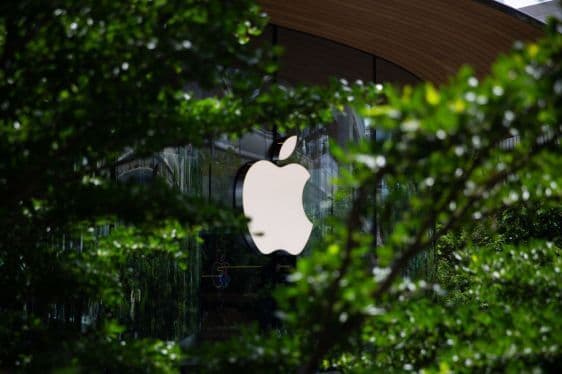
While Silicon Valley is spending billions to make AI agents shop for us, the man who pioneered Apple’s retail stores thinks the industry is overestimating how much of shopping people will hand over to machines — and believes physical stores will continue to thrive. Ron Johnson, 66, has heard predictions about the demise of physical retail before. He joined Apple in 2000 to build its retail business as online shopping was beginning to take off, and went on to help create a store network that became central to how Apple sells its products and connects with customers. “AI is a new technology that will improve the online shopping experience,” Johnson said in an interview. “But I don’t know that it’s going to change which way we shop.” Johnson’s view comes as some of the world’s biggest tech companies are trying to push AI deeper into shopping, betting that agents can automate more of how we find and buy items — a concept commonly calledagentic commerce. Google is making that push with itsUniversal Commerce Protocol, a standard designed to help AI agents take consumers from product discovery to checkout. OpenAI, meanwhile, isturning ChatGPT into a shopping destinationwhere users can research, compare, and, in some cases, even buy products without leaving the chatbot. Asked whether he could imagine someone letting an agent choose and buy a $1,000 or $2,000 laptop without ever visiting a website or store, Johnson was unequivocal: “Honestly, nobody’s going to do that.” Buying a laptop, he argued, is too personal a purchase to simply delegate to an AI agent. Buyers want to feel its weight, see the display and decide which size works for them. AI may narrow the choices, Johnson told TechCrunch. He added that many consumers would still want to experience the product themselves before spending that kind of money. “AI will never be able to have you physically experience a product,” Johnson said. Instead, he expects agents to better inform consumers before they walk into a store. “They’ll just become more informed shoppers when they come to the store.” Johnson’s conviction stems from a decision Apple made more than two decades ago. Apple’s physical stores, he said, were designed not only as places to buy Macs, but also as places where people could try products, learn how to use them, and return for help when something went wrong. Some of those bets are revisited inShop Different: How Retail Revealed Apple’s Genius, Johnson’s new book about building Apple’s retail operations alongside Steve Jobs. Competitors, he said, borrowed Apple’s glass-heavy design, open layouts, and even versions of the Genius Bar, but often missed the people. “The secret sauce for Apple has always been its people, the people in the store, and how they treat the customer,” Johnson said. Apple Store employees are not paid on commission, Johnson said, unlike the sales culture common across much of retail. The idea, he said, was to remove the pressure to sell and instead have employees figure out what a customer actually needed. After leaving Apple, Johnsontook overJ.C. Penney in 2011 with an ambitious plan to reinvent the struggling department-store chain. He wasoustedless than two years later after sales plunged. Johnson now says he tried to change too much, too quickly, without bringing employees and customers along. Apple’s stores had effectively been a startup that evolved alongside the company’s products. J.C. Penney, on the other hand, was a turnaround that required a different approach. “I applied a startup mentality to what needed to be a turnaround transformation,” he recalled. Johnson laterreturned to the startup world, founding Enjoy Technology, an e-commerce company that brought technology products and setup services directly to customers’ homes. The startupfiled for bankruptcy in 2022and sold substantially all of its assets to Asurion. For all his skepticism about how AI will reshape shopping, Johnson remains bullish on the technology itself. “I’m a real believer in AI. I’m an AI optimist,” he said. He believes Jobs would have embraced AI, too, but not as a substitute for human judgment. “There’s no substitute for human intuition,” Johnson said, recalling Jobs’ belief in bringing smart people together to debate problems and find new ways of looking at them.

Sunday night, users of Meta’s AI assistant Muse started getting a strange error message when they tried to buy goods on Amazon.As spotted by GeekWire, the error message read: “Continued access by an unauthorized AI agent violates Amazon’s Conditions of Use, to which our customers have agreed.” In other words, Muse isn’t welcome as a shopper — and anyone trying to buy something on Amazon through the AI agent will have to find it somewhere else. It’s easy to see the block as a tête-à-tête between tech giants. Amazon hasits own cohort of foundation models, after all, along withone of the most popular inference platforms on the internet. As long as they’re under no legal obligation to open the doors to Muse, why would they? But there are also substantive reasons Amazon might not want to be in the agentic commerce business just yet. If Muse makes a bad order, Amazon is going to be the one to clean it up — dealing with both the angry customer and the angry vendor. Muse hasone of the lower hallucination rates, as AI models go, but it’s still pretty far from zero. Even if Amazon sees an opportunity in agent-driven commerce, they may want to wait a few more release cycles before rolling anything out.
View

Meta’s latest AI app, Muse, could be the social giant’s next major hit, new data suggests. According to just- released estimates from market intelligence providerApptopia, Muse’s app on mobile devices has been downloaded more times during its first 12 days on the market than ChatGPT was in the 12 days after its debut. (This data compares the U.S. and Canada markets only.) Muse also has more daily active users than ChatGPT had at the time, the firm found. Until now, it had been difficult to make an exact apples-to-apples comparison between these two apps, given that they had pursued different launch strategies. When ChatGPT arrived on mobile, it was made available globally, but only on iOS. Muse, meanwhile, is available across both Apple’s App Store and Google Play, but only in the U.S. and Canada. To better align the numbers for comparison, Apptopia looked only at the iOS data for the U.S. and Canada for both apps during the first 12 days of their respective launches. In this subset of the data, Muse has now seen 1.8 million downloads to ChatGPT’s 1.3 million. Overall, Muse has seen 2.8 million total installs globally in its first 12 days, the firm also said. Its growth hasn’t yet stagnated, either; Muse has moved up from its original position as No. 2 overall on the U.S. App Store immediately after its launchto now No. 1, asBusiness Insider reportedon Friday. That jump put the app higher than ChatGPT, the outlet noted. Another firm,Appfigures, said at the time that Muse had then crossed 1 million downloads. In addition, Apptopia’s data indicates that Muse’s U.S. daily active users are now higher than they were for ChatGPT at the same point after its launch. When comparing just the U.S. mobile app daily active users, Muse comes in higher with 642,000 daily users compared with 231,000 for ChatGPT at the time. To be fair to the fact that Muse is available across both iOS and Android, while ChatGPT launched on iOS only, Apptopia narrowed the comparison to iOS alone. Yet, even here, Muse is coming in higher, with 359,000 daily active users on iOS, still above ChatGPT’s figures from that time period. Apptopia can only provide third-party estimates about an app’s downloads and active users; it doesn’t have direct access to Meta’s internal figures. But even if these numbers are only correct from a general “ballpark” perspective, they indicate that Muse could have a shot at becoming Meta’s newest top app. Meta already perfected its cross-promotion strategy when it launched Instagram’s Threads, whichnow has 500+ million users,thanks to heavy marketing and integrations in Meta’s largest apps, including Instagram and Facebook. Muse is likely to get a similar push, given that the AI app can connect with both of those platforms. It also works inside WhatsApp, so that could give it another boost. While Apptopia doesn’t have visibility into Meta’s cross-promotion efforts or ads directly, it did note that over 95% of Muse’s users are also Facebook users and 63% are Instagram users. Meta, which has been asked for comment, has not yet shared public figures related to Muse’s early adoption. Correction: An earlier version of this article referenced the analytics firm Appfigures as a source for data from Apptopia. This has been fixed.

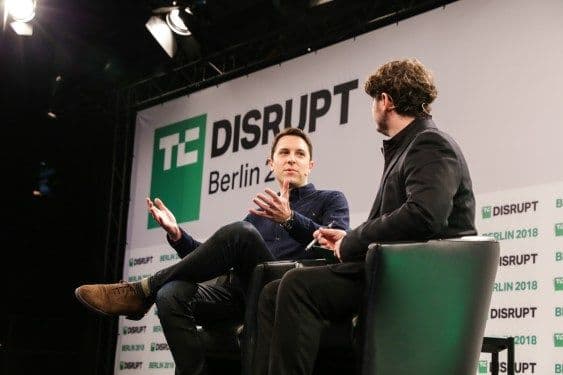
With five days left to save up to $200 on yourTechCrunch Disrupt 2026pass, each day we will list a reason why you should join 10,000+ founders, investors, and operators at San Francisco’s Moscone West on October 13-15. Grab your ticket savings before prices go up on September 25 at 11:59 p.m. PT. Plus, get a second of the same ticket type at 50% off.Register now. Part of the value of Disrupt has always been finding breakouts early. The startup you haven’t heard of yet. The technology moving from experiment to real product. The founder attacking a problem in a way you hadn’t considered. Or an emerging category that suddenly looks much bigger once you see several companies building around it. Startup Battlefield 200puts 200 TechCrunch-selected early-stage companies in one place, giving you three days to see what a new generation of founders thinks is worth building, and what investors are looking to add to their portfolio. Early-stage startups can be useful signals. Look across enough of them, and you start to see where founders are finding opportunity, which technologies are becoming accessible, which old problems are being attacked in new ways, and where completely new markets might be taking shape. At Disrupt, all 200 Startup Battlefield startups exhibit, so you can go beyond the company description. Meet the founders. See the product. Ask why they’re building it. Find out who they’re building it for. Understand what they think the rest of the market is missing. For investors, that can mean new deal flow and emerging categories to watch. For founders, it’s a chance to see what other early-stage teams are building and how they’re approaching the market. For operators and tech leaders, it can mean discovering a future supplier, partner, or solution before it reaches the wider market. Sometimes discovery is about finding a company. Sometimes it’s about spotting the pattern behind several of them. From the top 200 companies, 20 will take theDisrupt Stageto pitch live in front of leading investors and the TechCrunch community. One will ultimately take home the Disrupt Cup and $100,000 in equity-free funding. Explore all the Startup Battlefield onstage sessions on theDisrupt agenda. But the value of watching goes beyond who wins — you get to see emerging companies explain why their problem matters, why their approach is different, and why they believe they can build something much bigger. Then you hear the questions investors ask in return. For anyone building, backing, or evaluating startups, it’s a fast way to understand what turns an interesting idea into a company people want to pay attention to. Don’t miss this intense pitch competition and the opportunity to see who’s making waves next in the tech industry.Register now to save up to $200, and bring your colleague, co-founder, or partner with you at 50% off their ticket. Startup Battlefield alumniinclude companies that went on to become familiar names across the technology industry, including Dropbox, Discord, Cloudflare, Fitbit, Mint, and Trello, with a collective total fundraising of $32 billion since this program started. Nobody knows which members of the 2026 class will follow that path. Discovery is most valuable before the answer is obvious. Meet these 200 hand-picked startups. Talk to companies outside your usual sector. Watch the finalists pitch on the Disrupt Stage. Look for the technologies, business models, and problems that keep appearing. You might find your next investment, partner, or product. You might spot an emerging market before it reaches your everyday feed. Or you might simply find one startup that changes how you think about what comes next. CurrentTechCrunch Disrupt 2026ticket savings end September 25 at 11:59 p.m. PT.Register nowto save up to $200 on your pass and save 50% on a second pass. Or bring a group of four or more to save up to 30%. Five days to save. A multitude of reasons to join 10,000+ tech leaders in San Francisco. Learn more about all of Disrupt’s activations and the reason it’s been the startup epicenter for at least 15 years.Grab your ticket before prices go up.

On Monday, OpenAI announced a new independent advisory group hosted at the Institute for Advanced Study in Princeton, New Jersey. Called theAdvisory Group on Mathematics and Artificial Intelligence, the group is meant to give mathematicians more input into the company’s math-oriented research. “This group will serve as a bridge to the mathematical community and broader public, giving mathematicians a voice in how we move forward,” the post reads. The announcement comes after the abrupt publication ofa solution to the Navier-Stokes Millennium Prize problem. As part of the announcement of the new group, OpenAI also claims that the same internal model has resolved more than 100 additional open problems across most areas of mathematics. Many prominent mathematicians have taken issue with the frenzied pace of those results. Earlier this month, 25 Fields Medal-winning mathematicians signedan open letterarguing that AI labs are threatening their intellectual work as they seek to one-up each other with solutions to famous math problems. True to its name, OpenAI’s new group will mostly serve in an advisory capacity, assessing the significance of new results and coordinating their release. While members won’t be paid, they can offer unsolicited advice, go public with their views, and control their own membership, giving them a measure of independence from the company. However, the group won’t be given leeway to slow down or redirect OpenAI’s ongoing mathematical research. As the blog post puts it, “the group will not be responsible for advising us on how to pace our internal progress on mathematics.” The Institute for Advanced Study emphasized this point in its own announcement. “Although we will give advice, we do not have decision making power at any AI company, and the responsibility for the decisions made by any company will rest with that company,”saidthe institute in a press release. Nine prominent mathematicians have been named as initial members of the group. Notably, only one of the members — IAS’s Camillo De Lellis — also signed the Fields Medalists’ letter.
View

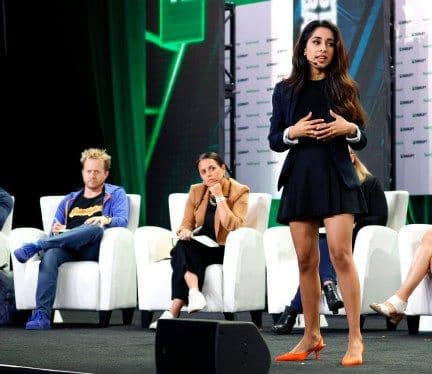
For founders, Startup Battlefield 200 is one of the biggest moments of their careers. For everyone else in theTechCrunch Disrupt 2026audience, it’s one of the best ways to learn how great companies are actually evaluated by VCs. This startup pitch competition is as intense as you’d expect. From October 13–15 at San Francisco’s Moscone West, every hand-picked founder has six minutes to make their case, but the most revealing moments often come after the presentation ends. That’s when the judges start asking the questions every investor, customer, and future employee will eventually want answered. Can this team execute? Is the market big enough? Why now? What’s defensible? Those conversations are as valuable for the thousands of founders watching from the audience as they are for the companies on stage. That’s why we’re continuing to build one of the strongest judging panels in Startup Battlefield’s history. Today we’re excited to introduce another group of five top-tier investors who’ll help identify the companies with the potential to become tomorrow’s breakout success stories. Join the Startup Battlefield contenders and VC judges on the main stage, alongside 10,000+ tech leaders attending Disrupt, and watch the next generation of startups compete for their place in TechCrunch history.Register now to save up to $200on your pass before prices increase on September 25 at 11:59 p.m. PT. Without further ado, meet the next batch of investors who will judge which early-stage founder walks away with the $100,000 prize. Get to know these judges, along with the first 10 already announced on theDisrupt agenda. Vaibhav ‘Dr.V’ Agrawal, Co-Founder and General Partner, ODDBIRD VC Dr.Vis the co-founder and general partner ofODDBIRD VC, a pre-seed fund he founded in 2024 to back AI companies reindustrializing the West — with a focus on health and bio, critical supply chains, and real-world automation. A trained physician with an MBBS degree, Agrawal also holds an MBA from Stanford and previously served as a General Partner at Lightspeed Venture Partners India, where he backed early-stage startups beginning in 2016. His current portfolio includes Anterior, a healthcare AI company that has raised $64 million from NEA and Sequoia. Anu Bharadwaj, Partner, ICONIQ Growth Anu Bharadwajis a partner atICONIQ Growth, where she focuses on enterprise software and AI companies. Before joining ICONIQ, Bharadwaj served as President and COO of Atlassian for nearly 12 years, where she led the product, engineering, and enterprise business across Jira, Confluence, and the Atlassian Cloud platform as the company scaled to billions in annual revenue. She previously held leadership roles at Microsoft and holds a B.Eng. in Computer Science from R.V. College of Engineering. Sho Sho Leigha Ho, Partner, General Catalyst Sho Sho Leigha Hois a partner onGeneral Catalyst‘s seed team, where she invests in early-stage founders. She serves as a board observer at Together AI. She joined General Catalyst in 2024 as its youngest partner. Her public investments include Graylark, Autoscience, Standard Kernel, and The Interaction Company of California (Poke), which Cognition acquired in July 2026. She holds an A.B. from Harvard and is based in San Francisco. Miloni Madan Presler, Partner, IVP Miloni Madan Presleris a partner atIVP(Institutional Venture Partners), where she partners with first-time founders building inflection-stage technology companies in enterprise software, healthcare, and security, from Series B through pre-IPO. She brings a disciplined growth equity and private equity perspective to company building, shaped by earlier roles at Summit Partners and Warburg Pincus. Presler holds a degree in Economics and Finance from Johns Hopkins University and speaks four languages. Aidan Madigan-Curtis, Partner, Eclipse Ventures Aidan Madigan-Curtisis a partner atEclipse Ventures, where she invests in AI, IoT, computer vision, and software solutions for manufacturing, logistics, supply chain, and climate transition. Named one of Business Insider’s 22 Investors to Know in Robotics and Physical AI, she leads Eclipse’s Carbon Optimization framework to track real emissions reductions across the firm’s portfolio. Before venture, Madigan-Curtis was a senior executive at Apple — scaling Apple Watch manufacturing from zero to millions of units per week — and then VP and General Manager at Samsara, where she helped grow the company from pre-revenue to over $1 billion in ARR. She holds a BA from Harvard University and an MBA from Stanford University. TechCrunch Disrupt 2026is happening October 13-15 in San Francisco, bringing 10,000+ tech leaders, VCs, and founders together to meet the next generation of breakout startups, connect with the leaders who could change their startup’s trajectory, and get a front-row seat to where the industry is headed.Save up to $200 on your ticketbefore rates increase on September 25 at 11:59 p.m. PT. Save an additional 30% when youregister as a group.

Getting people to try your first product is one challenge. Changing a product that billions of people already rely on is another. The ambition is still to move fast, test ideas, and build something better. But when every update carries consequences at a global scale, the instincts that helped you get started may need an update of their own. That tension is at the center of the Builders Stage session “From MVP to Billions of Users: How Product Decisions Must Change at Scale,” a fireside chat atTechCrunch Disrupt 2026. Led by Robby Stein, vice president of product for Google Search, this session explores how product teams balance speed with trust, and innovation with reliability, when their decisions affect billions of users. Disrupt returns to Moscone West in San Francisco, October 13-15, bringing together 10,000+ startups, investors, and tech decision-makers. Hear how product decision-making evolves as the stakes get higher —register for your ticket now to save up to $200 before prices increase on September 25 at 11:59 p.m. PT. Save up to 30% more if you grab group passes for four or more. How do you keep experimenting when users expect your product to work every time? How do you introduce something new without undermining what people already value? And which early-stage instincts should you hold on to as your company grows? Robby Stein’s session tackles the shift from building a first minimum viable product to making decisions inside one of the world’s largest product organizations. The conversation focuses on what changes when moving, while maintaining trust and delivering a reliable experience. For founders, the value isn’t in copying Google’s processes. It’s in examining the decisions behind them: where speed creates an advantage, where greater care becomes essential, and how to recognize when the way you build needs to evolve alongside the product. Learn these valuable insights from Stein, and250+ other speakersacross200+ sessions, by registering for your pass.Register now to save up to $200before prices increase on September 25 at 11:59 p.m. PT. Stein’s experience isn’t limited to working inside a technology giant. He co-founded and led Stamped, a social recommendations startup acquired by Yahoo, and later spent five years leading consumer products at Instagram. There, he helped build and scale the products and teams behind Stories, Feed, Direct Messaging, and Reels. Before returning to Google in 2024, he was head of product at Artifact, an AI-powered newsfeed. That career brings both the founder’s perspective and the experience of developing widely used consumer products to the conversation. For anyone working through the transition from an early product to a growing platform, it’s an opportunity to hear from someone whose work has spanned both environments. Register now to save up to $200 on your passbefore prices rise on September 25 and lean in on this session at Disrupt in October. Today, Stein works on generative AI products and experiences within Google Search. That places him at the intersection of introducing new technology and evolving how people find information. The scale is substantial. In May, Google reported that AI Mode had surpassed 1 billion monthly users, a year after its debut. Earlier this year, Stein also outlined updates that let people move from an AI Overview into a follow-up conversation in AI Mode, describing a search experience designed to accommodate both quick answers and deeper exploration. That work provides a timely backdrop to the session’s central question: How do you keep pushing a product forward without losing the qualities that make people depend on it? For founders introducing AI into their own products, it’s a useful way to think beyond what the technology can do and consider how people will actually experience it. Register nowto hear from one of the leaders making waves in the tech market, whose company has more than 1 billion users.Save up to $200 on your passbefore September 25. You don’t need a billion users for these questions to matter. Whether you’re refining your first product, expanding a growing platform, or rethinking an established experience, the next stage of growth is a reason to examine the decisions that got you this far. Join the conversation at Disrupt, then keep it going with founders, investors, and operators acrosssix industry stages, roundtables, breakouts, the Expo Hall, Startup Battlefield, and countless networking opportunities. Your product is evolving. Make sure your approach to building it evolves, too.Secure your pass to TechCrunch Disrupt 2026before September 25 at 11:59 p.m. PT to save up to $200. Save 30% more for groups of four or more.
View
View
View
View
View