🚀 Zaprep: Sosialmu Supercharged. Mulai gratis — otomasi 1.000 DM/bulan & ubah engagement jadi lead. dengan 1.000 DM otomatis/bulan.
Berita AI Terbaru

Chrome is now shipping updates every 2 weeks as AI changes the security landscape
Chrome has officially switched from a four- to a two-week release schedule, as Googlepromisedearlier this year, with Tuesday’s launch of Chrome 153 on desktop, iOS, and Android. The shift to faster releases is tied to Chrome’s evolvingsecurity strategyin the AI era, the company explained. As automated AI tools and community bug reports have pushed up the volume of patches and updates, Google says that a shorter release cycle makes it easier to manage security fixes. This is also critical because faster-moving threats, some of which can also beattributed to AI,can be better addressed by shrinking the window between landing a fix in the public codebase and getting that fix to end users, the company notes. A shorter release schedule would help keep the “N-day” patch gap — the gap between when a security vulnerability is known and when it gets patched — as small as possible. Faster releases have another benefit, too: They can help Chrome ship features faster. This is also key in the AI era, as AI-assisted software development has enabled a host of new browser competitors to emerge. While OpenAI’s web browser, ChatGPTAtlas, has been shut down, there arestill plenty of other alternative browserslooking to carve out a piece of Chrome’s market for themselves, includingBrave,Dia,Opera Neon, Perplexity’sComet,DuckDuckGo’sbrowser, andmore. Plus, Google is experimenting with adding more AI features to Chrome and then rapidly iterating on those additions, which also demands faster updates. The move to a two-week release schedule benefits the broader web as well. Because of Chrome’s position as the most-used browser globally, such changes can help set the standard for the industry.Mozilla,Microsoft, andBravehave already begun adopting a faster two-week schedule, following Chrome’s lead. This is not the first time Chrome has adjusted its release schedule to enable faster patch management. The company first moved toa four-week release cycle in 2021, down from six weeks, after establishing its principles of “release early, release often” over a decade prior.
View

OpenAI fought dirty on career-making math problem, says NYU mathematician
NYU mathematics professor Tristan Buckmaster announced three proofs on Tuesday with a preliminary finding on one of the major unsolved problems in theoretical mathematics. The findings, made in collaboration with Anthropic mathematician Levent Alpöge and using both Codex and Claude AI models, are significant in themselves — but they’re also accompanied by an unusual controversy surrounding OpenAI’s attempts to solve the same problem. “There is another part of this story,” Buckmaster wrote in hisstatementannouncing the proofs, “and one that, honestly, I very much wish I did not have to be concerned with.” According to the statement, a parallel effort by OpenAI built on their work before it became public, leading to a tangle of academic rivalries and conflicting claims. Shortly after the Buckmaster’s statement, OpenAI publisheda full proof of the Navier–Stokes existence and smoothness problem, which Buckmaster’s findings had taken steps towards. According to OpenAI, the proof was discovered by an unreleased next-generation model, which has tackled a range of different unsolved problems over the past week. All told, the week-long effort consumed 300 billion output tokens — $22.5 million worth of compute, if chargedat current Astra rates. The Navier-Stokes existence and smoothness problem is one of the sevenMillennium Prizeproblems — a set of major unsolved math problems, each carrying a $1 million bounty from Clay Mathematics Institute for the first person or group to provide a solution. The Navier-Stokes equations are widely used in fluid mechanics but poorly understood in theoretical terms. A solution would represent a significant advance in the collective understanding of mathematical physics. While Buckmaster and Alpöge were finalizing their own results, they learned that “information about our progress had been passed to OpenAI.” When they contacted OpenAI, they were told that OpenAI had already achieved a full proof of the central problem. But when they asked follow-up questions about when OpenAI had begun its research into the problem and how much human input was involved, the answers became more evasive. “It emerged that an entire team had been working on the problem,” Buckmaster said, “and that an insane amount of compute had been used…. Eventually, it was agreed that [the first prompt] had been sent in the past few days, after information about our work had reached OpenAI.” If true, that would suggest the OpenAI team had become convinced that Buckmaster and Alpöge’s approach was the right one, and decided to use its material advantage in computing resources to reach a formal proof first. OpenAI’s post confirms much of this timeline, specifically saying that the latest effort began on September 1, inspired by rumors that two Millenium Prize problem had been solved. Additionally, the post confirms the ongoing conversations with Buckmaster and Alpöge. Although the problem is widely pursued among mathematicians, the specific tactic taken by Buckmaster and his collaborator is far less common. As a result, Buckmaster found it suspicious that OpenAI ended up taking the same approach at the same time. “The route to the Clay problem through a smooth force, options c and d in Fefferman’s statement of the problem, is the route Luis and Diego opened and the one Levent and I had quietly chosen to attack,” Buckmaster wrote. “Almost nobody else I know of was working on it,” he continued. “It is not the direction one arrives at in a few days by giving a model the problem statement.” While Alpöge is employed by Anthropic, he was not conducting this research on the company’s behalf. As a result, the duo used a mix of models, relying primarily on OpenAI’s Codex in their work. Even so, Alpöge’s affiliation with a rival lab seems to have been a sore point for OpenAI, and Buckmaster alleges that Bubeck asked him to remove Alpöge’s credit as part of a proposed compromise. When Buckmaster pushed to make the dispute public, he says that Bubeck replied: “Why would you ruin your career?” Buckmaster says that when he pushed back, Bubeck followed up with: “If you don’t want me to be nice, then I don’t have to be nice.” Buckmaster also raised concerns that, because he used Codex extensively in assembling the project, information from his work could have informed OpenAI’s own efforts to solve the problem. OpenAIreserves the right to train models on Codex interactions,although users are able to opt-out. If the OpenAI team used a model trained on Buckmaster’s own Codex interactions, it’s plausible that it could have regurgitated his work when faced with a similar problem. In its own post, OpenAI downplayed the possibility that regurgitation could have been involved. “We (the researchers and the agents) did not see any of their work through any means until they released it publicly — in particular, no specific user data was accessed in order to solve this problem,” the post reads. “While unlikely, we cannot rule out that de-identified data derived from their usage of our products helpedimprove our models. However, our proofs differ significantly and even the precise results proved are different in the Euler case (forced vs unforced).” Regardless, the issue is likely to reignite the ongoing debate about AI’s role in mathematical research, and OpenAI’s specific incentives. For his part, Buckmaster seems to believe the best answer is to get as much information about the research out into the public eye. Update 2:35p.m. ET: Incorporated details from OpenAI’s release of the Navier-Stokes result.
View
Meta debuts its Muse AI agent. Will consumers trust it?
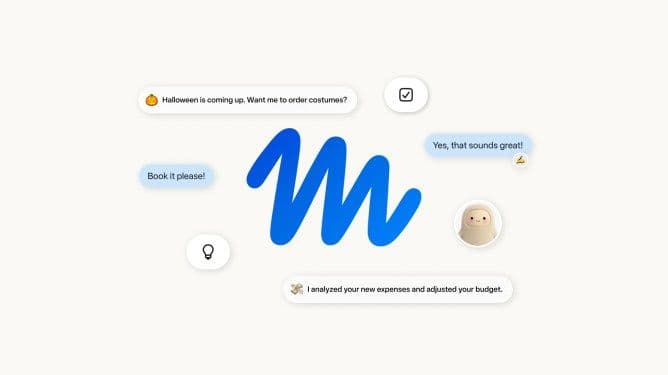
Less than two weeks after Meta agreed to a massive$18 billion multistate settlementin a lawsuit over social media’s consumer harms, the companyannouncedits biggest bet on consumer AI to date —and one that requires significantly more trust than social media ever did. On Tuesday, the company introduced Muse, its new personal AI agent that helps consumers with everyday tasks and projects for users in the U.S. To use Muse, consumers will have to trust Meta with more of their personal information than ever before. The AI agent works by connecting to the user’s apps and services that are a part of everyday workflows, like email, calendars, payments, and other things the individual may regularly use, like apps for health and fitness, the smart home, dining, shopping, music and events, and more. The idea is a sizable bet on what comes after the ChatGPT era, where AI chatbots answered questions, served as sounding boards, or even became digital companions. Instead, Muse is focusing on AI that can actually do things for you. The company says the agent can do things like sending emails, booking travel, lowering bills, filling out forms, creating plans, turning recipe reels into grocery lists, sending party invitations, and making purchases, leveraging Link by Stripe for checkout. The latter offerspurchase protections, which could potentially ease consumers’ fears of letting an AI check out on their behalf. (Shopify’s Shop Pay and 1Password integrations are also coming soon.) Muse’s users can decide which apps and services they want to connect, doing so one at a time, to make the opt-in nature of using Muse more transparent. The agent is powered byMeta’s AI model, Muse Spark, and ships with built-in connectors (pictured below) for several services, with plans to add more over time. If a service the user wants isn’t available but offers a public API, Muse can set up a connection using credentials the user provides. When no API is available, Muse can access the service via the browser instead. Muse will initially be available via the web atmuse.ai, through apps on iOS and Android, and through chats in WhatsApp. It will soon also make its way to Meta’s AI glasses, the company says. It will be free to use, with subscription plans kicking in as usage increases, which is why Muse requires a payment card to get started. Two paid plans will be available at launch: Power at $20/month and Maximum at $100/month. Both of these subscriptions offer more Muse usage for handing off everyday tasks, though Meta believes most people will remain on the free tier. (The company says the app includes a usage meter that shows users what percentage of their usage they have left. It will also warn users when free usage runs out and present options to subscribe.) Like other AI agents, Muse will continue to work even after the user leaves the app. It will also improve over time by learning from the user’s conversations what’s important to them to make suggestions unprompted, Meta noted. The concept is not unique to Meta. The agentic era is now coming into its own, as larger companies and smaller startups alike are experimenting with how AI agents will make the most sense for consumers and can become integrated into people’s daily lives. Some have triedAI web browsersor services, likeGemini SparkorClaude Cowork, that can kick off various tasks on consumers’ behalf. Others are integrating AI into thechat applicationsconsumers use the most, like Apple’s iMessage platform, SMS, and WhatsApp. Despite their usefulness, these powerful agents have forced consumers to wrestle with difficult questions about how much privacy they’re willing to give up. Manyearly testers of the AI assistant Instinct were shocked to seethe app required a broad “perpetual and irrevocable” license to “access, use, host, cache, store, reproduce, transmit, display, publish, distribute, and modify” any of the user’s materials, including for training its AI models. Under the hood, Meta claims that Muse runs in its own “dedicated, secure computer with its own browser,”Muse Secure VM, which offers various privacy, safety, and security protections over customers’ data. The company says a separate Sentinel agent runs on that same virtual machine, but is kept apart from Muse at the system level. This means Muse won’t have visibility into people’s passwords or payment methods. Meta also claims that Muse doesn’t share people’s conversations or data with Meta’s ads systems. (These claims are explained in more detail in atechnical post, also released today, but will require deeper investigation by security experts.) Despite Meta’s documentation of its security measures, it remains to be seen whether the company has enough consumer trust for its agent to be successful. As it stands, Meta has a history of proclaiming one thing and doing another. In 2011, for instance, the tech giantsettled with the FTC over charges that it deceived consumersby making users’ private information public without their approval. In 2019,the FTC penalized Facebook in a then record-breaking $5 billion settlementover eight separate privacy-related violations. In 2023,the FTC charged Meta with violating a privacy orderthat was filed after the 2019 settlement. In terms of technical matters, Meta has also had some big missteps before, having discovered in 2019 a number ofusers’ passwords in readable formats, exposing people to potential hacks. Themassive Cambridge Analytica data scandal, which saw Facebook data belonging to millions of consumers was collected by a third-party without their consent, still lingers in some people’s minds, too. Meta has also beenrepeatedlyhauledbefore Congress to testify on how it protected — or failed to protect — minors from harm. With Congress failing to act, Meta ultimately became the target of several related lawsuits, including the oneMeta just settled with 29 states in August,a New Mexico lawsuit over harms for children, whereMeta was ordered to pay $942 million, and the thousands of personal-injury and school-districtcases that are still pendingagainst multiple social media giants. To ease consumers’ fears, Meta not only talks in depth about its security promises, offering technicaldocumentation and explanations. The company has also designed Muse in a way that would make consumers feel more connected with the agent itself. Users can customize Muse by giving it a name, picking out its avatar, and configuring its look and various settings that dictate how the agent communicates with them. Time will tell if this personal connection and the utility Muse provides are enough for consumers to once again trust Meta with their personal information.
View

Mistral raises €3B as sovereign AI becomes big business
French AI lab Mistral AI on Tuesdaysaidit has raised €3 billion (about $3.58 billion) at a post-money valuation of more than €21 billion (about $24.39 billion), confirmingearlier rumors. This Series D round, which Mistral said is “the largest equity fundraising round ever completed by a European technology company,” was led by Samsung Electronics, withEQT-managed Scaleup Europe Fundand existing investor PSG Equity joining as co-leads. Mistral said it will use the funding to scale its compute capacity, build infrastructure, accelerate commercial growth and expand its international footprint. The money could also help clarify its positioning — the company says its goal is not to build a European ChatGPT, and though its models haven’t gone mainstream, it still envisions itself as an AI lab. The funding will help Mistral pursuea subtle shift in strategythat aims to further address concerns in Europe and elsewhere about being too dependent on the United States for tech, especially with theintensifying politics around AI regulation and products Stateside. In addition to a push to build1 GW of compute capacity in Europe by 2030, Mistral in August unveiled tools that let its customers choose which regions their AI queries are processed in. It’s also started hosting third-party, open-weight AI models (Chinese ones, too) to bolster its positioning as an AI services provider that wants its customers to control what AI models they use and how they use them. The company on Tuesday pegged its frontier research as “the foundation underpinning its infrastructure, products and sovereignty,” which may be an indirect response to naysayers whointerpretedthe company’s decision to host Chinese models as a sign that it was turning into an inference provider. Mistral’s mention of its global ambitions also likely is an effort to dispel a common misunderstanding that the company’s remit is contained within France. The lab now operates in 20 countries, and its go-to-market strategy is more focused on helping governments and corporations leverage AI and preserve a sense of control, unlike other frontier labs like OpenAI and Anthropic which sell their AI models more broadly. This strategy has built high hopes for Mistral as a French tech champion, as Samsung’s entry into Mistral’s cap table has the blessing of France’s authorities. In apost on X, French president Macron said the round reflected France and South Korea’s goal of “building a third way in AI.” The fact that Mistral’s funding round warranted such a statement is a reminder of the geopolitical undertones that have surrounded the AI company, mostly to its benefit. Amid growing demand for sovereign AI infrastructure, not being an American company has reportedlyboosted Mistral’s revenue. On the other hand, the capital required to compete with the leading U.S. labs isn’t available in France alone. But with Dutch chipmaker ASML as amajor partner and investor, and now Samsung, Mistral seems to have found a third way — similar toGermany’s Aleph Alpha’s merger with Canada’s Cohere. Mistral still works with U.S. players, particularly Microsoft, through a strategic partnership the two companiessignificantly expanded in July. The new Series D was also backed by American investors: existing backers such as a16z, Nvidia and Salesforce Ventures invested, as did new backers Advent and BlackRock. Still, with the Grand Duchy of Luxembourg also joining as a new backer and many other existing European backers doubling down, the AI lab’s cap table remains resolutely international. And that might be enough for the customers Mistral is targeting.
View
Google Cloud races to catch up in the AI deployment wars with Accenture deal
Google Cloud and Accenture are working together on ajoint unitdedicated to sending engineers into enterprises to help them better adopt Google’s AI tools and services. The new unit, dubbed Accenture Gemini Enterprise Business Group, is Google’s latest foray into theincreasingly competitive worldof “forward-deployed engineers,” or FDEs. Rivals in the AI race, includingOpenAI,Anthropic,MicrosoftandAmazon, have all recently launched separate business units in a bet that implementing AI models can become its own trillion-dollar business. It’s the kind of bet AI companies and hyperscalers increasingly need to make. Hyperscalers are committing hundreds of billions of dollars a year to GPUs, data centers, and power capacity even as the revenue directly attributable to AI remains a fraction of that investment. Google Cloud generated $24.8 billion in the second quarter, a big chunk of which was driven by enterprise AI. But the commitments behind that growth are enormous. Google Cloud’s parent companyAlphabet reportedly accumulated$811 billion in purchase commitments and contractual obligations as of June 30. This return on investment is not yet materializing in the way companies and investors need it to, so everything hinges on whether or not AI companies can create enough demand for their services. But that demand is not guaranteed, as enterprises themselves are struggling to see a true return on investment on their AI spending. It’s conventionally held that enterprises have simply lacked the expertise to intelligently integrate AI tools and services into their workflows in a way that not only saves them money, but helps them make more of it in the long run. That’s where the FDEs come in as a steady, guiding hand that, ideally, possesses the perfect mental cocktail of business acumen and agentic AI prowess needed to change everything. As part of its deal with Accenture, Google will train up to 1,000 of the consultancy firm’s FDEs to work with enterprises and build custom AI applications on the Gemini Enterprise platform. According toAugust data from Ramp, Google accounts for roughly 6% of enterprise AI spending among U.S. businesses, compared to Anthropic’s 43.5% and OpenAI’s 39.7%. Google’s new unit with Accenture, whichThe Wall Street Journalfirst reported, is the latest of its aggressive expansions of its FDE model this year as it attempts to resolve enterprise deployment bottlenecks and catch up to rivals. Earlier this year, Google Cloud launched a$750 million partner ecosystemcommitment that embedded Google’s own FDEs across multiple consultancies, including Capgemini, Cognizant and Deloitte. The tech giant also struck amulti-year partnership with CVCCapital Partners to deploy FDEs directly into the investment firm’s portfolio companies. Google isn’t the only giant at risk of being outpaced by newer firms. Companies that are dedicated specifically to embedding engineers into businesses to build bespoke AI workflows — like Ode with Anthropic, or OpenAI’s The Deployment Co. — threaten big consultancy firms like Accenture as well. For the professional services giant, the Google tie-up adds to its own wave of FDE programs this year, which include a similarMicrosoft FDE practice in March, anFDE initiative with ServiceNowin May, and ajoint program with SAPin June.
View
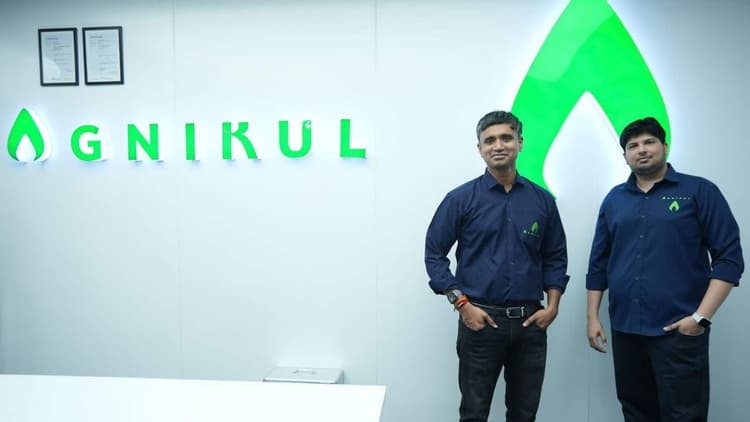
Agnikul Cosmos Opens Facilities to Test Reusable Rocket Stages Under Flight-Like Conditions
The new infrastructure will support post-flight inspection, requalification and faster production of critical launch vehicle components.
View
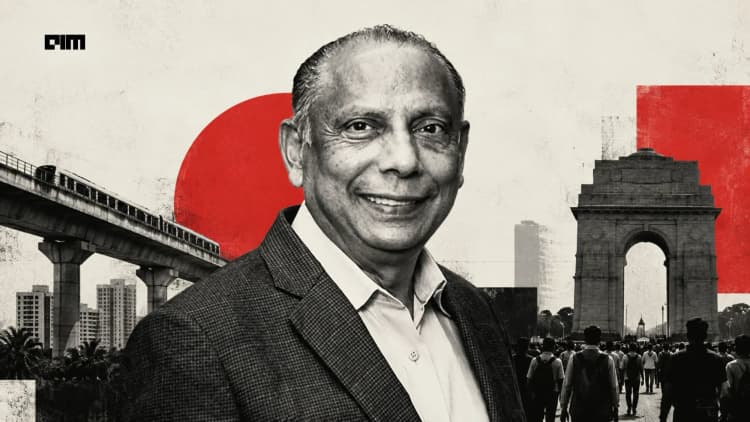
‘We Made People Zombies,’ Raj Vattikuti Warns Students Using AI
Instead of making students spend years learning increasingly fragmented technologies, he wants them to enter the real world earlier, understand businesses and work on actual problems.
View
Mathematician Alleges OpenAI Pursued Navier–Stokes Breakthrough After Learning of His Work
Tristan Buckmaster says OpenAI began pursuing an internal proof of finite-time blow-up for forced Navier–Stokes after learning about his work with Anthropic researcher Levent Alpöge.
View
Mistral Secures €3 Bn Funding Led by Samsung at Over €21 Bn Valuation
The company said the funding will expand its frontier AI research, increase compute capacity to train models, scale infrastructure, and support its commercial growth and international expansion.
View

260% Jump in Agentic AI Demand as Routine Tech Work Faces Automation, Finds CIEL HR
Agentic AI Engineers recorded the highest growth among emerging technology roles tracked by CIEL HR.
View

Swiss Startup Jaipur Robotics Raises €4.3 Million to Expand AI Automation Across Industrial Plants
“We are living in an energy crisis. It would be insane to just let landfill sit somewhere occupying space and generating pollutants when you could extract value from it.”
View

Databricks Says AGI Alone Won’t Fix Enterprise AI
Databricks says the next enterprise AI advantage will come from how well companies connect powerful models to their data, workflows and business goals.
View
Kirim Alatmu


PoweredByAI.app adalah Direktori Alat AI yang membantu individu, bisnis, dan kreator menemukan alat AI terbaik untuk menulis, coding, desain, produktivitas, dan lainnya.
© 2026 , Produk dari011BQ. Hak cipta dilindungi.