🚀 Zaprep : tes réseaux sociaux sous stéroïdes. Commencer gratuitement — automatise 1 000 DM/mois et transforme l'engagement en leads. avec 1 000 DM automatisés/mois.


C'est ton outil IA ? Réclame-le dès aujourd'hui.
Vérifie la propriété, gère ton profil et débloque des fonctionnalités de croissance.
telemetry.dev is a dedicated LLM observability platform that leverages OpenTelemetry to provide detailed tracing, cost monitoring, and error inspection for AI applications and agents. Ideal for AI developers and teams, it supports TypeScript, Python, and multiple AI providers, enabling efficient debugging and cost control in complex AI workflows.
Description
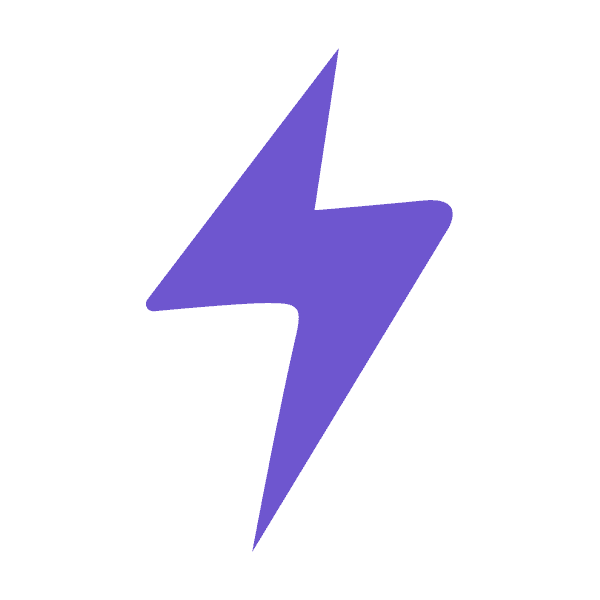
telemetry.dev shows each run of your AI agent as one trace. Each model call and tool call is a span with its duration, tokens, cost, and error. Prompts and evals use the same traces: change a prompt without a deploy, then run it on a dataset and compare the scores with production. Alerts tell you about errors, cost spikes, and agent loops. Connect with our TypeScript or Python SDK, or with the OpenTelemetry exporter that you already use.
Description détaillée
telemetry.dev is a specialized observability platform designed specifically for AI applications and agents that utilize large language models (LLMs). Its core purpose is to provide developers and AI teams with comprehensive tracing and monitoring capabilities for LLM calls and AI agent workflows by leveraging the OpenTelemetry standard. This enables users to gain deep insights into the performance, cost, and reliability of their AI systems, facilitating more efficient debugging and cost management. By integrating telemetry.dev into their AI stacks, organizations can track detailed metrics such as token usage, latency, error rates, and cost calculations, all within a unified observability framework. The platform offers a rich set of features tailored to the unique needs of AI developers. One of its primary capabilities is the tracing of LLM calls and AI agent operations using OpenTelemetry, which is a widely adopted open-source observability framework. This allows telemetry.dev to collect and visualize detailed spans representing model calls, tool steps, and data retrievals within a single trace, providing a clear picture of each AI request or agent run. Users can inspect token usage per request, which is crucial for understanding how much computational resource each interaction consumes. Additionally, telemetry.dev calculates costs based on reported token usage combined with a model pricing catalog, enabling teams to monitor and optimize their AI spending effectively. The platform supports first-party SDKs for TypeScript and Python, the two most popular programming languages in AI development, ensuring seamless integration into existing projects. It also supports standard OTLP (OpenTelemetry Protocol) over HTTP, allowing other languages and frameworks to send telemetry data. telemetry.dev integrates with major AI providers and frameworks including OpenAI, Anthropic, Vercel AI SDK, and Claude API, making it versatile for various AI ecosystems. Importantly, it offers features to enhance privacy and security, such as the ability to disable the capture of prompts and completions before storage, helping organizations comply with data governance policies. telemetry.dev is best suited for AI developers, data scientists, and engineering teams building and deploying AI applications that rely on large language models. It is particularly valuable for teams needing to debug complex AI agent workflows, monitor performance bottlenecks, and control operational costs associated with token consumption. Use cases include monitoring conversational AI systems, evaluating the efficiency of multi-step AI agents, and managing usage across multiple AI providers. Its detailed trace visualization and cost insights help teams optimize AI workflows and improve reliability. Regarding pricing, telemetry.dev offers a free plan that is genuinely free without requiring a credit card. This plan includes 30,000 ingestion units per month, 14-day data retention, one project, and two user seats, making it accessible for small teams and individual developers to start monitoring their AI applications. Each ingestion unit corresponds to a normalized span, OTLP log record, or metric data point. For larger teams or enterprises, additional plans and features are available, though specific pricing details beyond the free tier are typically provided upon inquiry or on the platform’s website. Compared to alternative observability tools, telemetry.dev stands out by focusing exclusively on LLM and AI agent telemetry, integrating deeply with AI-specific metrics like token usage and cost calculation. While general-purpose observability platforms can monitor AI applications, telemetry.dev’s native support for OpenTelemetry combined with AI-specific insights offers a more tailored and efficient solution. Its support for multiple AI providers and SDKs also provides flexibility that many competitors lack. However, users should consider that the level of trace detail depends on the instrumentation and integrations used, and some advanced features may require familiarity with OpenTelemetry concepts. Notable limitations include the 14-day data retention on the free plan, which might be insufficient for long-term trend analysis. Also, while telemetry.dev supports disabling prompt and completion capture before storage, it does not prevent sensitive data transmission during ingestion, so users must implement data sanitization in their instrumentation to ensure full privacy compliance. Lastly, as an emerging platform, telemetry.dev’s ecosystem and integrations continue to grow, so users should verify support for their specific AI frameworks and languages. Overall, telemetry.dev offers a powerful, AI-focused observability solution that helps teams monitor, debug, and optimize their LLM-powered applications with precision and ease.
Fonctionnalités de l'outil
- Trace LLM calls and AI agents with OpenTelemetry
- Inspect token usage, cost, latency, and errors
- Supports TypeScript and Python SDKs
- Integrates with OpenAI, Anthropic, Vercel AI SDK, and Claude API
- Calculates cost from reported token usage and model pricing catalog
- Includes 30,000 ingestion units per month on free plan
- 14-day data retention on free plan
- Allows disabling capture of prompts and completions before storage
Description
telemetry.dev is a dedicated LLM observability platform that leverages OpenTelemetry to provide detailed tracing, cost monitoring, and error inspection for AI applications and agents. Ideal for AI developers and teams, it supports TypeScript, Python, and multiple AI providers, enabling efficient debugging and cost control in complex AI workflows.
telemetry.dev shows each run of your AI agent as one trace. Each model call and tool call is a span with its duration, tokens, cost, and error. Prompts and evals use the same traces: change a prompt without a deploy, then run it on a dataset and compare the scores with production. Alerts tell you about errors, cost spikes, and agent loops. Connect with our TypeScript or Python SDK, or with the OpenTelemetry exporter that you already use.
Description détaillée
telemetry.dev is a specialized observability platform designed specifically for AI applications and agents that utilize large language models (LLMs). Its core purpose is to provide developers and AI teams with comprehensive tracing and monitoring capabilities for LLM calls and AI agent workflows by leveraging the OpenTelemetry standard. This enables users to gain deep insights into the performance, cost, and reliability of their AI systems, facilitating more efficient debugging and cost management. By integrating telemetry.dev into their AI stacks, organizations can track detailed metrics such as token usage, latency, error rates, and cost calculations, all within a unified observability framework. The platform offers a rich set of features tailored to the unique needs of AI developers. One of its primary capabilities is the tracing of LLM calls and AI agent operations using OpenTelemetry, which is a widely adopted open-source observability framework. This allows telemetry.dev to collect and visualize detailed spans representing model calls, tool steps, and data retrievals within a single trace, providing a clear picture of each AI request or agent run. Users can inspect token usage per request, which is crucial for understanding how much computational resource each interaction consumes. Additionally, telemetry.dev calculates costs based on reported token usage combined with a model pricing catalog, enabling teams to monitor and optimize their AI spending effectively. The platform supports first-party SDKs for TypeScript and Python, the two most popular programming languages in AI development, ensuring seamless integration into existing projects. It also supports standard OTLP (OpenTelemetry Protocol) over HTTP, allowing other languages and frameworks to send telemetry data. telemetry.dev integrates with major AI providers and frameworks including OpenAI, Anthropic, Vercel AI SDK, and Claude API, making it versatile for various AI ecosystems. Importantly, it offers features to enhance privacy and security, such as the ability to disable the capture of prompts and completions before storage, helping organizations comply with data governance policies. telemetry.dev is best suited for AI developers, data scientists, and engineering teams building and deploying AI applications that rely on large language models. It is particularly valuable for teams needing to debug complex AI agent workflows, monitor performance bottlenecks, and control operational costs associated with token consumption. Use cases include monitoring conversational AI systems, evaluating the efficiency of multi-step AI agents, and managing usage across multiple AI providers. Its detailed trace visualization and cost insights help teams optimize AI workflows and improve reliability. Regarding pricing, telemetry.dev offers a free plan that is genuinely free without requiring a credit card. This plan includes 30,000 ingestion units per month, 14-day data retention, one project, and two user seats, making it accessible for small teams and individual developers to start monitoring their AI applications. Each ingestion unit corresponds to a normalized span, OTLP log record, or metric data point. For larger teams or enterprises, additional plans and features are available, though specific pricing details beyond the free tier are typically provided upon inquiry or on the platform’s website. Compared to alternative observability tools, telemetry.dev stands out by focusing exclusively on LLM and AI agent telemetry, integrating deeply with AI-specific metrics like token usage and cost calculation. While general-purpose observability platforms can monitor AI applications, telemetry.dev’s native support for OpenTelemetry combined with AI-specific insights offers a more tailored and efficient solution. Its support for multiple AI providers and SDKs also provides flexibility that many competitors lack. However, users should consider that the level of trace detail depends on the instrumentation and integrations used, and some advanced features may require familiarity with OpenTelemetry concepts. Notable limitations include the 14-day data retention on the free plan, which might be insufficient for long-term trend analysis. Also, while telemetry.dev supports disabling prompt and completion capture before storage, it does not prevent sensitive data transmission during ingestion, so users must implement data sanitization in their instrumentation to ensure full privacy compliance. Lastly, as an emerging platform, telemetry.dev’s ecosystem and integrations continue to grow, so users should verify support for their specific AI frameworks and languages. Overall, telemetry.dev offers a powerful, AI-focused observability solution that helps teams monitor, debug, and optimize their LLM-powered applications with precision and ease.
Questions fréquentes
What is telemetry.dev?
telemetry.dev is an observability platform designed for AI applications and agents using large language models. It enables tracing of LLM calls and AI agent workflows through OpenTelemetry, allowing users to monitor token usage, latency, cost, and errors to improve debugging and cost management.
How much does telemetry.dev cost?
telemetry.dev offers a free plan that includes 30,000 ingestion units per month, 14-day data retention, one project, and two user seats at no cost and without requiring a credit card. Additional paid plans with extended features and higher limits are available, with pricing details provided on their website.
Who is telemetry.dev best for?
telemetry.dev is best suited for AI developers, data scientists, and engineering teams building AI applications and agents that rely on large language models. It is especially useful for those needing detailed observability into model calls, cost tracking, and debugging complex AI workflows.
What are the main features of telemetry.dev?
Key features include tracing LLM calls and AI agents using OpenTelemetry, inspecting token usage, cost, latency, and errors, support for TypeScript and Python SDKs, integrations with OpenAI, Anthropic, Vercel AI SDK, and Claude API, cost calculation based on token usage and model pricing, and options to disable prompt and completion capture before storage.
Does telemetry.dev offer a free trial?
Yes, telemetry.dev offers a free plan that acts as a free trial with no time limit, providing 30,000 ingestion units per month and 14-day data retention. This allows users to explore the platform’s features without any upfront cost or credit card requirements.
What integrations does telemetry.dev support?
telemetry.dev supports integrations with major AI providers and frameworks including OpenAI, Anthropic, Vercel AI SDK, and Claude API. It also supports standard OpenTelemetry Protocol (OTLP) over HTTP, enabling integration with other languages and frameworks beyond TypeScript and Python.
How does telemetry.dev work?
telemetry.dev collects telemetry data by instrumenting LLM calls and AI agent operations using OpenTelemetry. Developers configure their applications with telemetry.dev SDKs or OTLP exporters to send traces, logs, and metrics. The platform then aggregates and visualizes token usage, latency, errors, and cost data to help users monitor and optimize their AI workflows.
Réseaux
Utiliser l'outilAvis
Pas encore d'avis. Sois le premier à partager ton expérience.
Outils sponsorisés























Outils recommandés
Reste au courant des derniers outils IA
Reçois les derniers insights, rejoins notre newsletter
Lu et approuvé par 50,000+ lecteurs
Rejoins la plus grande communauté IA
Notre communauté et notre équipe sont là pour t'aider !
Tes retours aideront Alice AI à s'améliorer dans les prochaines versions.








Soumettre ton outil


PoweredByAI.app est un annuaire d'outils IA qui aide les particuliers, les entreprises et les créateurs à découvrir les meilleurs outils IA pour la rédaction, le code, le design, la productivité, et plus encore.
© 2026 , Un produit de011BQ. Tous droits réservés.