🚀 Zaprep : tes réseaux sociaux sous stéroïdes. Commencer gratuitement — automatise 1 000 DM/mois et transforme l'engagement en leads. avec 1 000 DM automatisés/mois.


C'est ton outil IA ? Réclame-le dès aujourd'hui.
Vérifie la propriété, gère ton profil et débloque des fonctionnalités de croissance.
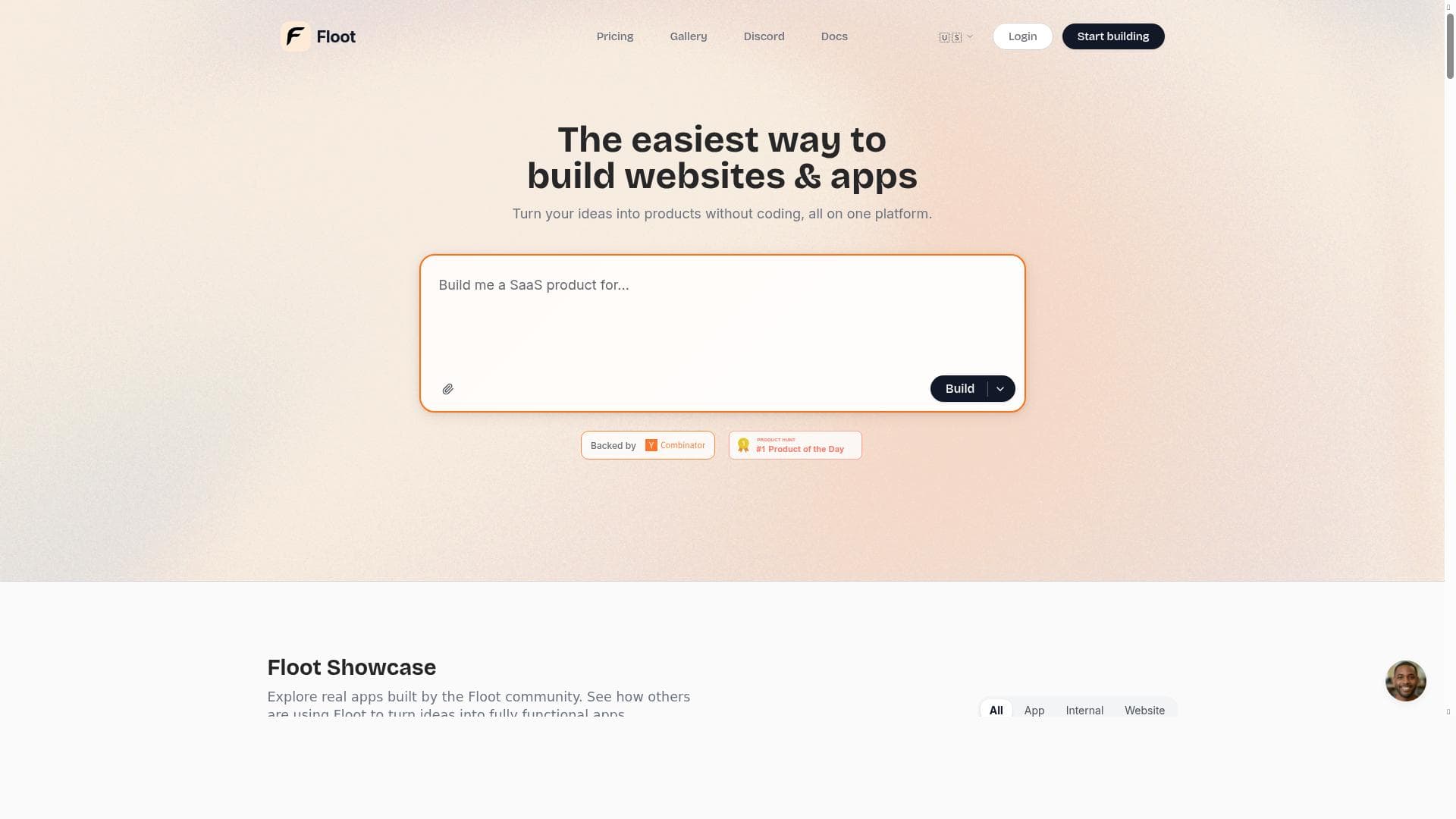
Floot revolutionizes app development by enabling users to build full-stack web and mobile applications from simple plain-language descriptions, no coding required. Perfect for entrepreneurs and developers seeking rapid prototyping and deployment, it combines React/TypeScript frontends, serverless backends, and managed databases with seamless AI assistant integration.

Description
Connect Floot to Claude or ChatGPT and build a full-stack app without leaving the chat. Floot gives your AI a ready-to-use workspace with a database, user logins, hosting, and a live URL - nothing to install or configure. Your existing Claude or ChatGPT subscription does the thinking, so Floot doesn’t charge based on AI usage. When you’re ready, publish the same project to the web, iOS, and Android, then keep shipping updates from the same conversation.
Description détaillée
Floot is an innovative no-code platform designed to empower users to build and host full-stack web and mobile applications using plain-language descriptions. Its core purpose is to simplify the app development process by eliminating the need for traditional coding skills, allowing creators, entrepreneurs, and developers to rapidly transform ideas into functional products. Floot supports modern technologies including React and TypeScript for frontends, serverless endpoints for backend logic, and managed Postgres databases for data storage. Additionally, it offers built-in authentication, file storage, and email integration, providing a comprehensive environment for app creation and deployment. One of Floot's standout features is its ability to convert natural language descriptions directly into full-stack applications. Users can describe the desired app functionality in plain English, and Floot's platform interprets these instructions to generate the corresponding frontend UI, backend APIs, and database schema. This dramatically accelerates the development cycle and lowers the barrier to entry for building complex applications. The platform includes a managed Postgres database, enabling users to handle data storage without setup or maintenance overhead. Authentication features allow secure user sign-in and management, while file storage and email integration support common app requirements such as media uploads and notifications. Floot also streamlines publishing by offering one-click deployment to a live URL with support for custom domains. Beyond web apps, it facilitates publishing to major mobile app stores including the iOS App Store and Google Play, enabling creators to reach users on multiple platforms seamlessly. Another key capability is its integration with AI assistants like Claude and ChatGPT via the Model Context Protocol (MCP). This remote MCP server connection allows users to build apps interactively with AI assistance, combining human creativity with advanced language models to enhance productivity and innovation. The platform is ideal for a wide range of users including solo entrepreneurs, startups, product managers, and developers who want to prototype or launch apps quickly without deep coding expertise. Use cases span from internal tools, MVPs, and customer portals to fully-fledged consumer-facing applications. Its support for React and TypeScript makes it appealing to developers familiar with these technologies who want to accelerate development while maintaining flexibility. Floot offers a freemium pricing model, allowing users to get started without upfront costs and scale as their needs grow. Detailed pricing plans are available on their website, catering to different levels of usage and feature requirements. Compared to traditional app development platforms, Floot stands out by combining no-code ease with the power of full-stack development and AI integration. Unlike many no-code tools limited to frontend design, Floot covers backend, database, authentication, and deployment in one unified platform. However, potential users should consider that while Floot significantly reduces coding, some technical understanding of app concepts may still be beneficial to maximize its capabilities. Also, as a relatively new platform, the ecosystem and third-party integrations may be less extensive than more established development environments. Nonetheless, its unique blend of plain-language app building, managed backend services, and AI assistant connectivity positions Floot as a compelling choice for rapid, code-free full-stack app creation.
Fonctionnalités de l'outil
- Build full-stack apps by describing them in plain language
- Managed Postgres database, authentication, file storage, and email
- One-click publishing to a live URL with custom domains
- Publish to the iOS App Store and Google Play
- Remote MCP server for building from Claude and ChatGPT/Codex
Description
Floot revolutionizes app development by enabling users to build full-stack web and mobile applications from simple plain-language descriptions, no coding required. Perfect for entrepreneurs and developers seeking rapid prototyping and deployment, it combines React/TypeScript frontends, serverless backends, and managed databases with seamless AI assistant integration.
Connect Floot to Claude or ChatGPT and build a full-stack app without leaving the chat. Floot gives your AI a ready-to-use workspace with a database, user logins, hosting, and a live URL - nothing to install or configure. Your existing Claude or ChatGPT subscription does the thinking, so Floot doesn’t charge based on AI usage. When you’re ready, publish the same project to the web, iOS, and Android, then keep shipping updates from the same conversation.
Description détaillée
Floot is an innovative no-code platform designed to empower users to build and host full-stack web and mobile applications using plain-language descriptions. Its core purpose is to simplify the app development process by eliminating the need for traditional coding skills, allowing creators, entrepreneurs, and developers to rapidly transform ideas into functional products. Floot supports modern technologies including React and TypeScript for frontends, serverless endpoints for backend logic, and managed Postgres databases for data storage. Additionally, it offers built-in authentication, file storage, and email integration, providing a comprehensive environment for app creation and deployment. One of Floot's standout features is its ability to convert natural language descriptions directly into full-stack applications. Users can describe the desired app functionality in plain English, and Floot's platform interprets these instructions to generate the corresponding frontend UI, backend APIs, and database schema. This dramatically accelerates the development cycle and lowers the barrier to entry for building complex applications. The platform includes a managed Postgres database, enabling users to handle data storage without setup or maintenance overhead. Authentication features allow secure user sign-in and management, while file storage and email integration support common app requirements such as media uploads and notifications. Floot also streamlines publishing by offering one-click deployment to a live URL with support for custom domains. Beyond web apps, it facilitates publishing to major mobile app stores including the iOS App Store and Google Play, enabling creators to reach users on multiple platforms seamlessly. Another key capability is its integration with AI assistants like Claude and ChatGPT via the Model Context Protocol (MCP). This remote MCP server connection allows users to build apps interactively with AI assistance, combining human creativity with advanced language models to enhance productivity and innovation. The platform is ideal for a wide range of users including solo entrepreneurs, startups, product managers, and developers who want to prototype or launch apps quickly without deep coding expertise. Use cases span from internal tools, MVPs, and customer portals to fully-fledged consumer-facing applications. Its support for React and TypeScript makes it appealing to developers familiar with these technologies who want to accelerate development while maintaining flexibility. Floot offers a freemium pricing model, allowing users to get started without upfront costs and scale as their needs grow. Detailed pricing plans are available on their website, catering to different levels of usage and feature requirements. Compared to traditional app development platforms, Floot stands out by combining no-code ease with the power of full-stack development and AI integration. Unlike many no-code tools limited to frontend design, Floot covers backend, database, authentication, and deployment in one unified platform. However, potential users should consider that while Floot significantly reduces coding, some technical understanding of app concepts may still be beneficial to maximize its capabilities. Also, as a relatively new platform, the ecosystem and third-party integrations may be less extensive than more established development environments. Nonetheless, its unique blend of plain-language app building, managed backend services, and AI assistant connectivity positions Floot as a compelling choice for rapid, code-free full-stack app creation.
Questions fréquentes
What is Floot?
Floot is a no-code platform that allows users to create and host full-stack web and mobile applications by describing their app in plain language. It supports React and TypeScript frontends, serverless endpoints, managed Postgres databases, authentication, storage, and email integration.
How much does Floot cost?
Floot offers a freemium pricing model, enabling users to start building apps for free with options to upgrade for additional features and higher usage limits. Detailed pricing plans are available on their website at https://floot.com/pricing.
Who is Floot best for?
Floot is ideal for entrepreneurs, startups, product managers, and developers who want to quickly prototype or launch full-stack applications without writing code. It suits users who prefer rapid development with modern technologies and AI assistant integration.
What are the main features of Floot?
Key features include building full-stack apps from plain-language descriptions, managed Postgres databases, authentication, file storage, email integration, one-click publishing to live URLs with custom domains, mobile app publishing to iOS and Google Play, and AI assistant connectivity via the Model Context Protocol.
Does Floot offer a free trial?
Yes, Floot provides a freemium plan that allows users to try the platform and build apps without upfront cost, making it easy to explore its features before committing to a paid plan.
What integrations does Floot support?
Floot integrates with AI assistants such as Claude and ChatGPT through the Model Context Protocol, enabling AI-powered app building. It also supports email integration and managed backend services like Postgres databases and authentication.
How does Floot work?
Users describe their desired app functionality in plain language within Floot's editor or via connected AI assistants. Floot then automatically generates the frontend, backend, database schema, and necessary integrations, allowing users to deploy fully functional web and mobile apps with minimal manual coding.
Réseaux
Utiliser l'outilAvis
Pas encore d'avis. Sois le premier à partager ton expérience.
Outils sponsorisés





















Outils recommandés
Reste au courant des derniers outils IA
Reçois les derniers insights, rejoins notre newsletter
Lu et approuvé par 50,000+ lecteurs
Rejoins la plus grande communauté IA
Notre communauté et notre équipe sont là pour t'aider !
Tes retours aideront Alice AI à s'améliorer dans les prochaines versions.







Soumettre ton outil


PoweredByAI.app est un annuaire d'outils IA qui aide les particuliers, les entreprises et les créateurs à découvrir les meilleurs outils IA pour la rédaction, le code, le design, la productivité, et plus encore.
© 2026 , Un produit de011BQ. Tous droits réservés.