🚀 Zaprep : tes réseaux sociaux sous stéroïdes. Commencer gratuitement — automatise 1 000 DM/mois et transforme l'engagement en leads. avec 1 000 DM automatisés/mois.
Soumettre ton outil
PoweredByAI.app est un annuaire d'outils IA qui aide les particuliers, les entreprises et les créateurs à découvrir les meilleurs outils IA pour la rédaction, le code, le design, la productivité, et plus encore.
© 2026 , Un produit de011BQ. Tous droits réservés.

Coforge’s approach adds goals, constraints, governance controls, and escalation paths to enterprise AI agent design.
View

Claude Opus 5, Sonnet 5 and Haiku 4.5 are now available through Amazon Bedrock’s India endpoint, with inference processed within AWS’ Mumbai and Hyderabad regions.
View

With AI squeezing traditional IT services growth, HCLTech is betting on a separate model to capture mid-market AI spending. But the segment is not easy to crack.
View

Razorpay said Engage will assess whether a brand’s catalogue is ready for ChatGPT Ads.
View

Zoho is launching products across seven sectors—automotive, financial services, healthcare, education, retail, real estate, and restaurants.
View

David Robinson said the industry is not being “nearly careful enough” and needs to put greater emphasis on safety expertise and research.
View

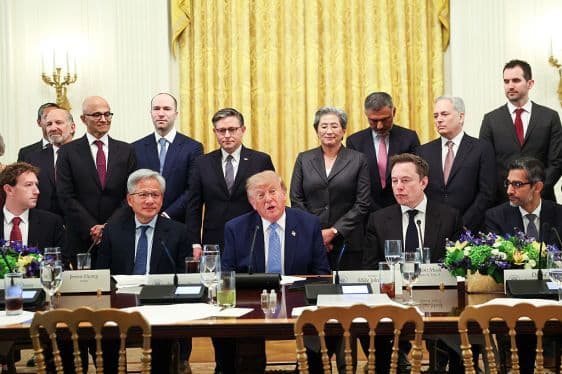
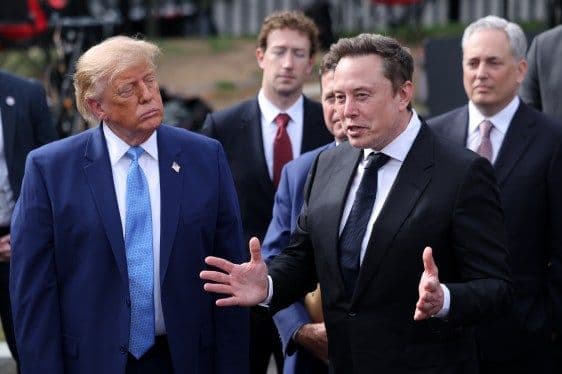
President Donald Trump hostedmany of the biggest names in artificial intelligencethis week — in part to announce that the U.S. government isn’t calling it artificial intelligence anymore. Now it’ssuperintelligence. On the latest episode ofTechCrunch’s Equity podcast, Kirsten Korosec, Sean O’Kane, and I discussed the motivation behind the meeting and what effect it might have on the AI industry. We were all pretty skeptical that the “Joint Commitment on Frontier Responsibilities” that the executives signed will amount to much, especially since — as Sean noted — it’s “deeply non-binding,” at least from a legal prospective. (Instead, Trump said he considers it “morally binding.”) Kirsten suggested that the meeting’s real significance may have been as “a rebranding effort around AI.” (An effort that continued this weekend withTrump’s announcement of a new Super Intelligence Force.) For her, the big message was, “AI is going to kill us, it’s scary, it is going to take jobs — but super intelligence is not.” Keep reading for a preview ofour conversation, edited for length and clarity. Anthony Ha:Officially, by order of the president of the United States, it’s not artificial intelligence anymore, it’s super intelligence. We weretalking about this last week, because this is something [Trump has] been hinting at — he doesn’t do hints, he’s beensaying[it] for a while. But now it’s signed into executive order. If you’re an official U.S. representative, you are supposed to say super intelligence, not artificial intelligence. And this was also part of this broader announcement around AI safety, which I think is both interesting for this pact that was announced, but also the fact that it happened at all. It seemed to have come together fairly quickly, because just two weeks ago, a week ago, President Trump was saying, “We don’t need any of this, we need to lead in AI, we can’t constrain it in any way, we don’t need any regulation, anyone who’s saying that there’s any danger from AI is essentially a Chinese or Democratic plant.” And yet all these AI CEOs got together with him earlier this week and signed this pact. Kirsten Korosec:Leading up to that, we should say, not only was there pushback on regulation, and we can talk about whether this executive order even does any of that — I would say no, there’s a little bit of theater there — but the important and interesting thing is that just days ago, Anthropic was really in the doghouse, if you will, in terms of what was happening behind the scenes with President Trump. That all changed when [Anthropic CEO] Dario Amodei wasinvited to a 10 p.m. dinner.He had this sit-down, and then just days later, we had this luncheon, and at this luncheon, we have pretty much every tech power broker from every major tech company that exists. So Mark Zuckerberg was there, Jeff Bezos was there, Elon Musk was there, Dario of course was there, they were all there. I’m wondering if any of you watched the press conference that happened afterwards, which there’s been many, many memes about, because of theinteresting, funny behaviorwhen you bring a bunch of tech CEOs together. But I guess my bigger question for both of you is: What does this all mean? And does it mean anything? Sean O’Kane:How much time do you have? First off, sure, they had dinner, Trump and Dario. If you readthe Time magazine interviewthat Trump just did, your guess is as good as mine as to how informed he was that that dinner was even going to be happening, which is a strange reality to live in, but it’s just the one we inhabit. I will also say one other thing that makes me skeptical — surprise, surprise — of how repaired the relationship is between the administration and Anthropic, is that for as much as there are clearly people trying to put those two groups together, the Defense Department is still very adamant that Anthropic is terrible and woke and and a national security risk. Emil Michael goes off on Anthropic every other day on X, it seems. I think there’s still some distance there despite Dario showing up to this thing. As far as the agreement and all of that, let’s be real,they misspelled the United Stateson the agreement that they all signed. It is also just deeply non-binding. I mean, it is completely voluntary. I think my favorite aspect about it was that Trump described it as quote “morally binding,” which is just a level of abstraction and terminology that I’ve never heard of before. Anthony:In terms of Anthropic and their relationship with the Trump administration, there’s been a sort of a lot of reporting, especially during that big blow up with the Defense Department, that different parts of the White House had different relationships with Anthropic.The Treasury Secretary seemed to be a big fan, whereas the Defense Department — definitely not big fans, or at least unhappy with some of the conditions that Anthropic were trying to put on the use of their technology. In that sense, it feels like nothing has necessarily changed. There are people in the White House who want to use Anthropic’s technology, want them involved in these decisions, and others who really, really, really, really don’t. In terms of the agreement, it seems not super meaningful. What is meaningful is just the fact that they felt that this was something worth doing. As indicated by the fact that they misspelled United States, it seemed like they rushed to put all of this together. [But] the fact that this kind of gesture was needed seems significant, even if I don’t think the agreement itself is going to lead to any major changes. Kirsten:I do think that there was one important thing that happened. And to me, this is the point of it, which was a rebranding exercise around AI. “AI is going to kill us, it’s scary, it is going to take jobs, but super intelligence is not.” This isn’t my personal belief. To me, that was the message.

Blaming a “significant rise” in AI submissions, Google has paused its open source bug bounty program until next year. Last year, TechCrunch reported thatcybersecurity experts were warning of that AI slop posed a serious risk to bug bounty programs. Looks like that’s the issue confronting Google’s Open Source Software Vulnerability Rewards Program, where researchers were rewarded for finding vulnerabilities in the company’s open source software. In postson Xandthe program website, Google said the bug bounty program was paused as of October 1, with a promise to provide “an update” in the first quarter of 2027.According to Tom’s Hardware, Google engineers and open source maintainers were overwhelmed by reports that were invalid or contained hallucinations. “This pause is due to a significant rise in automated submissions, the vast majority of which are not valid,” the company said. In the meantime, participants are encouraged to consider Google’s other bug bounty programs.
View

As promised, President Donald Trump has announced the formation of a new Super Intelligence Force, which he said will be led by national intelligence director Jay Clayton and other members of his administration. “The Super Intelligence Force is tasked with coordinating the effort of the Federal Government to ensure that America continues to lead the World in Super Intelligence, which many say is bigger than the Industrial Revolution, and the Internet, and will protect the interests, and improve the lives, of all Americans,” Trump said ina Sunday morning poston his social network Truth Social. Back in September, in response to an AI safety debate that the president haslargely dismissed as a hoax created by “Radical Left Dumocrats,”Trump said he would nevertheless form an AI Force and appoint an AI czar (“Only High I.Q. individuals need apply!”). Since then, Trump signed an executive order seeking torebrand AI as “super intelligence,”a term seemingly embraced,with some stumbles, by the tech executives who gathered at the White House this week to sign a non-binding safety pledge. (The pledgeincluded an impressive typo.) So it’s only natural that Trump’s new task force is named in accordance with this new branding.The Wall Street Journal reportsthat Clayton will chair the Super Intelligence Force, effectively making him the new AI/SI czar, with Federal Trade Commission Chair Andrew Ferguson, Undersecretary of War for Research and Engineering Emil Michael, and Office of Personnel Management Director Scott Kupor serving as vice chairs. The task force will have reportedly 120 days to create a report on the risks and opportunities presented by AI. Clayton, whopreviously saidthat it would be irresponsible for the United States to “back away” from AI while countries like China advance, made similar comments to the WSJ, insisting that one of the biggest risks is “not being first.” The task force’s charter reportedly says that it will “develop plans for responding to SI-enabled threats to our society, while preventing overregulation and regulatory capture that would stifle innovation and competition.”
View

For some gaming studios in India, GPU availability is crucial. But others, particularly mobile developers, bet on neoclouds to sidestep memory shortages.
View

NPrep combines its AI-powered Nursing Brain, learner data, and a recommendation engine to personalise exam preparation for nursing students.
View

Amazon Web Services CEO Matt Garman said the company hasstopped using nondisclosure agreements(NDAs) in its dealings with government agencies as it seeks approval to build new data centers. Garman’s statement is just one sentence ina longer blog postin which he tried to push back against widespread suspicion of data centers, and to make the case that they’re actually good for communities. NDAs are a significant piece of the broader data center backlash. For example, environmental activist Erin Brockovich recently said thatthe number one complaint she’s heard about data centers is transparency, with these projects following a common pattern: “projects announced after permits are already secured, developers who don’t return calls, local officials who signed NDAs before their neighbors knew a project was being considered.” As a result of that backlash,New York announced a one-year moratorium on permits for large data centers, and according to Garman, there are more than 100 data center moratoriums currently being considered across the United States. “If these measures are enacted, the U.S. could be writing its own losing ticket to this race, and the consequences would last generations,” Garman claimed. “As a country, we can’t afford to find ourselves in that position.” Garman also attempted to puncture what he said are four big myths around data centers: that they consume too much water, that they increase electricity costs, that they emit an enormous amount of pollution, and that they don’t provide any benefits to their communities. Pointing toan Amazon report about its own water usage, Garman said that “direct data center water consumption” only accounts for 0.5% of all industrial water usage in the United States, “orders of magnitude less than golf courses, almond farming, and many other industries.” Nvidia recently said its new cooling systemeliminates “pretty much all water usage” inside the data center, but those claims — like Amazon’s — seem to ignore the broader water usage involved in electricity generation and chip manufacturing. Scientists have also saidthey need to study data centers’ water and energy usage independently, since there are no federal or state requirements around how tech companies report this data. As for electricity rates, Garman said they’ve only gone up in some states with large numbers of data centers, while they’ve gone down or at least grown more slowly in others. And he argued, “In instances where energy rates are going up, it’s primarily because the grid is old and hasn’t been invested in and expanded before the demand arrived.” On the other hand, an independent watchdog said recently data centers werethe main culprit behind a 76% year-over-year price increaseon America’s largest electrical grid. When it comes to pollution — an issue thatthe NAACP is currently suing Elon Musk’s SpaceX/xAI over— Garman complained that critics focus on the maximum amount of pollution allowed under data center permits. For example,a planned Amazon data center in Texas is permitted to release 33 million tons of carbon dioxideper year, which is more than any other power plant in the United States. “The truth is data center generators almost never run,” Garman said. “They’re idle 99.9% of the time (they run roughly 10 hours per year, mostly for required maintenance testing).” As for the community benefits, this is where Garman wrote, “We no longer use nondisclosure agreements with the government agencies we work with on our projects.” Plus, he said, “Over the past three years, Amazon has contributed more than $1 billion to communities across the U.S. in which we have a meaningful data center presence.” Will this be enough to quell community suspicion? Perhaps not — Anthropic CEO Dario Amodei recentlyargued that the AI backlash is “fundamentally a crisis of trust,” where people assume governments and tech companies are always “cooking up some new way to screw them over.” Similarly,writer Jasmine Sun notedthat when data center opponents are presented with the tech companies’ arguments, their response is usually, “I don’t believe them.”
View
View