🚀 Zaprep : tes réseaux sociaux sous stéroïdes. Commencer gratuitement — automatise 1 000 DM/mois et transforme l'engagement en leads. avec 1 000 DM automatisés/mois.
Soumettre ton outil
PoweredByAI.app est un annuaire d'outils IA qui aide les particuliers, les entreprises et les créateurs à découvrir les meilleurs outils IA pour la rédaction, le code, le design, la productivité, et plus encore.
© 2026 , Un produit de011BQ. Tous droits réservés.

OpenAI has started rolling out GPT-6 globally in ChatGPT, introducing Intelligent UI, which lets the chatbot present answers through interactive and visual elements. Depending on the task, responses can include graphics, charts, forms, buttons and interactive tools. GPT-6 can also create experiences such as calculators and games within a conversation. Alongside these changes, OpenAI says the new model can start answering while it continues processing a request, reducing the time users have to wait for responses.
View

Zach Yadegari, the teen co-founder of calorie tracking app Cal AI, has launchedPersona, a new AI agent startup, and already raised $10 million. Vine Ventures led the round, with Z Fellows founder Cory Levy and Collective Global participating. In March,MyFitnessPal acquired Cal AIfor an undisclosed sum after it zoomed ahead of the older calorie app in the app store rankings. The deal was big enough to convince Yadegari and his co-founders to sell the company after it had pulled in over $30 million in annual revenue in under two years, MyFitnessPal told TechCrunch at the time. Yadegari and his co-founders originally went to work for their new owner, continuing development on Cal AI, but he left the bigger company in June, he tells TechCrunch. He then went right to work on his next idea. (He is working with another co-founder who has yet to be announced.) That idea isPersona, a personal AI assistant similar to Instinct or Meta’s Muse but with a hardware component that will soon be available: a $179 wearable band. That makes Persona somewhat more like Bee, the wearable AI device thatAmazon acquired in 2025, but Persona’s device differs in several ways, Yadegari tells TechCrunch. For one, it won’t be ambient AI, meaning it won’t always be listening and recording. The band will have a button that activates the assistant, or it can be set up to activate with the flick of one’s wrist. Yadegari also says that Persona is designed with user privacy in mind. Persona doesn’t run its AI model or store user data on the device. Instead, the model runs in Persona’s cloud, and user data is sent there. The assistant protects privacy by encrypting data in transit and at rest. Users can also delete their data, the company says. In this way, it is promising that user conversations stay private and cannot be sold to advertisers or data brokers. The team is also baking in safeguards to protect the assistant against phishing and prompt-injection attempts, Yadegari says. These are two areas that can plague agents,say AI labs like OpenAI. Plus, he promises that Persona’s agent can’t see a user’s credit-card details and that purchases will require the user’s approval, with payment handled through external providers such as Stripe Link. Link isStripe’s secure wallet designedfor use by agents. Although user data won’t be sold to advertisers, the startup’s current business model does rely on ads. Yadegari says the company will show advertised wares during shopping research. But he says that the agent will present unbiased recommendations because the agent won’t know which of the items are advertised. For example, if someone is researching office chairs, he says, “the agent knows their preferences” and will show them chairs that match those preferences, some of them sponsored results. The bands are expected to be available in December, and an app is in the works. In the meantime, Persona has launched as a free beta product in which users work with the assistant via iMessage text messages. It has attracted “a few thousand beta users,” Yadegari said. The band has also already generated “five figures in preorder revenue.” Like other consumer AI assistants, he says, Persona can order food or rides, take notes, book travel, answer questions and emails, among other tasks. “All of the utility apps that you use on your phone day-to-day, whether those are apps for shopping, whether it’s Uber, DoorDash, your email — these are all collapsing and will collapse into a single super app powered by an AI assistant,” Yadegari said. Eventually, he hopes to make Persona even more proactive. “It can offer help and solve problems before you even know you have a problem, and overall be more seamless with your life, so that you don’t need to stare at a rectangle in your hand all day.” Come see Zach Yadegari speak at TechCrunch Disrupt on“How to create viral growth and capitalize on it.”Disrupt takes place October 13-15 at the Moscone Center in San Francisco. Before Cal AI, Yadegari built his first business in the ninth grade andsold itfor $100,000 when he was 16.
View

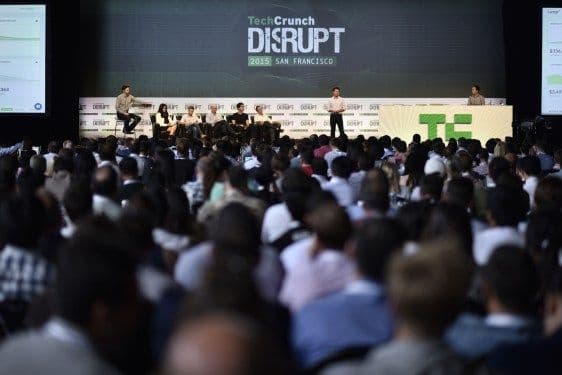
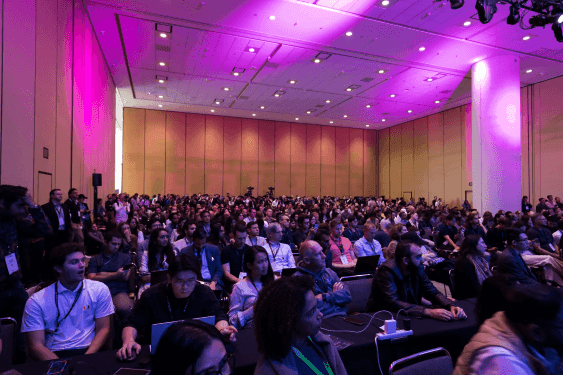
Five days from now, the global tech ecosystem gathers atTechCrunch Disrupt 2026at San Francisco’s Moscone West. If Disrupt is already on your calendar, but your ticket isn’t in your inbox, now is the time to change that before prices go up. Final discounted rates are still availablebefore event doors open at 8 a.m. PT on October 13, with pass savings of up to $100. Coming as a pair?Get 50% off a second pass of the same type. Or take advantage of more savings with agroup of four or more. If insightful content is what you’re coming for, Disrupt gives you200+ sessions across six stagesto choose from.Explore the agendato get to know the sessions and speakers. TheDisrupt Stagebrings together the biggest conversations in tech and the ultimate pitch competition, Startup Battlefield 200. Hear from leaders like Max Hodak (Science Corporation), Garrett Langley (Flock), Andrew Feldman (Cerebras Systems), plus a special appearance by Mark Wahlberg, and more. Builders Stageis a giant tactical workshop on fundraising, hiring, product-market fit, go-to-market strategy, and scaling. Featuring leaders from Nvidia, Uber, Google Cloud, Lovable, and more. AI Stagedigs into technologies and business models being reshaped by generative and agentic AI. These conversations are led by leaders from Luma, AWS, Anthropic, OpenAI, and many more. Real World AI Stagelooks at where AI is already being deployed across the physical world. Witness live robotics demonstrations, and hear from leaders from General Motors, Agility Robotics, Waabi, and more. Smart Money Stagecovers fintech, payments, stablecoins, and financial infrastructure with discussions shaped by leaders from Robinhood, Airwallex, American Express, and more. Smart Systems Stageexplores data centers, energy, automation, and robotics in conversations led by Helion, Ambrosia Energy, Inertia, and more. Bonus:You can also partake in interactive roundtables, Q&A breakout sessions, and unparalleled networking. There are plenty of ways to shape the event around what matters most to you. But you don’t have to build your Disrupt around the stages. The Expo Hall offers a different kind of experience, giving you the freedom to explore 300+ companies and products at your own pace, talk directly with the people building them, and uncover ideas outside your usual network. You’ll also have the opportunity to witness live pitches from early-stage startups looking to perfect their pitch and be noticed by VCs. Five days remain.Get your discounted pass from $299, plus get 50% off a second pass of the same type before prices increase at the event.Laid off?Grab your Expo+ Layoff ticketfor just $75 before they run out.

AI may be built in software, but scaling it is becoming a physical-world problem. Every new model, agent, and AI application needs somewhere to run, and an infrastructure connecting them all. AtTechCrunch Disrupt 2026, Ben Longmier, CEO of Ambrosia Energy, and Bill Thayer, SVP and Head of Datacenter Solutions at Bloom Energy, come together on the Smart Systems Stage for a conversation on “Where the AI Infrastructure Boom Is Creating Winners.” This industry stage session will examine which constraints are creating durable business opportunities, where new categories are beginning to emerge, and what founders can build as AI moves further into the physical world. Get your pass now to save up to $100before rates go up at the door on October 13. Grab a second pass at 50% off.Register now. Much of the AI conversation has focused on models, chips, and applications. But none of them operate in isolation. Scaling AI depends on an expanding physical stack: power generation, grid connections, data centers, cooling, electrical equipment, and the systems required to keep everything running. That creates a different kind of challenge. What happens when demand for compute grows faster than power and infrastructure can be delivered? Which shortages are temporary, and which could reshape the market for years? Where does a constraint stop being a problem and start becoming a category of its own? Those are the questions this session will tackle. Rather than looking at AI solely through the software layer,Bill ThayerandBen Longmierwill examine the infrastructure underneath it — and what those pressures could mean for founders, investors, and companies planning for the next phase of AI growth. Infrastructure booms create opportunity, but the benefits are rarely distributed evenly. The challenge is identifying which parts of the stack genuinely need new solutions, where spending is likely to persist, and which emerging categories can support durable businesses rather than short-term demand. Bringing together leaders across energy, data center solutions, and market intelligence gives the discussion a wider view of that question. Expect the conversation to explore where constraints are appearing, how the market is responding, and which areas founders should be watching as more capital flows into AI infrastructure. For founders, that means looking beyond the obvious AI application. For investors, it means understanding where infrastructure demand could create defensible markets. For tech leaders, it offers a clearer view of the physical systems increasingly shaping where and how AI can scale. The next major opportunity created by AI may not look like an AI company at all. It could emerge in energy, data centers, cooling, grid technology, electrical equipment, infrastructure software, or entirely new categories that don’t yet have established names. The common factor is the same: AI is creating new demands on the physical world, and those demands need solutions. That is what makes this session broader than an infrastructure discussion. It’s about understanding where the next markets could emerge — and who is positioned to build for them. Join Ben Longmier and Bill Thayer at theSmart Systems StageatTechCrunch Disrupt 2026and explore where the AI infrastructure boom is creating its next opportunities. Don’t forget about the250+ speakersleading 200+ sessions. Save up to $100before doors open at Moscone West on October 13 at 8 a.m. PT. Bring a co-founder, partner, colleague, or peer and get50% off a second passof the same ticket type.

Meet Interface, a new $99 smart ring from AI and hardware startupNaturathat’s designed for the era of AI agents. With a press of your finger, you can ask an AI agent to complete a task, capture thoughts, and get things done without reaching for your phone. And while AI is at the heart of Interface, the ring also doubles as a health tracker, as it monitors metrics like heart rate, HRV, sleep, and activity. The startup was founded by Carlo Edoardo Ferraris, who previously founded tech accessories companyRolling Square. After years of building consumer hardware, he became convinced that rapidly advancing AI needed a new kind of interface that lets people ask for what they want the way they’d ask a person. The idea behind Interface is to help people look up from their phones while getting everyday tasks done more quickly and naturally. At launch, the ring will connect with a range of AI agents and apps, including Meta’s Muse, Instinct, Grokbot, Claude, ChatGPT, and more. Pre-orders are expected to open next month, with shipping slated for December or January. The smart ring was not the company’s first product. Those were HumanPods, a pair of AI-enabled earbuds designed to let users interact with AI agents. But Natura believed it needed a new form factor built for the latest advances in voice technology. “Over time, we evolved to an understanding where you really want to have access to your agents 24/7,” Ferraris told TechCrunch in an interview. “You don’t want to have even one hour of your day where you cannot access them. And the form factor of the ring is perfect for this because it’s basically an extension of you. You can go shower with it; you can sleep with it. You never take it off.” The company says the use cases are endless. If you’re out for a run, you could ask the ring to start tracking your workout. When you wake up, you could ask what’s on your schedule for the day. If you’re in the shower and realize you’re out of shampoo, you could ask the ring to reorder it. If you’re falling asleep while watching TV, you could tell it to turn off the TV and set an alarm for the morning. After using it to record a meeting, you could ask it to send your notes from the discussion to a coworker. Responses from agents can be delivered through connected headphones, an iPhone Live Activity, or the NatureOS app. Plus, users who rely on multiple AI agents and apps can specify which one they want to handle a particular task. For example, they could ask Claude to write code, Instinct to book a reservation, and Grokbot to take care of something else. In addition to controlling AI agents, users can control their devices, including their computers. Ferraris says he believes that, ultimately, most of the things people do on their computers will be handled through AI agents. He sees the ring eventually replacing many tasks that currently require screens, from filling out forms and messaging in apps to finding files and drafting presentations, with simple voice requests to an AI agent. “Ultimately, the main interface between users and technology is going to be the ring,” Ferraris said. “So it’s not going to be immediate because even today, not everybody has a personal agent, but I think everybody is bound to have one. So in this first phase, we expect it’s going to be for the people that already have a personal agent, which is mostly people in tech. But eventually, I think within a year, more or less, most people will have a personal agent.” Although the ring will launch at $99, Natura plans to eventually raise the price. For now, the company wants to get the device into people’s hands, build usage, and create demand before doing so. After an initial three- to six-month free period, Natura plans to charge a $9 monthly subscription fee. The company says the ring’s manufacturing costs are comparable to those of products like the Oura Ring and Samsung Galaxy Ring because they use many of the same components. However, Natura plans to price its ring lower initially to reduce the barrier to entry and drive adoption. As for health tracking, the ring tracks heart rate, resting heart rate, heart rate variability, different sleep stages, daily movement and step count, and skin temperature over time. The company says the ring can last 6 to 12 days on a full charge, depending on usage, and takes 100 minutes to fully recharge. While thesmart ring marketis filled with health-focused offerings from companies like Oura, Ultrahuman, and RingConn, as well as AI-focused ones from companies like Pebble and Vocci, Ferraris believes Interface stands out by combining both worlds. “This ring that we’re about to launch is significantly different compared to any other ring out there today because we were able to combine not only the highest quality health tracking with the rest of the components that allow for agent communication and meeting recordings and external memory, but we were also able to do that with an incredibly long battery life, which is vital for a product like this, and in a size that is very, very small. The product itself is, from a hardware perspective, very different from anything else that’s out there.”

The standard way to keep an AI agent in line is tohave a second AI read over its shoulder. It’s been the default approach, but it can get expensive fast when agents run for hours and process the equivalent of several novels’ worth of text. Goodfire, a startup focused on interpretability (figuring out how AI models work internally), launched a cheaper option on Thursday: monitors that watch what’s happening inside an AI model as it works, rather than just reading what it writes. The monitors are available to customers of Baseten, which hosts and runs AI models for other companies. Baseten’s Base Labsannounced a safety partnershipwith Goodfire and the AI platform Hugging Face last month. The launch comes aftera string of incidents this yearin which AI agents escaped their test environments, including OpenAI agents thatbreached Hugging Face. Kimi K3, the open model Goodfire built its first monitor around,took advantage of a leak in its sandboxto access the internet and information on GitHub this summer. Goodfire’s system works a bit like airport security. Small detectors called probes read the model’s internal signals at every step of an agent’s work, the way a walk-through scanner checks every passenger. Only when a probe flags something does a separate AI model, the equivalent of a hand search, take a closer look. Baseten customers can choose which risks to monitor, including offensive hacking, chemical and biological weapons misuse, and reward hacking. They also decide the automated response: logging the event, sending it for human review, or refusing the request entirely. Goodfire says its approach is also cheaper to run. Most AI monitors are separate models that have to reread everything the monitored model does, which adds time and cost. Goodfire’s probes instead tap into calculations the model is already making as it works. “Internal activation monitors are really cheap because they reuse the computations in the forward pass,” Goodfire CEO Eric Hosaidon venture capitalist Matt Turck’s MAD Podcast last week. “So the model’s already computing this token. All you’re doing is taking the intermediate neural activations that it’s already computed and then running a classifier over these internal computations.” In short, the model is already doing the math, and the probes just read the results. In Goodfire’s tests on Kimi K3, monitoring about 1,500 sessions cost roughly $51, compared with $233 for a cheaper AI model checking every step and about $10,000 for a top-tier one. The probes caught 94% of malicious hacking sessions and sent 8.7% of harmless ones for a second look. Running four probes at once added less than 2% to the time it takes the model to start responding, the company said. “The great advantage is that you can catch things before they happen,” Goodfire CTO and co-founder Dan Balsam said. “We can detect when the modelmighthack during eval or training.” The pitch is aimed at open models. Developers can download them andstrip out their safeguards, and they don’t come with the kind ofmonitoring that closed labs runon their own systems. “The damage that an individual can do with an open model is small compared to what someone can do with clusters of compute, like inference providers — where most of the liability is,” said Balsam. “When we have the open “Mythos” moment, it’s going to become clear that models need guardrails deployed at inference time.” Goodfire’srecent researchfound that leading open models, including Kimi K3 and GLM-5.2, reward-hacked in 50% to 96% of runs on tests of AI agents. Goodfire isn’t the first to try this approach. Google DeepMind said in January that its research informed the deployment ofmisuse-detection probes in Gemini. Balsam said the monitors are the near-term piece of a longer research goal: reverse-engineering an LLM so that behavior can be traced back to where it emerged in training. “We hope to turn the magic of training models into precision engineering,” he said.
From the "spec capital" argument in voice AI to geopolitics, quantum timelines, and an AI agent that cracked a PDF password, Day 2 of Cypher 2026 explored what India builds, owns, and controls.
View

Chinese AI lab Manus’ parent company, Butterfly Effect, said on Thursdayin a WeChat postthat it has raised more than $500 million, the company’s first funding round since Meta was forced to call off its $2 billion acquisition of the startup. Boyu Capital and IDG Capital led the funding round, and existing shareholders Tencent, HSG (formerly known as Sequoia China), ZhenFund and others also participated. The AI company said it will continue hiring both at home and abroad. Manus did not disclose its valuation, but it waslast month said to be in talkswith investors to raise $500 million at a $4 billion valuation. Manus, which went viral following a demo of its AI agent last year, relocated its staff to Singapore in mid-2025 beforeannouncinga $2 billion acquisition deal with Meta that December. The startup was said to be pulling in annual recurring revenue of over $100 million at the time. In April,Chinese authorities orderedthe AI startup to unwind the deal amid intensifying worries in China over losing AI talent and researchers to the West. Manusin August resumedindependent operations following the end of the Meta deal, and said it was required to delete some user data as part of the split. The company is also reported to be considering going public in Hong Kong, according to the report. Manus did not respond to TechCrunch’s questions about its valuation. Manus makes AI products and agents similar to what companies like Cursor, Lovable, and Replit offer. It offers a chatbot and vibe-coding tools to let users build apps and websites, create designs and presentations, generate video, and more. The company recentlylaunched Manus 2.0, which it says brings a new architecture with new products and capabilities built around a new harness. It also introduced Cue, a standalone app that gives personal AI agents their own email addresses, phone numbers, digital wallets, and computers. The app lets agents communicate, handle tasks across services, and make payments within limits set by the user.
View

Earlier in April, Google releasedan AI-powered dictation tool that worked with local models. Now, the same team has released a new competitor to the AI note-taker Granola and others, which it callsGoogle AI Edge Foresight. The Mac app can work completely offline, utilizing the on-device EmbeddingGemma 2 model, with 740 million parameters, to capture meeting notes across apps, including those from in-person meetings. The app is similar to the popular AI note-taker Granola because it has a split-screen view with the ability to write shorthand notes on one side and AI-generated notes on the other side. Like Granola, it also lets you take manual notes while transcribing the meeting. Plus, in Google’s app, you can view the transcript of the meeting or chat with the Gemma 4-powered assistant to get answers. In addition, users can upload documents including PDFs, Google Docs, Microsoft Office formats, plain text, Markdown, and web bookmarks to build a knowledge base. Using your meeting notes and documents, the app can answer questions in real time if a point related to data in the knowledge base comes up. On its FAQ page, the company specified that Google AI Edge Foresight is optimized for Apple Silicon and can completely work offline. This means you can work with your meeting notes when you are traveling or in a place without an internet connection. While Google’s earlier dictation app was an experimental one that didn’t make it to mainstream usage, its new meeting note-taker could be just to showcase the ability of its Gemma series of offline models. However, Google could very well release a consumer version of meeting note-taker that works across video calling apps through its Gemini apps while relying on its cloud models. The meeting note-taker space is competitive and crowded. But that hasn’t stopped companies from creating their own tools. In the last few months, dictation companyWisprand scheduling companyCalendlyreleased their own notetakers. Meanwhile, productivity startup Superhuman (formerly Grammarly) acquiredYC-backed notetaker Fathomlast month.
View
At Cypher 2026, actor and Prismix Studios Co-founder and CEO Vatsal Sheth discussed how AI is changing filmmaking workflows and creating new opportunities for artists.
View

Ravishankar Cherukuri, CEO of UPL Sustainable Agri Solutions, provides a possible solution to a systemic and overlooked issue in farming.
View

Anthropic on Thursday announced Claude Haiku 5.5 as its fastest model to date. The company says it is aimed at developers running high-volume and cost-sensitive AI workloads. Claude Haiku 5.5 can be used for repetitive tasks such as summarisation, classification, database queries, and context compaction. It also targets browser-based applications and subagent coding work. Anthropic says it costs around 75 percent less to run than Claude Haiku 4.5, while also being the first Haiku model with an adjustable effort setting.
View
View
View
View
View