🚀 Zaprep : tes réseaux sociaux sous stéroïdes. Commencer gratuitement — automatise 1 000 DM/mois et transforme l'engagement en leads. avec 1 000 DM automatisés/mois.
Soumettre ton outil
PoweredByAI.app est un annuaire d'outils IA qui aide les particuliers, les entreprises et les créateurs à découvrir les meilleurs outils IA pour la rédaction, le code, le design, la productivité, et plus encore.
© 2026 , Un produit de011BQ. Tous droits réservés.

In a tan polo shirt, brown leather belt, and round bolo tie, MIT PhD student Wil Norton kind of looks like a park ranger, leading our tour group through a tropical jungle. We’re not actually on safari, though — we’re at MIT’s Computer Science & Artificial Intelligence Lab (CSAIL). But what we’re about to see is even more exotic than a cheetah or a jaguar: a pair of humanoid Unitree robots, each costing about $50,000. (“They’ll tell you they cost $16,000,” Norton says. “That’s a lie.”) We usually only see these robots on YouTube when they’re performing asynchronized martial artsroutine, ordancing on “America’s Got Talent.”Here, they’re approachable. Even though I know it isn’t sentient, I want to be its friend. With Norton’s permission, I approach the robot, whose nickname is Gabe. For a moment, I’m not sure how to interact with something that has a LiDAR sensor where its brain should be, but I default to treating it like a person. “Hello, sir, it’s nice to meet you,” I say, grabbing its gloved, dexterous hand and shaking it. I think about this interaction later — my instinctive impulse to be friendly to a robot — when I attendDr. Sherry Turkle‘s “Artificial Intimacy” book launch at MIT Future Fest. Turkle, who joined the faculty at MIT in 1976, has been researching the relationship between humans and computers perhaps longer than anyone, charting technology’s psychological impact on us from the first home computers to ChatGPT. “When we are drawn into even the most primitive exchanges with a relational artifact, we believe it cares for us,” Turkle writes in the book. “And we are wired to care for it in return.” I’m not alone in my tendency to anthropomorphize robots and large language models (LLMs) — as Turkle notes, it seems to be in our nature. One study found that about70% of peopleare polite when interacting with AI, while another showed that users aremore likelyto say “please” or “thank you” to chatbots once a conversation has progressed past a first prompt-and-response. “People tend to categorize whether this is the right use or wrong use, but I don’t think that is a clear boundary,”Dr. PatPataranutaporn, a colleague of Turkle who founded the Cyborg Psychology research group at the MIT Media Lab, told TechCrunch. “The question is, who are we becoming when we talk to [AI]?” There’s no material consequence of my politeness toward Gabe the robot, but as LLMs infiltrate everything from Google searches to customer service interactions, it has become routine for people to interact with these seemingly sentient chatbots. We’re more vulnerable than ever to the flip side of this impulse, which is that some people can ascribe so much legitimacy to the feelings of chatbots — which are programmed to never spark conflict — that they end up favoring them over other humans. “You can think of it like fantasy and fiction. We go to the cinema even though we know the story is completely fictional, but we want to experience a certain dimension of human experience that maybe our reality cannot give us,” Pataranutaporn said. “How do we benefit from that ability to experience other dimensions of human experience without losing it to the fantasy, where you can no longer come back to the reality?” Pataranutaporn describes himself as a “critical optimist,” and he studies AI’s potential to contribute to human flourishing. But he’s well aware of how dangerous this technology can be in the extremes. He even served as an expert in awrongful death lawsuitover the suicide of 14-year-old Sewell Setzer, III, whose mother sued the chatbot platform Character.AI, alleging that a chatbot modeled after a “Game of Thrones” character had encouraged her son to end his life. “It can create a situation where people don’t feel agency in actually creating their own future — like when you say that AI will replace everyone, people ask, what are we gonna do? And these companies are not really responding ethically or responsibly,” Pataranutaporn said. “How do we have imagination while still being responsible for the impact of that imagination?” While Turkle’s book explores the risk of turning to AI for emotional support, rather than other people, she doesn’t think that AI-human interactions are universally harmful. She recalls a project she advised in which a student created an AI bot to help people practice for job interviews. “My big metaphor is, stay in your lane, chatbot!” Turkle said at the event. “Coaching for a job interview? That’s a lane. I can do that … A chatbot that says to a three-year-old, ‘I’m your parent, you can talk to me, not your parents,’ is not in a lane.” But when this technology deviates from its lane even slightly, we become vulnerable to the way it can slowly chip away at our skepticism and make us trust it. It can start with something as simple as a handshake.
View

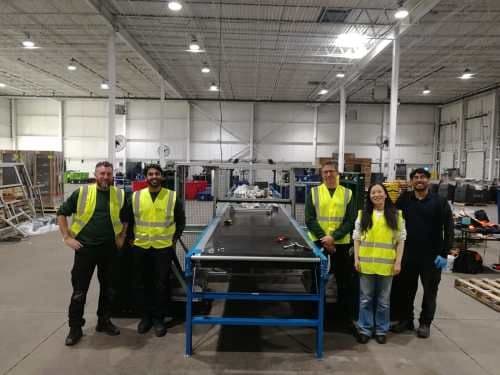
ForDanu Roboticsfounder Amy Ma, the eureka moment came after years of working as a software developer at a London bank. It was the kind of high-touch office that’s typical in finance — but despite all the perks, Ma was alarmed to realize that the building’s recycling bins were being emptied into the trash. “Even though they have tons of money, there’s all these different recycling bins that just end up in the same place,” Ma told TechCrunch. The more she dug into the problem, the deeper it seemed to go. It wasn’t just her building. The economics of recycling as a whole often boil down to human beings sorting by hand through streams of waste to pull out different kinds of recyclable material. “I saw the technology and thought, we can do so much better,” Ma remembers. Now, she’s making good on that promise with six-year-old, Edinburgh, Scotland-based Danu Robotics, which makes a robot designed to sort through recycling more cheaply and quickly. Ma has been working on that idea for six years and is finally bringing her version of the product to market. Her robot, dubbed H.E.R.O., has a few advantages over its competitors. For example, it picks up items with a pincer claw instead of a suction system. But the bigger difference is the business approach: Danu leverages AI to continuously improve the robot’s software. The approach is already seeing some traction. Danu has letters of interest from two large customers and $500,000 worth of signed contracts. More notably, more than 200 customers are in its sales pipeline, which gives the company a hook into the $20 billion market for recycling sorting across Europe and North America. On the back of that promise, Dabnu has raised $5 million in late-seed funding to keep the commercial pressure on. There’s already a robust market for robotic waste-pickers, particularly the suction-based arms offered by competitors like Glacier and RecycleEye. But Ma believes the economics of recycling will make it easy for a new competitor to prove its worth. Because recycling centers make money off the materials they’re able to sort out, there’s an immediate return on investment for a working system. Ma estimates that a working site will earn $485,000 in additional revenue from having the robot on the sorting line, compared with a $160,000 initial investment and $24,000 in maintenance fees each year. That’s significantly cheaper than the competition, and Ma believes the robot will be more efficient, too. Since those machines are already shipping, Ma’s next goal is to make the robot sturdier, smaller, and more versatile. Once it’s portable enough, it can be used outside dedicated waste facilities, opening up a whole other world of use cases. “Once it’s smaller, it can be used as a stand-alone recycling solution for events, for shopping centers, hospitals, or airports to recycle their waste at the source,” Ma told TechCrunch, “and that’s the way we can really change how we’re managing our packaging waste.” Danu Robotics will be participating in Startup Battlefield 200 atTechCrunch Disrupt, October 13-15 at the Moscone Center in San Francisco.

Amazon says it willstop using NDAswhen negotiating data center deals with local governments, following asimilar move from Microsoftearlier this year. Secrecy has fueled community backlash against AI infrastructure, with opposition leading to hundreds of proposed and enacted moratoriums from New York to San Francisco. Meanwhile, a wave of startups is betting that consumers will hand AI agents access to their inboxes, files, and credit cards —if they can get websites to let them in. On this episode of TechCrunch’sEquitypodcast, Anthony Ha, Sean O’Kane, and Rebecca Bellan dig into whether ditching NDAs will change how data center deals get done, why trust may be the real product for personal AI startups, plus a couple of deals of the week. Listen to the full episode to hear more about: We’ll see you next week atTechCrunch Disrupt 2026! Get 25% off your tickets with code Equity25, and we’ll see you on the Builders Stage Tuesday at 9 am. Subscribe to Equity onYouTube,Apple Podcasts,Overcast,Spotifyand all the casts. You can also follow Equity onXandThreads, at @EquityPod.
View

Loading the player… Amazon says it willstop using NDAswhen negotiating data center deals with local governments, following asimilar move from Microsoftearlier this year. Secrecy has fueled community backlash against AI infrastructure, with opposition leading to hundreds of proposed and enacted moratoriums from New York to San Francisco. Meanwhile, a wave of startups is betting that consumers will hand AI agents access to their inboxes, files, and credit cards —if they can get websites to let them in. On this episode of TechCrunch’sEquitypodcast, Anthony Ha, Sean O’Kane, and Rebecca Bellan dig into whether ditching NDAs will change how data center deals get done, why trust may be the real product for personal AI startups, plus a couple of deals of the week. Subscribe to Equity onYouTube,Apple Podcasts,Overcast,Spotifyand all the casts. You can also follow Equity onXandThreads, at @EquityPod.
View

Sarvam is digitising Odisha’s complex land records with a custom OCR model, while preparing a trillion-parameter model for February.
View

TCS saw stronger demand across BFSI, manufacturing and technology services, while AI work began commanding better pricing and margins.
View

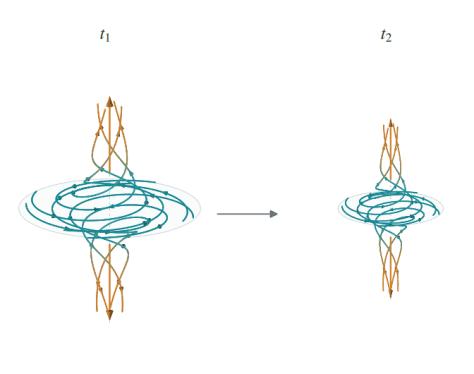
When OpenAIreleasedhundreds of claimed solutions to some of the world’s hardest math problems this week, the frontier lab said that it had consulted an advisory group of elite mathematicians to avoidthe controversythat came with the last time one of its models solved a long-standing problem in the field. But OpenAI fell short of those standards, particularly where the mathematicians emphasized the need for human understanding of a mathematical result. That’s especially concerning after a new paper highlighted gaps between the natural language and formally expressed solution to a million-dollar problem ostensibly solved by OpenAI’s models. The Advisory Group on Mathematics and Artificial Intelligence (AGMAI), hosted by Princeton University’s Institute for Advanced Studies, is made up of nine prominent researchers at institutions around the world. The organization releasedguidelinesfor frontier labs solving math problems at the end of September. In a statement on the latest set of proofs, the AGMAI said that “it is ultimately up to the mathematical community to assess the extent to which our recommendations were followed successfully.” However, the organization’s first request was “to stop testing advanced mathematical problems on proprietary models.” OpenAI’s release explicitly says that it is evaluating its proprietary models using open research problems in mathematics. The advisory group did not respond when asked by TechCrunch for a more thorough evaluation of OpenAI’s latest proof release. The lab clearly followed some of its principles, including releasing results as soon as possible and including information about how the models reached their conclusions. But not for all of them: Just 10 of the 719 manuscripts included releases of the model’s chain of thought. For papers that people don’t understand, the mathematicians suggested the proofs should be formalized — but just 42% of the proofs released by OpenAI had not undergone this process. Ultimately, it’s still not clear that OpenAI is taking “responsibility for ensuring that human understanding will follow” when releasing its proofs, in accordance to the AGMAI principles. AGMAI suggested that OpenAI should help fund the work of human mathematicians who will be required to make the lab’s solutions meaningful in any real way. “Problems are being solved autonomously by AI prompters who have no interest in the broader field itself once their initial target is ‘solved’, and do not understand the AI output well enough to answer questions on the result, give talks, or otherwise interact with the rest of the field,” Terence Tao, a prominent mathematician who has criticized OpenAI’s approach,wroteon social media after the release. That problem is exemplified bya paperreleased this week by mathematicians at the University of Cambridge and King’s College in London that questions the way frontier labs are approaching these challenges. When AI models solve mathematical problems, they first create a “natural language” explanation, then try to express that result in Lean, a programming language that in theory confirms the accuracy of the proof by compiling it as code. However, there may be problems with the way the models translate their natural language proofs into code; this paper documents at least two discrepancies between the natural language proof and the Lean code behind the solution OpenAI has offered to a problem derived from the Navier-Stokes equations that describe the complex behavior of fluids. These discrepancies don’t necessarily disprove either solution, but they do raise questions on whether we can simply rely on models to formalize their own solutions without human involvement. That’s one reason that AGMAI asked OpenAI to “include machine-readable metadata correlating the natural language and formal artifacts,” something that the frontier lab did not do with these releases. “Because of the phenomenon of mistranslations — as highlighted in this paper — the NL proof by OpenAI andother autoformalised Lean proofs should not prima facie be trusted without the same peer review process andscrutiny that other proofs are subjected to,” the authors of the “lost in translation” paper conclude. Mathematicians stress that when new results are discovered by humans, they take responsibility for them and engage with the broader community through papers, talks, and seminars. That process increases understanding of the solutions, finds strategies that can be used to solve other problems, and allows the new knowledge to be applied in practical fields. When a model is prompted to solve a hard problem and spits out a solution, “there is not human understanding of them at the point of release, and now the work begins,” Harvard University mathematics professor Melanie Wood told TechCrunch.

Anthropicupdated its usage policy on Thursday, codifying new prohibitions on election interference, weapons software, and surveillance. But perhaps the most attention-getting change is a new prohibition against prolonged verbal abuse of the model, which is now expressly forbidden. Since an update in August, Claude has been trained to end conversations with “persistently harmful or abusive user interactions” — but the new policy explicitly bars users from pursuing those conversations. “The policy update is meant to apply only in extreme cases, where users repeatedly act cruelly toward our models, with no discernible purpose,” the post explains. “It does not apply to common versions of user frustration, pushback, dark creative themes, or model testing and research.” The change comes after Anthropic has sought out collaborations withprominent religious scholars— in some cases, seeking to convince them that Claude could be conscious or have a soul. Separate sections of the usage policy forbid users from engaging in broadly deceptive campaigns, such as using Claude to run fake accounts or fabricated news outlets. The policy also includes rules against deceiving voters or disrupting elections, collected in a section titled “Do Not Undermine Democratic Processes.”
View

At aGoogle Cloud eventon Thursday, the companyannouncedit’s bringing its Gemini AI into the agentic age, with the launch of a unified agent that can not only answer questions but also get things done on the user’s behalf, all from a single interface. The move comes as AI tools have been moving beyond being just conversational experiences to those that can take ownership of assigned tasks, generate code, schedule meetings, book appointments and travel, and more. It also follows the rise of consumer-facing agents like Meta’s Muse and those that operate over messaging, like Instinct and others, as well as the recent debut of ChatGPT’s Dots. The company still has a good shot at achieving scale for its agentic efforts — as Google CEO Sundar Pichai pointed out at the event’s start, Gemini today has over 1 billion monthly active users. He also noted that nearly 90% of Fortune 100 businesses now use Gemini Enterprise at work. Given Gemini’s adoption in the corporate world, Google will initially focus on bringing the agent to businesses before later rolling it out to consumers. According to Pichai, this will allow the company to solve the “harder problems around security, scale, and performance,” which come with launching powerful agents such as these. Thomas Kurian, CEO of Google Cloud, explained that the new agent can be given “objectives, not just instructions.” That means it’s able to plan the work, use custom skills and tools, and connect to businesses’ internal systems to accomplish its goals. By default, the AI will pick the best model to complete the task, but users can also take over to choose a model — including those from third parties, starting with Anthropic’s Claude models. Google said that it will expand the model picker to include open source models and other private models in the future. The request can include attachments, like files, folders, or other projects designed for specific workstreams, like those that combine files and skills. The agent can connect to the business’ data and systems, like Google Workspace, Microsoft 365, Slack, Jira, Confluence, Git, BigQuery, Databricks, Postgres, Snowflake, and others. It can also connect and work securely with any Model Context Protocol (MCP) server inside or outside the company’s network. Users can keep track of what Gemini is doing from a “tasks inbox” interface, where they can see Gemini’s thinking process, delegation of tasks to subagents, loading of special skills, code, and progress. Notably, the AI will have its own Workspace account, as if it’s just another co-worker. That means it has its own email address and its own context, Google said. It knows who at the company is on which team, their time zones, who needs to approve items, what’s on people’s calendars, and more. Users can call the agent by tagging it, emailing it, sharing with it, or adding it to a group chat. As it takes action, it writes an audit trail attributed to the agent, instead of a person. The agent will be accessible from iOS and Android mobile devices, Windows and Mac desktops, the command line interface, Google Workspace, Microsoft 365, ServiceNow, and Slack. The agent’s early testers included sportswear brand On, Shopify, and PayPal, and noted that Gemini Enterprise customers include large businesses like BNP Paribas, Bradesco, Merck, Orange Spain, Santee Cooper, SOMPO, Ulta Beauty, and Wesfarmers. Google said new flexible spending options, including multi-model orchestration, smart routing, and real-time spend caps, will help businesses keep their enterprise AI costs under better control.

A little over a week ago,it was reportedthat OpenAI’s annualized revenue was approaching $70 billion, a figure that would have made it competitive with Anthropic’sreported run rate. Now, however, the AI lab is said to have told investors that the real revenue is some $20 billion lower than that. The Financial Timesreports thatthe company has told investors that its annualized revenue is “approaching $50 billion.” The $70 billion figure was previously reported by news outlets and based on information that had been shared with OpenAI investors, the outlet writes. That figure was devised via “attempts by OpenAI’s own investors to produce a direct comparison with Anthropic’s annualised revenues,” per the FT. It’s worth pointing out that OpenAI and Anthropic calculate their annualized revenue differently — with Anthropic counting sales made by its cloud partners. OpenAI doesn’t do this. TechCrunch reached out to OpenAI for comment. The issue of OpenAI’s revenue has troubled the company, as it attempts to justify the gargantuan investments being made on its behalf; the AI giantraised $122 billionduring a March funding round alone. The company’sleaked 2025 financialsearlier this year showed it had made about $13 billion but spent significantly more. OpenAI’s IPO, which was previously rumored to be materializing this year, hasbeen pushed offuntil early 2027.
View

Arena, which originated in 2023 as a research project at UC Berkeley that crowdsourced rankings of AI models, has raised a $200 million Series B round at a $3.1 billion valuation, itsaidon Thursday. This comes after the company said itreached $100 millionin annualized run-rate revenue in June. The round was led by Lightspeed Venture Partners and Khosla Ventures, with Salesforce Ventures, 01 Advisors, Dell Technologies Capital, Endeavor Catalyst, a16z, Felicis, and others joining in. Arena previously announced a $150 million Series A in January at a $1.7 billion post-money valuation. At the time, its annualized revenue was$30 million, it said. So that means its valuation has nearly doubled in about 10 months. Arena provides a crowdsourced platform that is free for consumers to use. People enter prompts or request vibe-coded projects and then rate which model does it better. Arena claims it has tens of millions of monthly visitors. In September of last year, it introduced its commercial product,AI Evaluations, a service that provides model labs and enterprises with detailed performance analytics based on its community feedback. The timing proved impeccable. This year, AI labs realized thattheir models were gaming benchmarkingtests, finding ways to rack up good scores without truly earning them. At the same time, enterprises wanted help determining which model works best for their own internal needs rather than relying only on standardized benchmarks. “AI is advancing faster than our ability to evaluate it, and static benchmarks break down once models recognize they’re being tested,” the company said in its funding announcement. “The world needs a neutral third party to measure how safe and aligned AI actually is once it’s in the hands of real people. Arena is stepping into that role today,” it added. To that end, Arena has also added a new category to its leaderboard:alignment. This is where it ranks models based on issues like unauthorized action (taking actions it wasn’t asked to take); false attribution (wrongly crediting statements or facts to the wrong source); and what it calls “deceptive completion” (lying about completing tasks that it didn’t do). Currently, a slate of OpenAI’s models are at the top of itspreliminary alignment leaderboard,with Claude Opus 5.5 and Claude Fable in sixth and ninth place, respectively.

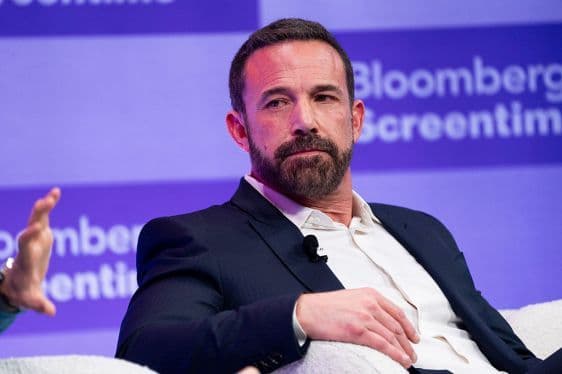
They cast the wrong lead in “Good Will Hunting,” apparently, because it’s Ben Affleck who is the secret genius, as it turns out. The actor who earlier this yearsold his AI filmmaking startup to Netflixfor a reported $587 million has gone viral this week for demonstrating his understanding of AI technology, neural networks, machine learning, and the like, across multiple video clips of his recent interviews. He can even write a little Python, he says. The movie star delved into his interest in technology most recently on an episode ofGQ’s “One More Question” seriesthis week, where he humbly started with “I’ve always been kind of into computers since I was young,” before nerding out on the development of AI as it relates to filmmaking, while using AI terminology like machine learning, neural networks, transformers, tensors, GPUs, inference, and more. In a clip that’s making the rounds, Affleck explains to the impressed interviewer, Zach Baron, that he got into the space when analog film moved to digital. As he spoke, he kept defining terms so the interviewer could understand what he was talking about. “I became more interested in that aspect of it, and the visual effects workflow for many years has included machine learning,” Affleck began. “So I can write, like, pretty shitty Python scripts and stuff like that. Because with convolutional neural networks — which were the sort of precursors to what the transformer can do — which is just much more computation simultaneously — you would do things like, look at what’s called a tensor — which is just the numerical translation of a visual image, in numbers like the batch number, the frame number, the red, green, and blue values of each pixel in each frame, and how many? It’s just that simple, right?” No, Ben Affleck, it is not just that simple, which is why this video is going viral. The actor then went into how neural networks were used to identify patterns and do edge detection or feature extraction, which he described as “identifying patterns enough to know — like this is where the window ledge is, so we can more easily take the green screen image out and replace it with something.” He also admitted he used his status as a Hollywood star to get a peek at emerging AI technology, at times. OpenAI was among those he visited, Afflecksaidin a separate clip, which ultimately led him to understand how he could get more directly involved in the AI space. As the interviewer continued, Affleck explained how AI can help with filmmaking while not replacing it, leading to the development and sale of his own startup in this space. (He claims the $587 million figure is “not right,” noting that he didn’t own the whole company.) “I gambled on this notion that in order to do this in an ethical way and in a way that could take this technology and actually make it work hand in glove with artists in this community where there are very fixed, long-standing relationships around likeness and so forth, we had to create our own dataset,” he said. “So I raised the money. I shot for about eight months with a lot of cameras and a lot of equipment, and created a dataset that would serve as late-stage training for open models to do discrete tasks, sort of where the training code, the inference code, were related to one another and geared toward actual specific tasks that would generate value,” Affleck said. In a separate clip, also going viral, Affleckspoke to Bloomberg’s Lucas Shawat the Screentime 2026 conference in LA, where he talked about how he fine-tuned AI models by taking open source models, unfreezing the weights, then teaching them to meet certain cinematic standards. In the process, the filmmaker retains their proprietary work, while benefiting from the learning they create by training their own unique model for the movie they’re making. Ben Affleck (Hollywood star & Artists Equity CEO) talks about how he fine-tunes open video models by unfreezing weights and trained only the last cinematic layer so a film crew can hit real production standards.for context, Ben Affleck founded InterPositive in 2022, a 16-person…pic.twitter.com/xIOvD0xMyt The actor used the technique himself in his movie “Animals,” where AI aided in the post-production process. At one point, he also weighed in on the concerns around AI andits world-ending potential. His worries, however, were much more rational. “When I worry about AI, I worry about my kids in school. I worry about the 30% rise in the number of A’s given out at colleges over the last three years. I worry about learned helplessness. I worry about responsible use. I don’t worry about Skynet, and I don’t think that it’s going to take over [the movie] business in any meaningful way. I think it’s going to be additive,” Affleck said.
View
View
View
View
View