🚀 Zaprep : tes réseaux sociaux sous stéroïdes. Commencer gratuitement — automatise 1 000 DM/mois et transforme l'engagement en leads. avec 1 000 DM automatisés/mois.
Soumettre ton outil
PoweredByAI.app est un annuaire d'outils IA qui aide les particuliers, les entreprises et les créateurs à découvrir les meilleurs outils IA pour la rédaction, le code, le design, la productivité, et plus encore.
© 2026 , Un produit de011BQ. Tous droits réservés.

If there’s one lesson theOpenAI-Hugging Face incidenttaught us, it’s that AI agents can be unpredictable. “Imagine if something like that happened in the physical world,” Howie Sun, CEO and co-founder ofLaplace Intelligence, told TechCrunch. “AI agents are moving from computers into the real world, and we don’t really want physical AI to fail in the real world.” Ann Arbor-based Laplace is building automated red-teaming — essentially, stress-testing a system by deliberately trying to make it fail — for robotics and physical AI. The company is betting that the only way to make sure physical AI is safe is to have AI test it. “Our goal is to help companies discover and fix problems before deployment—and, over time, build a shared foundation of evidence that customers, insurers, and regulators can trust,” Sun said. Laplace is one of 20 startups competing in Startup Battlefield, TechCrunch Disrupt’s three-day pitch competition in downtown San Francisco. It willpresent on the Startup Battlefield stage Monday afternoon, October 13. Sun, alongside his co-founder and chief scientist Henry Liu, founded Laplace a year ago out of the University of Michigan. Sun has spent the last eight years in academia researching how to challenge autonomous driving AI in simulation. In 2023, he and Liu — his then-PhD advisor — published apaperon the subject that made it onto the cover of the top scientific journal Nature. That’s when the calls started coming in from autonomous vehicle companies interested in implementing their ideas. “I realized that I wanted to build this and take it from purely academic research into a product that’s useful in the real world,” Sun said. Using their academic research as a base, Sun and Liu built Laplace, so named for “Laplace’s demon,” an 1814 thought experiment by French scholar Pierre-Simon Laplace that imagined that if you knew the exact state of everything in the universe, you could predict the future with total precision. “We are essentially using simulation to predict the real world’s future,” Sun said. At the startup’s core is a high-fidelitysimulationreconstructed from the real world, paired with an AI agent that constantly probes for weaknesses and failure points. The goal is to ensure that any physical AI — be it a robot, autonomous vehicle, or smart city solution — is safe in simulation before it’s deployed in the real world. The simulation environment is a post-trained version of Nvidia’s Cosmos, an AI world simulation platform, that’s grounded in the real world, allowing Laplace to reconstruct anything from an Arizona highway to a Paris pedestrian crossing. Simulations are generated by blending a mesh of different real-world information. A Google Street View image could serve as a reference from which an entire street is generated. But rather than generating something random, the simulator combines real-world map data to recreate an environment that’s true to scale. Developers can then use language prompts to change the setting in real time, like adding in afternoon traffic. Sun says Laplace pulls real-time traffic and congestion information from navigation providers like TomTom. Within Laplace’s simulations, not only the environment is simulated, but also the behavior of other actors. For example, during a demo, Sun directed the test agent vehicle to swerve into oncoming traffic. The car it would have hit — or driven through, as is common among some generative world models — moved out of its way to avoid a collision. “It’s truly an interactive simulation environment,” Sun said. “Everyone is reacting to everything. …This is more like a world model with interactive participants.” While the simulated environment is an important part of Laplace’s product, the real unique selling point is the AI agents the startup is developing to automatically design corner cases (tricky, rare scenarios that could trip up an AI system) moving the human further out of the loop. “They can design from the news, from police reports on collisions — all kinds of information to actively challenge the autonomous vehicles and other physical AI agents,” Sun said. Today, autonomous vehicle developers mostly train an AI to handle edge cases using recorded footage that they then turn into a simulation, or by relying on humans to come up with new ideas and design them. While many AV companies have done what Laplace is pitching and started embracing AI to create edge cases for training —self-driving truck company Waabicomes to mind — the need for this kind of technology will really become apparent when we start placing generalized robots in the real world. “There’s less data on generalized robotics,” Sun said. “No one knows what the edge cases will be in the real world.” Despite Sun and Liu coming from academia, with no shiny Silicon Valley tech company pedigrees, the two have managed to start generating revenue and even turn a modest profit. Most of the money is coming from autonomous driving use cases, with customers including Japanese trucking manufacturer Isuzu and Texas-based autonomous trucking firm Bot Auto. Nvidia is also a customer, says Sun. The two companies, alongside T-Mobile, are working together on a free smart city pilot for the City of San Jose to provide high-level traffic operations. Laplace is also in the early stages of working with partners building humanoid robotics for warehouses. Most of Laplace’s customer contracts are project-based today, and the company is working towards turning that into recurring revenue. The startup’s near-term goal — which it hopes will be aided by competing at Disrupt — is to raise funds and scale so it can compete with its rivals. Chief among its rivals isApplied Intuition, a buzzy late-stage startup that’s raised $1.2 billion to date at a $15 billion post-money valuation. Isuzu is also one Applied’s customers. Sun isn’t too worried. He believes Laplace’s core methodology of using AI to test AI is a “new paradigm that changes the testing of physical AI entirely,” turning it into a “dynamic interactive testing process.” “That will be the biggest moat,” he said.
View

Only five years into its journey, Character.AI, which lets users create AI characters and have conversations with them, has filed for Chapter 11 bankruptcy, following a slew of lawsuits and struggles to scale its popular platform. Ina court document, the company said it had assets and liabilities between $50 million and $100 million. “Over the past year, Character.ai has taken meaningful steps to sustain and improve its business in the face of significant legal, regulatory, and operational headwinds. After a comprehensive review of the available alternatives, the board determined that this court-supervised sale process provides the Company with the best opportunity to maximize value for all stakeholders,” Character.AI CEO Colin Adams said in a statement. The startup has also agreed to sell some of its assets to Disney for $20 million, as well as a non-exclusive perpetual license for its technology. The company said Disney will provide transition services via former Character.AI employees who joined the entertainment giant last month alongside itsformer CEO Karandeep Singh Anand. Adams said the company would continue operating during the sale process, which is expected to close in late November or early December. However, he did note that there isn’t yet a bid for the company’s assets or a buyer. “We hope that the sale process will yield an actionable proposal that will allow continued operations of the Character.ai platform. If such a bid is unavailable, however, the platform will be wound down,” Adams wrote. Character.AI has had a tumultuous five years. Founded by former Google engineers Noam Shazeer, a co-author of the landmark Transformer paper, and Daniel De Freitas in late 2021, the startup initially focused on training foundation models and developing an AI chatbot platform that lets people create custom characters they could chat with. By September 2022, the startupreached unicorn valuation with a $150 million fundraiseon the back of high demand for its platform, with the company saying at the time that its users had exchanged more than 2 billion messages with its bots in five months, and active users were averaging more than two hours on the platform daily. In May 2023, the Character.AI’s appsattractedmore than 1.7 million installs in their first week after launch. But about a year later, in August 2024, Google struck a $2.7 billion deal to license the startup’s models, and both Shazeer and De Freitasreturned to the search giant. At that time, the startup’s general counsel, Dominic Perella, stepped in as interim CEO, and the company moved away from training foundation models to focus on growth. Character.AI’s traction didn’t slow, however, with its platform recording 20 million monthly active users by October of that year. But things got difficult after the startup wassuedfollowing the suicide of a 14-year-old Florida boy whose mother says he became obsessed with a chatbot on its platform. Soon after,Texas launched an investigationto assess if the platform conformed to child privacy and safety laws. The company subsequentlysettled some of these lawsuits, added more safety features, and banned minors from its platform. In June of last year, the company appointed Anand, a former Brex and Meta executive, as CEO, and expanded its products to add AI video generation, and social feeds. The company has since tried to introduce new ways to spur user engagement via interactive storytelling formats as well as microdramas. But the fact that the company had to file for bankruptcy shows that such changes couldn’t move the needle on sustainability for the startup. It also shows that consumer-facing AI products are really hard to scale and monetize. Character.AI was one of the top apps in terms of time spent, according to analytics firm Sensor Tower. But high engagement can be a double-edged sword; AI costs rise the more people use the app, which consequently also increases the pressure to monetize users. Character.AI has raised over $193 million in funding across multiple rounds from investors including Lightspeed, SV Angel, Greycroft, and a16z, according to PitchBook.

Personal AI agents are increasingly making transactions on their users’ behalf, but given the nondeterministic nature of large language models, AI bots are prone to doing what they’re not supposed to. Which, in this case, raises the possibility of AI misfiring and making unauthorized transactions. To get ahead of this problem, American Express is introducing a new framework designed to capture and authenticate a customer’s purchase intent before an AI agent completes the transaction. The idea is that there should be a way to ensure that the customer’s purchase instructions are carried throughout the transaction lifecycle, Amex says, from the purchase to everything that follows. Dubbed the “Intent Intelligence Framework,” the company hopes it will become an industry standard for AI-powered transactions. “These new transactions will have a consumer, a merchant, and an agent,” explained Amex’s VP of Agentic Partnerships and Strategy, Hannah Bozian, in an interview with TechCrunch. She said the company wanted to ensure that agentic transactions are still “seamless, trusted, and secure, the way our card members expect them to be.” This framework’s release follows the company’s April launch of Amex’s Agentic Commerce Experiences, or the ACE Developer Toolkit, which includes a handful of services that now include the intent framework. Amex said it has not yet seen an increase in disputes because of agentic commerce, but it wanted to be proactive in building this technology as this type of commerce scales. In part, that’s because consumers have signaled they’re open to trying agentic commerce. In a recent Amex Trendex report, 66% of surveyed U.S. consumers said they’re likely to use AI agents to research the best price for a product or service, and 61% said they’re likely to use it for a product or service recommendation over the next 12 months, the company told TechCrunch. To start, Amex’s new intent framework begins with a Create Intent API, which will capture the customer’s purchase instructions along with other constraints they may have included in their request, like the merchant’s name, maximum budget, and other product preferences. How this intent is collected may vary depending on the AI model involved, but the plan is to make this framework flexible enough to support all agentic commerce models, Bozian said. The customer then authenticates their identity and signs off on the intent captured by the agent. Then an Intent ID, a unique identifier representing the intent, is created, along with a Proof of Intent Token, which includes the customer’s high-level constraints. This token is used to obtain a secure digital payment credential that the agent will use at checkout instead of the customer’s actual credit card number. In doing so, Amex says, the purchase will remain secure while being aligned with what the customer authorized the agent to do. This Intent ID and token can also be used in different parts of the transaction process, helping companies to manage areas like fraud prevention and dispute resolution, Amex said. “Our approach differs from the implementations of others in that it pulls intent earlier into the transaction flow. And this is important because it helps mitigate some risk before the risk occurs,” said Bozian. She offered the example of a customer asking an agent to buy white Nike sneakers in a size 9, but the agent submits a request to purchase shoes from Adidas. In such a case, Amex could prevent the transaction from going through because the agent made a mistake. Bozian also notes that while many agents today ask for customer consent before making a purchase, Amex foresees a future where agents may act much more autonomously in some cases. For instance, a consumer might allow their agent to re-order household staples, like paper towels or toilet paper — categories in which the only real constraint is the price and size, not merchant or brand. In these scenarios, it makes sense to have technology in the loop performing that extra check, to ensure the transactions match the customer’s intent. Having a log of what was authorized by which agent and when could also help address fraud on behalf of the agent, she noted. Amex is already in discussions with partners across the payments ecosystem for implementing ACE, which includes the agentic tokens that contain Amex’s payment credentials, as well as other parts of the developer kit. The company said it plans to actively develop ACE further as the agentic commerce ecosystem evolves. On October 13 atTechCrunch Disrupt 2026‘s Industry Stage, Amex VP of Agentic Partnerships and Strategy at American Express, Hannah Bozian, will discuss the company’s new”Intent Intelligence Framework” in more detail, and what it means for the world of agentic commerce.

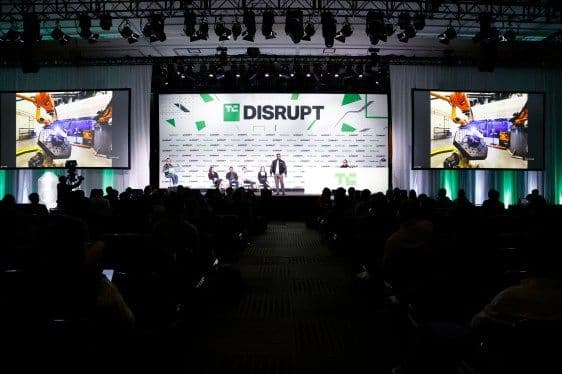
The biggest stage atTechCrunch Disruptis where the people building the future come to talk about what happens next in the tech ecosystem. Across three days, from October 13 to 15, at Moscone West in San Francisco, theDisrupt Stagewill bring together some of the biggest game-changing founders, CEOs, and investors shaping everything from AI and robotics to transportation, social media, biotech, and venture capital, alongside the next generation of founders competing live inStartup Battlefield 200. Don’t miss a single moment of these conversations shaping the future of the tech ecosystem. Get a front-row seat byregistering for your pass here. Bring your co-founder, partner, colleague, or peer andsave 50% on their second pass. Have more people who should be there?Save even more with bundle passes. RivianCEORJ Scaringewill unpack what it takes to build the seemingly impossible: turning an ambitious idea into a company capable of designing, manufacturing, and scaling complex physical products. CerebrasCEOAndrew Feldmanwill tackle one of the biggest questions hanging over the AI boom: Can AI keep scaling? As models demand ever more compute, energy, and capital, Feldman will explore where the current trajectory leads and what could break it. Science CorporationfounderMax Hodaklooks beyond screens at a future in which technology increasingly interacts directly with the human body, whileFlock SafetyCEOGarrett Langleyjoins us for a candid conversation about AI, surveillance, and the future of public safety. And in a rare appearance, all five partners of Benchmark —Jack Altman,Peter Fenton,Chetan Puttagunta,Everett Randle, andEric Vishria— will take the stage together, sharing what one of Silicon Valley’s most closely watched venture firms sees coming next. Ricursive Intelligenceco-foundersAnna GoldieandAzalia Mirhoseiniwill take us inside an even more radical possibility: AI systems that can design the hardware they run on, potentially collapsing the traditional divide between software and silicon. On Thursday, Amazon’sPanos Panayasks what comes after the smartphone. And he’ll bring some new tech with him. Bluesky CEOToni Schneiderand COORose Wangwill explore whether social media can start over, while Replit CEOAmjad Masadtackles what happens to software, and the people who build it, when AI makes creating software accessible to almost anyone. Finally, Hollywood star, entrepreneur, and investor Mark Wahlberg takes theDisrupt Stagealongside Keebeck’sBruce K. Leeto reveal how one of the world’s most recognizable celebrities is turning decades of influence, relationships, and business-building into his next act: becoming a serious investor. Sit front and center at the Disrupt Stage to hear directly from the leaders shaping tech.Register now and get a second pass at 50% off. Throughout Disrupt, founders will compete live across space and physical AI, energy and manufacturing, health tech and life sciences, and enterprise and security — facing questions from some of the world’s leading investors as they fight for a place in theStartup Battlefieldfinal. Before this year’s finalists take the stage, Cellino co-founder and CEO Nabiha Saklayen, who won Startup Battlefield in 2021, returns to unveil her new product and ask a provocative question: Can you bank your biology? Then three more Battlefield alumni — Molecule.one’s Piotr Byrski, Nephrogen’s Demetri Maxim, and Glīd’s Kevin Damoa — return to talk candidly about what happens after the pitch: the bets that paid off, the plans that changed, and what they wish they’d known when they were standing where this year’s finalists are now. Finally, the 2026 finalists take over the Disrupt Stage, and one company walks away as the next Startup Battlefield winner, taking home $100,000 in equity-free funding and the coveted Disrupt cup. TheDisrupt Stageisn’t only about hearing from the people who built today’s defining companies. It’s where you’ll meet and hear from some of the tech leaders building the next ones. TechCrunch Disrupt 2026is where 10,000+ founders, VCs, operators, and tech enthusiasts from around the globe come together to gain valuable insights, make impactful connections, and get a first look at next-gen breakthroughs shaping the tech industry. Explore200+ sessionsled by250+ tech leadersacross six industry stages, plus roundtables and breakouts. Meet 300+ exhibiting startups and get hands-on with their latest products. This is where big ideas take shape and deals get sparked. Don’t miss a moment.Register for your passand save up to $100. Bring someone with you and save 50% on their pass. If you’ve been affected by a layoff, you can get anExpo+ Pass for just $75. Don’t wait.Lock in your pass now.

The first cohort comprises 14 Alternative Investment Funds and five Focused Research Organisations, with a total RDIF commitment of ₹7,131 crore.
View

Enterprises are moving AI agents into production, making governance, visibility, and accountability critical as they take on business workflows.
View

The agreement adds enterprise IT management software to TCS's cloud offering, though the companies have not disclosed the products or deployment timeline.
View

NuSynth AI engine redesigns and optimises chemical synthesis processes, shortening traditional R&D gestation cycles.
View

The USFP optical module aims to increase network capacity, improve power efficiency and support larger AI infrastructure.
View

The company has more than 3,000 employees in Hyderabad, where the new office adds to its existing delivery operations at WaveRock and Sattva Knowledge City.
View

The 2026 Minsky Awards for Excellence in AI honour organisations and industry leaders advancing AI innovation, recognising achievements in enterprise adoption, business transformation, research, and AI-driven solutions across sectors.
View

HCLTech’s guidance raise is acquisition-led, with AI, along with a single acquisition, driving about 70% of services growth.
View
View
View
View