🚀 Zaprep : tes réseaux sociaux sous stéroïdes. Commencer gratuitement — automatise 1 000 DM/mois et transforme l'engagement en leads. avec 1 000 DM automatisés/mois.
Dernières actualités IA

Why Stream ring-maker Sandbar says the future of AI wearables is voice
Loading the player… AI notetaking hardware has taken offover the past couple of years, with credit-card-sized devices, pendants, pins, and even transcribing earbuds all promising to capture your meetings and turn them into summaries and action items. Now, a whole wave of wearables — rings especially — are betting people want to capture stray thoughts and ideas the same way. One of the companies chasing that bet isSandbar, the startup behind the private voice ring Stream, which has raised $36 million to date, including a$23 million Series Aled by Adjacent and Kindred Ventures. On this episode of TechCrunch’sEquitypodcast, Rebecca Bellan talks with Sandbar co-founder and CEOMina Fahmiabout why he thinks so many voice hardware devices before Stream struggled to break through, and why he’s betting that keeping the human firmly in control is what it’ll take to get wearable tech right. Subscribe to Equity onYouTube,Apple Podcasts,Overcast,Spotifyand all the casts. You also can follow Equity onXandThreads, at @EquityPod.
View

Mesh, Automattic’s CRM for everyone, comes to Android
Mesh, the relationship manager and personal CRMacquired by WordPress.com’s parent company, Automattic, last year, is now available to users on Android devices. The software allows users to privately visualize and keep track of the people in their personal and professional networks, add notes to people’s contact information, and be reminded when to reach out. OnAndroid, the company customized Mesh’s app to work with key platform features, like split-screen and pop-up views. This allows users to access Mesh while working in other apps, like messages or email. It also supports keyboard shortcuts for foldables and tablets, in-app search, home screen widgets (with Material You colors that match your Android’s wallpaper), and real-time sync across devices. The company’s broader plans for Mesh could eventually see it tied more closely to Automattic’s all-in-one messaging app,Beeper, which offers a way to connect with people across platforms, including through WhatsApp, Instagram, Signal, Messenger, X, LinkedIn, Slack, Discord, Google Messages, and more. Already, Mesh and Beeper interoperate to some extent, as Mesh users can draft a text to someone in Beeper or click deep links in the app to visit a Mesh user’s profile. In time, the company wants to add additional AI features that will make users of both products more productive in terms of managing their personal relationships. “We’re thinking a lot about how can AI help you be a better friend and have better work and personal relationships?,” Mesh co-founder Zachary Hamed told TechCrunch in an interview earlier this spring. “We have users who have ten-, twenty-, or fifty-thousand connections across multiple social media apps, across their work products. It’s an impossible task to think and be conscientious with you, with each of those people, by yourself,” he noted. Today, Mesh’s Nexus AI is in early access, offering a way to use AI to navigate your network. That means users can ask questions like who they know at a particular company or who lives in a certain city, or who has expertise in a particular topic. The company is also experimenting with using AI technology to provide a voice-based, hands-free experience and an improved business-card-scanning feature. Importantly, personal information stored in Mesh isn’t shared or used for ad targeting, the company says, as the product is supported bysubscriptions. (It’s free for up to 1,000 contacts, then has higher tiers for unlimited contacts and other features.) In time, Mesh may consider a bundled subscription with Beeper or other Automattic products, but has nothing to announce on that front at this time. Currently, the majority of Mesh’s customers, or around 70%, are using the app for some type of business purpose. Mesh co-founder Matthew Achariam says Mesh’s sweet spot is executives running bigger teams or those who have a tight network to stay in touch with. However, the company still thinks about the consumer use case, he notes. “The beauty of [serving business users] is that the same things they’re using apply to every individual consumer. So every feature that we think about has to apply to both,” he says. Mesh (formerly Clay) for Android will roll outto Google Playfor phones, tablets, and foldables as a free download with in-app purchases.
View
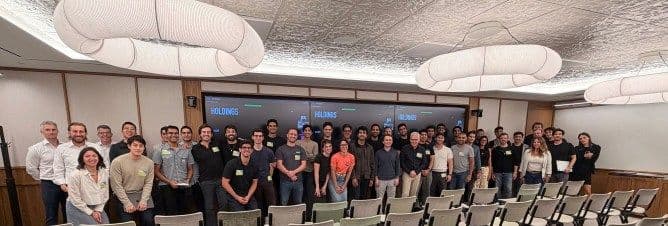
OpenAI-backed Thrive Holdings raises $2B to bring AI to the enterprise
Thrive Holdings has raised $2 billion in new funding at a $12 billion valuation from investors like SoftBank, D1 Capital Partners, and Altimeter Capital. Thrive Holdings is akin to a private equity firm for AI, buying traditional businesses like accounting firms and implementing AI into their workflows. So far, Thrive has focused on accounting and information technology, but part of Wednesday’s raise will go toward expanding a new vertical in physical assets. Key to that strategy is Thrive’s close relationship with OpenAI. The New York Timeswas first to report the news. The firm is a spinout ofThrive Capital, one of OpenAI’s major investors. In December 2025, OpenAI took anownership stakein Thrive Holdings. Part of the deal involved OpenAI sending employees to work with Thrive’s companies to accelerate AI adoption. That hands-on model of AI implementation has become a business in its own right, and may help explain investor enthusiasm behind Thrive’s latest fundraise. OpenAI and Anthropic have both partnered with large private equity firms to launchThe Deployment CompanyandOde with Anthropic, respectively — billion-dollar ventures that are building teams of elite engineers who embed themselves into enterprises and implement AI solutions into workflows. The raise comes off the back of proven success for Thrive’s companies, which has surpassed 70 businesses on Thrive Holdings’ platforms. The company has focused on two pillars to date: Current, its accounting arm with more than 50 firms and more than 2,000 professionals, and Shield, its information technology arm with around 20 companies on the platform. Current’s self-improving tax agents, dubbed TaxAI, processed more than 7,000 tax returns at 98% accuracy, lowering tax prep times at participating firms by over 30%, according to Thrive. Meanwhile, Shield’s AI products have sped up help desk resolution times by 36x, and the platform has doubled the number of custom AI agents deployed in the last month. Part of Wednesday’s fundraise will help Thrive launch a third platform focused on regulatory services for the built environment, described by a spokesperson as: “the work required to get physical assets approved, built, certified, and kept in operation.” “The U.S. needs to build and modernize more critical infrastructure, but projects are often constrained by local, technical, and regulatory complexity,” Anuj Mehndiratta, a founding member of Thrive Holdings, told TechCrunch. “This applies across data centers, manufacturing, healthcare, power, water, transportation, and other physical infrastructure.” That sort of complexity is where Thrive, well, thrives — large, fragmented, mission-critical, and operationally complex. While Mehndiratta says AI won’t replace field work, local judgement, or professional sign-off, it can help ease manual workflows like research, reporting, permit preparation, inspection documentation, and compliance tracking. “We think AI partnered with a lot of the experts and practitioners at these businesses can really help compress [regulatory bottlenecks], keep the safety standards high, but also be able to do it with less of a burden to the actual building of that and help it do it more efficiently, lower cost and do it faster,” Kareem Zaki, a founding member of Thrive Holdings, said in a statement emailed to TechCrunch.
View

As AI safety concerns mount, three pioneers make the case for staying open
As projects like Pacing the Frontier look to major labs as a way to keep AI research safe, open-source models have becomea sore spot for the industry. With free distribution and little control over how they’re used, open-weight models aren’t easily controlled, leadingsome labsto treat them as downright scary. But at the Ai4 conference in Las Vegas last week, three of the world’s most respected AI researchers — Nobel Prize winner Geoffrey Hinton, World Labs CEO and co-founder Fei-Fei Li, and Coursera co-founder Andrew Ng — spoke out on the issue. And while they disagreed on particular tactics, all three made a powerful case for keeping AI open. For the three speakers, the core concern was allowing a handful of major AI companies to control the pace of progress. When a few companies control access to a technology, as Apple and Google do with mobile operating systems, innovation can slow and the companies that control the platforms can influence what gets built on them. Andrew Ng said that he worried about a similar dynamic emerging in AI. “I don’t want there to be gatekeepers,” Ng said. “That limits how all of us can access AI.” Companies have an incentive to protect their competitive advantages, including by influencing the rules that govern the industry. That could create a dynamic where only the largest, best-capitalized firms with the resources to build the most advanced AI systems. Ng’s solution was to maintain multiple providers, with models and companies competing rather than allowing a handful of of players to dominate the field. “If I were to try to give one prescription, it would be to promote openness,” Ng said, “because AI is amazing technology and I want it to be in everyone’s hands.” But not everyone agreed that open-weight models would help preserve that state of play. Hinton, in particular, drew a distinction between open-source software, which makes the underlying code available for inspection and modification, and open-weight models, which release the parameters of a trained AI model to the public. “Open source is great. You show people the code, and lots of people look at the lines of code and say, ‘Oh, there’s a bug.’ Open weights means you train a big model and then you give people the weights. That’s very different,” Hinton said. “I was against open [weights] because it makes it so easy for people to take these big foundation models, which are very expensive to train, and for much less money train them to do bad things like cyber attacks.” But whatever his reservations, Hinton acknowledged that open-weight models are already a permanent fixture of AI. “I think that battle’s been lost. We now have open-weight models, so the barrier to lots of people getting these big models, which was the cost of training foundation models, that barrier has disappeared. It’s too late.” Yet accepting reality didn’t mean ignoring the risks. Hinton’s position was clear: AI would continue to advance, and he thought that was largely a good thing. He said it would boost productivity and improve education and healthcare. “Worrying about the possible bad effects of AI and the things that intelligent beings might do when they’re smarter than us. I don’t think that’s unfair. I think it is unfair to label anybody who thinks like that as a fear-monger,” Hinton added. Ng took a different view. The question, he argued, wasn’t whether open models were risky, but who controlled access and who would win the market. Whoever built the cheaper model would have the advantage. If China’s open-weight models gained widespread adoption across Asia, Africa, and/or the developing world, he warned, they could influence how billions of people encountered ideas about democracy, freedom, and human rights. “One thing I hope we do is encourage American competitiveness and open-source AI. It turns out that AI is a tremendous source of soft power. You can see the way China’s model has tremendous accomplishment with Africa, for example,” Ng said. “But my worry is because of all the lobbying in the U.S. and the fear-mongering, building open-source AI in America is struggling to compete with open-weight models coming out of China, and my worry is that if China figures out a fundamentally more cost-efficient way to build AI, then things that are more cost-efficient have a fundamental business adoption advantage.” Li pushed back on that framing. “It’s very dangerous to make this a dichotomy between complete openness all the way to complete closedness,” she said. “In complex software systems as well as scientific systems it’s much more nuanced.” Li used nuclear physics as an example: scientific papers are published openly, but uranium is regulated, while laboratory work falls somewhere in between. The lesson, she explained, was that openness doesn’t have to be an all-or-nothing choice. Different layers of the ecosystem can operate at different levels of openness. She also highlighted collaborations between public and private institutions, such as the Human Genome Project. The resulting knowledge became a platform that others could build on, she said, allowing pharmaceutical companies to profit, scientists to advance their work and society to benefit. “So I think we have to use [AI] as that kind of infrastructure,” Li said. “We need some levels of openness, both in scientific discovery, in education, in global partnership, as well as lucrative business models for entrepreneurs. But we also will accept closed-source systems. This debate, especially at the sweeping level of ‘we can only tolerate one,’ is a false debate. We need to get to a level of nuance.” But everyone agreed that some level of regulation would be necessary to keep AI on the right track. “What we want to do is develop AI in a direction that helps people, and regulation will help us do that,” Hinton said. “You can’t leave it to people like Elon Musk and Mark Zuckerberg to decide how AI should be done.”
View
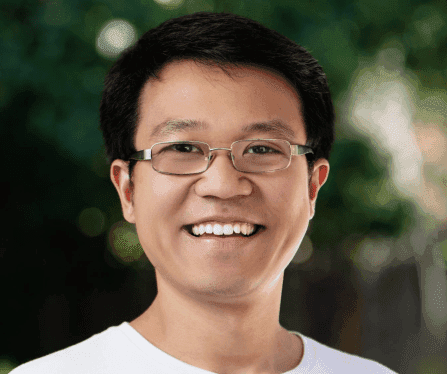
AI coding startup Cognition reportedly already in talks to raise at $40B valuation
Cognition, makers of the AI coding agent Devin, is reportedly already talking to investors about raising another funding round with a big leap in valuation, after it raised $1 billion at a$26 billon valuationin May. This new round could deliver at least a $40 billion valuation based on achieving a $1 billion annualized revenue run rate, according to sources cited byBloomberg. Three months ago, when it announced its last raise,Cognition’s Scott Wu confirmed to TechCrunchthat it had achieved a $492 million annualized revenue run rate and that enterprises were growing their usage of Devin by 50% month-over-month for the past six months. Wu, a famed wunderkind programmer himself, also told TechCrunch that Devin is not being sold as a human replacement. The agent is often tasked with doing long-tail grunt-work that many programmers dislike such as bringing old software up to date or moving applications off one platform and onto another. This could account for much of its growing popularity among enterprises that have adopted it. The company says its customers include Mercedes-Benz, NASA, and Goldman Sachs.
View
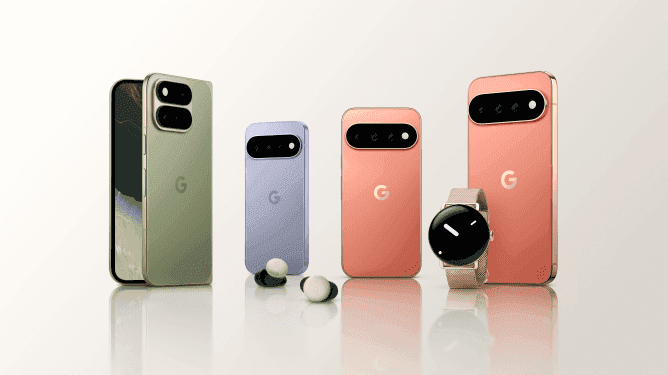
Everything announced at Made by Google ’26: Pixel 11, Pixel Watch 5, Pixel Tag, and tons of Gemini features
Google is holding itsMade by Google 2026 eventon Wednesday, unveiling the Pixel 11 series, the Pixel Watch 5, and even a competitor to Apple’s AirTag. The tech giant also used the event to show off new Gemini-powered features across its devices. Google spent a good portion of the event talking about Gemini and other AI features coming to its devices. One of the more notable accessibility updates is an expansion of “Live Transcribe” tosupport American Sign Language. Using the Pixel Camera, users can have sign language translated into text, giving people another way to communicate without relying on typing. Google also introduced “Rambler,” a new voice-input feature designed to better understand the way people actually talk. Rather than requiring carefully phrased sentences, Rambler is designed to handle run-on sentences, filler words, and less structured speech while still figuring out what the user is trying to say. There are a few smaller additions, too. “Circle to Search” can now be accessed more directly from the Pixel Camera, allowing users to identify objects, search for things in the distance, translate text, or ask questions about what’s around them without leaving the camera experience. The standard Pixel 11 gets a redesigned camera bar that is thinner than the one on the previous generation. Google says the new camera bar is more than 40% thinner and now uses an all-glass surface that stretches across the width of the phone. Google is also increasing the base storage to 256GB, doubling the previous starting capacity. The starting price for the new model is set at $899, reflecting a $100 increase compared to the Pixel 10. This price hike comes with the decision to drop the 128GB storage option. Plus, the ongoing RAM supply shortage plays a part in this increase. The Pixel 11 will be available in Frost, Hibiscus, Pistachio, and Obsidian. Google is making durability a bigger part of the Pro lineup. The company says the Pixel 11 Pro and Pixel 11 Pro XL have improved drop resistance and a new anti-scratch display coating that provides more than twice the scratch resistance of the Pixel 10 Pro models. The Pixel 11 Pro starts at $1,099, compared to $999 for the Pixel 10 Pro. The phones are available in Canyon, Fog, Olive, and Obsidian. Notably, this year’s Obsidian option gets an all-matte finish. Google says the new foldable is nearly 10% lighter and almost 1mm thinner than the Pixel 10 Pro Fold. It also has slimmer bezels, a 48-megapixel main camera, and 30x Super Zoom. The company is also building on the IP68 water and dust resistance introduced with the Pixel 10 Pro Fold. The Pixel 11 Pro Fold uses a glass-fiber composite back cover designed to better withstand cracking, while a redesigned hinge offers additional protection for the inner display. Google says the changes make the model three times more durable than its predecessor. The Pixel 11 Pro Fold comes in Olive and Obsidian. Google finally has its own tracking tag. Called Pixel Tag, the small device is designed to help people keep tabs on things such as keys, wallets, and luggage. It connects to Android’s Find Hub network, allowing users to see the tag’s location through the Find Hub app (similar to Apple’s Find My). The tag, priced at $29 (or $99 for a four-pack), can also be located from a Pixel Watch. Pixel Buds users can ask Gemini to find or ring a Pixel Tag, adding a voice-controlled option for tracking something down. The Pixel Watch 5 is getting several health-related updates. The Google Health app will provide monthly summaries of blood pressure trends, with the goal of helping users notice patterns over time. It will also provide monthly summaries of insulin resistance trends. The 41mm Pixel Watch 5 starts at $399, while the 45mm version starts at $429. Google is also offering a Stephen Curry edition for $579, with an exclusive design built for workouts. (This is featured in the image above.) Meanwhile, the Pixel Buds Pro is arriving in a new Olive color.
View

How a $250 million acquisition collapsed into allegations of fraud and forged signatures
When VideoVerseannounced its acquisitionin September 2025, it felt like a victory for startups across India. VideoVerse was a simple clipping service, but after years of startup incubators and pitching clients, the company had pulled off a $250 million exit. The acquirer was Minute Media, an international sports publisher split between New York and Tel Aviv, with plans to scale VideoVerse’s clipping software beyond its Indian niche and into the lucrative world of international sports. Less than a year after the announcement, the deal has unraveled. Investors are still waiting for their share of the $250 million windfall, and founder Vinayak Shrivastav is now at the center of multiple legal cases. Even the acquirer, Minute Media, seems to be backing away. In May, the company said it was terminating its contract with VideoVerse, underscoring that the two had continued operating as separate legal entities even after the acquisition closed. Reached by TechCrunch, a Minute Media representative said that “after, among other things, significant discrepancies were discovered in VideoVerse’s representations, Minute Media decided to terminate its engagement with the company.” If the allegations are true, this was more than just a deal that fell through. Across multiple legal filings, creditors and investors paint a picture of a serially untruthful CEO, who used the guise of a successful business to accumulate cash-generating debts and side deals until the pretense became untenable. The result is an alarming reminder of the limits of due diligence and how much the business of startups still relies on trust. The sheer volume of legal cases shows that trust is now in short supply. Bluestone Capital, which backed VideoVerse in its 2023 round, is now suing the company for fraud, alleging that the startup violated its investment terms and refused to pay out proceeds from the acquisition. In a separate suit, a creditor is seeking to recover $64 million from a loan that Shrivastav took out shortly after the acquisition closed. The same complaint alleges that Shrivastav committed fraud during the acquisition itself, claiming he “used fraudulent merger documents that did not reflect the business terms on which Mr. Shrivastav and Minute Media had agreed to induce Clippings’ shareholders to approve the merger.” Even VideoVerse executives have begun lobbing accusations. The company’s COO alleges in a separate case that Shrivastav forged his signature on loan and share-repurchase agreements, extracting tens of millions of dollars from the company, in the wake of the Minute Media deal. While not a household name, VideoVerse became a key player in the billion-dollar clipping industry, providing automated tools for editing long-form broadcasts into the shorter clips that travel well on social platforms. Its flagship product,Magnifi, is an AI-powered tool that can automatically identify key players and moments. Using the software, clients could easily generate packages of every three-point shot in a basketball game, for instance. Backed by an extensive human support team, the platform attracted high-profile clients like the Indian Premier League, FIFA+ and Nippon TV. It is a lucrative niche, and one in which Minute Media had hoped to expand to the U.S. market before VideoVerse’s internal problems surfaced. Even across the multiple cases against Shrivastav, there are conflicting claims and inconsistencies, as investors struggle to make sense of the current state of the company. What is clear is that tens of millions of dollars are missing, and there are already disputes about where the money went and how much is owed to whom. In October, Shrivastav approached the investment firm Lingotto, arranging a $55 million structured loan — supposedly to satisfy an earlier creditor. With the Minute Media merger already public at more than four times that amount, it appeared to be a safe bet. The financing was even backed by statements from the creditor and Minute Media’s own CEO. According to a court filing from Lingotto, $53 million was transferred to an account controlled by Clippings on October 1, backed by a standard repayment schedule. But Lingotto now says critical documents provided by Shrivastav were forged. Minute Media’s CEO never signed the documents, the lawsuit alleges, and screenshots purporting to show internal bank balances were also fabricated. According to the terms of the loan, Lingotto was owed a $4 million payment on March 31, but it never arrived. When the investment firm called in the full amount of the loan with interest, it discovered a long list of people waiting to be paid by VideoVerse. A separate loan from Bluestone Capital had gone into settlement a few months prior, with similarly overdue payments. By the end of April, Shrivastav was out as CEO. The following months have produced a web of overlapping court claims, as Minute Media, Lingotto, and Bluestone each seek restitution in Delaware Chancery Court. A separate claim from former COO Sabya Das alleges a more complex tangle of fraud involving secondary sales and a confidential high-interest loan. Shrivastav did not respond to multiple attempts to contact him for this story. His most recent listed address, which appears in Das’s complaint, is on the Palm Jumeirah islands in Dubai.
View

Sarvam AI Takes Indus to 2,500 Maharashtra Govt Officials
The platform will help officials research policies, draft replies, translate documents and process records while keeping government data within India.
View
i-Hub Gujarat, SanchiConnect Scale Accelerator to Support 30 Defence, Aerospace Startups
The second cohort brought together 30 startups and more than 20 investors and corporate leaders at a two-day Demo Day.
View

Mid-Tier Firms Again Beat Indian IT Majors in Q1—But With a Catch
While acquisitions boosted Coforge, Mphasis and Persistent delivered stronger organic momentum, with AI emerging as a key growth driver across the segment.
View
AI code-testing startup Blacksmith’s valuation jumps almost 10x in less than a year
As AI makes coding dramatically faster, the next big challenge in software development is testing and validating all that code.Blacksmithhas raised a new $45 million round to capitalize on that shift. The Series B, led by Peak XV Partners, values Blacksmith at $550 million, up from the $60 million valuation it was assigned when it raised a$10 million Series Aless than a year ago. Existing investors GV and Y Combinator also participated, bringing the startup’s total funding to $58.5 million. Founded in 2024, Blacksmith helps companies build, test, and verify software before it reaches production. The startup now serves more than 5,000 customers, including Mercury, Supabase, Clerk, Ashby, and Expensify, up from more than 700 customers less than a year ago, co-founder and CEO Aditya Jayaprakash said in an exclusive interview. The rise of AI coding tools such as Cursor, OpenAI’s Codex, and Anthropic’s Claude Code has made it significantly easier for software teams to generate code, but the quality of AI-generated code is not a given. “Validating code is still a bottleneck, and it’s an even bigger bottleneck because people are writing even more,” Jayaprakash said. Blacksmith started as a cloud provider for continuous integration (CI) workloads, helping companies run the software builds and tests needed to validate code before it reaches production. The startup has since broadened its platform with Codesmith, an AI coding agent that can automatically fix failed code checks. Jayaprakash said Blacksmith reached a $10 million annualized revenue run rate with just 10 employees and has since grown its workforce to about 30 and grown revenue to “tens of millions of dollars.” He declined to provide a specific updated ARR figure, though did say some of its largest customers now spend more than $1 million a year on the platform. While that appears to be solid and fast progress, Blacksmith is operating in a crowded market. Its key competitors include GitHub Actions, Cursor Automations, validation capabilities baked into Codex and Claude Code, numerous other startups, and AI code-testing services offered by Amazon Web Services, Microsoft Azure, and Google Cloud. Jayaprakash said his startup is competing on the speed of testing code as well as affordability. Looking ahead, Jayaprakash said that Blacksmith plans to expand into a broader suite of coding tools, aiming to help developers write, validate, and merge software faster.
View

India is Scaling AI Skills. But the Jobs Data Is Disappearing
India is rapidly expanding AI and future-skills training, but PMKVY 4.0 has stopped tracking placements, leaving a widening gap between training and outcomes.
View
Soumettre ton outil


PoweredByAI.app est un annuaire d'outils IA qui aide les particuliers, les entreprises et les créateurs à découvrir les meilleurs outils IA pour la rédaction, le code, le design, la productivité, et plus encore.
© 2026 , Un produit de011BQ. Tous droits réservés.