🚀 Zaprep : tes réseaux sociaux sous stéroïdes. Commencer gratuitement — automatise 1 000 DM/mois et transforme l'engagement en leads. avec 1 000 DM automatisés/mois.
Soumettre ton outil
PoweredByAI.app est un annuaire d'outils IA qui aide les particuliers, les entreprises et les créateurs à découvrir les meilleurs outils IA pour la rédaction, le code, le design, la productivité, et plus encore.
© 2026 , Un produit de011BQ. Tous droits réservés.

OpenAI announced Monday it has acquired Promptfoo, an AI security startup founded in 2024 to protect LLMs from online adversaries. The frontier lab said in ablog postthat once the deal closes, Promptfoo’s technology will be integrated into OpenAI Frontier, its enterprise platform for AI agents. The development of independent AI agents that perform digital tasks has generated excitement about productivity gains. But it’s also given bad actors fresh opportunities to access sensitive data or manipulate automated systems. This deal underscores how frontier labs are scrambling to prove their technology can be used safely in critical business operations. Promptfoo was founded by Ian Webster and Michael D’Angelo to develop tools that companies can use to test security vulnerabilities in LLMs, including an open-source interface and library. The company reports that its products are used by more than 25% of Fortune 500 companies. Promptfoo has raised just $23 million since its founding, and was valued at $86 million after its most recent round in July 2025, according to Pitchbook. OpenAI did not disclose the value of the transaction. OpenAI’s post said Promptfoo’s technology will allow its agent platform to perform automated red-teaming, evaluate agentic workflows for security concerns, and monitor activities for risks and compliance needs. The company also said it expects to continue building out Promptfoo’s open-source offering.
View

Anthropic's latest frontier artificial intelligence (AI) model, Claude Opus 4.6, has successfully identified several vulnerabilities in the Mozilla Firefox browser. The San Francisco-based AI firm announced that it had partnered with Mozilla to test the AI model's capabilities in finding bugs in real-world scenarios. The researchers claimed that in just two weeks, Claude was able to find 22 different vulnerabilities, out of which 14 were classified as high-severity vulnerabilities. The security risks were reportedly patched by the browser company with a recent update.
View

OpenAI's “code red” has reportedly reached its end, nearly four months after the company CEO declared it. In December 2025, reports claimed that Sam Altman declared a code red, keeping every non-ChatGPT project on hold. Ever since then, the San Francisco-based artificial intelligence (AI) giant has released three new AI models and multiple new features for the popular chatbot. At the same time, the company has reportedly delayed its “Adult Mode” feature for ChatGPT once again due to other higher-priority projects.
View

Amid growing demand for data centers that can deliver AI compute at scale,Nvidia-backedBritish AI infrastructure companyNscaleis now valued at $14.6 billion. This makes it one of Europe’s latest decacorns alongsideHelsingandMistral AI. Nscale has bet on vertical integration, from energy and data centers to compute and orchestration software. Its new valuation stems froma $2 billion Series C, which it calls “the largest in European history,” though the figure includes a$433 million pre-Series C SAFEbacked by Blue Owl, Dell, Nvidia and Nokia in October. The raise was supported by Goldman Sachs and JPMorgan, whose involvement has been interpretedas IPO preparation— and not without reason: Nscale CEO Josh Paynetold the New York Timeshis company might seek to go public “as early as this year” to generate more capital. Alongside its funding and plans, the company also announced that former Meta COO Sheryl Sandberg, former Yahoo president Susan Decker, and former UK deputy prime minister Nick Clegg are joining its board. Nscale is no newcomer to big rounds and announcements. In September, it announceda $1.1 billion Series Bled byAker. Aker is a public Norwegian company with interests in energy and is also co-leading the Series C alongside New York-based investment firm 8090 Industries. The companies also agreed that Aker’s joint venture with Nscale will now be fully managed by the startup. Dubbed “Stargate Norway,” this Norway-based AI infrastructure project has the ambitionto run on 100,000 Nvidia GPUs by the end of 2026, with OpenAI asan initial customer. According to Aker president and CEO, Øyvind Eriksen, who sits on Nscale’s board, “this step strengthens execution by putting delivery and governance under one roof, while keeping continuity for the people and projects already underway.” Last October, Nscale had also signed anexpanded dealwith Microsoft tobring approximately 200,000 Nvidia GPUs to three data centersin Europe and one in the U.S, in collaboration with Dell. Dell and Nvidia both participated in the Series C, as did Astra Capital, Citadel, Jane Street, Lenovo, Linden Advisors, Nokia, and Point72. Nscale expects the new funding to accelerate the development of its AI infrastructure across Europe, North America, and Asia, while helping the company expand its engineering and operations teams, and strengthen its platform. Equity aside, the company also raised debt last month, witha $1.4 billion delayed draw term loanbacked by GPUs to finance some of its clusters across Europe. It aims to harness rising enterprise demand and low-cost renewable energy while renewing its pledge to reuse waste heat, develop local skills, and invest in regional infrastructure as part of Stargate Norway.

Modular AI-led projects are pushing big providers downmarket while smaller rivals are moving up.
View

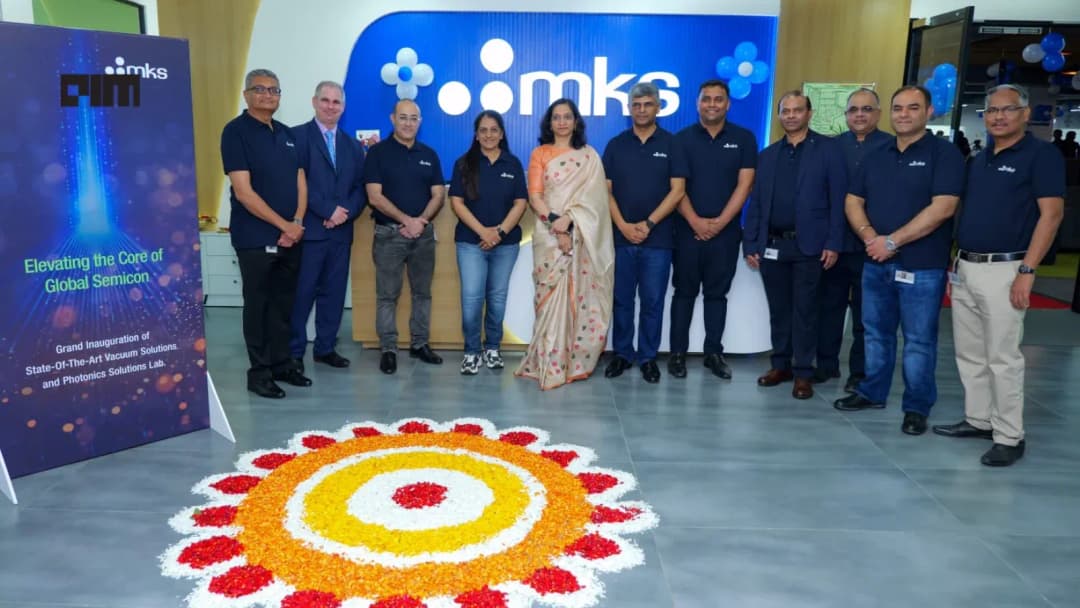
MKS’ photonics engineering lab will focus on the design and development of next-generation optical and photonic solutions.
View

The industry body has urged contingency planning, employee safety, and stronger cyber preparedness.
View

Users can describe the outcome they want, and Cowork automatically grounds the task in their emails, meetings, messages, files and data.
View

Google introduced a new benchmark last week that evaluates artificial intelligence (AI) models based on their proficiency in developing Android apps. Dubbed Android Bench, the platform also ranks the models that perform the best in the tests, to help the developer community pick the right AI tools when building new apps and experiences for Android. The Mountain View-based tech giant said that the curated set of tests and evaluation system was validated by several AI model developers. Additionally, the methodology, dataset, and tests have also been made publicly available.
View

The partnership includes the rollout of the Calibo AI Academy across more than 50 higher education institutions.
View

The new facility will bring together AI engineers and data scientists to build scalable AI systems and support enterprise adoption of agentic AI.
View

The GEC globally integrates Google’s Gemini models with TCS’ manufacturing expertise.
View
View