🚀 Zaprep : tes réseaux sociaux sous stéroïdes. Commencer gratuitement — automatise 1 000 DM/mois et transforme l'engagement en leads. avec 1 000 DM automatisés/mois.
Soumettre ton outil
PoweredByAI.app est un annuaire d'outils IA qui aide les particuliers, les entreprises et les créateurs à découvrir les meilleurs outils IA pour la rédaction, le code, le design, la productivité, et plus encore.
© 2026 , Un produit de011BQ. Tous droits réservés.

Large language models trained on vast datasets could speed genomics research, streamline clinical documentation, improve real-time diagnostics, support clinical decision-making, accelerate drug discovery, and even generate synthetic data to advance experiments. But their promise to transform biomedical research often runs into a bottleneck: beyond the structured data healthcare relies on, these models struggle in edge cases like rare diseases and unusual conditions, where reliable, representative data is scarce. New York-basedMantis Biotechclaims it’s developing the solution to fill this data availability gap. The company’s platform integrates disparate sources of data to make synthetic datasets that can be used to build so-called “digital twins” of the human body: physics-based, predictive models of anatomy, physiology, and behavior. The company is pitching these digital twins for use in data aggregation and analysis. These digital twins could be used for studying and testing new medical procedures, training surgical robots, and simulating and predicting medical issues or even patterns of behavior. For example, a sports team could predict the likelihood of a specific NFL player developing an Achilles heel injury based on their recent performance, training load, diet, and how long they’ve been active, Mantis’ founder and CEO Georgia Witchel explained to TechCrunch in a recent interview. To build these twins, Mantis’ platform first takes data from a variety of sources such as textbooks, motion capture cameras, biometric sensors, training logs and medical imaging. Then, it uses an LLM-based system to route, validate, and synthesize the various data streams, and runs all that information through a physics engine to create high-fidelity renders of that dataset, which can then be used to train predictive models. “We’re able to take all these disparate data sources and then turn them into predictive models for how people are going to perform. So anytime you want to predict how a human being is going to be performing, that is a really good use case for our technology,” Witchel said. The physics engine layer is key here, Witchel told TechCrunch, because it helps the platform enhance the available information by grounding the generated synthetic data and realistically modeling the physics of anatomy. “If I asked you to do hand-pose estimation for someone who is missing a finger, it would be really, really hard, because there are no publicly available datasets of labeled hand positions of someone who is missing a finger. We could generate that dataset really, really easily, because we just take our physics model and we say, remove finger X, regenerate model,” she said. Since Mantis’ platform fills gaps in data sources, Witchel thinks there’s potential for it to be used widely across the biomedical industry, where information on procedures or patients can be difficult to access, is unstructured or siloed into various sources. She stressed edge cases or rare diseases, where data is hard to obtain since there are often ethical and regulatory constraints around including patients’ data in public datasets, or using it for training AI models. “You know how when you see a three-year-old running around, and they have a Barbie, and they’re holding it by one leg and smashing it against a table? I want people to have that mindset with our digital twins,” she said. “I think that’s going to open up people to this idea that humans can be tested on when you’re using virtual humans. I feel currently, people operate with the exact opposite mindset, which totally makes sense, because people’s privacy should be respected. In fact, I don’t really think people’s data should be exploited at all, especially when you have these digital twins.” For now, Mantis has seen success in professional sports, presumably because there is a need to model high-performing athletes. Witchel said one of the startup’s main clients is an NBA team. “We create these digital representations of the athletes, where it basically shows here’s how this athlete has jumped, not just today, but for every single day in the past year, and here’s how their jumps are changing over time compared to the amount that they’re sleeping, or compared to how many times they lift their arms above their head,” she explained. The startup recently raised $7.4 million in seed funding led by Decibel VC, with participation from Y Combinator, a few angel investors, and Liquid 2. The funding will be used for hiring, advertising, marketing and go-to-market functions. The next step for Mantis, Witchel said, is to continue building out the tech, and eventually release the platform to the general public, targeting preventative healthcare. The company is also working to cater to pharmaceutical labs and researchers working on FDA trials, aiming to deliver insights into how patients are responding to treatments.

View

Samsung Electronics has outlined a roadmap to integrate light-based chips with AI semiconductors and challenge foundry leader TSMC.
View

The funding will support new satellites, manufacturing and hiring as the company targets Starcloud’s AI infrastructure demand.
View

A data passport certifies that a dataset is AI-ready, standardised, structured, and safe to share.
View

The system uses models from providers, including Anthropic and OpenAI.
View

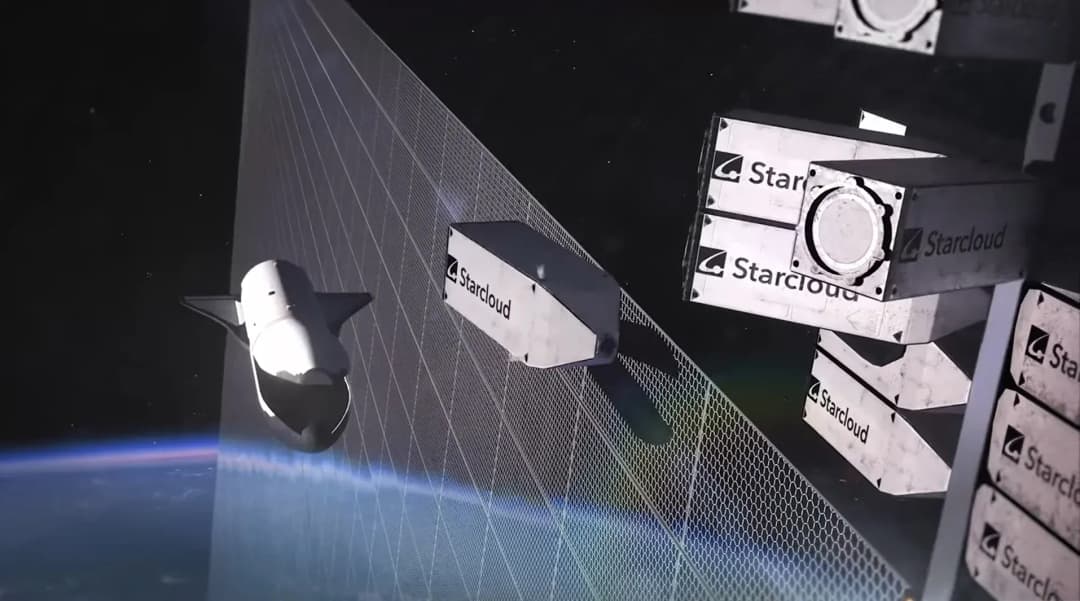
Starcloud’s latest funding round values the space compute company at $1.1 billion, making it one of the fastest startups to reach unicorn status after graduating from Y Combinator. The company’s Series A, which closed 17 months after its demo day presentation, was led by Benchmark and EQT Ventures. It’s another sign of the interest in outsourcing data centers to orbit as resource and political obstacles slow their development on Earth, but the business modeldependson unproven technology and significant capital expenditure. Starcloud has now raised a total of $200 million, and launched its first satellite with an Nvidia H100 GPU in November 2025. The company will launch a more powerful version, Starcloud 2, later this year with multiple GPUs, including an Nvidia Blackwell chip and an AWS server blade, as well as a bitcoin mining computer. The company will also begin developing a data center spacecraft designed to launch from Starship, the reusable heavy lift rocket being built by Elon Musk’s SpaceX. Starcloud 3, as the spacecraft is named, will be a 200 kilowatts, three-ton spacecraft that fits the “pez dispenser” system SpaceX designed to deploy its Starlink satellites from Starship. CEO and founder Philip Johnston said he expects that will be the first orbital data center that is cost-competitive with terrestrial data centers, with costs on the order of $.05 per kw/hour of power — if commercial launch costs land around $500 per kilogram. The challenge is that Starship isn’t flying yet; Johnston says he expects commercial access to open up in 2028 and 2029. That’s the reality facing all the big space data center projects: powerful space computers will be cost-prohibitive until a new generation of rockets starts launching at a high operational cadence, something that might not happen until the 2030s. “If it ends up being delayed, we’ll just carry on launching the smaller versions on Falcon 9,” Johnston said. “We’re not going to be competitive on energy costs until Starship is flying frequently.” “There’s kind of two business models,” Johnston explains: One is selling processing power to other spacecraft on orbit; the company’s first satellite, for example, analyzes data collected by Capella Space’s radar spacecraft. Then, in the future when launch costs go down, more powerful distributed data centers could potentially pull work from their terrestrial counterparts. That gets at how new this industry really is. When Nvidia CEO Jensen Huang unveiled the company’s Vera Rubin Space-1 chip modules at his company’s annual GPU Technology Conference last week, he didn’t note that none had been produced or shared with the company’s development partners. In fact, the number of advanced GPUs on orbit is numbered in the dozens, while Nvidia is estimated to have sold nearly 4 million to terrestrial hyperscalers in 2025. Or consider that SpaceX’s Starlink communications network, the largest satellite network in orbit with 10,000 spacecraft, produces something around 200megawattsof energy, while data centers with more than 25gigawattsof power are currently under construction in the U..S, according to Cushman and Wakefield. Johnston argues that his company is well ahead of the competition, with the first terrestrial GPU deployed in orbit. It was used to train an AI model in orbit, a first, according to Starcloud, and run a version of Gemini. Beyond the performance, Johnston says Starcloud now has valuable data about what it takes to run a powerful chip in space. “An H100 is probably not the best chip for space, to be honest, but the reason we did it is we wanted to prove that we could run state of the art terrestrial chips in space,” he told TechCrunch. That hard-won knowledge —another GPU, an Nvidia A6000, failed during launch — will influence future designs. There is a laundry list of technical challenges to be solved, including efficient power generation and cooling the hot-running chips. Starcloud-2 will have the largest deployable radiator flown on a private satellite; he expects at least two additional versions of that spacecraft will head to orbit, Johnston said. Then there is the challenge of synchronization. The largest datacenter workloads, often for training, require hundreds or thousands of GPUs to work in tandem. Doing that in space will either require fantastically large spacecraft, or powerful and reliable laser links between spacecraft flying in formation. Most companies working on this technology expect those workloads to come long after simpler inference tasks take place on orbit. Besides Starcloud,Aetherflux, Google’s Project Suncatcher, and Aethero — which launched Nvidia’s first space-based Jetson GPU in 2025 — are all developing space data center businesses. The elephant in the room is SpaceX itself, which has asked the U.S. government for permission to build and operate a million satellites for distributed compute in space. Going head-to-head with SpaceX is a daunting task for any entrepreneur, but Johnston sees room for coexistence. “They are building for a slightly different use case than us,” he told TechCrunch. “They’re mainly planning on serving Grok and Tesla workloads. It may be at some point that they offer a third party cloud service, but what I think they are unlikely to do is what we’re doing [as] an energy and infrastructure player.”

Engineers from OLX reported that a single-line modification to dependency requirements allows developers to exclude unnecessary GPU libraries, shrinking container images from 8.3GB to 1.75GB.
View

This follows the recent retirement of long-time CEO Shantanu Narayen, who will continue as Adobe’s Chair of the Board.
View

Gnata, “a pure-Go implementation of JSONata 2.x”, was built in just seven hours, $400 in tokens and a 1,000x speedup on common expressions.
View

As AI coding tools mature, developers are shifting toward Claude and Gemini, as a multi-model ecosystem emerges across workflows.
View

This investment aims to increase its capacity to 44MW and support the growing demand for AI capabilities from governments and enterprises.
View

The move came at a time when AI-powered content platforms are gaining traction, particularly in short-form and regional storytelling formats.
View
View