AI NewsUS government sides with OpenAI on issue of training LLMs on copyrighted material
US government sides with OpenAI on issue of training LLMs on copyrighted material
7:23 AM IST · September 3, 2026
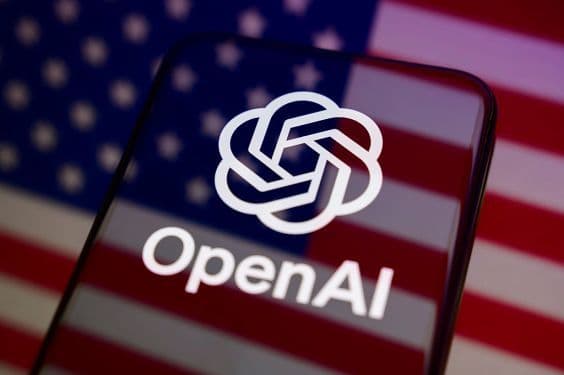
In a lawsuit that The New York Times filed against OpenAI, the Trump administration has contributeda 20-page briefin defense of the ChatGPT maker’s unlicensed use of copyrighted material to train its LLMs. “The United States has a strong interest in continuing to develop a robust and competitive artificial intelligence industry that sets the standard for the practice and procedure of AI use globally… As such, it is critical for the United States to ‘retain global leadership in artificial intelligence,’” the brief reads, referencingan executive orderthat President Donald Trump signed last year. The LLMs powering chatbots like ChatGPT, Claude, and Gemini are trained on incomprehensibly massive databases of published works, including copyrighted books, articles, and other media that AI companies feed into these databases without permission. Many publishers,including The New York Timesin this case, have sought to argue that it is illegal for AI companies like OpenAI to train AI models on their copyrighted material. This question —can you use copyrighted material to train an AI?— isn’t black and white, hence the extensive legal debate around the subject. These conversations often center on fair use, a carve out of copyright law that makes exceptions for certain scenarios when it can be ruled legal to use someone else’s copyrighted work without permission. In this case, the fair use debate addresses whether AI companies’ use of copyrighted work is “transformative” enough for a judge to rule it legal.“Constraining LLM development under a misunderstanding of fair use doctrine would thwart such creative and scientific progress while hindering American prosperity and economic mobility,” the brief says. So far, cases about AI training and copyright infringement have largely been favorable to AI companies. Last year, Judge William Alsup ordered Anthropic to pay a$1.5 billion copyright settlementto a group of writers whose works were used to train the company’s AI models; but Anthropic wasn’t dinged for its AI training. Rather, the company was fined for using illegal shadow libraries to pirate the books it used for training. “Like any reader aspiring to be a writer, Anthropic’s LLMs trained upon works not to race ahead and replicate or supplant them — but to turn a hard corner and create something different,” Judge Alsup wrote, comparing the LLM’s training to a human reading a book. This new Trump administration brief is not a ruling, as the case is being tried in the U.S. District Court for the Southern District of New York, and the authors of the brief do not have jurisdiction. However, this intervention by the Trump administration could still carry weight.
read more