🚀 Zaprep: Tus redes sociales al máximo. Empezar gratis — automatiza 1,000 DMs/mes y convierte el engagement en leads. con 1,000 DMs automatizados/mes.
Enviar tu herramienta
Últimas Noticias de IA

The real AI race may no longer be at the frontier
For several weeks this summer, the AI industry was fixated onAnthropic’s latest frontier modelsandWashington’s fight to controlwho was granted access to them. But while everyone was watching the frontier, developers kept building — and they weren’t waiting around for permission from the Anthropics and OpenAIs of the world. Chinese open-weight models accounted for41% of downloadson Hugging Face this spring, surpassing U.S. models. OnOpenRouter, the top six most popular models are all open models from Chinese firms including Tencent, Xiaomi, DeepSeek, MiniMax, and Z.ai. Anthropic’s Claude Opus 4.7 trails in seventh place, at the time of this writing. Anddata from Vercelshows thatopen weight modelsare absorbing much of the volume-heavy infrastructure of AI apps, while closed models operate as the higher-cost, premium layer. Open models handled nearly a third of AI requests on the platform in June. Those platforms only capture one slice of the AI ecosystem; in particular, they leave out sessions hosted by major labs, which likely account for the bulk of OpenAI and Anthropic’s usage. But open-source models’ large and growing share of the market raises a difficult question: How much do frontier models still matter if most production AI ends up running on cheaper, customizable alternatives? Some see the growth of open-source models as a sign that the most intelligent models may end up being used for only the most specialized use cases. “Maybe in a few years, the frontier models will be for experimenting and [for] some really high value tasks, and most of the production workloads will actually be powered either by private models within companies or by open source models,” Hugging Face CEO Clem Delangue said on a recentepisode of Equity. Loading the player… Hugging Face is a platform and developer community best known for hosting, sharing, and helping companies deploy open models. Delangue says Hugging Face’s customers and community members are increasingly touting the benefits of owning their own AI models rather than renting them, a trend that’s picked up steam in the cold light of day after getting the bill associated with thecost of scaling closed frontier models. “If you’re an AI company or a technology company, you don’t want to outsource your core capabilities to another company, to a black box API that you don’t control, don’t have any visibility on, and don’t really have any sort of ownership,” Delangue said. That shift, Delangue argues, is reflected in the activity happening on Hugging Face. A new repository is created every seven seconds on the platform, which hosts almost three million public models and one million public datasets, per Delangue. That points to a different picture than the “one model to rule them all,” he says. In reality, it looks more like companies using many different models, many of which are customized for their specific use case. Half of all Fortune 500 firms are using Hugging Face to deploy their own private models and open source models, he says. The growing popularity of open models coincides with a steady stream of increasingly capable releases from Chinese AI labs. Every few months, another Chinese AI company releases a powerful open-weight model that is cheaper to deploy and easier to customize than closed competitors, undercutting the economics of proprietary AI that U.S. firms have poured billions into. Most recently, Beijing-based AI company Z.ai released an open weight model called GLM-5.2 that excels at agentic coding and competes with Anthropic’s latest models on identifying security vulnerabilities. Delangue isn’t the only executive arguing that enterprises should avoid tying themselves to a single model provider. Microsoft CEO Satya Nadellarecently warnedagainst single provider lock-in, arguing that control of data should be a primary concern for enterprises using AI. “While the great innovation that comes from model providers having fair use rights to train models on public data is needed, I find it ironic that the status quo is to then turn around and impose restrictive terms on distillation, and to reserve the right to learn from customer usage and interaction data,” Nadella said. “If learning flows in only one direction, economic value converges toward the owners of the learning infrastructure rather than the creators of the knowledge itself. Therefore, it’s imperative that we distribute the learning infrastructure to every firm so that they can control their own learning loop.” The rise of open models has also intensified a debate over whether increasingly capable models should be broadly available at all. Anthropic CEO Dario Amodei hasarguedthat scaling powerful open model weights could become dangerous because once they are released, they become difficult to control.Othershave argued that open models are easier to access by bad actors who could use them to spread disinformation or enact cyber or biological warfare. Delangue sees the tradeoff differently. “The biggest risk in AI is concentration of power,” Delangue said. “The way you make the world safer, in my opinion, is by leveling up the playing fields and creating transparency on these models.” Transparency means defenders can more easily “patch the cybersecurity risks that they already know open source models can exploit,” he said. The Hugging Face executive argues that keeping powerful models closed doesn’t eliminate the risks associated with advanced AI systems, in part because it’s easy to get past frontier model API guardrails and tosteal the weightsand disseminate them openly. Restricting powerful models, Delangue argues, simply concentrates the technology in the hands of a few companies while reducing transparency into how systems work. “You don’t really make it safe by keeping it behind closed doors for just a few players,” Delangue said. “You make it more dangerous because you create asymmetry of power and asymmetry of capabilities.”
View

Reflection inks $1B compute deal with Nebius
Reflection AI, a U.S. startup vying to developopen models, has signed a $1 billion compute deal with European AI infrastructure company, Nebius. Nebius, formerly the international arm of Russian tech giant Yandex, will provide Reflection access to Nvidia’s latest chips. The deal comes just a few weeks after the startup signed asimilar deal to access SpaceX’s computing resources, and mirrors several partnerships by AI firms as they race to secure compute for training and deploying their models. Along with its increasingly capable Chinese counterparts, Reflection is one of several open-weight AI model developers that have received ample attention lately as debate rages over the value of top-shelf, closed-source AI models — especially withdata retention concernssurging up, as well as government intervention. Just last month, the Trump administration pressuredAnthropicandOpenAIto restrict their most powerful new models, raising concerns that access toAI models could be taken away overnight. That, plus the release of more capable open models from China, has led to an increase in mainstream interest in open source AI. Reflection, currently valued at $8 billion, was founded in 2024 by two former Google DeepMind researchers. It has already raised close to $2.6 billion in funding from backers including Nvidia, Sequoia Capital, and Lightspeed Venture Partners. Shortly after securing a$2 billion investment from Nvidia, Nebius signed a five-year infrastructure dealwith Metaworth up to $27 billion. Last year, Nebius signed a multi-year deal with Microsoft worth up to $19.4 billion. TechCrunch has reached out to Reflection and Nebius for more information.
View

HCLTech's AI Infrastructure Play Can Redefine the Limits of Indian IT
HCLTech's AI strategy shows Indian IT is moving beyond software services, betting on compute infrastructure, sovereign AI, and specialised talent.
View
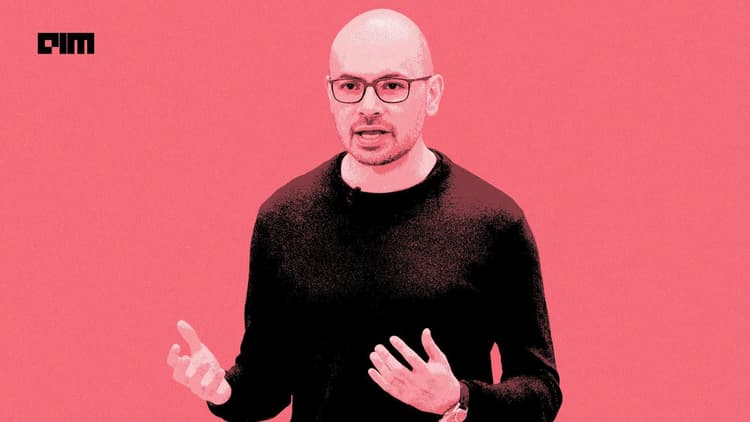
Demis Hassabis Says AGI Could Arrive Within ‘A Few Short Years’, Calls for US Frontier AI Standards Body
Hassabis argues that the pace of AI development is exceeding the current understanding of the technology.
View

AI Could Drive Mass Job Displacement and Transform Economies, Economists and 16 Nobel Laureates Warn
Tech firms globally are either in the process of integrating AI technologies and automation into their workflows. This, added with the use of AI chatbots by individuals for various daily tasks, has led to an unprecedented rise in AI adoption. The proponents of AI argue that the agents improve efficiency. However, the accelerated adoption of AI by firms comes as companies have laid off several workers and cut white-collar jobs, including managerial positions. Warning about the potential dangers of AI, various economists, Nobel laureates, and industry leaders have signed a letter, claiming that AI could lead to large-scale job displacements and transform economies.
View
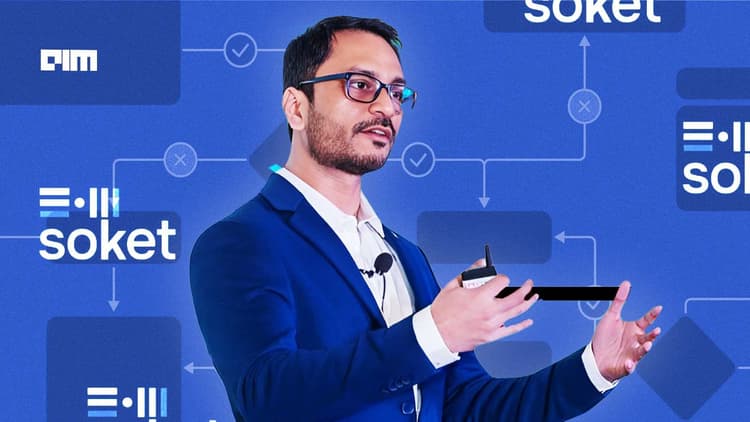
Soket AI is Building India’s Answer to Anthropic Fable
Early benchmarks of Soket AI’s upcoming model suggest inference efficiency is roughly 3x better than DeepSeek's and training costs are 30–40% lower.
View

Father of Reinforcement Learning Richard Sutton Launches New AI Startup
The Turing Award winner has left Keen Technologies with a former colleague, Khurram Javed, to build AI models that benefit from continual learning.
View

Karnataka to Build AI University & Innovation Hub, Announces CM Shivakumar at Google I/O Connect India
Google also introduced on-premises Gemini, AI education initiatives, cybersecurity tools, and expanded language support for Indian enterprises and developers.
View

The AI Smoke and Mirrors Fuelling India’s Data Centre IPOs
As Indian data centre operators line up for IPOs, investors are backing tomorrow's AI demand, even as today's utilisation, governance, and policy remain unresolved. As Indian data centre operators line up for IPOs, investors are backing tomorrow's AI demand, even as today's utilisation, governance, and policy remain unresolved.
View
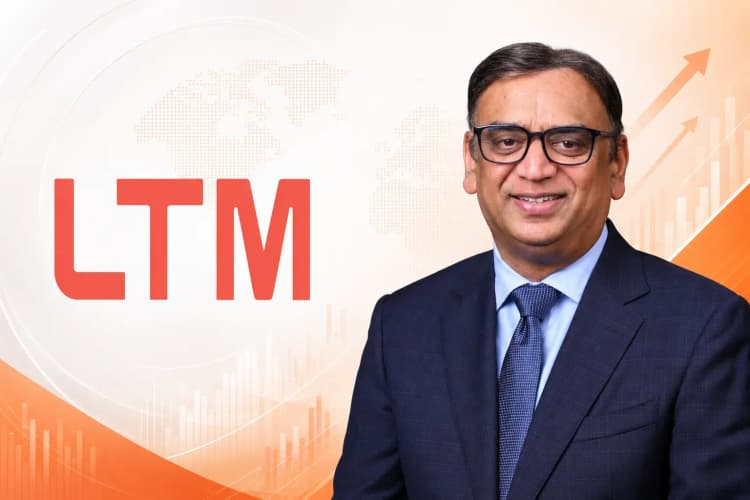
LTM is Over AI Pricing Reset. It's More Worried About AI Deployment
LTM is betting that investing early in forward-deployed engineers will position it for the next phase of AI services growth.
View

Anthropic Introduces India-specific Pricing for Claude AI Subscriptions
The revised plans include Claude Pro at ₹1,999/month, Claude Max at ₹11,999 and ₹23,999, and Claude Team starting at ₹2,399/user/month.
View

Elevation Capital Raises $500 Mn Fund IX to Back India's Next Wave of AI Startups
Elevation Capital’s Fund IX will focus on seed and Series A investments, emphasising early-stage opportunities in AI and deeptech.
View
Enviar tu herramienta

PoweredByAI.app es un directorio de herramientas de IA que ayuda a personas, empresas y creadores a descubrir las mejores herramientas de IA para escritura, programación, diseño, productividad y más.
© 2026 , Producto de011BQ. Todos los derechos reservados.