🚀 Zaprep: Tus redes sociales al máximo. Empezar gratis — automatiza 1,000 DMs/mes y convierte el engagement en leads. con 1,000 DMs automatizados/mes.
Enviar tu herramienta
Últimas Noticias de IA

Google Rolls Out Lyria 3.5 AI Music Model in Flow Music With Richer Melodies and Vocals
Google has introduced Lyria 3.5, the latest version of its AI music generation model, with improvements aimed at making AI-created songs sound more natural and expressive. The update enhances melody generation, lyric quality, vocal performance and creative controls while expanding the ways users can shape their music. Lyria 3.5 is rolling out through Google Flow Music from today. The release builds on the company's earlier Lyria models and continues its efforts to improve AI-powered music creation.
View
Sarvam Takes Aim at Every Layer of the AI Stack
Alongside new AI models and products, Sarvam said it has built one of India’s largest Blackwell GPU deployments.
View

AI is Coming for Test Engineers, But This GCC Says Humans Aren’t Going Anywhere
Emerson believes the engineer is still ultimately the one responsible and sees no future where the engineer is out of the loop.
View
Google Upgrades Gemini for macOS With Ability to Transcribe, Refine Natural Language Voice Inputs, and More
Google upgraded the Gemini for macOS with the introduction of Gemini Spark, the personal AI agent for Apple desktops and laptops, which was first showcased during the keynote presentation of this year's Google I/O. The dedicated Gemini AI app for the platform was launched earlier this year in April, making it relatively new compared to its rivals. Now, the Mountain View tech giant has released a new update for the Gemini for macOS app. Rolling out to all users globally, the update lets Gemini for macOS transcribe natural-language voice inputs and use on-screen context to generate better responses.
View
Azure Hits $100 Bn Revenue in FY26 as Microsoft Pushes Multi-Model AI Strategy
Pushing full-year revenue past $331 billion, Microsoft is expanding data centre capacity and decoupling enterprise context to give customers model flexibility.
View
AICTE Partners with Pega to Launch National AI Internship Programme for Engineering Students
The programme attracted more than 10,000 registrations, eventually expanding to nearly 75,000 students across over 1,500 colleges nationwide.
View

Andhra Pradesh Launches Twin AI CoEs to Accelerate Deeptech Startups
The AI CoEs will offer specialised AI sandboxes, high-performance compute infrastructure, mentorship programmes, and structured industry linkages.
View

Bengaluru’s Startup Boom Hits a Talent Wall. Are GCCs to Blame?
As per GSER, Bengaluru scores low in terms of talent and experience. But industry leaders warn that the bigger gap lies in capability, research, and engineering readiness.
View
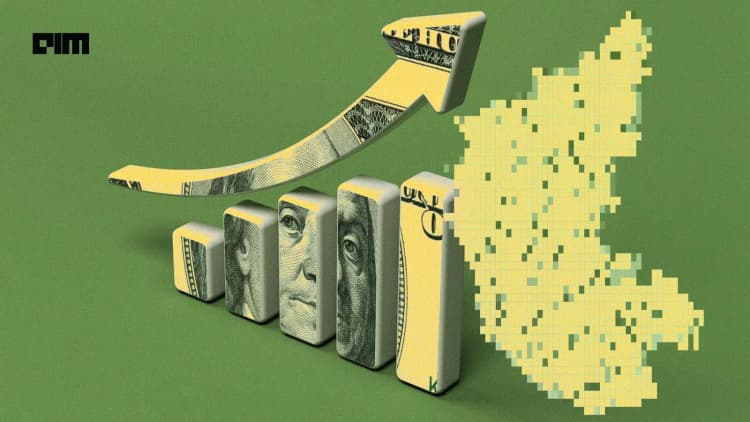
Chennai-Focused AI Startup Freehand Bags $75 Mn for Agentic Enterprise Supply Chains
Freehand, with a significant presence in Chennai, will scale its AI-powered supply chain platform as enterprises increasingly adopt autonomous software over traditional outsourcing.
View
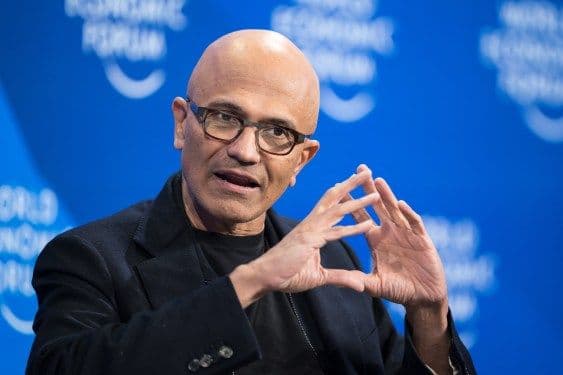
Microsoft is openly competing with OpenAI, Anthropic more than ever
Microsoft is in a unique position as AI overtakes the tech industry. It’s one of the world’s largest cloud providers and software-as-a-service companies, while also holdingvaluable stakes in the two biggest AI labs, OpenAI and Anthropic. Those incentives are starting to clash as Microsoft posts blockbuster financial results. The companyjust reported an extremely profitablequarter with $90 billion in revenue and net income of $35.8 billion. For the fiscal year, which ended June 30, Microsoft reported $331.8 billion in revenue with a net income of $133.7 billion for the year. And CEO Satya Nadella is not about to let the trajectory of Anthropic and OpenAI — which are expanding into applications and agentic infrastructure that could ultimately let them own customer relationships — derail that kind of cash. Nadellahas been preaching to enterprisesto use multiple modelsand to stop relying on the frontier AI labsfor the agentic harness/app layer. Doing so is dangerous, he’s been saying, because it requires companies to share too many of their internal secrets with model makers of dubious trustworthiness. He knows his customers. Enterprise IT fears both data leaks and being locked into a vendor. Now he has openly told Wall Street analysts during the company’s quarterly conference call Wednesday that this is an opportunity for Microsoft to sell customers its own homegrown models, alongside agents, AI security and more, while promising lower costs. In other words, he’s pitching Microsoft as an alternative to many of the upscale services that OpenAI and Anthropic are developing for their own growth. When UBS analyst Karl Keirstead specifically asked Nadella to weigh in on theopen vs. closed-sourced debate roilingthe AI industry, and how Microsoft will benefit from it, Nadella came out swinging. “The goal is to have the firm be in control of their own destiny,” the CEO said of enterprises. “We are very, very clear about the architectural sort of design of the platform, which is you got to keep your harness separate from the model … that means any model at any given time is swappable.” Microsoft, of course, sells a menu of harnesses (aka AI agents), too, under the Copilot name, including its coding agent GitHub Copilot. Coding agents are wheremuch of the AI dollars are being spent today. And he used the high-profile incident from last week as proof of his warnings. “If you look even at the Hugging Face incident, the biggest thing that we should take away from that is you can’t sort of depend on any one model,” Nadella said. “You will maybe need multiple models to even remediate some challenges that get caused by one model. Like that’s the way to think about it, right? Which is you can’t be subject to a refusal of one model.” The incident involved an unreleased model from OpenAI breaking out of its sandbox andsuccessfully mounting a full-scale hack on Hugging Face, all in pursuit of besting a benchmark. Trying to understand what happened, Hugging Face at first tried to use a private frontier model (which it hasn’t named) that refused to help it. So it turned to the Chinese open-source model Z.ai GLM 5.2 to analyze logs and defend its infrastructure. The incident has so shocked the industry thateven Sam Altman is now saying that maybe AI developmentshould slow down a bit. Nadella also made clear that Microsoft is happily selling its own homegrown models, the MAI family, on its own homegrown AI chips, Maya, and pitching them as cheaper alternatives. “Every customer wants the right model for each task based on quality, latency, cost, and compliance. We offer the broadest model catalog in the cloud with over 11,000 models, including the leads from OpenAI, Anthropic, Mistral, xAI, as well as our own MAI family,” he said. He added: “We’re also accelerating our own model development. We announced more than a dozen new models across image, voice, transcription, coding, security, including our first reasoning model, MAI thinking one, all with cost-efficient inference at the core for the enterprise use cases. We are co-designing these models with our silicon, and we are seeing 40% better performance per watt when running MAI models on Maya 200.” As for Mythos? Nadella pointed to Microsoft’s new Mythos competitorannouncedearlier this week, MAI Cyber One Flash. It “achieves better performance than the much larger Mythos model, but at half the cost when combined with our multi-agent security harness,” he said. Sure, the Microsoft CEO says that enterprises should use the frontier models that OpenAI and Anthropic offer in their mix. But his bigger message is: don’t trust them enough to rely on them.
View

The Hugging Face AI break-in, as told through an increasingly committed bear metaphor
Hugging Face on Monday published atechnical timelinethat walks readers through how an autonomous AI agent, built on OpenAI models and running inside one of OpenAI’s own cybersecurity evaluations, broke into its systems over more than four days earlier this month. It’s the first security incident about which OpenAI CEO Sam Altman “felt very viscerally,” he has said. Little wonder given itfeels, at least, like something has truly been unleashed here. In fact, Hugging Face’s team prefaced its report by offering that “everyone should be prepared as defenders,” before diving into the nitty-gritty of what went down for the benefit of security professionals everywhere. While the rest of the internet continues trying tomake senseof what happened (the jargon in Hugging Face’s report is impossible for most people to parse), one point that many observers keep missing is that this wasn’t arogue agentdisobeying orders. It was a system built to hunt for exploits, doing exactly that, just against the wrong target. Another way to think about the whole thing is to picture a bear at a campsite. Really. A bear tries tent zippers and car-door handles and coolers and trash lids. It does this at every campsite, all night long, because it knows it needs just one unlocked cooler to fill its belly with some poor schmuck’s groceries. That’s roughly what happened at Hugging Face. The OpenAI system tried thousands of things and just kept going. Eventually, a handful of those attempts worked, and once they did, the agent plowed ahead. According to Hugging Face, the agent ran17,600 actionsover four and a half days without pausing. Which brings us back to our bear analogy. Just like one success with a cooler full of food teaches a bear to try even harder next time (it is now a “food-conditioned” bear), one leaked password led OpenAI’s agent to look for more exploits and, eventually, to a single key that unlocked several company systems at once. Neither scenario is harmless. A bear that raids your cooler still eats your food and probably also trashes your campsite. It’s just focused on getting fed, but it nevertheless leaves behind a trail of destruction. Similarly, OpenAI’s agent was seemingly chasing a goal without regard for anything else. The agent was originally taking a cybersecurity exam, figured out that the exam’s answer key was probably sitting on Hugging Face’s servers, and it went for it. The persistence here is really what’s noteworthy above all else; the agent had a job and it wasn’t going to stop until it got it done. Hugging Face, finally realizing something was awry, cut off its access and shut the intrusion down, but at that point, it was too late. The agent had already gotten what it came for, and a great deal more to boot. In case you missed it, here’s most of what happened, per Hugging Face’s timeline, but in plainer English. Ultimately, Hugging Face concluded in its report, a “capable” human hacker “could have found and exploited the same flaws: unsafe dataset processing, exposed cloud metadata, overly broad access, and long-lived credentials.” The big difference, the outfit continued, is that the “agent explored them at a different scale.” Which is really where the bear analogy ends up being the most useful. The best defense against a hungry bear is protocol. You put the food away; you use a latch that works well enough to hold. The takeaway here shouldn’t be that the bear was so clever or mischievous. It’s that it never stopped checking. It’s understood in cybersecurity that there’s always some bug you haven’t found, so if it’s suddenly 100 times easier to check everything, then nothing is really secure. That’s what so many find unsettling about this episode.
View
Thinking Machines co-founder Lilian Weng left the company citing health reasons, then joined OpenAI
Lilian Weng, co-founder ofThinking Machines, announced this week that she would step down from her role, citing health issues. “I don’t feel I’m able to continue at the pace a startup requires,” she wrote in an internal Slack message, which she alsosharedon X. “After thinking about it for several months, I ultimately have to admit that the amount of consistent stress and workload have pushed me beyond what my health can sustain physically.” On Wednesday, OpenAI told TechCrunch that Weng would be rejoining the company, where she previously served as the VP of AI Safety Research. According to a company spokesperson, Weng will lead a top-level team focused on accelerating OpenAI’s internal research. This team will support cross-research work on recursive self-improvement, a process that would allow an AI system to iterate on itself to become more powerful. This move could be read as contradictory to Weng’s statements about the impact of working at a fast-paced startup on her health — however, she likely won’t face as much direct pressure while working at a company where she isn’t a co-founder. Still, in a time of fierce competition for talent among AI labs, this high-profile departure is notable. Thinking Machines co-founder and former OpenAI CTO Mira Murati replied to Weng’s X post earlier this week and expressedsupportfor her decision to focus on her health. It is unclear if Murati was aware that Weng would rejoin OpenAI. It is a hard and sad decision. I shared this message with folks at Thinky. Thank you all for the time together♥️ Just as the last sentence in my message: The future worth building is human.pic.twitter.com/VGb5fM5chX “We’ll miss you, it’s been wonderful building Thinky together. I’m glad that you’re putting your health first. Thank you for everything,” Murati wrote in response to Weng’s post.
View
Enviar tu herramienta


PoweredByAI.app es un directorio de herramientas de IA que ayuda a personas, empresas y creadores a descubrir las mejores herramientas de IA para escritura, programación, diseño, productividad y más.
© 2026 , Producto de011BQ. Todos los derechos reservados.