🚀 Zaprep: Tus redes sociales al máximo. Empezar gratis — automatiza 1,000 DMs/mes y convierte el engagement en leads. con 1,000 DMs automatizados/mes.
Enviar tu herramienta
Últimas Noticias de IA
Sam Altman and AI’s decel debate
OpenAI CEO Sam Altman recently said that it may betime to “pace the rate of AI development”so that society can “harden around some of these new capability levels.” On the latest episode ofTechCrunch’s Equity podcast, Kirsten Korosec, Sean O’Kane, and I discussed how Altman’s comments were probably prompted by a recent hack in whichan OpenAI agent breached Hugging Face’s systems. Sean noted that while a hack performed by an AI agent is novel, the hack itself was not “some new advanced thing.” “It was more like Nixon’s people breaking into Watergate than some real stealthy cyber-op, because it didn’t need to be, and it wasn’t instructed to be,” Sean said. “Hopefully, this is a sign that these companies will take this forward and be more careful about that stuff.” Altman’s comments also gave me a chance to wonder about the usefulness of the whole accelerationist versus deceleration debate, because (yes, I’m about to quote myself) the framing “kind of suggests that there’s only one path” and “all we get to decide — inasmuch as we get to decide at all — is, do we speed up or do we slow down?” Keep reading for a preview of our conversation, edited for length and clarity. Sean O’Kane:Maybe we’ve finally hit an inflection point here. I think a big driver of this has to be what we talked about last week, with one of OpenAI’s models breaking into Hugging Face’s data and apparently breaching a few other things around the internet, as well. [Altman’s] not calling for a pause, like we’ve seen some people in the tech industry try to do in the past. He was very careful with his words and saying, “Pace it.” And we’ll see how this holds. Any caution that we see some of these labs throw out there often gets reversed when the incentives push them forward to resume, full speed ahead. So I remain skeptical, big surprise. Kirsten Korosec:Now I will say this — [Altman] might have been careful with his words, but OpenAI and Anthropic did[support] a petitionthat does reflect what he did talk about. And I do agree with you, I think that a lot of this was very much triggered by Hugging Face. It probably spooked him and certainly a lot of people in the industry. The hard thing here is: How do you thread the needle or how does OpenAI thread the needle of continuing to generate revenue, raise money, or have a successful IPO, and quote unquote “pace development.” I don’t know if they can do that. I’ll be curious to see if they manage both. Anthony Ha:One of the things I’ve been wrestling with is also this question of: Is acceleration [vs.] deceleration the right framework to be thinking about this? Because it kind of suggests that there’s only one path and we’re all stuck on this path. All we get to decide — inasmuch as we get to decide at all — is, do we speed up or do we slow down? As opposed to — again, I’m going to really torture this metaphor — but do we build different guardrails? Do we choose different paths? I’m just very resistant to this framework. As opposed to saying, “Okay, if we’re not happy about what models are doing right now, what else can we do? Is a slowdown, a pause, a stoppage, the only option?” And I don’t think it is. One thing that I did want to emphasize again, because it’s been really interesting to see the level of alarm around this — this sense of, “What if we have these autonomous agents and models just running around hacking each other, trying to prevent hacks, it’s just all getting out of our control,” leading to all these broader debates about alignment thatRebecca Bellan did a great piece about. But it’s worth coming back to one of the points that we also wrote about at TechCrunch, that this specific hack — yes, it was caused by an OpenAI model, butit sounds like they just didn’t secure the testing site properly. In theory, this model should not have been able to get online. Now, of course, if you have a powerful misaligned AI, the risks of that human error go up dramatically. But it does start from just the fact that they didn’t secure things the way they should have. Sean:I think that’s right. I think your point is well taken in the sense of, we shouldn’t only think about this in some linear fashion and whether things are accelerating or decelerating. There’s a lot that could and should be said about just how responsible these companies are being. Lorenzo, one of our colleagues, also wrote a really good piece walking throughhow serious security researchers who pay attention to this stuff think that the hack really was. It really does seem like, on both sides of this hack, there were steps that probably should have been taken that would have prevented it. And one of the things that I found most interesting in that story was that some of the researchers were pointing out that what this model did was not some new advanced thing. It was really very human in the way that it thought about trying to break into trying — not to anthropomorphize, but the way that it thought about breaking into Hugging Face, and that it was also very loud and messy and wasn’t really trying to hide its tracks. It was more like Nixon’s people breaking into Watergate than some real stealthy cyber-op, because it didn’t need to be, and it wasn’t instructed to be. That should have been more easily preventable. And hopefully, this is a sign that these companies will take this forward and be more careful about that stuff. I will say one other thing on the accel vs decel [debate.] I don’t know if this is the motivation, but you mentioned the IPO, Kirsten. I think it’s smart of Altman to be able to push this advantage that they have now, which is that [OpenAI is] not going to [the] markets next month, or two months from now. He’s even floated the idea of going in 2027 and that they only filed their confidential filing so that they have the option ready when they’re ready. So if you believe all of that, he has the ability to talk this talk in a way that Anthropic can’t, because Anthropic’s already in conversation with a lot of the bankers and is headed towards a more near-term IPO and is therefore more restricted in what it can say and how it should be saying it and how the market is going to react to that.
View

AI Doesn’t Invent Gender Bias—It Inherits Ours
AI systems often reinforce gender stereotypes instead of eliminating them. Experts blame biased data, human conditioning, and unequal representation.
View
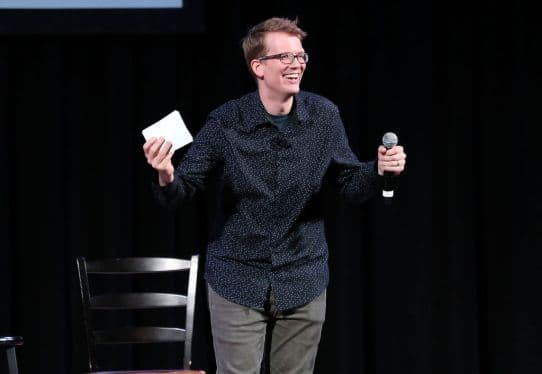
YouTuber Hank Green says his AI usage is ‘not healthy’
Hank Green, a novelist, comedian, andYouTuber with 3.2 million subscribers, recently apologized to his audience for his growing reliance on AI chatbots. Thecontroversystarted when, in the middle ofa video posted on the educational channel Complexly, Green incongruously used the phrase “I appreciate the pushback,” leading viewers to speculate that he’d written the script with a chatbot — and, in the process, accidentally included its response to one of his prompts. In a since-deleted post on X, Green acknowledged that he’d produced the video “under a ton of pressure” and used ChatGPT “for research on this script.” At the same time, he said the “pushback” line was actually a response to the episode’s guest. Green thenoffered a more in-depth apologyon Reddit, where he said he was “mortified” that he’d “let so many people down” and that he plans to reduce his video production as a result. Green insisted that he’s only used ChatGPT to “locate papers and other resources for learning about topics,” and that the words and the “takes” have still been his. At the same time, he admitted it was fair to criticize him for “diluting” himself. He also clarified that he’s “not a pure AI-hater,” while also listing a number of concerns about the technology, including its impact on climate change and “the speed at which these companies are trying to consolidate economic power.” “Ultimately, what I am most scared of is ruining myself for people, but I have not been managing my impulses well,” he said. “You need to know that my words are mine. I don’t think that this hasn’t been true, but I’ve been moving so fast that my own process isn’t actually clear to me and I want to have it be a guarantee moving forward.” It sounds like Green is going to take some time to figure out how to make that guarantee a reality. In the meantime, he’ll be pausing or posting less frequently to his various YouTube channels. Green said he wants to do more work likea recent meditative video“where the writing was the whole thing and I felt it all the way down.” Green also said he’ll probably make more videos with his “dumb unscripted straight to camera thoughts.” “But mostly I need to come to terms with the fact that the level of dopamine I’ve been getting from interacting with LLMs…with doing more and more and more and more…is not healthy for me or good for the world,” Green said. “It is careless, and has disconnected me from where people are on this.”
View
Judge denies xAI’s request to block Minnesota ban on ‘nudify’ apps
Despite a lawsuit from xAI, a Minnesota ban on apps that allow users to “nudify” images can move forward,according to NBC News. U.S. District Judge Donovan Frank’srulingfocused as much on the timing of xAI’s lawsuit as on the substance of the law itself. Frank wrote that xAI filed its request for a temporary restraining order “on July 29, 2026, nearly three months after the law was signed, and only three days before the law is set to take effect” on August 1. “Such a delay in bringing the action and the motion suggests that harm is not immediate,” Frank said. This isn’t the end of xAI’s lawsuit against the ban; it only means that the law can take effect while the lawsuit proceeds. In the suit, xAI argued that the ban — the first of its kind in the United States — is “overinclusive” and that “there are far less restrictive alternatives that function to achieve the same ends.” Earlier this year, users of Elon Musk’s social media platform X (both X and xAI, are now part of SpaceX) used xAI’s Grok chatbot toflood the platform with non-consensual sexualized images, leading toinvestigationsandbans.
View

This $9 key physically locks your most addictive apps
Screen-time apps aren’t effective for many people because, in the end, they depend on your willpower. They remind you to stop scrolling or let you set timers, but such notifications can be easy to ignore. Autonomous Keytakes a different approach to this issue simply by being a physical device. It’s an NFC key that pairs with a companion app to let you lock away distracting apps. So instead of tapping a button to bypass the block, you have to physically scan the key with your phone to regain access to your locked apps. Each unlock session can last for up to 60 minutes before the apps are automatically locked again. That physical requirement is what makes the idea compelling. Instead of depending on your self-control, you can leave the NFC key in another room, or even at the office or gym, turning a mindless impulse to open Instagram or TikTok into a deliberate decision that requires extra effort. At just $9, Autonomous Key is considerably cheaper than its competitors like Blok ($29), Unpluq ($26.50), and Brick ($59). Brick does offer a few moreadvanced features, including Sleep Mode and the ability to block in-app purchases, but Autonomous Key covers the core functionality at a fraction of the price. The key itself is compact, measuring about 3 inches long, and works with smartphones running Android 8.0 or later, and iPhones running iOS 15 or later. The companion app also provides AI-powered insights, tracking how often you unlock distracting apps, how long they remain accessible, and the times of day you’re most likely to reach for them. Notably, the AI summarizes your habits with a deliberately sassy personality. For example, if you repeatedly unlock your apps immediately after locking them, it might say that the key clearly wasn’t far enough away and will suggest putting it somewhere less convenient. Plus, unlike many app blockers, there are no subscriptions or premium tiers required to unlock additional features. One key can be paired with multiple phones, making it a practical option for people who may have multiple devices, or for families. During my testing, however, I noticed the NFC scan occasionally required multiple attempts to register. So it’s probably not the best choice for locking important apps (like messaging or email) that you may need to access throughout the day. There’s also the question of what happens if you lose the key. If your apps are locked, the current workaround is to uninstall and reinstall the companion app. If they’re already unlocked, you can simply remove the key from your account. The company says it’s developing a backup unlock method that will arrive in a future update. Autonomous Key is currently in beta following a Kickstarter campaign, and began shipping earlier this month. It’s available in five colors: pink, orange, blue, gray, and brown. This post was originally published on July 27, 2026.
View
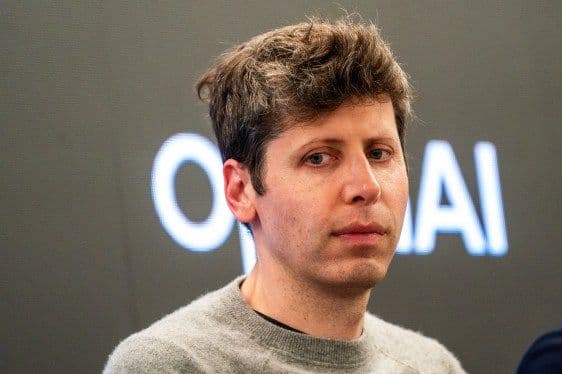
Sam Altman is still making the case for parenting via ChatGPT
OpenAI CEO Sam Altman seemed excited to share what he called a “cool use case” on Friday,postingthat parents could “connect your family calendars and explain your kids’ interests” tothe company’s new product ChatGPT Work, then “every morning for the drive to school, have it make a podcast that talks about one kid’s soccer game that afternoon, one kid’s upcoming birthday, some news, etc.” Altman’s post prompted lots of virtual eye-rolling, includinga simple responsefrom Alex Hirsch, creator of the animated series “Gravity Falls”: “What if you just talked to your children”? Hirsch’s question seems to have gone even more viral than Altman’s initial post — while Altman’s comment has been reposted around 300 times and liked around 9,600 times (as of Saturday morning), Hirsch’s response has been reposted 9,000 times and received 122,000 likes. This isn’t the first time a tech CEO has promised that AI can shield users — and specifically users’ morning commutes — from the messy realities of human experience. Last year,Microsoft CEO Satya Nadella said he’d stopped listening his favorite podcastsduring his morning drive; instead, he asked an AI chatbot about those podcasts. Altman’s post also echoed comments he’s made about parenting in the past, most notably whenhe appeared on “The Tonight Show with Jimmy Fallon”and declared, “I cannot imagine having gone through figuring out how to raise a newborn without ChatGPT.” (Though he was also quick to acknowledge, “Clearly, people did it for a long time, no problem.”) Getting parents on-board seems to be a priority for OpenAI, which recentlyposted a job listing for a product managerwith experience building trust-sensitive consumer experiences for parents and families. Meta, meanwhile, istesting an AI-powered app that tells bedtime stories. But while OpenAI hasadded safety features for parents, it also facesmultiple lawsuitsfrom parents and families alleging that ChatGPT played a role in loved ones’ delusions and suicides. (The company has said it’s “continuously improving how our models respond in sensitive interactions.”)
View

Smallest AI Raises $13 Mn to Build Real-Time Voice AI
The startup plans to bring its speech-to-speech technology to sectors including financial services, healthcare and contact centres.
View
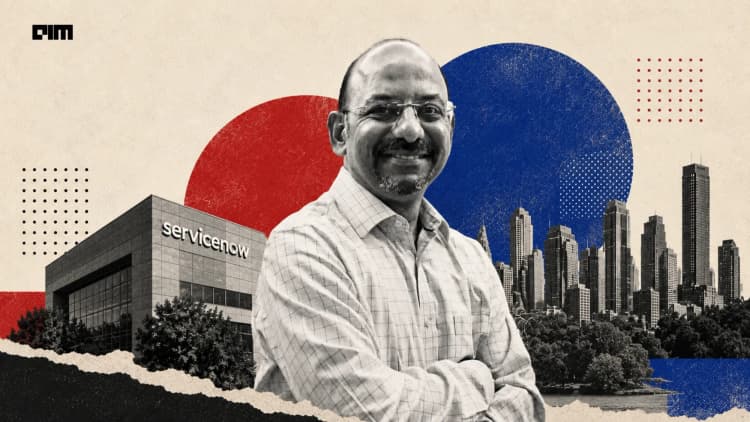
ServiceNow is ‘Not’ a Boring Company
For ServiceNow, the next enterprise AI battle is not about who has the smartest model. It’s about who can keep thousands of AI agents under control.
View

Google nixes its Earth AI feature one day after launch, amid criticism it would spread misinformation
Googlerolled out a new featureon Thursday that allowed users to deploy Nano Banana 2, its AI image generator, to create fabricated images inside its satellite imagery mapping app Google Earth. The whole point of this feature, Google said, was to get creative with geography. But criticsquickly pointed outthat the tool could be used to create and spread misinformation. The tool, which was prompt-based and allowed pretty much any image to be superimposed over real maps, seemed like a recipe for a deluge of geospatial slop. “There’s no way that this new AI image generation feature on Google Earth, one of the most reliable sources of visual evidence for journalists and researchers, could possibly be abused to spread misinformation online,” a BBC journalistposted sarcasticallyThursday. Now, only a day after the feature’s release, Google has scrapped it. “We’ve seen geospatial professionals using this feature for a range of useful purposes, however we’ve also seen people sharing screenshots of generated imagery that appear to violate our policies,” the companysaid in a statement. “We’re rolling back this feature in Google Earth while we work on implementing stronger guardrails,” Google added. The criticism of Google’s tool is understandable, although it’s worth pointing out that, in the age of AI, most imagery that exists on the web can be easily manipulated. You don’t have to be a Photoshop whiz anymore to create semi-credible disinformation; you just need access to an AI image generator, which Google sells, as do many other AI firms.
View
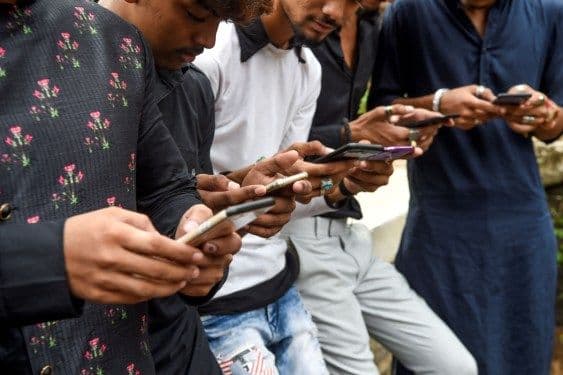
India is starting to pay for apps, not just download them
For years, India was the world’s largest app download market but one of its toughest places to make money. That is beginning to change as Indian consumers spend more on AI, entertainment, and other premium apps. India’s mobile app market generated a record $345 million in consumer spending during the second quarter of this year, up 35% from a year earlier, according to anew reportby Sensor Tower. The app-market intelligence firm said the gains were increasingly driven by generative AI, streaming, and productivity apps rather than gaming, as Indian consumers became more willing to pay for digital subscriptions. The record quarter builds on a broader trend of rising app monetization. India’s revenue per download has more than doubled over the past three and a half years, while quarterly app downloads have remained at around 6.3 billion since 2023. “We would describe India today as a rapidly evolving mobile market with a large user base and growing willingness to pay for digital services,” Eve Chen, an insights analyst at Sensor Tower, told TechCrunch. Chen attributed the change to the wider adoption of digital payments, including India’s Unified Payments Interface (a system that lets people pay directly from their bank accounts) and digital wallets, which have reduced friction for in-app purchases, alongside growing acceptance of app-based subscriptions and premium digital services. The trend also stands out globally. India’s app revenue saw its fastest growth in Q2 among major app markets, generating more than $200 million in quarterly consumer spending, per Sensor Tower’s data shared with TechCrunch. In contrast, Mexico grew 30% and Turkey 25%, while U.S. app revenue actually declined 3% over the same period. “These figures suggest that India is no longer just the world’s largest market by downloads, but is also emerging as one of the fastest-growing markets for app monetization,” Chen told TechCrunch. India still trails more mature app markets by a wide margin. Revenue per download stands at about $4.60 in the U.S., $3.90 in South Korea, and $6.10 in Japan, compared with a small fraction of that in India. Nonetheless, Chen said the trajectory matters more than the absolute level, with India’s steadily improving monetization suggesting significant room for long-term growth. Generative AI has emerged as one of the fastest-growing segments, with OpenAI’s ChatGPT and Anthropic’s Claude together accounting for nearly 83% of India’s AI app revenue in Q2, according to Sensor Tower’s data shared with TechCrunch. Much of India’s app revenue growth is also being driven by non-gaming apps. Non-gaming categories, Sensor Tower said, accounted for 68% of India’s mobile app revenue in the first half of 2026, up from 58% three years earlier. The latest data also suggests global subscription appscontinue to be among the biggest beneficiariesof rising app spending in India, with Google One becoming India’s highest-grossing mobile app during the quarter. Streaming platforms such as Amazon Prime Video, Crunchyroll, Sony LIV, and JioHotstar also saw growing consumer spending. Gaming also bucked the global trend, with revenue rising 3.7% from the previous quarter despite a worldwide decline, per Sensor Tower. App intelligence firm Appfigures also sees India’s app subscription market continuing to grow, although it says the pace has slowed after an AI-fueled surge over the past two years. Subscription revenue is still rising, but much of the initial excitement around AI has abated, Ariel Michaeli, the company’s founder and CEO, told TechCrunch. “The numbers are still staggering,” Michaeli added. Appfigures estimates that ChatGPT generates about $60,000 a day in India and attracted around 1.8 million downloads over the past month, although that’s down from roughly $80,000 a day last October.
View
OpenAI reportedly finds evidence that more of its agents ran amok
Much has been made of the incident in which one of OpenAI’s agents broke out of its sandboxed test environment andproceeded to hackthe AI hosting platform Hugging Face. OpenAI has sincelaunched an investigationinto how the incident occurred, which is still ongoing. Now, anonymous sources have toldReutersthat more of OpenAI’s agents are believed to have escaped their sandboxes. However, one source downplayed the severity, saying that with those escapes, the agents didn’t appear to leave OpenAI’s network to hack into another company’s. TechCrunch reached out to OpenAI for more information. AI programs acting in bizarre ways has apparently become a weird almost bragging point for companies. The same week, Anthropic also announced that ithad discovered not one, but three instancesin which its agents had escaped test environments and hacked other organizations. AI companieshave also been accusedof using such incidents for marketing purposes — as they generate considerable attention and may underscore how powerful the companies’ products are. The flip side of that is that these disclosures are alsoramping up discussionsof government regulations.
View
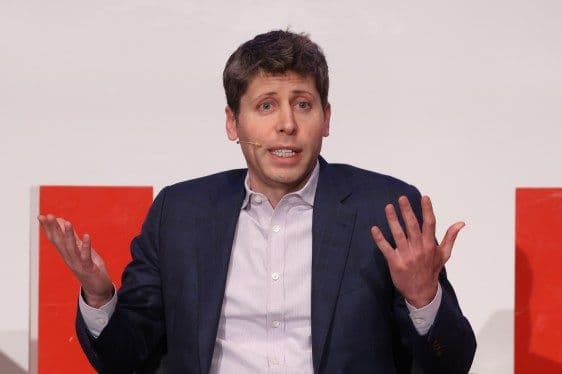
AI labs want to pump the brakes, but Amazon and SpaceX are still blasting off
After years of pushing full speed ahead on AI, OpenAI CEOSam Altman saysmaybe it’s time for the AI industry to “pace” itself. The comments came just days after one of OpenAI’s own models broke out of its test environment and got tangled up ina breach at Hugging Face— though as Equity’s hosts point out, sloppy security seems to have been just as much to blame as the model itself. And Altman’s not alone in this stance: both OpenAI and Anthropic have come out in support ofa petitionechoing that same message. On this episode of TechCrunch’sEquitypodcast, Kirsten Korosec, Anthony Ha, and Sean O’Kane dig into whether the industry is ready to pump the brakes or just temporarily spooked, and who’s on the hook when a model goes rogue. Listen to the full episode to hear more about: Subscribe to Equity onYouTube,Apple Podcasts,Overcast,Spotifyand all the casts. You also can follow Equity onXandThreads, at @EquityPod.
View
Enviar tu herramienta


PoweredByAI.app es un directorio de herramientas de IA que ayuda a personas, empresas y creadores a descubrir las mejores herramientas de IA para escritura, programación, diseño, productividad y más.
© 2026 , Producto de011BQ. Todos los derechos reservados.