🚀 Zaprep: Tus redes sociales al máximo. Empezar gratis — automatiza 1,000 DMs/mes y convierte el engagement en leads. con 1,000 DMs automatizados/mes.
Enviar tu herramienta
PoweredByAI.app es un directorio de herramientas de IA que ayuda a personas, empresas y creadores a descubrir las mejores herramientas de IA para escritura, programación, diseño, productividad y más.
© 2026 , Producto de011BQ. Todos los derechos reservados.

The explosion of new data center projects in the U.S. has led to a growing backlash against the infrastructure that powers AI. Two influential politicians are now proposing a ban on any new data centers with peak power loads in excess of 20 megawatts. Senator Bernie Sanders of Vermont and Rep. Alexandria Ocasio-Cortez of New York are introducingcompanion legislationin their respective chambers today that would halt the projects until Congress enacts comprehensive AI regulation. Sanders’ office points to remarks from a variety of tech luminaries who have discussed their fears of AI and called for stricter rules or pauses on development. These include Elon Musk (who has said “AI is far more dangerous than nukes. So why do we have no regulatory oversight?”), Google DeepMind chief Demis Hassabis, Anthropic CEO Dario Amodei, OpenAI CEO Sam Altman, and Nobel Prize-winner Geoffrey Hinton. A MarchPew Research pollfound that a majority of Americans are more concerned than excited about AI, with just 10% of those surveyed saying their excitement outweighed their concern. However, massive political spending by AI companies and fears of losing an AI arms race with China may make such legislation difficult to enact. This bill might be seen as an opening bid for what AI regulation should look like. The two lawmakers want the U.S. government to review and certify models ahead of their release, enact protections against AI-driven job displacement, limit the environmental impact of data infrastructure, and require union labor in its construction. They also seek to prohibit the export of advanced chips to countries without similar rules — which, at this point, is most of them.
View

Gemini for Google TV is getting a big upgrade. On Tuesday, the Mountain View-based tech giant announced three new artificial intelligence (AI) features to improve the viewing experience of users and to allow them to find more information without having to look it up on their smartphone. The most notable among them is the new live sports scorecards functionality that lets users quickly check the scores of their favourite teams without having to stop what they were originally watching.
View

OpenAI added a new feature to ChatGPT on Tuesday. Dubbed Library, it is a quality-of-life feature that makes it easier for users to reference previously uploaded files. The San Francisco-based artificial intelligence (AI) giant highlighted that the feature will help quickly reshare files during conversations, eliminating the need to upload them over and over. The Library acts as a locker space that shows all the recently uploaded files, and users can simply select and attach them to a conversation.
View

The cry of “atoms, not bits!” — a phrase capturing Silicon Valley’s growing obsession with physical manufacturing over digital products — reached a fever pitch last week with word that Jeff Bezos is putting together a$100 billionfund to roll up and automate factories. But automating factories isn’t purely a hardware problem. It increasingly depends on sophisticated software and AI tools, and that shift is reshaping the companies building the infrastructure of the physical manufacturing world. Karthik Gollapudi, the CEO ofSift, an El Segundo, California, company whose tools support the design and manufacturing of complex machines like spacecraft and cars, is feeling the ground shift underfoot. He says these changes have reshaped his company’s focus in the last six months. Gollapudi and his co-founder, CTO Austin Spiegel, started the company in 2022 after working on software tools at SpaceX that managed the huge amount of telemetry data — real-time performance information streamed from sensors on physical components — during testing, manufacturing, and launch. Most companies building advanced machines use off-the-shelf database tools or cook up their own Python scripts, but Sift saw the opportunity to provide companies with a best-in-class tool. Customers range from United Launch Alliance, a major US rocket builder, and other defense contractors, to robotics and power grid management startups. However, Gollapudi says that the arrival of AI tools for data analysis forced a change at his business. The kinds of customized workflows that once stood out as the company’s signature offering have become table stakes in a world of AI and deep learning models. But the company’s ability to manage data infrastructure had suddenly become more valuable. “Our long-term vision of how we saw this playing out over five years is actually being played out this year,” Gollapudi told TechCrunch. That means managing the intense data flow from today’s software-intensive machines. Some vehicles the company works with have more than 1.5 million sensors streaming data concurrently, across multiple formats and time scales. Organizing and storing that data for AI applications is the company’s goal—”a lot of the value is in exposing that to be machine readable,” Gollapudi said. If AI agents are going to make decisions about manufacturing or analyze test data to flag potential problems, Sift’s goal is to make that data available to them. Jeff Dexter, the VP of software at Astranis, a satellite company that uses Sift to manage test, manufacturing, and operations, said that good data infrastructure matters for companies like his that might do 10 million automated software tests in a day. “Inevitably, it gets to a point where it’s costing us millions of dollars per month just to store data,” Dexter said. “It’s really like, is this a million dollars well spent? With technology like Sift, I don’t worry about how much data is there.” Gollapudi told TechCrunch that Sift raised a $42 million Series B in 2025 at $274 million post-money valuation, led by StepStone with participation from GV (Google’s venture arm), Riot Ventures, Fika Ventures, and CIV.

Meta is looking to leverage AI’s ability to inform and potentially influence shoppers to increase sales on the company’s social media platforms, like Facebook and Instagram. At the Shoptalk 2026 conference this week, the tech giant announced it will begin testing a new experience that allows consumers to see more product information and a summary of user reviews after they click on an ad or visit a website from Facebook or Instagram. The feature is similar to Amazon’s use ofgenerative AI to enhance its product reviews, introduced in 2023. Instead of requiring users to read through hundreds of reviews to get a sense of what people say about a given product, Amazon uses AI to summarize the reviews into a short paragraph that appears on the product page. Meta will also use AI in the same way. In the new pop-up experience that appears, the AI feature can offer a round-up of “what people are saying” about the given product. This may include a brief intro followed by key bullet points. However, in Meta’s apps, the feature will also provide other general information, including details about the brand itself, recommended products, potential discounts or sales, and, on an individual product’s page, a button to add the item to the user’s cart. This is then followed by an updated checkout flow, built in partnership with payment providers Stripe and PayPal, which allows consumers to complete the purchase in just a tap. Meta says it’s already working on other integrations with Ayden and Shopify, which will roll out in the future. The advertiser is in control of which checkout partner they use, so when a consumer taps the “Buy Now” button, they can complete the purchase and fulfill the order, while the user remains in Meta’s app. The changes to checkout come alongside other updates to Meta’s product discovery tools and features. This includes an update aimed at creators that offers an expandedrange of affiliate partnersfor them to work with on Facebook, as competition with TikTok heats up. The affiliate additions include Amazon,eBay, and Temu in the United States, Mercado Libre in Latin America, and Shopee in Asia. On Instagram later this year, Meta will also test affiliates like Amazon (U.S.) and Shopee (Asia). The partners will choose which products they want featured and set the commission rates for sales that the creator receives when someone buys through their account. In addition, Instagram Reels creators will gain access to product catalogs from businesses in 22 countries that will help them find products to feature in their videos.

Meta is launching Meta Small Business, a new company-wide initiative focused on supporting entrepreneurship and driving AI adoption,Axios reportedon Wednesday. Meta CEO Mark Zuckerberg said in a memo to staff that small businesses have always been a big part of the company’s business model, and that tens of millions of entrepreneurs already use its platforms to grow and connect with customers. The company now plans to do more in the space. “In the AI era, it should be easier than ever for people to build new businesses,” Zuckerberg wrote. “We want to build the services that enable this. This is important for ensuring that people broadly share in the prosperity created by superintelligence.” Axios reports that Meta Small Business will be led by Meta President and Vice Chairman Dina Powell McCormick and head of product Naomi Gleit. Zuckerberg has asked product managers, designers, engineers, and other employees to reach out if they’re interested in working on the new initiative.
View

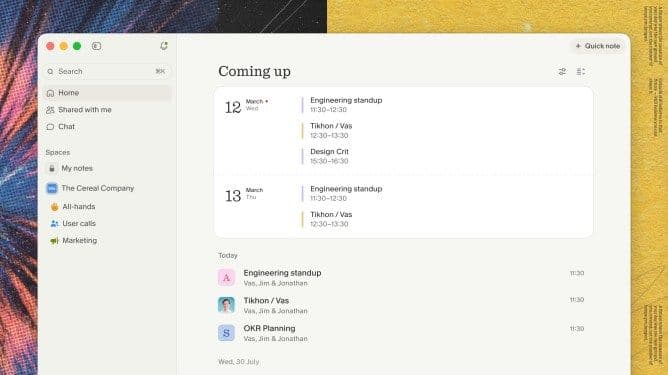
Users might not likebotsin meetingsvisibly taking notes, but a lot of them don’t mind if an app on someone’s computer is doing the transcription. That’s the core reason behind Granola’s popularity, which helped it secure $125 million in Series C funding led by Danny Rimer at Index Ventures, with participation from Mamoon Hamid at Kleiner Perkins. This has tipped the company’s valuationto $1.5 billion, it said, up from $250 million as of the last round. The company said that existing investors like Lightspeed, Spark, and NFDG participated in the round as well. With this round, which comes less thana year after its $43 million round, the startup has raised $192 million. From being a prosumer app that sits on your computer, transcribes meetings, and generates notes, Granola has been building features to suit an enterprise stack. For instance, last year, it started allowing teammates to collaborate on notes. It has now made inroads into enterprises such as Vanta, Gusto, Thumbtack, Asana, Cursor, Lovable, Decagon, and Mistral AI, it says. With the fundraising announcement, Granola is also adding a feature called Spaces, which are essentially workspaces for a team. You can also create Folders within this workspace. Spaces have granular controls around who can access what part. Users can query notes from Spaces and folders separately. The company understands that AI meeting notes are becoming a commodity at this point, withmanyplayersoffering this feature. That is why, after introducing aModel Context Protocol (MCP)server in February, the company is introducing two new APIs for integrating the context of notes into AI workflows. Granola now has a personal API that lets people access their notes and notes shared with them, and an enterprise API to let admins work with team context. The personal API is available to users on business and enterprise plans and the enterprise API is available only to enterprise users. The API launch comes after a bunch of users, including an a16z partner, weremad at Granola for locking down its local database and breaking on-device AI agent workflows they had set up. Granola co-founder Chris Pedregalclarifiedthat the company didn’t want to lock down data, but its local cache was not designed to handle AI workflows, and the startup decided to change how it stored the data. That move broke the agent workflows. Pedregal promised at that time that Granola would launch APIs for users to access data in bulk. He also said that the company will figure out a way to work with local AI agents. The company said that it is also updating its MCP server to let users see notes in folders and notes shared with them. It noted that its app already connects with tools including Claude, ChatGPT, Lovable, Figma Make, Replit, Manus, v0, Bolt.new, Duckbill, and Dreamer, and the startup is working on bringing more partners on board. As meeting note-taking becomes a commonplace feature, the value for startups in this category is to enable users and companies to take actions based on the notes and transcripts. This could range from drafting follow-up emails, or finding time for the next set of meetings, or drawing knowledge from the company database and CRMs to get closer to finalizing a lead. Some companies, such asRead AI,Fireflies, andQuill, have already started working in this direction.

Universities in the country are helping translate national technological ambitions into actionable industry dialogue.
View

The session will focus on practical business applications of Claude, particularly in automating administrative workflows.
View

Manus CEO Xiao Hong and Chief Scientist Ji Yichao are not allowed to leave China
View

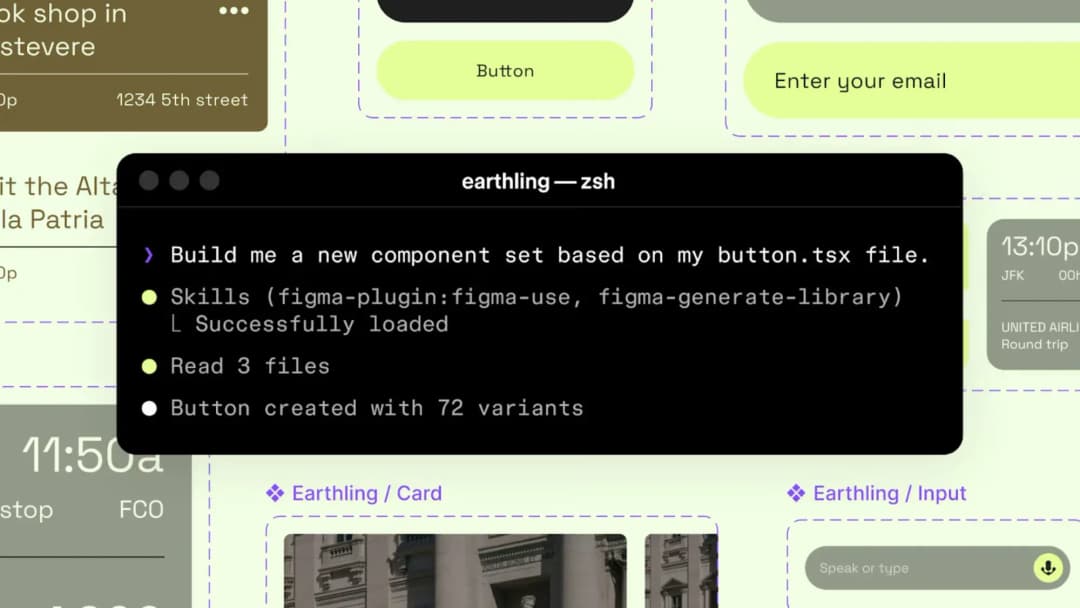
New capability lets AI agents create and modify designs directly within Figma files using design systems as a foundation.
View

With Sora’s collapse, OpenAI’s deal with Disney also fell through as the AI giant is determined to move over ‘side quests’.
View
View
View
View