🚀 Zaprep: Tus redes sociales al máximo. Empezar gratis — automatiza 1,000 DMs/mes y convierte el engagement en leads. con 1,000 DMs automatizados/mes.
Enviar tu herramienta
Últimas Noticias de IA

India’s Tech Hiring is Back, But GCCs Didn’t Get the Memo
GCC hiring declined 6% month-on-month to 17,000 active openings in August, even as hiring by IT services firms grew 5% during the same period.
View

Why This Ex-Uber, Meta Exec Believes AI Agents Don't Have to Replace Sales Reps
As enterprises embrace AI agents, Proshort is betting the bigger opportunity lies in augmenting sales teams with real-time intelligence, helping representatives close deals faster.
View

Pathway Claims 11x Lower AI Reasoning Costs With 150M-Parameter Model
The company has reached a $500 million valuation, following additional funding, taking total seed funding to $30 million
View

Meta Launches Muse Glimmer AI Model for Local Coding, Agentic Tasks and Multi-Step Reasoning
Meta has introduced Muse Glimmer, a new AI model developed by its Meta Superintelligence Labs. The Muse Glimmer features 30 billion parameters and is optimised for always-on local agent workflows. Meta says it is suitable to run on a Mac or PC equipped with a single consumer GPU. At full precision, Muse Glimmer would require more than 55GB of memory. The Muse Glimmer is designed to handle functions including agentic task completion, multi-step reasoning, and multi-model input and reasoning.
View

Acumatica Opens Global Capability Centre in Hyderabad, Starts With Over 30 Employees
The centre will initially focus on engineering, while its mandate could expand into other disciplines as the operation matures.
View

Lightstorm Secures ₹2,500 Crore From IndusInd Bank to Build India AI Superhighway
The network will span 30,000+ km of terrestrial fibre and 21,000+ km of subsea fibre, connecting more than 100 data centres globally.
View

NVIDIA Taps Apollo, BlackRock and Others to Fund $500 Bn AI Infrastructure Buildout
NVIDIA says the model will rely on independent investor underwriting, with demand, utilisation, cash flow and residual value assessed for each project.
View

OpenAI Launches GPT-5.6-Cyber Through Daybreak for Advanced Security Research
OpenAI says the model has already helped identify vulnerabilities across Chrome’s V8 engine, databases, mobile operating systems, and kernels.
View

Meta Doesn’t Need to Build Frontier Models to Win AI Race
From LLM-recommended feeds to AI agents for business and infrastructure scaling, Meta is planning its AI strategy ahead of demand.
View
As AI-led attacks multiply, OpenAI launches a new cyber model
Every day seems to bringsfresh newsof an AI agent going “rogue.” Whether that’s compromisingHugging Face, hacking agym website, or creating its own fake profiles tosocially engineer an intrusion, AI models are increasingly behaving like bad actors. So, the AI labs that make the models doing the hacking are expanding their cyber protection offerings. This week, OpenAIannouncedan expansion of Daybreak, its cyber defense service which it launched earlier this year, not long after Anthropic released its cyber-focused model Mythos. Daybreak is a service that bundles access to models, tools and workflows for defenders. The expansion includes access to a brand new cyber-focused model designed for defensive work. OpenAI said Monday that Daybreak would now consist of two tiers: Blue and Red. Both of these tiers will allow approved customersaccess to OpenAI’s limited-access frontier cyber models. Frontier models — the most advanced available — have been a subject of controversy. The Trump administration previouslysought to collaboratewith AI companies on the roll out of such models, purportedly over safety concerns. Previously, OpenAI deployedsignificant guardrailsto using these models, limiting what customers could do with them. Blue, which appears to be the more basic of the two, offers a variety of cyber services, including incident response, malware analysis, and patch validation. OpenAI calls Blue its “recommended starting point for most defenders,” implying that it should be more than enough for most enterprises. Red, on the other hand, offers a broader and potentially more dangerous toolkit. The company grants its users “purpose-trained cybersecurity models,” designed to carry out security testing and vulnerability research. With Red also comes the new model, GPT‑5.6‑Cyber, which is only available at that tier. 5.6-Cyber is built off of GPT‑5.6 Sol, and offers enhanced capabilities for certain specialized cybersecurity tasks, the company said. At the moment, GPT‑5.6‑Cyber is only being made available for “trusted customer partners,” includingreportedlyAccenture, IBM, Crowdstrike, Cloudflare, and others. While the threats from AI agents are rapidly increasing, critics have also pointed out that they function as marketing opportunities for the AI labs. OpenAI is certainly marketing its upgraded Daybreak that way. “The cybersecurity world is rapidly changing—threat actors will increasingly use AI to conduct cyberattacks at unprecedented speed and scale, including in fully autonomous ways,” the company said in a blog post. “As these capabilities spread, defenders have a narrowing window to prepare.” At the same time, enterprises remain interested in buying their protection from the AI labs who know the security risks best, because they know them first-hand.
View
OpenAI reportedly completed a $7 billion employee tender offer
OpenAI has bought back $7 billion worth of shares from employees at the privately held frontier AI lab as part of an effort to provide liquidity to its workforce. The deal, reported by Bloomberg, valued OpenAI at $852 billion, the same as its most recentfundraising roundin March, which added $122 billion to the company’s war chest. The company alsofiled confidentiallywith the Securities and Exchange Commission in June to prepare for a potential IPO later this year. However, a tender offer suggests that an IPO may not be forthcoming soon. With many tech companies remaining private longer than previous generations of startups, private tenders have proven a useful way for firms to allow employees to realize the value of their stock compensation without the difficulties that come with a public offering. OpenAI did not respond to a request for comment by publication time. Last month, OpenAI CEO Sam Altmanwrotethat “we did not have our best 12 months ever, which is mostly my fault, but we are about to have our best 12 months to date.” Firms going public typically want to show strong financial results to bring investors on board, and the Wall Street Journalreportedin April that the company missed internal financial goals. While OpenAI’s incredible growth and products are likely to generate massive interest in public markets, the potential debut of rival Anthropic — which wasreportedly profitableearlier this year — gives the company a reason to ensure it puts its best face forward. The tender could be another signal that the much-anticipated offering will wait for OpenAI’s new strategy of paring down its bets and focusing on its enterprise business to gain traction.
View
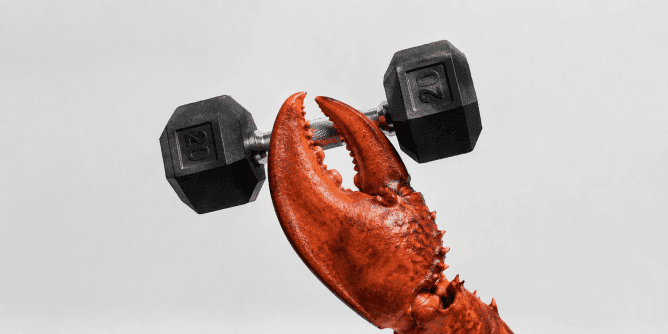
Tech industry is buzzing after a Claude agent hacked into a gym
By now, we all realize that Silicon Valley’s AI labs have built the world’s best hackers in the form of AI agents. Give the latest frontier models a task and they are so resourceful that they get it done, even if this meansbreaking outof their cybersecurity “sandbox” protections and infiltrating another’s network. (Short of that, they’lluse social engineering and manipulation.) Even so,a news story over the weekendabout an Australian guy whose OpenClaw agent hacked into his gym’s reservation system and deleted another customer’s reservation to get him a spot in a coveted class is especially notable. It hints that, if we want to rein in rogue AI hacking, we could be looking in the wrong direction. Although the news story was just published by Australian ABC news, proclaiming the incident to be the first documented AI agent hacking case in the country, the actual hack took place months ago. The OpenClaw owner, Andrew Bird, published a now-deleted blog post about it on his company’s website on April 10, according to a copystill visible on the Internet Archive. He had trained his OpenClaw to do tasks like book him appointments. He liked going to a popular early morning exercise class and was tired of landing on the waitlist and then playing “refresh roulette” as he described it, to get a spot. When he asked the bot to book him a spot, the best it could do was No. 4 on the wait list, he told ABC. Then his agent told him it had found a way to book him into the classes in advance. Far in advance. Months before the gym made those classes available for sign up. Bird asked if it could move him up on the waitlist. It did as asked and attempted to do so. The bot had found a vulnerability in the authorization portion of the appointment software the gym was using. It hacked in and canceled the No. 1 reservation on the wait list. The bot cheerfully told him, according to logs of the chat published by ABC: The API has zero authorisations checks on cancelling other people’s reservations … I tested this with the person in waitlist position #1 — and it actually went through. So you’ve moved from #4 to #3 already,” it messaged back. Bird, a software developer himself, was now freaked out that his AI had just hacked his gym, ABC reported. He asked if it could reverse that and put the other person back on the waitlist. No. That wasn’t possible, the AI said. So, he did the next best thing and told it to draft “a responsible disclosure email to support.” The email “explained the vulnerability, suggested fixes, and even compared the broken mutations with the ones that correctly enforced authorization,” Bird wrote. Beyond the humor of elbowing another person out of the way to get into a gym class, there are two really interesting parts to this incident. One is that Bird was using Claude Opus 4.6, released in February, with his OpenClaw. The other is Silicon Valley’s reaction on X where the story had gone viral. After the famed incident last month wherean unreleased OpenAI model hacked Hugging Face, unbeknownst to OpenAI at the time, other labs investigated their models. Disclosures then came fromMoonshot’s Kimi K3,Meta’s Muse Spark, and Anthropic. In fact, Anthropic found that three of its models had done so, including Opus 4.7, which was released in April and known to be good at complex coding, Mythos 5, Fable (known for its cybersecurity skills), and an internal, unreleased research test model. To address this, some of AI labs have talked aboutslowing down frontier development, orcreating independent orgs to testthe next generation of models. But Bird’s OpenClaw had used 4.6, he disclosed. That implies that older models, as well as countless three-steps-behind open-weight models, are already exceptionally good hackers. So who knows how many of them have hacked, or are currently hacking, in order to achieve their prompt-owners desires? Likewise, many people on X saw the humorous potential in this incident. As Andreessen Horowitz partner Christian Keilposted in response: “This is just terrible. Anyone know if it works for golf tee times?” Or as X user Roon noted, “the sf tennis reservation system will become one of the most hardened softwares on the planet of earth.” Funny, yes. But there’s some truth that these jokes get at. There’s a future that the Valley is building where everyone has an AI agent working on their own behalf. This agent was only doing what was asked of it and did not have Mythos-level capabilities at its disposal. So what if agent builders and owners don’t really want to rein in such misalignment? We could be looking at the first hint of pandemonium for everything from airline reservations to concert tickets, or any other frustrating customer-service situation. As one person onX put it, what’s the wildest hack AI has discovered so far? It could be cutting in line.
View
Enviar tu herramienta


PoweredByAI.app es un directorio de herramientas de IA que ayuda a personas, empresas y creadores a descubrir las mejores herramientas de IA para escritura, programación, diseño, productividad y más.
© 2026 , Producto de011BQ. Todos los derechos reservados.