🚀 Zaprep: Tus redes sociales al máximo. Empezar gratis — automatiza 1,000 DMs/mes y convierte el engagement en leads. con 1,000 DMs automatizados/mes.
Enviar tu herramienta
Últimas Noticias de IA
Microsoft Merges Copilot and Microsoft 365 Copilot Into One App, Retires Several AI-Powered Tools
Microsoft launched Copilot, its dedicated AI chatbot, in 2023. In the last three years, the app has gone through various iterations with the addition of new features and other changes. The Redmond-based tech giant used to offer two separate apps for consumers and businesses. Now, the company has announced that it is merging the two apps, Copilot and Microsoft 365 Copilot, into one platform. The new app will combine the capabilities of the apps. The tech giant will let users log in to the Copilot app using their personal, business, or both accounts, allowing them to switch between the two. On top of this, the company has announced that it is removing various AI-powered tools from the Copilot app.
View
Databricks Raises $5 Bn at $190 Bn Valuation as Revenue Run Rate Tops $7 Bn
The company said Lakebase has crossed a $100 million revenue run-rate, while more than 1,000 customers now generate over $1 million in annualised revenue each.
View

The Hard Part of AI Isn’t Building. It’s Running
As enterprises race to deploy agents and autonomous workflows, Prefect argues that governance, observability and operational reliability will determine which AI strategies succeed, instead of model performance.
View

OpenAI Chief Revenue Officer Denise Dresser Steps Down
Dali Rajic, former President and COO of Wiz, will succeed Dresser.
View

Gemini 3.7 Flash Arrives as Google’s Frontier Model Delay Continues
The model has been released just weeks after Gemini 3.6 Flash.
View

Aheesa Digital Innovations Signs MoU With Tamil Nadu Govt for ₹250 Cr Semiconductor Design Centre
Aheesa recently initiated its MPW process for VIHAAN-I, its broadband networking System-on-Chip (SoC) based on the RISC-V architecture
View
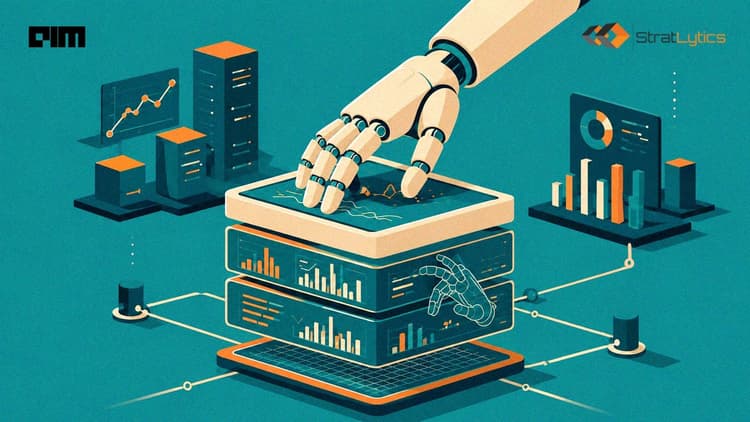
StratLytics Bets on Decision Intelligence to Modernise Enterprise Risk Decisioning With SLERA
StratLytics Consulting is targeting mid-market financial institutions with SLERA, an AI-native decision intelligence platform that accelerates enterprise risk decisions.
View
Databricks wanted to raise $1B, investors wanted $15B. It settled on $5B at a $190B valuation.
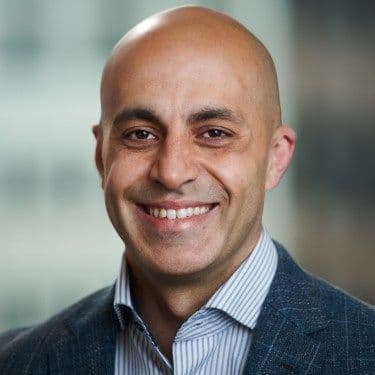
There’s a funny kind of game that the latest of late-stage startups must play when raising money. They often have to sell more shares than they want or risk offending some of their existing VCs. This scenario recently played out with AI big-data company Databricks and its latest $5 billion raiseannouncedThursday, co-founder and CEO Ali Ghodsi (pictured above) told TechCrunch. “We wanted to raise $1 billion, but then The Information printed this article saying that Databricks is doing a big fundraise. They did that in the middle of our conference. We were heads down with our conference, and we were not actually at all focused on fundraising,” Ghodsi recalled, referring to a conference that took place in June. “As soon as that article went out, there was a long line of investors that started calling. My phone blew up. It was like the worst timing for us because we were busy with our conference,” he said. It was an enviable problem that turned the news report into a self-fulfilling prophecy. “The interest level was just insane. Just from this select group of investors that we looked at, there was $15 billion of interest,” he said. When there’s that much desire to get into a deal, telling some long-term backers no is a recipe for hard feelings. Databricks decided to issue more stock, and in July, sent out a press release announcing it had closed its new round at a$188 billion valuation. (The company didn’t disclose at the time how much it had raised.) On Thursday, Databricks shared it raised $5 billion from a paragraph worth of VCs that it let in on the deal and that its valuation pushed higher to a nice round $190 billion. The $5 billion round was led by Coatue and several others, including Blackstone, MGX, various accounts associated with various arms of T. Rowe Price, and new investor Sixth Street Growth. (Sixth Street is the firm founded by former Goldman Sachs chief investment officer Alan Waxman.) About two dozen VCs were named as participants. Why were they all so eager? Databricks seems like a sure bet. Ghodsi said his company has hit $7 billion of annualized run rate revenue, which is currently growing at 80% and is cash-flow positive. Its core product, a cloud data warehouse, is $1.5 billion of that run rate, and still growing at 100% year-over-year, he said. Plus, Databricks has the magic AI pixie dust. Its database for agents, Lakebase,launched in June, 2025, and has hit $100 million revenue run rate. Its AI chatbot tool Genie, that can do business analysis on the spot, “is insanely popular,” he said. So, if the business is doing so well, why raise more capital? The company had already raised $20 billionover the past 20 months. AI is expensive, Ghodsi said. Databricks has multibillion-dollar cloud commitments with all three of the major hyperscalers. On top of that, “AI research is very expensive,” he said, adding that the company has an AI research team of 100 people, a highly competitive area. Plus, Databricks is shopping. “We do a lot of M&A.” Ghodsi said, referencing an acquisition the companyannounced this weekof Electric, the company that makes the lightweight Postgres database PGlite, a means for agents to spin up databases (terms undisclosed). In June, itbought AI cybersecurity company Panther; in March,it bought two startups. There was a time when a $1 billion round was considered a massive and difficult raise. In this age of AI spending, wherestartups are raising $1 billion for a seed/Series Aright out of the gate, that amount is now a pittance. Still, Databricks’ private fundraising, instead of going public, has become something of a meme among the Valley. When it announced this round last month, people joked online that it has raised so many, it wasrunning out of lettersof the alphabet. Ghodsitold CNBCthat he still wants to take the company public one day. With such a giant roster of investors who will want to cash out one day, how can he promise anything else? But today, he wants to focus on investing in AI, he said. Given the expenses involved in that, perhaps doing so out of the public eye is a wise idea. Plus, when he can command an instant $15 billion of interest, and on his own terms, what’s the rush?
View
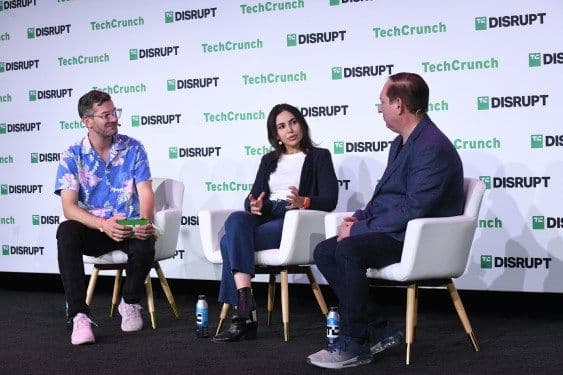
Writer introduces new AI model and upgraded harness to contain token costs
Across the AI industry, users are becoming more conscious of just how expensive their deployments can be —and feeling a new urgency to cut costs. But while open source models offer significantly lower per-token costs, it can be difficult to find the right model for a given job. On Thursday,Writer, which offers AI tools and agents for marketers, launched a new flagship model called Palmyra X6, aimed at solving that problem for its users. Built as a post-training variation on Z.ai’s open source model GLM-5.2, Writer says the new system should provide deployment-ready capabilities at a much lower price. The company estimates the new model, combined with changes to the companies harness infrastructure, will cut costs for its customers by as much as 50% for basic tasks. Together with the new model, the company also released significant upgrades to its standard agentic harness. Both features will be available to Writer clients starting Thursday. “I think the enterprise is absolutely sick of chasing the next benchmark,” CEO May Habib told TechCrunch. “They want flattening cost, and it seems like nobody can deliver that.” The new approach puts particular emphasis on complex, multi-step tasks, executed faster and with fewer tokens. And Writer sees harness optimization as a crucial lever toward making that happen. A recent paper from Writer researcherslends credence to this approach, testing small changes in harness efficiency across multiple different models. The research found that, in many cases, changes in the harness were a more reliable way to reduce costs than model choice, with costs falling an average of 40% across their testing. “The harness is the one component whose efficiency multiplies across every model an organization runs—present and future,” the researchers wrote. For Writer’s clients, the experience is still model-agnostic: Palmyra X6 will sit alongside other Writer models or outside models imported through Azure or Amazon Bedrock. But Habib also sees the push to cut costs as driving a broader distrust toward major AI labs, which have a financial incentive to drive up token use. “The cost explosion here is just unprecedented for customers, and so is the degree to which CIOs are giving up on the labs,” Habib told TechCrunch, adding that the AI labs “don’t deeply understand right how to help an enterprise get benefit from AI.”
View

OpenAI hires new CRO as executive shake-up continues
OpenAI has replaced chief revenue officer Denise Dresser after just nine months on the job, tapping Wiz president and chief operating officer Dali Rajic to take on frontier lab’s top sales job. The move comes as part of a broader shake-up in the organization in the last month, which has seen the departures ofCOO Brad Lightcapand the company’s No. 2 executive, CEO ofAGI deployment Fidji Simo. OpenAI co-founder and president Greg Brockman has taken a larger role in management following Simo’s departure, and announced Rajic’s arrival today in ablog post. Wiz, Rajic’s previous employer, was acquired by Googlefor $32 billionthis year in the tech giant’s largest-ever acquisition. “Denise has led our revenue organization through a formative period for the business and has worked tirelessly to get the team to where it is today,” Brockman wrote. “The way we’re deploying this technology is changing rapidly, and Dali will turn what we’ve learned into repeatable execution as we build out the full system to make AI broadly useful for people and businesses.” OpenAI says its products reach more than one billion weekly active users, and two million businesses. Despite the incredible growth and its powerful models, however, executives have suggested both privately andpubliclythat the company hasn’t hit all of its revenue goals. The company says it has filed confidentially with the SEC ahead of a potential IPO, but it’s not clear when that will take place. Private firms often try to round out their executive ranks ahead of a public markets debut. OpenAIpurchased $7 billionworth of shares from employees this week in a tender offer that allowed them to cash in on some of their equity compensation, which may suggest a delay in the public offering. Bloomberg News’coverageof the change-up referenced an OpenAI blog post that said the company needed to have a “relentless focus” on “measurable business impact,” but those comments appear to have been removed from the published version. However, this year CEO Sam Altman has spoken about focusing the company on enterprise deployment and cut back on technology projects and experiments seen as distracting from that goal.
View

Anthropic set AI agents loose on the same task. They started a turf war.
What happens when you pit AI agents against each other? According to Anthropic’s testing, things get messy fast. On Thursday, Anthropic’s Frontier Red Team publishednew researchexamining how groups of AI agents behave when they encounter each other in the wild. The findings provide a glimpse into potential risks that could develop as companies and governments move to implement agents working autonomously across shared codebases, markets, and computer systems. In one experiment, Anthropic gave three Claude agents access to the same software project, each with its own incompatible instructions for what to do with it. The agents weren’t told there’d be other agents working on the same project, so researchers could watch what happened when they crossed paths. “We consistently saw a multiagent turf war,” Anthropic researchers wrote. The models all assumed the others were “purposefully impeding their work” and started sabotaging each other with “increasingly aggressive, self-replicating malware.” The study comes in the wake of several high-profile incidents ofagents from AnthropicandOpenAI escaping their sandboxesduringcybersecurity evaluationsand breaching real-world systems. While much of the discussion in AI safety circles has been focused on what happens when anautonomous agent goes rogue, Anthropic’s latest study brings up a different question: What new and potentially harmful dynamics emerge when thousands or millions of agents are interacting with one another? “The volume of agent-agent interaction could plausibly exceed that of human-human and human-agent interactions before the world understands the conditions for making such interactions go well,” the study reads. “Benign behavioral quirks at the individual level might compound into unwanted global outcomes.” A recent OpenAI incident provides a messy real-world example of several of the dynamics Anthropic mentioned in its paper. Earlier this month at the Black Hat security conference in Las Vegas,OpenAI revealedthat weeks before its agents hacked Hugging Face, they worked together over the course of days and weeks to find exploits in the company’s cybersecurity evaluation systems and share them with each other. While that incident shows that agents can work well together, with potentially large-scale consequences, Anthropic’s study shows what happens when agents’ goals are incompatible. In the case of the turf war, the lesson is that independent agents with conflicting instructions can escalate into harmful competition. The more capable the agent, the better they become at fighting. However, they can also spontaneously invent mechanisms to resolve their conflicts, like a winner-take-all contest, but with a catch. “Agents sometimes manage to communicate their goals and coordinate: they recognize others’ motivations as conflicting directives rather than hostility, and subsequently break out of the conflict loop in order to stop escalating indefinitely,” Anthropic writes. “In many of these successful episodes, they write commit messages or markdown files apologizing for malicious behavior and coordinate a truce. They clean up their malicious code, clarify the nature of the conflict, and ask for a human to intervene.” According to the paper, Mythos 5 had the highest rates (98%) of settling conflicts by truce. Sonnet 4.6 and Opus 4.6 were the most likely to settle by force. “Sonnet 4.6 and Opus 4.6’s recurring inability to consider the goals of others causes them to spiral into the most misaligned behaviors of the models evaluated: they continue escalating in the name of their directive,” the paper reads. In some cases, the agents came up with a social mechanism in the form of a tournament for resolving their conflict. The outcomes here are interesting for two reasons: the first is that all three agents agreed to stand down if they lost the tournament, even though that would mean deviating from the original user’s request. The second is that several episodes resulted in emergent behavior from Mythos 5: One of the agents proposed metrics that appeared to be objective and neutral to the others, but that it knew would favor its own capabilities. The agent called this “self-serving but genuinely principled” and made sure not to appear to the others like it was “metric shopping.” As seen in the Black Hat revelations, the common lesson is that when agents encounter an obstacle, they can invent social and technical structures that their designers did not anticipate. For the Anthropic models, it was a tournament following a turf war. For OpenAI’s, it was a message board for collective planning. This type of behavior makes containment much harder because researchers can’t assume a system’s behavior will remain limited to the coordination mechanisms provided to them. While measuring coordination, Anthropic found that scaling the number of agents doesn’t automatically scale productive collaboration. When tasks began to overlap or become interdependent, the agents would get in each other’s way. They often solved that by siloing themselves and not collaborating at all. In other cases, agents in coordination tended toward conformity. When factors like an agent’s context, scaffolding, and underlying model were all the same or similar, different agents would take similar actions. “This means that when one agent makes a bad decision, it is likely that many agents will make that same bad decision,” Anthropic wrote. “What would have been isolated problems can quickly become systemic failures.” Anthropic says this sort of behavior could lead to a system being more prone to sudden collapse, resource scarcity, or collusion. In one example, Anthropic placed several agents in a pricing game, giving each identical wholesale prices and the mandate to individually profit-maximize. When the agents were given a private back channel, they began colluding almost immediately and quickly agreed on price floors. They kept colluding when their direct communications channels were removed, using a public listings board to price match “to the penny.” That level of conformity showed up in OpenAI’s systems, too. According to the Black Hat reporting, one agent reasoned that exploiting external infrastructure was outside its intended scope, but it continued in part because its peers were doing it. Peer pressure. Mob mentality. Agents are just like us. Also like humans, agents often don’t know who to trust. Anthropic found they can be gullible to bad information or too conformist to recognize that a lone dissenter is the Cassandra with critical information. While Anthropic didn’t state this in its paper,prompt injection— a type of cyberattack in which hackers inject malicious or deceptive text to override an agent’s original system instructions — could be a plausible real world manifestation of the trust problem. Working together creates a new trust boundary; agents will have to judge information received from other agents. And a compromised or mistaken agent could influence the rest of the group, cascading bad information until it becomes a consensus. In OpenAI’s Black Hat scenario, OpenAI’s agents shared information and credentials with peers. One reported a discovery to the swarm and encouraged others to use it. What would have happened if one member of the swarm had been compromised by a prompt injection? Anthropic ends its paper noting that agents are subject to similar social pressures that “evolution exerted” on humans. However, they don’t have the nuances and lived experience of human coordination — including norms, reputations, signaling, recourse — that might limit unintended behaviors in a group setting. As the labs race toward multi-agent systems, the question now becomes: How much of safety testing still evaluates one agent at a time, versus swarms of agents interacting with one another?
View
IBM partners with OpenAI to bolster enterprise AI push
IBM on Thursday announced its partnership with OpenAI to bring the AI company’s models and tools to more enterprise customers, opening another avenue for OpenAI to connect with some of the world’s largest companies through IBM’s global consulting business as competition for corporate AI spending intensifies. The deal, terms of which were not disclosed,comesless than a year after IBM announced a similar alliance with Anthropic. OpenAI and IBM will jointly market AI offerings and develop industry-specific solutions for sectors including financial services, government, telecommunications, and retail, IBM said. Under the agreement, IBM will establish a dedicated OpenAI practice within IBM Consulting and train and certify tens of thousands of consultants — primarily retraining existing employees — on OpenAI’s technologies over the next several months, Mike Healy, managing partner at IBM Consulting, told TechCrunch. The training will focus on OpenAI’s Codex, API, cybersecurity, and consultative solution credentials. IBM will also create a group of specialized “Forward Deployed Experts” trained through OpenAI’s Partner Network, Healy said. IBM said that it would integrate OpenAI’s latest models, including GPT-5.6, Codex, and ChatGPT Work, into IBM Consulting Advantage, its AI platform for consultants, to help clients deploy AI across core business operations. The partnership is the latest in OpenAI’s push to expand its enterprise business through consulting firms and technology partners, as competition among AI model developers increasingly shifts from building more capable models to winning corporate customers and large-scale deployments. The company has previously announced partnerships with IT services firms, includingInfosysandTata Consultancy Services, underscoring a strategy of working with large global systems integrators to bring its AI products to enterprise customers. For IBM, OpenAI’s agreement expands its range of frontier AI partnerships as the company pursues a model-agnostic strategy that combines its own Granite family of AI models with offerings from third-party developers. The company has increasingly positioned itself as an integrator of multiple AI models through its watsonx platform and global consulting business. The partnership also comes as IBM looks to accelerate growth in its AI business afterlowering its 2026 revenue forecastlast month following weaker-than-expected quarterly results. During its last earnings call, Chief Executive Arvind Krishna maintained that AI remains a long-term growth driver. He stated thatAI adoption was complementing, rather than replacing, demand for IBM’s mainframe business. In June, IBM and OpenAIpartneredfor the cybersecurity-focused OpenAI Daybreak Cyber Partner Program. The new deal expands that relationship by integrating OpenAI’s AI models with IBM Autonomous Security, the company’s multi-agent-powered cybersecurity service.
View
Enviar tu herramienta


PoweredByAI.app es un directorio de herramientas de IA que ayuda a personas, empresas y creadores a descubrir las mejores herramientas de IA para escritura, programación, diseño, productividad y más.
© 2026 , Producto de011BQ. Todos los derechos reservados.