🚀 Zaprep: Tus redes sociales al máximo. Empezar gratis — automatiza 1,000 DMs/mes y convierte el engagement en leads. con 1,000 DMs automatizados/mes.
Enviar tu herramienta
Últimas Noticias de IA

NxtGen Plans 4,000 NVIDIA Blackwell GPU AI Factory with Vertiv Infrastructure
The deployment uses Dell Integrated Rack Scalable Systems (IR5000) running on Dell PowerEdge XE9685L liquid-cooled servers.
View
AIM Launches GCC Council in Partnership With LinkedIn India
Membership to the council is currently free and by invitation only, ensuring meaningful engagement.
View

India’s AI Founders Stare at the Credit Cliff
Startups relying on free computing resources may incur unsustainable costs, revealing inefficiencies in the system.
View

Stripe’s Autonomous Coding Agents Generate Over 1,300 PRs a Week
Minions are Stripe's internal unattended coding agents that handle tasks from fixing flaky tests to implementing features — start to finish, with no human in the loop.
View
‘Claude Code is Built Around Prompt Caching’
Anthropic explains why cache hit rates are treated as an operational metric, and the design patterns that keep long-running agent sessions fast and cost-efficient.
View

HCL Launches VisionX 2.0 AI Edge Platform With NVIDIA
The next-generation multi-modal AI edge platform built on NVIDIA’s physical AI stack enables real-time intelligence, enhanced safety and operational efficiency.
View

App Stores are Outdated in the Era of Vibe Coding: Andrej Karpathy
Even though Andrej Karpathy vibe-coded an app in just under an hour, he was still left disappointed.
View
Why these startup CEOs don’t think AI will replace human roles
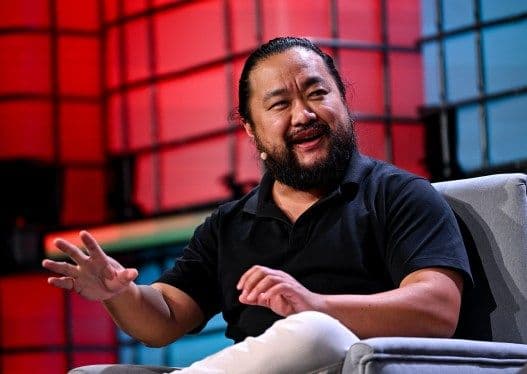
As AI companies get bigger in valuation and usage, there is a constant debate about how AI is replacing humans in various jobs. Studies suggest that roles whereAI can automate most tasks will be impacted, though someanalystsbelievethat AI may also create jobs, with the displacement effect only transitional. David Shim, CEO ofmeeting notetaker and intelligence company Read AI, told TechCrunch at Web Summit Qatar earlier this month that even with the rise of AI tools, it will ultimately be humans who decide the course of action, and their job will be important. He equated the technology with using maps in a car. “I think there’s always going to be a human in the middle,” Shim said. “I think the job is going to get easier over time. But a good example would be like driving a car. When we first started, you used to have a map. And you’d pull out the map. And you’d go in and say okay I’m driving. I’m deciding what happens. Now everyone uses Waze or Google Maps, and the map is telling you where to go. And you’re just following that order. But you’re the human in the middle who can decide what happens.” Shim acknowledged that AI would affect jobs, noting that advertising agencies may lose human roles in favor of automated tools. However, he noted that tech platforms would need jobs to oversee the automation process. Abdullah Asiri, founder of AI-powered consumer support tooling startupLucidya, said that he believes that AI will replace tasks but not roles. He said that when his company’s clients use Lucidya, customer support agents often take up different roles and responsibilities. He noted that some become supervisors who guide other humans and AI, while some take up relationship-building and business development responsibilities using the time they saved. Read AI’s Shim noted that meeting notetakers have freed up humans from taking notes manually. “Nobody here wants to sit down and take meeting notes, but as you start to take away that job, you have a little bit more time to do other things that you can go and focus on. You can send that report a little bit faster, or you can respond back to a customer and actually have better context to make better decisions, versus spending a bunch of time gathering all the information and having little time to make a decision,” he said. As tech companies like Read AI and Lucidya are increasingly using AI tools, they want to keep their teams lean. Currently, Read AI’s customer service team consists of just five people, who serve millions of monthly users. Shim noted that the company is using AI tools to make a small team more productive and give them more context to help them do their job more quickly. The companies are said to be reaping productivity gains. Read AI said that its sales tool helps predict the state of a deal using data from CRM systems like HubSpot and Salesforce. The startup said that it has seen deals worth $200 million approved through that system. Shim said Read AI captures 23% more context with each update, which could be used to evaluate what worked or what didn’t in a lead call. Lucidya’s Asiri also noted that the company uses AI tools, including Read AI, for meetings and marketing asset creation. He said that the company wants “scale outcomes without scaling headcounts.” “The goal for any company is to hire people who are AI native, who are very strong with AI, but we need to be realistic,” Asiri said. “Today, this skill is being developed. You cannot find a lot of people who have very strong AI capabilities, not building AI, but using AI.” Asiri noted that people who would be able to build agents that can help them do their job would be more desirable to hire. Shim noted that just a few years ago, many people were hesitant to have AI notetakers in meetings and didn’t understand why a bot was on the call. However, now people are more receptive to notetakers as long as you give them controls around recording, he said. Asiri said that Lucidya discloses to users when it’s using a voice AI to communicate. He said that for users, issue resolution is more important than the fact that an AI bot is handling their calls. “It’s all about resolving issues and finding customers’ problems and resolving them,” Asiri said. “As long as the AI agents are actually focusing on that part, customers are happy that their issues are being resolved. The customer really doesn’t care whether it’s fixed by AI or a human, as long as it’s fixed fast and accurately.”
View
Nvidia deepens early-stage push into India’s AI startup ecosystem
Nvidia is stepping up efforts to court India’s artificial intelligence startups earlier in their lifecycle, unveiling a string of partnerships this week aimed at reaching founders even before their companies are formally established. The push is intended to help the AI chipmaker cultivate relationships with future customers in one of the world’s fastest-growing developer markets. The latest move comes through a partnership with early-stage venture firmActivate, which plans to back about 25 to 30 AI startups from its $75 million debut fund while giving portfolio companies preferential access to Nvidia’s technical expertise. The collaboration follows other India-focused efforts unveiled this week, including work with nonprofit AI Grants India to support early-stage founders and new ties with venture firms focused on the South Asian nation. The flurry of activity comes as India hosts itsAI Impact Summitin New Delhi, drawing top technology companies including OpenAI, Anthropic, and Google. Nvidia Chief Executive Jensen Huang was slated to attend but skipped the event due to what the company called unforeseen circumstances. A senior delegation led by executive vice president Jay Puri attended in his place, meeting AI researchers, startups, developers, and partners on the ground. India has emerged as one of the fastest-growing pools of AI developers and startups, making it an increasingly important market for Nvidia as it looks to expand adoption of chips and computing software. By working more closely with founders at the earliest stages, the company is positioning itself to capture long-term demand as new AI-native companies scale. Aakrit Vaish, founder of Activate, said Nvidia’s engagement with startups in India has historically been relatively light-touch compared with the U.S., but the chipmaker is now looking to work with founders much earlier in their journey. Activate aims to leverage that shift by connecting portfolio startups directly with Nvidia experts. The VC firm, which Vaish describes as focused on “inception investing,” meets technical teams months before company formation and works closely with them as they grow. Its backers include venture capitalist Vinod Khosla, Perplexity co-founder Aravind Srinivas, Peak XV managing director Shailendra Singh, and Paytm CEO Vijay Shekhar Sharma, underlining the prominent network Activate is assembling around its early-stage strategy. For Nvidia, the logic behind partnering with an early-stage venture firm is straightforward: the earlier it builds relationships with promising AI startups, the more likely those companies are to rely on its computing infrastructure as they scale. Vaish told TechCrunch that growing startups typically consume increasing amounts of AI compute over time, making early technical engagement valuable for the chipmaker as a way of generating future business. Nvidia already has a sizable presence in the country through itsInception program, which supports more than 4,000 startups in India. This week, the chipmaker alsoexpanded its local ecosystem ties, including partnerships with venture firms such as Accel, Peak XV, Z47, Elevation Capital, and Nexus Venture Partners to identify and fund AI startups. It separately teamed up with AI Grants India, co-founded by Vaibhav Domkundwar and Bhasker (Bosky) Kode, to support more than 10,000 early-stage founders over the next 12 months. The company has also been broadening its startup outreach in India over time. In November 2025, Nvidiajoined the India Deep Tech Alliance, a consortium of U.S. and Indian investors including Accel, Blume Ventures, Premji Invest, and Celesta Capital, to provide strategic and technical guidance to emerging startups in the country. Vaish said Activate’s partnership with Nvidia is designed to provide a more curated layer on top of the company’s broad-based Inception program, which serves thousands of startups globally. By serving as an early filter for high-potential technical teams, Activate aims to give its portfolio companies more direct, timely access to Nvidia’s engineering expertise. The stepped-up activity underscores intensifying competition among global technology firms to court AI developers and startups in India, which has become one of the fastest-growing pools of technical talent outside the U.S.
View
Google’s new Gemini Pro model has record benchmark scores — again
On Thursday, Googlereleasedthe newest version of Gemini Pro, its powerful LLM. The model, 3.1, is currently available as a preview and will be generally released soon, the company said. Google’s new model may be one of the most powerful LLMs yet. Onlookers have noted that Gemini 3.1 Pro appears to be a big step up from its predecessor, Gemini 3 — which, upon its release in November,was already considereda highly capable AI tool. On Thursday, Google also shared statistics from independent benchmarks — such as one called Humanity’s Last Exam — that showed it performing significantly better than its previous version. Gemini 3.1 Pro was also praised by Brendan Foody, the CEO of AI startup Mercor, whose benchmarking system, APEX, is designed to measure how well new AI models perform real professional tasks. “Gemini 3.1 Pro is now at the top of the APEX-Agents leaderboard,” Foody saidin a social media post, adding that the model’s impressive results show “how quickly agents are improving at real knowledge work.” The release comes as theAI model wars are heating up, and tech companies continue to release increasingly powerful LLMs designed for agentic work and multi-step reasoning. Other major names — including OpenAI and Anthropic — have recently released new models as well.
View

BHASHINI Unveils VoicERA, Open Source Multilingual Voice AI Stack
The launch was led by BHASHINI, along with EkStep Foundation in collaboration with COSS, IIIT Bengaluru and AI4Bharat.
View

YouTube’s latest experiment brings its conversational AI tool to TVs
The race to advance conversational AI in the living room is heating up, with YouTube being the latest to expand its tool to smart TVs, gaming consoles, and streaming devices. This experimental feature, previously limited to mobile devices and the web, now brings conversational AI directly to the largest screen in the home, allowing users to ask questions about content without leaving the video they’re watching. According to YouTube’ssupport page, eligible users can click the “Ask” button on their TV screen to summon the AI assistant. The feature offers suggested questions based on the video, or users can use their remote’s microphone button to ask anything related to the video. For instance, they might ask about recipe ingredients or the background of a song’s lyrics, and receive instant answers without pausing or leaving the app. Currently, this feature is available to a select group of users over 18 and supports English, Hindi, Spanish, Portuguese, and Korean. YouTube first launched thisconversational AI toolin 2024 to help viewers explore content in greater depth. The expansion to TVs comes as more Americans now access YouTube through their television than ever before. ANielsen reportfrom April 2025 found that YouTube accounted for 12.4% of total television audience time, surpassing major platforms like Disney and Netflix. Other companies are also making significant strides with their conversational AI technologies. Amazon rolled outAlexa+ on Fire TV devices, enabling users to engage in natural conversations and ask Alexa+ for tailored content recommendations, hunt for specific scenes in movies, or even ask questions about actors and filming locations. Meanwhile,Rokuhas enhanced its AI voice assistant to handle open-ended questions about movies and shows, such as “What’s this movie about?” or “How scary is it?”Netflixis also testing its AI search experience. Another way YouTube has tried to improve itsTV experience with AIis the recent launch of a feature that automatically enhances videos uploaded at lower resolutions to full HD. Additionally, the company continues to launch other AI features, like a comments summarizer that helps viewers catch up on video discussions and anAI-driven search results carousel. In January, the companyannouncedthat creators will soon be able to make Shorts using AI-generated versions of their own likeness. Last week, YouTubelauncheda dedicated app for the Apple Vision Pro, too, letting users watch their favorite content on a theater-sized virtual screen in an immersive environment.
View
Enviar tu herramienta


PoweredByAI.app es un directorio de herramientas de IA que ayuda a personas, empresas y creadores a descubrir las mejores herramientas de IA para escritura, programación, diseño, productividad y más.
© 2026 , Producto de011BQ. Todos los derechos reservados.