🚀 Zaprep: Tus redes sociales al máximo. Empezar gratis — automatiza 1,000 DMs/mes y convierte el engagement en leads. con 1,000 DMs automatizados/mes.
Enviar tu herramienta
Últimas Noticias de IA
Google’s Gemini Named in First Wrongful Death Lawsuit
A father in the US has alleged that Gemini’s AI chatbot drove his son to fatal delusions and encouraged self-harm.
View

Quantum Sensing Could Be a Game Changer for India, Says C-DAC’s SD Sudarsan
India could witness the emergence of quantum internet infrastructure within three years.
View
Google's NotebookLM Upgraded With Cinematic Video Overviews Feature
NotebookLM is one of Google's most frequently updated artificial intelligence (AI) products. In the last few months, the AI-powered learning platform has received a large number of new features across the website and mobile apps. But on Wednesday, the Mountain View-based tech giant released one of the biggest upgrades to NotebookLM with the Cinematic Video Overviews feature. The new mode finally enables the generation of fully immersive, animated videos. Notably, earlier Video Overviews could only generate multiple static slides for users.
View
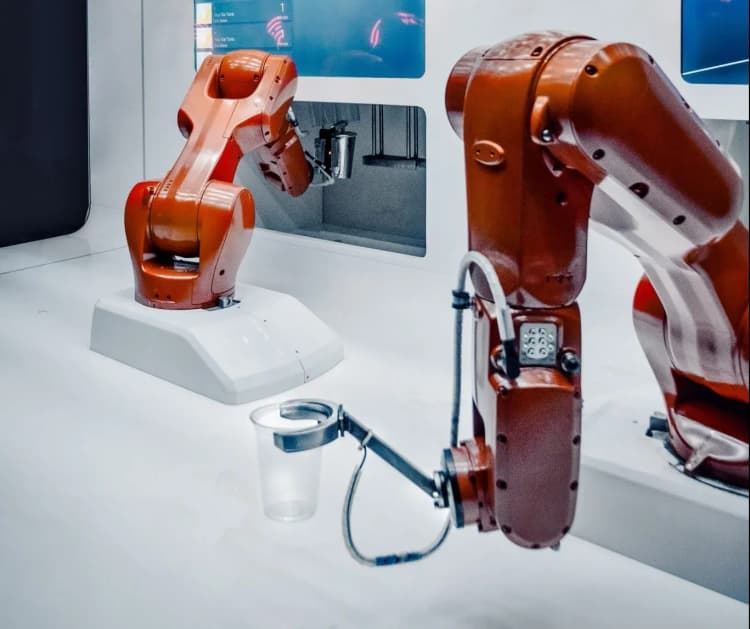
GCCs are Making India the World’s Robotics Launchpad
India’s engineering education system tends to produce tool-trained graduates rather than concept-trained engineers.
View

MAHE Sets Up Quantum Hub in Bengaluru to Support Indigenous Quantum Hardware Development
The physical facility is slated to be inaugurated in September.
View
Google Research Finds ‘Bayesian Teaching’ Improves How LLMs Update Beliefs
Most LLMs plateau after one interaction when inferring user preferences, but training them on Bayesian model outputs improves accuracy and adaptation.
View

NVIDIA Signals Investment Exit in OpenAI and Anthropic
Jensen Huang says NVIDIA’s latest stakes in OpenAI and Anthropic will likely be its last before anticipated IPOs.
View
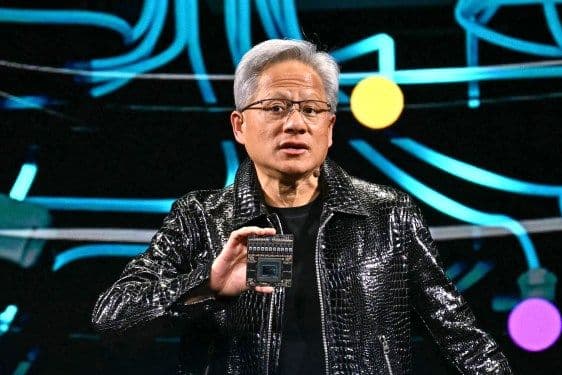
Jensen Huang says Nvidia is pulling back from OpenAI and Anthropic, but his explanation raises more questions than it answers
At the Morgan Stanley Technology, Media and Telecom conference in downtown San Francisco Wednesday, Nvidia CEO Jensen Huang said his company’s recent investments in OpenAI and Anthropic are likely to be its last in both, saying that once they go public as anticipated later this year, the opportunity to invest closes. It could be that simple. While firms sometimes pile into companies until practically theeve of their public debutin search of more upside, Nvidia is minting money selling the chips that power both companies — it’s not like it needs to goose its returns by pouring even more money into either one. Nvidia, for its part, isn’t offering much elaboration. Asked for comment earlier today following Huang’s remarks, a spokesman pointed TechCrunch to a transcript from the company’s fourth-quarter earnings call, where Huang said all of Nvidia’s investments are “focused very squarely, strategically on expanding and deepening our ecosystem reach,” a goal its earlier stakes in both companies have arguably met. Still, a few other dynamics might also explain the pullback, including the circular nature of these arrangements themselves, which have raised questions about apotential bubble. When Nvidia first announced it would invest up to $100 billion in OpenAI last September, MIT Sloan professor Michael Cusumano blandly described it to the Financial Times as “kind of a wash,” observing that “Nvidia is investing $100 billion in OpenAI stock, and OpenAI is saying they are going to buy $100 billion or more of Nvidia chips.” That could explain why the commitment shrank. The investment Nvidia finalized just last week as part of OpenAI’s $110 billion round came in at$30 billion— well short of that earlier pledge. If there is more to the story, Huang isn’t saying, having dismissed suggestions of bad blood between the two companies as “nonsense.” Meanwhile, Nvidia’s relationship with Anthropic has looked fraught in its own right. Just two months after Nvidia announced a$10 billioninvestment in November, Anthropic CEO Dario Amodei took the stage at Davos and, without naming Nvidia directly, compared the act of U.S. chip companies selling high-performance AI processors to approved Chinese customers to “selling nuclear weapons to North Korea.” (Ouch.) In retrospect, a nuclear weapons comparison was the least of it. Just days before Huang appeared at the banking conference, the Trump administrationblacklistedAnthropic, barring federal agencies and military contractors from using its tech after the company refused to allow its models to be used for autonomous weapons or mass domestic surveillance. Within hours of that announcement, OpenAI struck its own deal with the Pentagon — a move Anthropic has called “mendacious” and the public appears to have viewed similarly. Within 24 hours, Claude hadshot to the topof Apple’s U.S. App Store, overtaking ChatGPT. (At the end of January, Anthropic was outside the top 100, according toSensor Tower data.) Where that leaves Nvidia is holding stakes in two companies that, at this particular moment, are pulling in very different directions, and potentially dragging customers and partners along for the ride. Whether Huang saw any of this coming, given Nvidia’s web of partnerships, is impossible to know. But his stated reason on Wednesday for likely pulling the plug on future investments — that the IPO window closes the door on this kind of deal — is hard to square with how late-stage private investing actually works. What’s looking more probable is that this is an exit from a situation that has gotten really complicated, really fast.
View
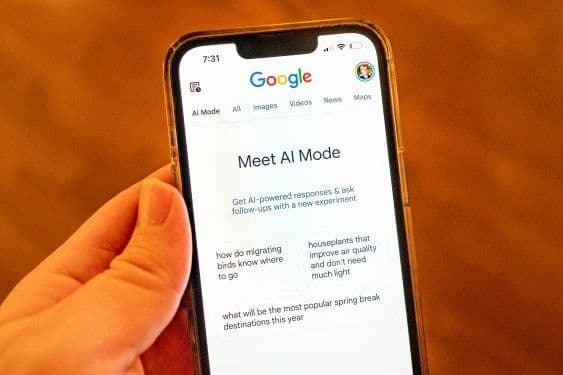
Google Search rolls out Gemini’s Canvas in AI Mode to all US users
Google has expanded access to Canvas in AI Mode to all users in the U.S. in English, afterfirst launchingthe feature as part of its Google Labs experiments last year. Canvas in AI Mode is designed to help users organize and plan projects or delve into deeper research. The feature now supports the ability to draft documents or create custom tools within Google Search, the company saidin a blog post. Google previously suggested using Canvas for tasks like building a study guide by uploading class notes and other sources; the feature can also complete other tasks such as turning a research report into a web page, quiz, or audio overview, which has some overlap with Google’s research tool Notebook LM. Users can describe an idea to Canvas and watch as it generates the code to transform that idea into a shareable app or game. The feature can also be used to help refine creative writing drafts and get feedback on projects. Canvas is already available in Gemini, where Google AI Pro and Google AI Ultra subscribers have access to the latest model, Gemini 3, and a larger 1 million-token context window for more complex projects. More people will be exposed to Canvas now that it’s available to all users in the U.S. through Google’s AI search feature known as AI Mode, including those who haven’t yet dabbled with Gemini’s capabilities. That’s one of Google’s advantages in the AI race — the reach of Google Search gives it the power to place its products in front of billions of users. To use Canvas, users select the new Canvas option from the tool menu (+) while in AI Mode, then describe what they want to create. This opens up a Canvas side panel where users can pull together information from the web and Google’s Knowledge Graph. If building a prototype or app, users can test the functionality, toggle to see the underlying code, and refine how the app works by chatting with Gemini. Canvas competes with similar tools from rivals like OpenAI and Anthropic. However,ChatGPT’s Canvas feature is triggered automaticallybased on the query, while Google and Anthropic’s Claude require more direct interaction. Both also allow users to get help with writing or turn ideas into projects.
View

Apple Music to add Transparency Tags to distinguish AI music, says report
Apple Music is changing the way that record labels and distributors can flag AI-generated or AI-assisted content when they upload it to the platform. According toMusic Business Worldwide, Apple sent a newsletter to industry partners on Wednesday to explain how it will roll out a new set of metadata to promote transparency around how and when AI is used in music. Metadata typically refers to fields like the song title, album title, genre, artist name, and other information that helps keep files organized. Now Apple Music will add the option to include metadata tags that distributors can use to flag when AI-generated content is involved in certain aspects of a song. These tags allow distributors to distinguish between a song’s artwork, track (music), composition (lyrics), or music video. This seems like something that Apple Music users are interested in — a Reddit user posteda mock-up of a similar feature conceptjust days ago. But the problem with this sort of opt-in tagging is that it’s on the label or distributor to manually choose to flag their use of AI.Spotify is taking a similar path. Other music-streaming platforms likeDeezerare trying to flag content with in-house AI-detection tools, but it remains challenging to create these sorts of systems that are maximally accurate. TechCrunch has reached out to Apple for more information.
View

Anthropic CEO Dario Amodei calls OpenAI’s messaging around military deal ‘straight up lies,’ report says
Anthropic co-founder and CEO Dario Amodei is not happy — perhaps predictably so — with OpenAI chief Sam Altman. In a memo to staff,reported by The Information, Amodei referred to OpenAI’s dealings with the Department of Defense as “safety theater.” “The main reason [OpenAI] accepted [the DoD’s deal] and we did not is that they cared about placating employees, and we actually cared about preventing abuses,” Amodei wrote. Last week, Anthropic and the U.S. Department of Defense (DoD) failed to come to an agreement over the military’s request forunrestricted accessto the AI company’s technology. Anthropic, which already had a $200 million contract with the military, insisted the DoD affirm that it would not use the company’s AI to enable domestic mass surveillance or autonomous weaponry. Instead, the DoD — known under the Trump administration as the Department of War —struck a dealwith OpenAI. Altmanstatedthat his company’s new defense contract would include protections against the same red lines that Anthropic had asserted. In a letter to staff, Amodei refers to OpenAI’s messaging as “straight up lies,” stating that Altman is falsely “presenting himself as a peacemaker and dealmaker.” Amodei might not be speaking solely from a position of bitterness, here. Anthropicspecifically took issuewith the DoD’s insistence on the company’s AI being available for “any lawful use.” OpenAI said in ablog postthat its contract allows use of its AI systems for “all lawful purposes.” “It was clear in our interaction that the DoW considers mass domestic surveillance illegal and was not planning to use it for this purpose,” OpenAI’s blog post stated. “We ensured that the fact that it is not covered under lawful use was made explicit in our contract.” Critics have pointed out that the law is subject to change, and what is considered illegal now might end up being allowed in the future. And the public seems to be siding with Anthropic. ChatGPT uninstallsjumped 295%after OpenAI made its deal with the DoD. “I think this attempted spin/gaslighting is not working very well on the general public or the media, where people mostly see OpenAI’s deal with the DoW as sketchy or suspicious, and see us as the heroes (we’re #2 in the App Store now!),” Amodei wrote to his staff. “It is working on some Twitter morons, which doesn’t matter, but my main worry is how to make sure it doesn’t work on OpenAI employees.”
View

The US military is still using Claude — but defense-tech clients are fleeing
The aftermath ofAnthropic’s disputewith the Department of Defense has left the company in an awkward place — being both actively in use as part of the ongoing conflict between the U.S. and Iran and decoupling from many of its clients in the defense industry. Part of the confusion is the overlapping and contradictory restrictions made by the U.S. government. President Trump has directed civilian agencies todiscontinue use of Anthropic products, but the company was given six months to wind down its operations with the Department of Defense. The next day, the U.S. and Israel launched a surprise attack on Tehran, entering a continued conflict before Trump’s directive could be fully executed. The result is that, as the U.S. continues its aerial attack on Iran, Anthropic models are being used for many targeting decisions. And while Secretary of Defense Pete Hegseth has pledged to designate the company as a supply-chain risk, no official steps have been taken to that end, so there are no legal barriers to using the system. An article in The Washington Poston Wednesday unearthed new details on how Anthropic’s systems are being used in conjunction with Palantir’s Maven system. As Pentagon officials planned the strikes, the systems “suggested hundreds of targets, issued precise location coordinates, and prioritized those targets according to importance,” the Post reports. The article characterized the system’s function as “real-time targeting and target prioritization.” At the same time, many companies involved in the defense industry have already replaced Anthropic models with competitors. Lockheed Martin and other defense contractors began swapping out the company’s modelsthis week, according to a Reuters report. Many subcontractors are caught in a similar bind: A managing partner at J2 Venturestold CNBCthat 10 of his portfolio companies “have backed off of their use of Claude for defense use cases and are in active processes to replace the service with another one.” The biggest open question is whether Hegseth will make good on the supply-chain risk designation, which would likely result in a heated legal case. But in the meantime, one of the leading AI labs is quickly being partitioned out of military tech — even as it’s used in an active war zone.
View
Enviar tu herramienta


PoweredByAI.app es un directorio de herramientas de IA que ayuda a personas, empresas y creadores a descubrir las mejores herramientas de IA para escritura, programación, diseño, productividad y más.
© 2026 , Producto de011BQ. Todos los derechos reservados.