🚀 Zaprep: Tus redes sociales al máximo. Empezar gratis — automatiza 1,000 DMs/mes y convierte el engagement en leads. con 1,000 DMs automatizados/mes.
Enviar tu herramienta
Últimas Noticias de IA
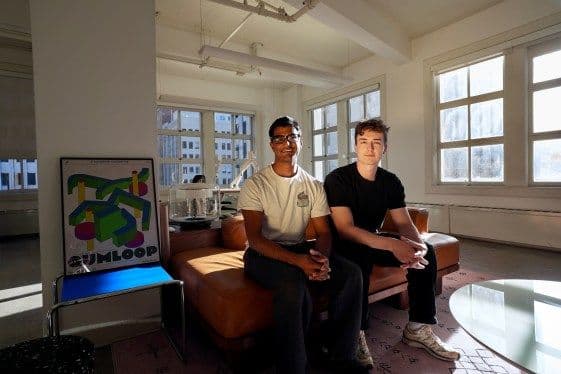
Gumloop lands $50M from Benchmark to turn every employee into an AI agent builder
When Max Brodeur-Urbas co-founded Gumloop in mid-2023, his vision was to help non-technical employees automate repetitive tasks using AI. At that time, the concept of AI agents was still largely experimental and prone to errors. As AI technology has matured, so has Gumloop’s offering. The company claims that it now allows teams at organizations like Shopify, Ramp, Gusto, Samsara, Instacart, and Opendoor to deploy reliable AI agents that autonomously handle complex, multi-step tasks, all without ever needing an engineer. Employees can share the agents they build with colleagues, creating a compounding effect that accelerates internal automation. “They get addicted, they start building more agents, and then all of a sudden, the whole company is AI native,” Brodeur-Urbas told TechCrunch. As companies race to adopt AI, Benchmark general partner Everett Randell believes the key to success lies in empowering every worker with AI superpowers, and Gumloop’s intuitive agent-builder is an example of the kind of tool that will unlock that potential. That’s why Randell, who joined Benchmark last October from Kleiner Perkins, chose to lead a $50 million Series B investment into Gumloop. The deal, which is Randell’s first at his new firm, included participation from Nexus VP, First Round Capital, Y Combinator, Box Group, The Cannon Project, and Shopify. Though Gumloop wasn’t actively seeking new capital, the startup decided this was the year to “step on the gas.” For Brodeur-Urbas, partnering with Benchmark—the firm behind icons like eBay, Uber, and Dropbox—was a “no-brainer.” While Brodeur-Urbas previously planned to ‘build a 10-person, billion-dollar company,’ the surging demand from enterprise clients has compelled him to build a dedicated sales force and scale up his engineering team, he said. Gumloop is by no means the only player vying to turn every knowledge worker into an AI agent-builder. The startup faces stiff competition from established automation platforms like Zapier and n8n, as well as specialized agent builders like Dust. Even foundational AI labs are entering the fray. For instance, Anthropic’s Claude Co-Work allows users to create autonomous agents without writing a single line of code. But Randell believes Gumloop is superior to all its rivals. During his due diligence, he discovered that at least one of the company’s customers had adopted Gumloop somewhat organically. When Randell asked a CTO how they chose Gumloop, the response was telling. The company had given employees full access to Gumloop alongside two competitors. Six months later, the results were clear: staff were using Gumloop daily or weekly, while the competing tools sat untouched, Randell told TechCrunch. The reason Gumloop gained such momentum, according to Randell, is its minimal learning curve. “You can go in and start making agents and workflow automations immediately,” he said. While many AI startups worry that foundational models will replicate the same functionality and render them obsolete, Randell is convinced that Gumloop’s model-agnostic approach is precisely what will keep attracting customers. As models continue to evolve, one may perform better than another for a specific task. So, Gumloop provides the flexibility to choose the model best suited for the job at any given moment. Another reason why model independence is attractive, according to Randell, is cost. “Plenty of enterprises have OpenAI, Gemini, and Anthropic credits. They want to use all of them,” he said Randell’s excitement for the company ultimately comes down to the sheer size of the opportunity. “Enterprise automation is a massive pot of gold,” he said. “I think it’s the biggest category in enterprise AI.”
View

Fragmented Pharmaceuticals: Why Indian Biopharma Does Not Have AI-Ready Data
Beyond data preparation, Solix has expanded into enterprise AI platforms, including developing small language models designed for corporate environments.
View
HCLTech Bets on Google Gemini to Build AI Agents Across 2,000 Client Projects
The company will deploy Gemini-powered AI agents and scale talent as firms target over 2,000 GenAI projects.
View
Zendesk Moves to Acquire Forethought to Expand Self-Learning AI Agents for Customer Service
The acquisition aims to strengthen Zendesk’s AI agents, which automate customer service interactions across multiple channels.
View
IBM Says the Future Lies in Quantum-Centric Supercomputing
IBM’s new reference architecture outlines how quantum processors can work with classical systems to tackle complex scientific problems.
View

Perplexity Takes On Claude Cowork With Personal Computer, an Agentic AI Platform for Mac Mini
Perplexity unveiled the Personal Computer on Wednesday as an extension to the last month's Perplexity Computer platform. Unlike what the name suggests, it is not a hardware system, but a dedicated tool for Apple's Mac Mini that connects Perplexity Computer to a device, and allows it to access the local apps and files. With that, the multi-model agentic system can perform a wider range of complex tasks autonomously. The company's new offering also competes with other automation tools available in the market, such as Anthropic's Claude Cowork, Microsoft's Copilot Cowork, and OpenClaw.
View
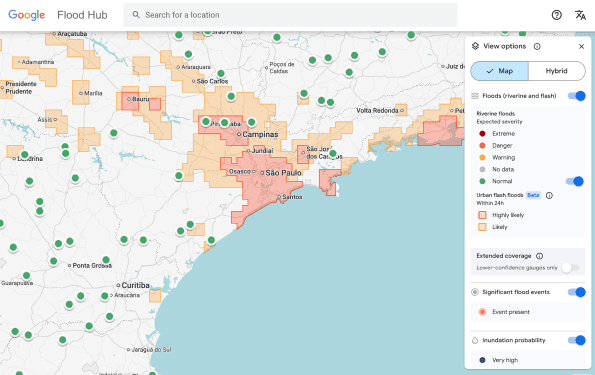
Google is using old news reports and AI to predict flash floods
Flash floods are among the deadliest weather events in the world, killing more than 5,000 people each year. They’re also among the most difficult to predict. But Google thinks it has cracked that problem in an unlikely way — by reading the news. While humans have assembled a lot of weather data, flash floods are too short-lived and localized to be measured comprehensively, the way the temperature or even river flows are monitored over time. That data gap means that deep learning models, which are increasingly capable of forecasting the weather, aren’t able to predict flash floods. To solve that problem, Google researchers used Gemini — Google’s large language model — to sort through 5 million news articles from around the world, isolating reports of 2.6 million different floods, and turning those reports intoa geo-tagged time seriesdubbed “Groundsource.” It’s the first time that the company has used language models for this kind of work, according to Gila Loike, a Google Research product manager. The research and data set wasshared publiclyThursday morning. With Groundsource as a real-world baseline, the researcherstrained a modelbuilt on a Long Short-Term Memory (LSTM) neural network to ingest weather global forecasts and generate the probability of flash floods in a given area. Google’s flash flood forecasting model is now highlighting risks for urban areas in 150 countries on the company’sFlood Hubplatform, and sharing its data with emergency response agencies around the world. António José Beleza, an emergency response official at the Southern African Development Community who trialed the forecasting model with Google, said it helped his organization respond to floods more quickly. There are still limitations to the model. For one, it is fairly low resolution, identifying risk across 20-square-kilometer areas. And it is not as precise as the US National Weather Service’s flood alert system, in part because Google’s model doesn’t incorporate local radar data, which enables real-time tracking of precipitation. Part of the point, though, is that the project was designed to work in places where local governments can’t afford to invest in expensive weather-sensing infrastructure or don’t have extensive records of meteorological data. “Because we’re aggregating millions of reports, the Groundsource data set actually helps rebalance the map,” Juliet Rothenberg, a program manager on Google’s Resilience team, told reporters this week. “It enables us to extrapolate to other regions where there isn’t as much information.” Rothenberg said the team hopes that using LLMs to develop quantitative data sets from written, qualitative sources could be applied to efforts to building data sets about other ephemeral-but-important-to-forecast phenomena, like heat waves and mud slides. Marshall Moutenot, the CEO of Upstream Tech, a company that uses similar deep learning models to forecast river flows for customers like hydropower companies, said Google’s contribution is part of a growing effort to assemble data for deep learning-based weather forecasting models. Moutenot co-foundeddynamical.org, a group curating a collection of machine learning-ready weather data for researchers and startups. “Data scarcity is one of the most difficult challenges in geophysics,” Moutenot said. “Simultaneously, there’s too much Earth data, and then when you want to evaluate against truth, there’s not enough. This was a really creative approach to get that data.”
View

Kris Gopalakrishnan to Lead Karnataka’s Responsible AI Committee
Panel of industry, policy and academic experts to frame Responsible AI policy in 90 days; interim report due in 60 days.
View

Razorpay Launches AI-Native Agent Studio to Automate Payments
Razorpay’s Agent Studio simplifies payment processes through natural language interactions.
View

IITM Pravartak Ties Up With SRIT to Expand Sovereign Database Infrastructure
The initiative backed by MeitY seeks to strengthen India’s sovereign digital infrastructure across government and enterprise environments
View
Google Finalises Multi-Billion-Dollar Wiz to Amp Up AI Cloud Security
The Wiz acquisition is reportedly worth $32 billion and will enable Google Cloud to protect AI-driven workloads.
View
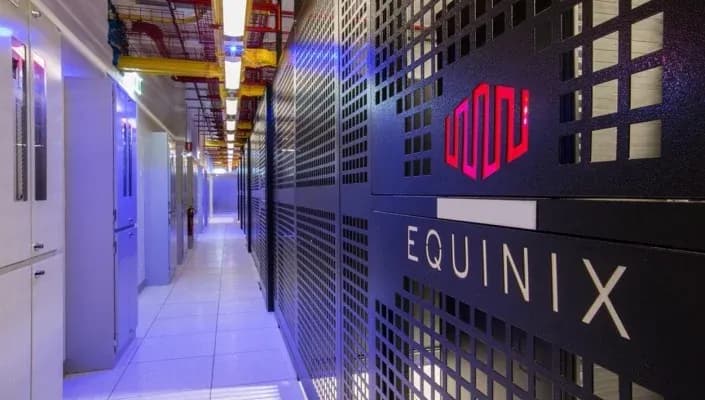
Equinix Launches Distributed AI Hub to Simplify & Secure Enterprise AI Infrastructure
The platform is designed as a vendor-neutral ecosystem, allowing enterprises to build customised AI stacks without being locked into a single hyperscaler.
View
Enviar tu herramienta

PoweredByAI.app es un directorio de herramientas de IA que ayuda a personas, empresas y creadores a descubrir las mejores herramientas de IA para escritura, programación, diseño, productividad y más.
© 2026 , Producto de011BQ. Todos los derechos reservados.