🚀 Zaprep: Tus redes sociales al máximo. Empezar gratis — automatiza 1,000 DMs/mes y convierte el engagement en leads. con 1,000 DMs automatizados/mes.
Enviar tu herramienta
Últimas Noticias de IA
10 People You’ll Meet at Cypher 2026
Five thousand people, three days, three halls. Here is the cast you will run into—and which of them is worth 20 minutes of your time.
View

Coforge Launches AI Platform to Help Enterprises Build & Run AI Within Their Own Environments
The Coforge AI Launchpad is aimed at enterprises seeking greater control over data, models and AI infrastructure, as companies move open-weight AI from pilots to production.
View
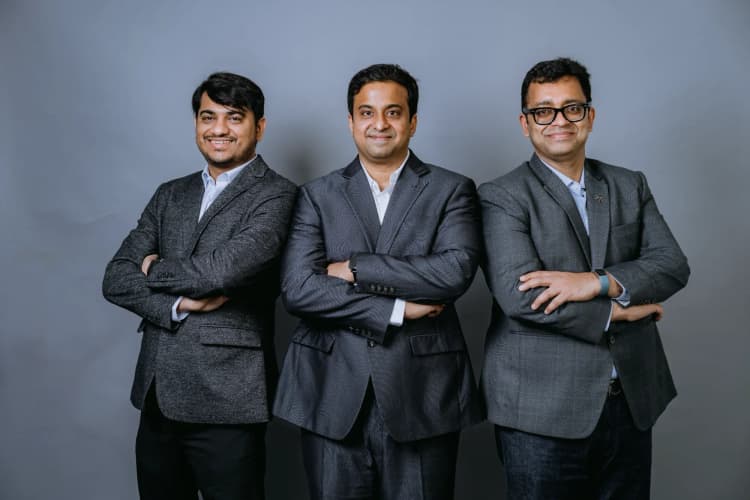
MathCo Plans 2,000 AI Hires as Enterprise AI Services Shift from Pilots to Deployment
The company is betting that enterprises moving from AI experimentation to large-scale deployment will create demand for a different mix of engineering, domain and analytics talent.
View

TechCrunch Disrupt 2026’s new Real World AI Stage features Nvidia, robots, and extinct animals
At our past TechCrunch Disrupt events, AI has taken center stage, both throughout our programming and in a stage of its own. This year, the technology, implications, and players are so rapidly developing and widespread that we’re expanding the single AI stage into two! The AI Stagewill continue as you’d expect, with a rundown of sessions and speakers available for review right here. But the Real World AI Stage is brand-new forTechCrunch Disrupt 2026. On this stage, we’ll be focusing on that intersection between the digital and physical, and all the ways we’ll continue to see a blending of the two, as autonomous hardware goes beyond self-driving cars and enters public spaces, battlefields, our homes, and even potentially helps extinct species reenter Earth. It’s a packed lineup featuring speakers from Shield AI, Colossal Biosciences, FieldAI, Foxglove, and more still to come. You can join in on all the excitement October 13 to 15 at San Francisco’s Moscone West,so register to attend right here. But in the meantime, here’s the breakdown of our Real World AI Stage lineup: Large language models had the internet. Self-driving cars have millions of hours of road data. Robots have neither. That data gap is the single biggest reason most experts believe general-purpose robotic intelligence is still years away, despite the breakthroughs happening everywhere else in AI. A new wave of startups is racing to close it, building the data pipelines, simulation environments, and foundation models that could trigger the same capability explosion we saw with LLMs. This session asks the hard question: what does the ChatGPT moment for physical AI actually require, and how close are we really? With Les Karpas, Head of Physical AI, Nvidia When AI enters the physical world, the consequences of failure change. A mistake could lead to a grounded aircraft, a vehicle crash, or a compromised mission. In this session, leaders who are building autonomous vehicles, defense technologies, and industrial systems will talk about one of the toughest questions that every hard tech founder must face: How do you know when your system is ready to be safely deployed? We’ll dig into how founders can create a safety culture, test and validate AI, navigate regulatory hurdles, and build companies that can earn trust when the stakes are high. WithNate Michael, CTO, Shield AI Ben Lamm has built one of the most controversial companies in tech by turning de-extinction from science fiction into a billion-dollar business. In this fireside chat, the Colossal Biosciences CEO will discuss the technologies used to revive extinct species, the role AI plays in modern biology, and the growing debate over whether engineering nature is a conservation breakthrough or a distraction from protecting what’s already here. With Ben Lamm, CEO, Colossal Biosciences The most valuable AI deployments in the world operate where the cloud can’t reach. And building for them requires a different technological playbook. This session brings together leaders from defense, space, and industrial AI who will share how they have tackled the challenge of making AI work at the edge — where latency matters, connectivity is limited, and failure isn’t an option. Expect practical lessons on architectural principles, design decisions, and trade-offs that make AI-centric systems work in the real world. With Dr. Ali Agha, CEO and founder of FieldAI; Michelle Lee, CEO and founder, Medra; and Aidan Madigan-Curtis, partner, Eclipse Ventures A prototype that works is not a product. A product that ships is not a scaled business. The gap between each of those stages is where most deep tech startups die. Founders might have the right team and tech, but they fail to understand what it takes to bring a prototype into production and eventually scale to higher, profitable volumes. This session brings together founders who have crossed that gap in space hardware, humanoid robotics, and autonomous systems. They’ll share what they got wrong, what they’d do earlier, and what the prototype-to-production journey looks like when supply chains and manufacturing realities replace lab conditions. With John Mackey, CEO, co-founder, MBRYONICS; Boris Sofman, co-founder and CEO, Bedrock Robotics; and Adrian Macneil, CEO, Foxglove There’s plenty more in store for you at Disrupt 2026 — after all, that’s just one stage’s worth of programming! For a sense of what else you’ll get to access, we’ve also announced the: Be part of Disrupt 2026 in San Francisco from October 13–15, where more than 10,000 startup, tech, and VC leaders come together for three days of insights, Startup Battlefield, unparalleled networking, and access to every stage and the exhibition floor. Register today!
View

Palo Alto Networks paid $500M for Thrive-backed Console, sources say
Palo Alto Networks paid $500 million in cash and stock to acquire Console, a two-year-old startup that uses AI agents to automate routine IT help desk tasks, according to two people with knowledge of the deal. The companies officiallyannouncedthe acquisition on Tuesday but didn’t reveal terms of the deal. Since its founding in 2024, Console has raised $29 million across two rounds: a$6.2 millionseed led by Thrive Capital and a $23 million Series A co-led by DST Global and Thrive. Before the sale, Console was valued at $157 million, according to PitchBook, delivering a rapid return for investors including SV Angel, Abstract Ventures, and notably Palo Alto Networks CEO Nikesh Arora, who participated as an angel investor. Palo Alto Networks declined to comment. The cybersecurity giant said that it will integrate Console into Cortex, its platform that uses AI to automatically detect and neutralize threats. Console’s agentic functionality will allow security teams to investigate and resolve alerts using natural language, giving Cortex “the arms and legs to deliver autonomous security outcomes across the entire enterprise,” as Arora described in a statement. Console was founded by Andrei Serban, coming shortly after his previous startup — code-security platform Fuzzbuzz — was acquired by Rippling. The startup, whose customers included Ramp, Flock Safety, and Scale AI, automated tasks like password resets, granted access to apps like Figma and Miro, and performed routine troubleshooting without direct human involvement. As a startup, Console competed primarily with Serval, another ServiceNow challenger that hit a $1 billion valuation after raising a $75 million Series B round led by Sequoia last December. Serval started as an AI tech support tool and quickly expanded to provide AI assistance for human resources, legal, and finance departments. Console’s acquisition leaves Serval as the category-leader-to-watch among startups automating IT service management, one investor, who is not a backer of Serval, told TechCrunch. Console is Palo Alto Networks’ seventh acquisition in 2026, according to PitchBook. Other VC-backed companies scooped up by the cybersecurity behemoth this year include Greylock and Lux Capital-backed observability platform Chronosphere, at a valuation of $3.35 billion, and Koi, a cyber startup backed by Battery and Team8, for $400 million.
View
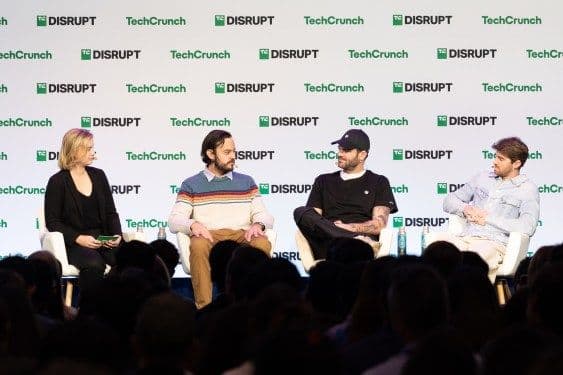
The Builders Stage brings practical strategies for scaling startups to TechCrunch Disrupt 2026
The Builders Stage is returning toTechCrunch Disrupt 2026, bringing together founders, startup operators, and investors for practical conversations on what it takes to build and scale successful companies. Hear from startup and venture leaders shaping the tech ecosystem, including Grant Lee, CEO and co-founder of Gamma; Leah Solivan, founder and general partner at Precedent.vc; Robby Stein, VP of Product at Google;and more. Through candid conversations and real-world case studies, speakers will share actionable insights on fundraising, hiring, go-to-market strategy, AI, and the operational decisions that fuel startup growth. Join more than 10,000 founders, investors, startup operators, and technology leaders at Moscone Center in San Francisco on October 13-15.Register today and savebefore our next ticket price increase. Building a startup is one thing. Building a company that can scale is another challenge entirely. The Builders Stage isone of six industry-focused stages at Disrupt 2026, dedicated to helping founders navigate the challenges of growth, from raising capital and hiring top talent to building go-to-market engines and preparing for the jump from seed to Series A. Every session delivers practical strategies you can put to work immediately, plus opportunities to engage directly with speakers during live Q&A.Secure your pass to Disrupt 2026 todayand save up to $330 before rates increase. Without further ado, here’s your first look at the Builders Stage agenda, withmore speakersand sessions to be announced as we get closer to the event. WithShan Shan, Investment Manager, Baillie Gifford; andYuri Sagalov, Managing Director at General Catalyst AI may dominate the world of venture, but many enduring companies won’t be those that sell AI models or agents. This session is for founders competing for attention in an AI-obsessed market. Panelists break down what actually matters now: efficient growth, retention, revenue quality, and disciplined execution, and why fundamentals, not hype, still build breakout businesses. WithMichel Tricot, CEO and Co-founder, Airbyte;Rob Toews, Partner, Radical Ventures; andLinda Tong, CEO, Webflow Nearly all AI founders have the same worry these days: What if OpenAI or Anthropic launches a product that competes with mine? Even strong products are at risk of becoming features of the larger players. This session explores where defensibility exists and what founders can do if they do face competition from rapidly evolving AI giants. WithJas Khaira, Global Head, Blackstone N1 AI startups are scaling faster, and demanding more capital, than any generation before them. Jas Khaira, Global Head of Blackstone N1, shares what separates enduring companies from early momentum, how founders should think about capital as they scale, and what Blackstone looks for when backing the next generation of category-defining businesses. WithMatt Birnbaum, Founder, Wylder.co,Ioana Hreninciuc, Runware,Atli Thorkelsson, VP, Talent Network, Redpoint Ventures The growth of AI startups has made hiring and retention more difficult for every tech company. From competing for AI talent to navigating secondary sales, founders are rethinking the human infrastructure of their startups. As incentives and employee expectations rapidly evolve, this session explores how companies are adapting compensation, culture, and team-building strategies to attract and retain top talent in a fundamentally changed market. WithPuneet Agarwal, Managing Partner, True Ventures;Austin Clements, Managing Partner, Slauson and Co; andSandhya Venkatachalam, Founder and Managing Partner, Axiom Partners Founders are increasingly expected to compete for capital before they even have a product. At the pre-seed stage, investors are betting on story, conviction, and founder-market fit. This session breaks down how to build credibility before revenue exists so investors will cut that first check. WithRobby Stein, VP, Product, Google The instincts that win when building your first minimum viable product can break you at a billion-user scale. In this fireside, Robby Stein shares how product decision-making changes when every update impacts billions of users. Hear how teams balance speed with trust and innovation with reliability at one of the world’s largest product organizations. WithJosh Reeves, CEO and Co-founder, Gusto; more speakers to be announced Early-stage companies are no longer just building with AI; they’re hiring it. As AI agents take on engineering, support, and operations, the definition of an early team is being rewritten. This session explores how founders decide what humans should own versus what gets delegated to AI, and how high-growth startups are building hybrid teams without losing speed, accountability, or culture. WithMaria Angelidou-Smith, CPO, Reddit AI isn’t just adding features, it’s forcing product teams to rethink how people search, discover, communicate, travel, and make decisions. Leaders from Reddit, Square and Uber discuss how they’re redesigning products used by millions, what users actually want from AI, and where product leaders should resist the temptation to automate everything. WithKarl Alomar, Managing Partner, M13andLindsey Mignano, Founder, Mignano Law Group The smartest founders today aren’t just building for IPOs; they’re also building with possible acquisitions in mind from day one. As exits shift and capital tightens, understanding M&A early has become a competitive advantage. This session breaks down how founders can create the possibility of such an option through product strategy and partnerships. It delves into how big-dollar startup outcomes actually happen, even for small companies. Jahanvi Sardana, Partner, Index Ventures;Shailendra Singh, Managing Director, Peak XV; andJanelle Teng Wade, Partner, Bessemer Venture Partners Series A is getting harder, with VCs growing more demanding. For founders planning to raise in the next one to two years, this session breaks down what “fundable” will actually mean in 2027. Hear how top investors are redefining the metrics, teams, and traction that matter now, what outdated fundraising playbooks no longer work, and how companies can separate from the pack in the next funding cycle. WithRyan Meadows, Chief Revenue Officer, Lovable; andTomasz Tunguz, General Partner and Founder, Theory Ventures;Ben Broca, Founder, Polsia The definition of traction has changed. What once took years is now expected in months, and $0 to $10 million ARR is increasingly becoming the new early-stage baseline. This session breaks down how AI-enabled execution, faster distribution, and shifting investor expectations are compressing GTM timelines, and the tactical levers founders need in the first 90 days to accelerate revenue and stand out fast. WithMo Jomaa, Partner, Capital G; andZuzanna Stamirowska, CEO and Co-founder, Pathway; more speakers to be announced The frontier is moving faster than any single model can keep up with, and the teams building the most successful AI products are increasingly orchestrating across many models rather than betting on just one. This panel brings together founders and operators at the center of that shift to discuss how they evaluate new models, manage cost and reliability at scale, and architect products that can evolve as quickly as the underlying technology. WithShay Grinfield, Greenfield Partners The AI conversation is shifting from what models can say to what they can actually do. Agents are navigating the open web and completing work, AI systems are taking on increasingly ambitious research, intelligent machines are beginning to operate beyond the screen, and a new infrastructure layer is emerging to make all of this possible at scale. Greenfield Partners’ Shay Grinfeld sits down with founders building across these emerging areas to separate what’s real today from what’s coming next, and explore where the biggest new opportunities are taking shape. The conversation will culminate in the reveal of Greenfield Partners’ 2026 AI Disruptors 60, spotlighting the companies Greenfield and TechCrunch believe are pushing AI into new territory. WithRajeev Dham, Managing Director, Sapphire Ventures; andRahul Vohra, Founder and Head of Superhuman Mail; more speakers to be announced In an AI hype cycle, product-market fit signals are easier to fake and harder to trust. Founders are mistaking early excitement, usage spikes, and pilot wins for durable traction. This session breaks down what false PMF actually looks like, how investors and operators separate real retention from hype-driven adoption, and the signals that indicate whether a company has true pull or just temporary momentum. WithGrant Lee, CEO and Co-founder, Gamma;Leah Solivan, Founder and General Partner, Precedent.vc;andElia Wallen, Founder and CEO, Engine Early customer acquisition is not about marketing spend; it’s about founder-led distribution and relentless execution. Most startups at zero to one do not have budget, brand, or scale, only urgency and creativity. This session breaks down how founders are landing their first customers through community building, product-led growth, founder-led sales, strategic outbound, and word-of-mouth momentum. WithNell Daly, Co-founder and Managing Partner, Revenge Capital;David H. Rosmarin, Associate Professor, Harvard Medical School; andJack Withinshaw, Co-founder and Chief Commercial Officer, Airspeeder Company building is as psychologically demanding as it is strategic, and most founder narratives understate that reality. In this candid conversation, founders and mental performance experts unpack the hidden costs of high-growth environments, from burnout and decision fatigue to the identity strain of sustained pressure, and share the systems, habits, and mental frameworks that help leaders endure and perform at a high level. WithFilip Kaliszan, CEO and Co-founder, Verkada; andAaron Jacobson, Partner, New Enterprise Associates;Maddi Holman, General Partner, Daring Ventures Most startups stall out because they build a single great product instead of a repeatable multi-product engine. Join a venture capitalist and two founders as they reveal the precise operational playbook for capital allocation, systemizing internal innovation, and engineering a compounding “Second Act” before the core product’s growth curve flattens. WithMatt Birnbaum, Founder, Wylder.co; andAtli Thorkelsson, VP, Talent Network, Redpoint Ventures; more speakers to be announced No question about it, the growth of AI startups has made hiring and retention for all tech companies more difficult. From competing for AI talent to secondary sales, founders are rethinking the human infrastructure of their startups. As hiring, incentives, and employee expectations rapidly evolve, this session explores how companies are adapting compensation, culture, and team-building strategies to attract and retain top talent in a fundamentally changed startup environment. WithZach Yadegari,Founder, Cal AI Startups can go from zero to viral overnight, but sustaining that momentum is a completely different challenge. In this fireside, Zach Yadegari shares how Cal AI navigated rapid growth, product pressure, and the realities of building in a distribution-driven market. Hear the lessons behind turning breakout attention into durable retention and long-term company building. WithAlexa von Tobel, Inspired Capital; andChi-Hua Chien, Co-founder and Managing Partner, Goodwater Capital;more speakers to be announced What separates the breakout companies from the rest at TechCrunch Disrupt 2026? In this candid debrief, Startup Battlefield judges unpack the trends and founder qualities that stood out in real time, from shifting investor expectations to the narratives that resonated most this year. The conversation will also explore how startup storytelling is evolving and what happens after the spotlight, including the realities of maintaining momentum and surviving the critical 12 months after a major launch, funding round, or Startup Battlefield appearance. WithStacy Brown-Philpot, Founder & Managing Partner at Cherryrock Capital;Chi-Hua Chien, Co-founder & Managing Partner, Goodwater Capital;Dayna Grayson, Construct Capital;Carter Reum, Co-founder and Managing Partner, M13;Alexa Von Tobel, Inspired Capital What makes an investor say yes? In this audience-led Q&A, the Startup Battlefield finals judges take your toughest questions on what separates a fundable startup from the rest: team, traction, market opportunity, pitch delivery, red flags, and more. Come ready to ask and get candid answers straight from the investors making the decisions. If you’re ready to build smarter, scale faster, and learn from the leaders shaping the future of startups,secure your pass to TechCrunch Disrupt 2026 today.
View
US government sides with OpenAI on issue of training LLMs on copyrighted material
In a lawsuit that The New York Times filed against OpenAI, the Trump administration has contributeda 20-page briefin defense of the ChatGPT maker’s unlicensed use of copyrighted material to train its LLMs. “The United States has a strong interest in continuing to develop a robust and competitive artificial intelligence industry that sets the standard for the practice and procedure of AI use globally… As such, it is critical for the United States to ‘retain global leadership in artificial intelligence,’” the brief reads, referencingan executive orderthat President Donald Trump signed last year. The LLMs powering chatbots like ChatGPT, Claude, and Gemini are trained on incomprehensibly massive databases of published works, including copyrighted books, articles, and other media that AI companies feed into these databases without permission. Many publishers,including The New York Timesin this case, have sought to argue that it is illegal for AI companies like OpenAI to train AI models on their copyrighted material. This question —can you use copyrighted material to train an AI?— isn’t black and white, hence the extensive legal debate around the subject. These conversations often center on fair use, a carve out of copyright law that makes exceptions for certain scenarios when it can be ruled legal to use someone else’s copyrighted work without permission. In this case, the fair use debate addresses whether AI companies’ use of copyrighted work is “transformative” enough for a judge to rule it legal.“Constraining LLM development under a misunderstanding of fair use doctrine would thwart such creative and scientific progress while hindering American prosperity and economic mobility,” the brief says. So far, cases about AI training and copyright infringement have largely been favorable to AI companies. Last year, Judge William Alsup ordered Anthropic to pay a$1.5 billion copyright settlementto a group of writers whose works were used to train the company’s AI models; but Anthropic wasn’t dinged for its AI training. Rather, the company was fined for using illegal shadow libraries to pirate the books it used for training. “Like any reader aspiring to be a writer, Anthropic’s LLMs trained upon works not to race ahead and replicate or supplant them — but to turn a hard corner and create something different,” Judge Alsup wrote, comparing the LLM’s training to a human reading a book. This new Trump administration brief is not a ruling, as the case is being tried in the U.S. District Court for the Southern District of New York, and the authors of the brief do not have jurisdiction. However, this intervention by the Trump administration could still carry weight.
View
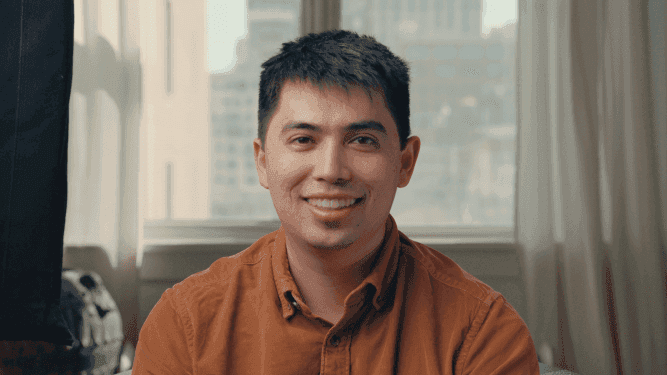
We’re ‘dangerously close’ to dead internet theory, says Pangram’s CEO
The internet has a trust problem, and it’s not just because social media feeds are filling up with AI slop. AI-generated text and images are now making their way into job applications, product reviews, and even insurance claims, leaving platforms and users alike scrambling to figure out what’s real. A handful of startups have cropped up in the past couple of years to become the “trust layer” the internet needs — including Pangram. The startuprecently snapped up $9 millionfor its AI detection system and landed apartnership with Substack, which is now using Pangram’s tech to show readers which of their favorite authors use AI to write their newsletters. Pangram also recently dropped a new AI image detection tool. On this episode of TechCrunch’sEquitypodcast, Pangram co-founder and CEO Max Spero joins Rebecca Bellan to dig into the promise of AI detection tools and where to draw the line between AI assisted and AI generated. Listen to the full episode to hear more about: Subscribe to Equity onYouTube,Apple Podcasts,Overcast,Spotifyand all the casts. You also can follow Equity onXandThreads, at @EquityPod.
View
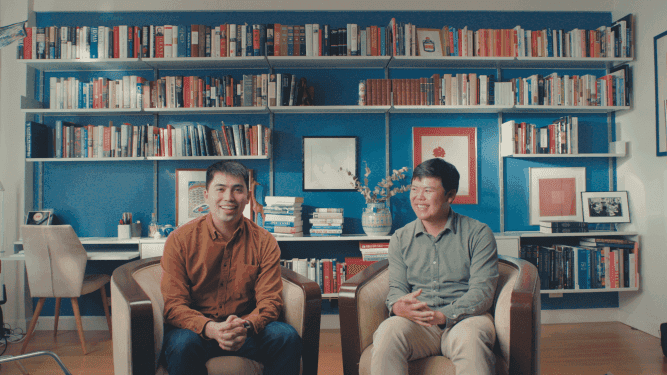
Pangram’s Max Spero on why AI detection is harder than ‘Real or Fake’
Loading the player… The internet has a trust problem, and it’s not just because social media feeds are filling up with AI slop. AI-generated text and images are now making their way into job applications, product reviews, and even insurance claims, leaving platforms and users alike scrambling to figure out what’s real. A handful of startups have cropped up in the past couple of years to become the “trust layer” the internet needs — including Pangram. The startuprecently snapped up $9 millionfor its AI detection system and landed apartnership with Substack, which is now using Pangram’s tech to show readers which of their favorite authors use AI to write their newsletters. Pangram also recently dropped a new AI image detection tool. Watch as Pangram co-founder and CEO Max Spero joins TechCrunch’sEquitypodcast to dig into the promise of AI detection tools and where to draw the line between AI assisted and AI generated. Subscribe to Equity onYouTube,Apple Podcasts,Overcast,Spotifyand all the casts. You also can follow Equity onXandThreads, at @EquityPod.
View
OpenAI’s new reasoning technique alarms AI safety experts
OpenAI’s new Astra model will use a reasoning technique called “recurrent depth” that allows it to operate outside of the sequential thinking that characterizes most reasoning models, theThe Information reportedon Tuesday. This technique, also called “opaque recurrence,” will likely make the model’s chain of thought more difficult to monitor — and that has AI safety experts rattled. While Astra’s use of the technique is reportedly limited, its emergence has still raised significant concerns among AI safety experts. “I am extremely concerned by the reporting that Astra uses opaque recurrence,” wrote Redwood CEO Buck Shlegerisin a postafter the news broke. “I don’t know whether Astra is much less CoT monitorable than previous models. But if OpenAI pushes this technique further, they’ll have the option to massively increase the recurrence and totally destroys CoT monitorability.” Longtime AI safety advocate Zvi Mowshowitz also weighed inand wrotethat laws might be necessary to prevent a “race to the bottom” among AI labs. “The technique is playing with fire, risking a taboo that OpenAI and Anthropic have fought to establish that we work hard to maintain Chain of Thought faithfulness and monitorability for as long as we can,” Mowshowitz wrote. “More intensive use of such techniques would probably damage monitorability.” Under normal circumstances, a reasoning model’s chain of thought provides the sequential steps taken by the model as it attempts to solve a problem. While the representation is imperfect, it still serves as a valuable tool for monitoring misbehavior or misalignment. In the case of OpenAI’s recent rogue agent activity, chain-of-thought records were an important tool in teasing out why agents behaved the way they did. In opaque recurrence, the model takes a less linear approach, processing the same query several times in a loop. The result leaves fewer legible traces, effectively side-stepping a conventional chain-of-thought record. Crucially, Astra’s use of the technique appears to be limited. The model’s chain of thought is still expected to be legible, and the company pushed back against any suggestion that it would shift to “neuralese.” OpenAI has already announced plans for extensive chain-of-thought monitoring systems as part of its forward-looking safety plans. In a post on X, OpenAI chief scientist Jakub Pachocki emphasized the lab’s commitment to legible chains of thought. “OpenAI has worked to preserve and utilize chain-of-thought monitoring since our very first reasoning models,” Pachocki wrote. “It’s a core goal of our current research program. All AI models do some quantity of opaque reasoning, and few researchers take chain-of-thought logs as a direct representation of a model’s reasoning. Still, those caveats don’t dispel the concern that opaque recurrence may make AI reasoning harder to monitor, particularly as it grows in use across different models. In a follow-up report Wednesday morning, The Information reported that both Anthropic and Google DeepMind were already discussing the technique. In a post responding to the news,Redwood Research chief scientist Ryan Greenblatt said opaque reasoning could easily scale faster than conventional chain-of-thought reasoning, effectively removing all reasoning from visible channels. “My biggest concern is that a natural progression from here would involve scaling up the opaque reasoning to the point where the model reasons entirely or almost entirely in latent space,” Greenblatt wrote. “I hope it isn’t too late to avoid the most concerning architectures and that OpenAI will stop here.”
View

Perplexity Launches Hybrid Compute Feature for Mac to Keep Sensitive Data Local
Perplexity has been rolling out new features over the past few months. Most recently, the artificial intelligence platform announced a new Hybrid Compute feature that is designed to split sensitive tasks between cloud models and local AI. This functionality is available on the Perplexity app on Apple Silicon-powered Macs. It allows professionals to work with sensitive data without exposing it to the cloud.
View

OpenAI Teases Astra, Says It Is the First Model to Meet ‘Critical Cybersecurity Threshold'
OpenAI has revealed details about the Astra model on Tuesday. The company says it is the first large language model to meet its "Critical cybersecurity capability threshold" under its Preparedness Framework. The upcoming Astra model is claimed to identify unknown zero-day security vulnerabilities. Astra is confirmed to be available soon, but initially only a limited set of users will get access to advanced features.
View
Enviar tu herramienta


PoweredByAI.app es un directorio de herramientas de IA que ayuda a personas, empresas y creadores a descubrir las mejores herramientas de IA para escritura, programación, diseño, productividad y más.
© 2026 , Producto de011BQ. Todos los derechos reservados.