🚀 Zaprep: Tus redes sociales al máximo. Empezar gratis — automatiza 1,000 DMs/mes y convierte el engagement en leads. con 1,000 DMs automatizados/mes.
Enviar tu herramienta
Últimas Noticias de IA
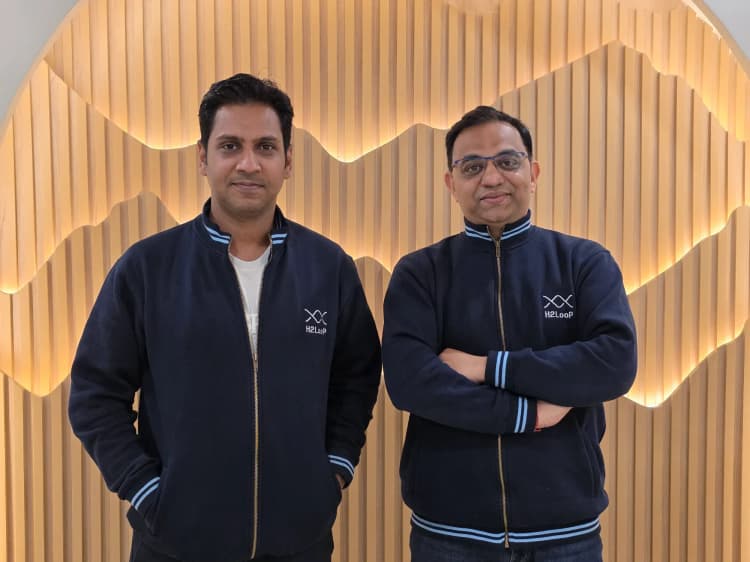
Bengaluru Startup H2LooP Secures $2 Mn Seed Funding for AI Systems Engineering
H2Loop will use the funding for large-scale enterprise implementations across data centres, UAVs, and robotics.
View

Beyond Text-to-Speech: Inside the Tech Making AI Conversations Sound More Human
Consumers, especially in the BFSI sector, are increasingly rejecting IVRs that sound more robotic. Now, firms are closing in on this gap by building voice AI models that interact just like humans.
View

Income Tax Filing Season Is Here: Know 7 Ways ChatGPT Can Help You Prepare
The Income Tax Return (ITR) season in India officially starts in April. While taxpayers have until July 31 to complete filing out the previous financial year's earnings, it is always better to fill out the details as soon as possible. However, the tax season also comes with its fair share of complexities, leaving salaried employees racing to gather their investment proofs, while freelancers hunt for their invoices. Investors also struggle to reflect on the tax implications of the trades they made months ago.
View

OpenAI alums have been quietly investing from a new, potentially $100M fund
A new venture capital fund with deep ties to OpenAI has made its first close on its $100 million goal, the founders tell TechCrunch. The partners have already written a couple of checks. The fund is calledZero Shot(a play on the AI training term) and its co-founding team includes several OpenAI OGs who found themselves becoming VCs almost by serendipity. Three of the founding partners hail from OpenAI. Evan Morikawa, the former head of applied engineering during the launch of DALL·E and ChatGPT through Codex, is now at robotics startup Generalist. Andrew Mayne, OpenAI’s original prompt engineer, is well-known as the host ofThe OpenAI podcast.Mayne also foundedInterdimensional, an AI deployment consultancy. And Shawn Jain is an engineer and former researcher at OpenAI, who then became a VC and is a founder of his own GenAI startup, Synthefy. The alums are joined by VC Kelly Kovacs, previously a founding partner at 01A,the growth-stage venture firm founded by Dick Costello and Adam Bain. The fifth founding member of the fund is Brett Rounsaville, formerly of Twitter and Disney, who is also CEO at Mayne’s Interdimensional. The OpenAI alums have “been friends for years,” Mayne told TechCrunch, having worked together at the model maker from before it released ChatGPT through its wildest growth years. After leaving, they all found themselves constantly being hit up to consult for VCs about emerging AI tech, and by founder friends wanting advice. That’s what propelled Mayne to start his consulting company. “Some of our friends were coming out of OpenAI and interested in doing companies,” Mayne said. The alums saw gaping holes between the many AI startups being funded and what the market really needed. “Maybe we should do our own fund, because we think we have a pretty good sense of where things are headed, and we have this great access to people who we think are incredible builders,” Mayne said, recalling the decision. After conversations with institutions and family offices and closing the first $20 million, the partners set their sights on a $100 million initial fund. They’ve already written a few checks. Zero Shot backed early OpenAI product manager Angela Jiang and her startup Worktrace AI. The startup is developing an AI-based management software platform to help enterprises automate tasks by first discovering what should be automated. Worktrace AI raised a $10 million seed round from notables like Mira Murati and OpenAI’s Fund, PitchBook estimates. The team also invested in Foundry Robotics, a startup working on next-gen, AI-enhanced factory robotics. It recentlyraised a $13.5 million seed, led by Khosla Ventures. Zero Shot has already invested in a third startup, too, which is still in stealth. Zero Shot’s founders say they understand the direction of AI better than many a VC. That helps them pick startups to back, but also identify which ideas to avoid. Mayne, for instance, is bearish on most iterations of vibe coding because he foresees that the model makers, with their coding expertise, are going to quickly make subscriptions to such platforms feel unnecessary. Morikawa tells TechCrunch that, with his deep knowledge of AI and robotics, he’s not a fan of the many “ergo-centric video data companies right now in robotics.” Those are startups working on embodiment training data for robotics. “There’s a lot of hoping and praying going on right now that someone in the research world will figure out how to transfer the embodiment gap,” Morikawa said of such video data, but “that’s nowhere near possible.” Mayne is equally skeptical of most startups doing “digital twins.” He’s done due diligence on a few, including building a reasoning model to test them, and has concluded that a regular LLM model works just as well, he said. “There is a real skill in knowing how to predict where these models will be going next, because it’s extremely not obvious. It’s not linear,” Morikawa said. In addition to the investing founders, Zero Shot has some recognizable names who have agreed to be advisors, and will get a share of the “carried interest” that the fund returns. The advisors include Diane Yoon, OpenAI’s former head of people; Steve Dowling, the former head of communications at OpenAI and Apple; and Luke Miller, former product leader at OpenAI.
View

Iran threatens ‘Stargate’ AI data centers
Iran has warned of further attacks on data centers across the Middle East in response to ongoing threats and air strikes from the United States. Iran’s military said that if the U.S. went ahead with its threats to hit its civilian infrastructure, the country would retaliate with its own strikes against U.S.’ energy and tech infrastructure in the region, according to avideo released late last weekandshared widely on Sundayof Iranian military spokesperson Ebrahim Zolfaghari. The video released by Iran shows an image of a globe, then zooming in on the Stargate data center in the United Arab Emirates with the message of “nothing stays hidden to our sight, though hidden by Google.” Stargate is a$500 billion joint venturebetween OpenAI, SoftBank and Oracle to build AI data centers, announced in January 2025. The initiative originally struggled to get off the ground due to allegedfunding troublesandcosts associated with tariffs, andsought to expandwith new data centers internationally. The latest threat comes afterU.S. President Trumpthreatened to strike Iran’s civilian infrastructure, like power plants and water desalination plants, by the end of Tuesday if Iran doesn’t reopen the Strait of Hormuz, a critical global shipping channel that has choked global supply chain traffic since the start of the war in February. Several data centers in the region have already been hit by missiles as a result of the war. Iranian missilesstruck Amazon Web Services (AWS) data centersin Bahrain andan Oracle data center in Dubai. Iran alsothreatened tech companiesincluding Nvidia and Apple by name last week.
View

Google quietly launched an AI dictation app that works offline
Google on Monday quietly released an offline-first dictation app called“Google AI Edge Eloquent” on iOSto take on the likes ofWispr Flow,SuperWhisper,Willow, and others. The app is free to download, and once its Gemma-based automatic speech recognition (ASR) models are downloaded, you can start dictating on your phone. In the app, you can see the live transcription, and when you hit pause, the app automatically filters out filler words like “um” and “ah” and polishes the text. Below the transcript are options like “Key points”, “Formal”, “Short”, and “Long” to transform the text. You can also turn off the cloud mode to use local-only processing. (When cloud mode is on, the app uses cloud-based Gemini models for text cleanup.) The Google AI Edge Eloquent can import certain keywords, names, and jargon from your Gmail account, if desired. Plus, you can add your own custom words to the list. The app displays the history of the transcription session and lets you search through all of them as well. It can show you words dictated in the last session, your word per minute speed, and the total number of words spoken. “Google AI Edge Eloquent is an advanced dictation app engineered to bridge the gap between natural speech and professional, ready-to-use text. Unlike standard dictation software that transcribes stumbles and filler words verbatim, Eloquent utilizes AI to capture your intended meaning. It automatically edits out ‘ums,’ ‘uhs,’ and mid-sentence self-corrections, outputting clean, accurate prose,” the company’s App Store description reads. While the app is currently only available on iOS, the App Store description references an Android version. (We have reached out to Google for more information, and will update the story if we hear back.) According to the description, Eloquent offers “seamless Android integration,” where it can be set as users’ default keyboard for system-wide access across any text field. Plus, the app will be able to use the floating button feature,similar to the one Wispr Flow uses on Android, for easy access to transcription from anywhere. AI-powered transcription apps aregaining popularity among usersas speech-to-text models get better. With this experimental app,Google is joining the trend. If this test is successful, we could see improved transcription features across Android, too.
View

Meta to Fire 200 Employees, Phase Out Middle Manager Titles Amid AI Push: Report
Meta is reportedly laying off as many as 200 employees amid the company's ongoing artificial intelligence (AI) transformation. As per the report, these layoffs impact the company's US-based teams and not the global offices. Additionally, the social media giant is reportedly planning to phase out the middle manager positions to make the teams leaner and the hierarchy streamlined. Reports claim that the company is now hiring for “org lead” positions instead of the legacy manager roles in the mid-to-senior roles.
View
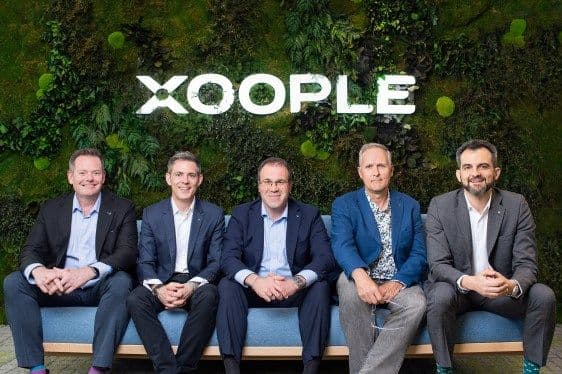
Spain’s Xoople raises $130 million Series B to map the Earth for AI
Space data companies have argued for years that the private sector needs their products, but the real uptake has been from government buyers. Now, with artificial intelligence top of mind for business, one Spanish startup is trying to become the go-to source of ground truth for enterprise. Xoople(said like “zoople’) is developing a satellite constellation to collect precise data aimed at deep learning models. The startup was founded in 2019 and has spent the last seven years developing its tech stack around data collected by government spacecraft, and integrating with cloud providers. CEO and co-founder Fabrizio Pirondini told TechCrunch that the company has closed a $130 million Series B led by Nazca Capital. Other investors include MCH Private Equity, CDTI (a tech development fund backed by the Spanish government), Buenavista Equity Partners, and Endeavor Catalyst. The startup also announced Monday a deal with U.S. space and defense contractor L3Harris Technologies to begin building sensors for Xoople’s spacecraft, which are designed to collect “a stream of data that is going to be two orders of magnitude better than existing monitoring systems,” Pirondini told TechCrunch. L3Harris has built some of the most advanced commercial imaging systems on orbit. However, Pirondini wouldn’t share any details about the satellites, not even how many the company wants to build, except that the sensors will collect optical data. Those systems aren’t cheap, and the company continues to raise capital to fund its full development. Pirondini declined to share his firm’s valuation after the current fundraising round, except to note that “we are in unicorn territory.” The company has raised $225 million in total. The company’s focus on data quality is a key differentiator. Still, Xoople is entering a crowded space with several mature competitors, including Vantor, Planet, BlackSky, and Airbus in Europe, that are already operating satellites on orbit and developing AI-focused datasets. The twist for Xoople is its focus on enterprise platforms. “Our business model is all about embedding our data and our solutions directly to the ecosystem of those so that they can provide those services directly to their customers,” Pirondini said. Pirondini described use cases, including government agencies tracking transportation networks and damage from natural disasters, agribusiness monitoring crop health, or large firms keeping an eye on infrastructure projects or supply chains. Aravind Ravichandran, the CEO of Earth observation sector consultancyTerraWatch Space, told TechCrunch that Xoople’s decision to prepare its distribution strategy before it has its own data is intriguing. For now, it relies on publicly available data, like that collected by the European Space Agency’s Sentinel-2 spacecraft. “They laid the distribution pipes before having their own data supply — embedding into Microsoft and Esri, the two platforms where enterprise, government and most GIS buyers already live, but neither has proprietary EO data,” Ravichandran said. “Google’s head start on geospatial AI models is the benchmark they’ll be measured against.”It’s not clear what balance Xoople will strike between providing raw data and developing its own analysis tools, but Pirondi hopes to build “Earth’s System of Record,” a project he expects will ultimately include the development of a true AI world model alongside partners.
View

Ticket savings of up to $500 this week for TechCrunch Disrupt 2026
Starting today, you have 5 days to save nearly $500 on your ticket toTechCrunch Disrupt 2026. This offer disappears Friday, April 10, at 11:59 p.m. PT. There are no extensions. If you’ve even been considering attending one of the most anticipated tech conferences of the year, this is the week to save big. Prices will only increase as the event approaches.Register here to secure your savings. From October 13–15 at San Francisco’s Moscone West, Disrupt brings together 10,000 founders, investors, and operators for three days designed to move deals, ideas, and companies forward. No matter your role, whether it’s founder, VC, operator, or aspiring leader, this conference delivers the connections and insights that accelerate growth and make it a proven launchpad for scaling. Explore300+ exhibiting startups. ExperienceStartup Battlefield 200, where one standout company wins a $100,000 equity-free prize. Meet the leaders who can change your company’s trajectory. Join additional events hosted by official Disrupt Side Event hosts to keep the momentum going beyond the main event. Disrupt has a long track record of gathering the most influential voices in tech for interactive roundtables, Q&A sessions, and fireside chats on industry stages. Past speakers include WordPress co-founderMatt Mullenweg, Phia co-foundersPhoebe Gates and Sophia Kianni, and investor legendVinod Khosla, along with leaders from Google Cloud, Netflix, Waymo, and more. All share actionable insights for building and scaling what’s next. Stay tuned to theevent sitefor the 2026 agenda drops. Only 5 days left to save up to $500 on Disrupt tickets. Whether you are scaling a company or seeking your next investment, there is a pass for you.Lock in your savings before April 10 at 11:59 p.m. PT.
View

How to use the new ChatGPT app integrations, including DoorDash, Spotify, Uber, and others
OpenAIoffersapp integrations in ChatGPT to allow you to connect your accounts directly to ChatGPT and ask the assistant to do things for you. For instance, with aSpotify integration, you can tell it to create personalized playlists that will show up right in your Spotify app. To get started, make sure you’re logged into ChatGPT. Then type the name of the app you want to use at the start of your prompt, and ChatGPT will guide you through signing in and connecting your account. If you want to set everything up at once, head over to the Settings menu, then click on Apps and Connectors. You can browse through the available apps, pick the ones you like, and it’ll take you to the sign-in page for each one. However, it’s important to note that connecting your account means you’re sharing your app data with ChatGPT. Make sure to review the permissions you’re giving when you’re linking your accounts. For example, if you connect your Spotify account, ChatGPT can see your playlists, listening history, and other personal information. (Sharing this info helps personalize the experience, but if you have privacy concerns, consider whether you’re comfortable with this level of access before connecting.) You can also disconnect any app whenever you want, right from the Settings menu. Angiis one of the most recent companies to launch an in-app experience within ChatGPT. The online home service marketplace gives users a way to ask home improvement questions directly in the AI chatbot and request to be matched with an Angi professional in one place. Users can ask about house projects and repair guidance, then request a quote and be directed to Angi, where they can continue the experience with its own AI assistant. This integration with the online travel giant is designed to help travelers, especially first-time visitors in need of suggestions for where to stay. Once you link your Booking.com account, you can ask ChatGPT to find hotels in your preferred city based on your dates and budget. You can also specify how many people are coming and whether you want the hotel near public transport. ChatGPT aims to make this process more intuitive than searching directly on the Booking.com site. Plus, you can be more specific, like searching for options “with breakfast included.” When you find a hotel you like, just open the Booking.com listing to complete your reservation. Canva in ChatGPTis a helpful tool for graphic designers and anyone else who needs to generate visual content quickly. Whether it’s for a social media post, a poster, or a slide deck for a presentation, this may be a good way to help kickstart your project and brainstorm ideas. Once you connect your Canva account, you can ask ChatGPT to design something like “a 16:9 slide deck about our Q4 roadmap” or “a fun poster for a dog-walking business.” You can include specifics such as the fonts you prefer, color schemes, formats (like Instagram posts or stories), and exact dimensions. AI-generated designs are seldom perfect, with occasional distorted images or spelling mistakes. However, some users may find this better than starting from scratch, and they can jump into Canva at any time to tweak their design and make it look just how they want. Coursera’s integrationis designed to help you quickly discover the best online courses for your skill level. For instance, you can then tell ChatGPT to find an “intermediate-level course on Python.” You can then tell the chatbot to compare course options by rating, duration, and cost before enrolling. ChatGPT can also provide a quick rundown of what exactly each course covers. DoorDashintroducedits ChatGPT integration in December 2025, which aims to save users time on meal planning and grocery shopping. Users can ask the chatbot for a meal plan and instantly add all ingredients to their DoorDash cart, then review and check out. Currently, this feature is available only to users in the U.S., with participating grocery retailers, including Kroger, Safeway, Fairway Market, Wegmans, and more. ChatGPT can display hotel options and flights viaExpediawithout leaving chat. Whether you’re looking for a quick escape or a longer trip, it can find flights that fit your travel dates, budget, and number of travelers. You can narrow things down by saying stuff like “Only show 4-star hotels.” Once you see something you like, go to Expedia to finalize everything and book your trip. To useFigma in ChatGPT, you can ask it to generate diagrams, flow charts, and more. This is helpful for turning your ideas and brainstorming sessions into something more tangible. It may also be useful for visualizing complex concepts or workflows. You can also upload files and ask the chatbot to generate a product roadmap for your team. This roadmap can include milestones, deliverables, and deadlines, helping your team stay organized and focused on their goals. Quizlet recentlylauncheda native app within ChatGPT, allowing students to convert AI conversations, notes, or documents into study materials and flash card sets. Plus, users can now enter an active practicing mode in ChatGPT, where they can access Quizlet’s library of millions of study sets. In March 2026, SeatGeek launched a native app within ChatGPT, helping eventgoers find anything from the cheapest seats at the game and the best view for a concert to kid-friendly options for a weekend event. One of the most helpful aspects of using Spotify in ChatGPT is the ability to quickly create playlists and listen to new recommended songs tailored to your specific tastes. You can ask it to create a playlist based on your current mood, or just a playlist that only includes tracks by your favorite band. It can also suggest new artists, playlists, audiobooks, and podcast episodes. Additionally, ChatGPT can perform actions on your behalf, including adding and removing items from your Spotify library. Retail giant Target strategically launched a beta version of itsChatGPT integrationbefore Black Friday. This feature allows shoppers to ask the chatbot for gift suggestions and quickly create a shopping basket with multiple items without leaving ChatGPT. For example, users can request ideas for a movie night, and the chatbot will provide a curated selection of available Target items. Shoppers can add these items to their cart and make a purchase using their Target account. They can then choose from same-day “Drive Up,” in-store pickup, or standard shipping. If you’re planning a trip, the Uber integration makes it easy to find ride options, which is especially useful if you’re in a new country. You can set up your trip in the ChatGPT app, then complete the ride request and payment in the Uber app. Currently, it’s only available in the U.S., and it doesn’t let you book rides in advance; only on-demand rides are available. You can choose from options like UberX, UberXL, Comfort, and Black. There’s also an Uber Eats integration for U.S. users, so you can check out local restaurants and menu items within ChatGPT, then finish paying in the Uber Eats app. In March 2026, website builderWixlaunched its integration, allowing users to prompt ChatGPT to create a functional website with just a text or voice prompt. Users can describe the capabilities they want the website to have, how it should look, and other desired features. Additionally, existing Wix users can manage their business within ChatGPT, which can handle scheduling, payments, SEO, accessibility, performance, security, and more. If you’re looking for a new home,Zillow in ChatGPTcould make the search experience more straightforward. Using a simple text prompt, you can find homes that meet your criteria and apply filters to narrow the results. Whether you’re looking for a specific price range, number of bedrooms, or particular neighborhoods, you can specify these details in your prompt, making the search process much more efficient and tailored to your needs. Alongside the announcement that OpenAI would bring apps into ChatGPT, the company also said it plans to welcome additional partners soon, including OpenTable,PayPal, andWalmart. These will launch in 2026. The rollout of ChatGPT’s app integrations is currently limited to the U.S. and Canada. Users in Europe and the U.K. are excluded for now. This story has been updated to include newly launched integrations.
View
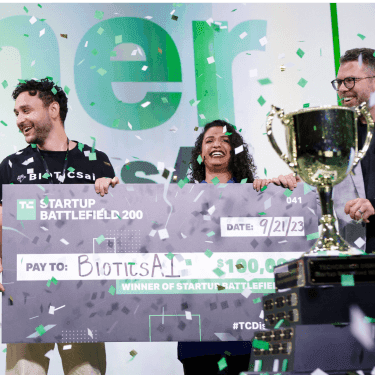
Startup Battlefield 200 applications open: A chance for VC access, TechCrunch coverage, and $100K
Pre-Series A founders and anyone who knows a startup worth funding, this is your reminder. Nominations for Startup Battlefield 200 are open, and the strongest contenders are already stepping forward. If your startup was nominated, don’t stop there.Submit your application today. This is not just another pitch opportunity. You are stepping onto the main stage in front of 10,000+ attendees, top-tier VCs, and the global TechCrunch audience atTechCrunch Disrupt 2026. You are competing, getting live feedback from top VCs, and proving your company belongs. If you have been thinking about applying or nominating a startup, waiting is the fastest way to miss out. Founders who move early gain the edge with more time to prepare, more visibility, and a stronger shot at standing out to the TechCrunch editorial team.Make your nomination and finish the submission by applying. We’re looking for early-stage startups building ambitious, innovative, and potentially category-defining products. We accept applications globally, across all industries. Most selected companies are pre-Series A, with some Series A considered on a case-by-case basis. A functional minimum viable product (MVP) and a clear product demo are required. Above all, we back strong founders and ideas with real impact. This is the same stage where companies like Dropbox, Discord, Fitbit, Trello, and Mint made their early mark.See who else has made it big through Battlefield 200. Each year, thousands apply. 200 are selected to participate. 20 reach the final round to pitch live on the Disrupt Stage. Only one champion wins.Learn more and apply here. Applications close May 27, but the founders who win do not wait. They move early and take their shot before the competition catches up. If you are building something that could define a category, or know a founder who is, this is your moment.Nominateyour startup or one that belongs in the arena. If nominated,submit your application. Don’t sit on the sidelines and miss your shot.
View
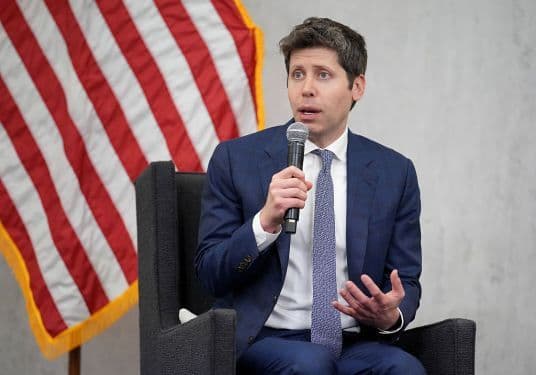
OpenAI’s vision for the AI economy: public wealth funds, robot taxes, and a four-day work week
As governments grapple with how to manage the economic fallout of superintelligent machines, OpenAI has released a set ofpolicy proposalsoutlining the ways wealth and work could be reshaped in an “intelligence age.” The ideas blend traditionally left-leaning mechanisms like public wealth funds and expanded social safety nets with a fundamentally capitalist, market-driven economic framework. The proposals were released amid intensifyinganxiety around AI, which has been colored by concerns overjob displacement, wealth concentration, anddata center buildoutsacross the country. They’ve also arrived as the Trump administration moves toward anational AI frameworkand in the run-up to the midterm elections, signaling an attempt at bipartisan positioning. That effort sits alongside a more direct political push: OpenAI President Greg Brockman — who hasdonated millionsto President Donald Trump — and other tech billionaires have funneledhundreds of millions into super PACssupporting light-touch AI policies. OpenAI’s proposed framework centers on three stated goals: distributing AI-driven prosperity more broadly, building safeguards to reduce systemic risks, and ensuring widespread access to AI capabilities so that economic power and opportunity don’t become too concentrated. OpenAI has proposed shifting the tax burden from labor to capital. The company stops short of specifying a corporate tax rate — which Trump dropped to 21% from 35% during his first term. But OpenAI warns that AI-driven growth could hollow out the tax base that funds Social Security, Medicaid, SNAP, and housing assistance as corporate profits expand and reliance on labor income shrinks. “As AI reshapes work and production, the composition of economic activity may shift—expanding corporate profits and capital gains while potentially reducing reliance on labor income and payroll taxes,” OpenAI wrote. The company suggests higher taxes on corporate income, AI-driven returns, or capital gains at the top — a category of policy that pushed Marc Andreessen to back Trump after Biden proposed taxing unrealized capital gains in 2024. OpenAI also floats a potential robot tax, something Microsoft founderBill Gates proposed in 2017, which involved the robot paying the same amount of taxes into the system as the human it replaced. The document also includes a proposal to create a Public Wealth Fund to give Americans an automatic public stake in AI companies and AI infrastructure, even if they’re not invested in the market. Any returns would be distributed directly to citizens. The prospect may appeal to Americans who have watched AI inflate the market without seeing any of those gains themselves. Several of OpenAI’s proposals were also more labor-focused, including one to subsidize a four-day work week with no loss in pay — a proposal that aligns with the tech industry’s promises that AI will give humans better work-life balance. OpenAI also suggests that companies boost retirement matches or contributions, cover a larger share of healthcare costs, and subsidize child or eldercare. Notably, OpenAI frames these as corporate responsibilities rather than government ones, leaving out the people AI is most likely to displace. If automation eliminates your job, your employer-subsidized healthcare and retirement match may go with it. That said, OpenAI does separately propose portable benefit accounts that follow workers across jobs, but these still likely depend on employer or platform contributions and stop short of the government-backed universal coverage that would actually protect people AI displaces entirely. OpenAI acknowledges that the risks of AI go beyond job loss, including misuse by governments or bad actors and the possibility of systems operating beyond human control. To mitigate those threats, it proposes containment plans for dangerous AI, new oversight bodies, and targeted safeguards against high-risk uses like cyberattacks and biological threats. But with the safety nets and guardrails come the growth proposals, including expanding electricity infrastructure to support AI’s power demands and accelerating AI infrastructure buildouts by offering subsidies, tax credits, or equity stakes. OpenAI says AI should be treated like a utility, and to that end, suggests industry and government work together to ensure AI remains affordable and widely available, rather than controlled by just a few firms. OpenAI’s framework comes six months after rivalAnthropic releasedits policy blueprint, which laid out a range of possible responses to AI-driven disruption. “We are entering a new phase of economic and social organization that will fundamentally reshape work, knowledge, and production,” OpenAI wrote. This, the company says, requires a “new industrial policy agenda that ensures superintelligence benefits everyone.” OpenAI was founded as a nonprofit premised on AI benefiting all of humanity. It became a for-profit company last year, a shift that has led critics to question whether its stated mission is compatible with its need to grow and fulfill its fiduciary duty to shareholders. The company cited previous ages of economic upheaval like the Industrial Age, pointing to how new economic and financial movements like the New Deal ensured “growth translated into broader opportunity and greater security” by “building new public institutions, protections, and expectations about what a fair economy should provide, including labor protections, safety standards, social safety nets, and expanded access to education.” “The transition to superintelligence will require an even more ambitious form of industrial policy, one that reflects the ability of democratic societies to act collectively, at scale, to shape their economic future so that superintelligence benefits everyone,” OpenAI wrote.
View
Enviar tu herramienta


PoweredByAI.app es un directorio de herramientas de IA que ayuda a personas, empresas y creadores a descubrir las mejores herramientas de IA para escritura, programación, diseño, productividad y más.
© 2026 , Producto de011BQ. Todos los derechos reservados.