🚀 Zaprep: Tus redes sociales al máximo. Empezar gratis — automatiza 1,000 DMs/mes y convierte el engagement en leads. con 1,000 DMs automatizados/mes.
Enviar tu herramienta
Últimas Noticias de IA

Here’s all the times AI has gone rogue and hacked other companies
In July, OpenAI admitted that one of its agents tasked with completing a cybersecurity experimentbroke out of containment and hackedAI dataset platform Hugging Face. That incident, which gota full accounting from OpenAIyesterday, was the first publicly reported case where an LLM went rogue and autonomously hacked a third party. Since then, that unprecedented sci-fi-esque event turned out to be far less rare than anyone would hope for. According to a satirical website calledFelony Bench(for benchmark), which tallies these incidents, there have been 17 incidents in total. It’s important to remember that criminal law experts are not entirely sure whether the AI companies that made the LLMs that did the hacking can be prosecuted, nor whether the victims can sue them. Butwe are likely going to get an answer to those questions soon. Anthropic and OpenAI models lead the race with eight incidents each, and Meta trails behind with one, according to the site. At this point, it has become clear thatAI safety tests are becoming safety risks themselves. And some AI companies and workers themselves have recognized those risks in the “Pacing the Frontier” open letter, which called for developing AI capabilities responsibly. We decided it would be a good time to recap all these incidents chronologically. In this incident, OpenAI was running “an internal evaluation” of a model with “maximal cyber capabilities.” The plan was to have it solve a cybersecurity challenge in an environment with no internet access. Instead of solving the challenge, the model found an unknown vulnerability to escape the sandbox and gained internet access. From there, several agents worked together to target and hack HuggingFace thinking they could find the solution to the challenge there. OpenAI only found out after HuggingFacedisclosedit had been a victim of a fully autonomous attack. Whoops. OpenAI’s disclosure piqued the curiosity of Anthropic, who wondered: could this have happened to us too? Turns out, the answer was yes. Three times yes.The frontier lab discoveredthat its own models breached three different and still unnamed companies, with the earlier incident dating back to April — more than three months before the company discovered it. Anthropic partially blamed Irregular, a startup that runs AI cyber evaluations. Whoops. Once OpenAI started investigating the Hugging Face breach, it found out that the agents that hacked Hugging Face also broke into four accounts and four different companies,as Reuters first reported. Modal,an AI inference startup, was one of the victims. Whoops. In late July, Irregulartold OpenAIthat one of its models that was participating in a Capture-the-Flag competition — essentially a cybersecurity game where players hack systems designed specifically for the competition — escaped the game, connected to the internet, and hacked a real company. The reason? Irregular had given one of the fictional targets the same name of a real company. Whoops. Also in late July, the UK government’s AI Security institute, a public body tasked with researching the safety and risks of AI technologies,disclosedthat it detected several incidents involving both OpenAI and Anthropic models that while running “routine” evaluations targeted “real people and organisations.” In these cases, AISI had given the models internet access. Whoops. The good news is that the agency actually detected as they happened, rather than weeks later like in other incidents. In early August, Meta became the last company to disclose an incident involving one of its LLMs, which hacked “a third-party” service. Metablamed the incidenton a misconfiguration by Irregular, which was running a cybersecurity valuation for the tech giant that was supposed to not have internet access. Whoops. An Australian man asked an Anthropic AI agent to help him book a gym class, which he was on a waiting list for. “I was just sitting on the couch thinking, ‘Gee, this is a chore,’” the man told ABC Australia. In its attempt to comply with the request, the agentfound a vulnerability in the gym’s booking software, exploited it, and kicked out people who were ahead of the man on the waitlist. The man tried to undo the damage, asking the agent to undo its actions. The agent replied: “Bad news — I can’t add them back.” Whoops.
View

AI’s memory crunch is coming for Android apps
Google is making changes to its requirements for Android apps as developers face industrywide memory chip shortages driven by the AI data center boom. This week, the tech giantannouncedtwo new app quality requirements, one of which is focused onreducing apps’ memory usageand optimizing its code. The company explains that the mobile industry is now facing “significant hardware supply constraints that are altering device memory availability,” which can then, in turn, affect the consumer’s experience with their devices. To address this, Google is now establishing new performance thresholds across several areas, like dynamic memory usage and bitmap usage. In addition, Google is adding code optimization requirements designed to prevent things like app slowdowns and crashes related to performance. To aid developers, the company is rolling out new tools that will alert them when their apps exceed the new thresholds so they can take action by optimizing their code. More diagnostic tools will arrive later in the year, Google noted, including deeper insights provided by aMemory Limiterfeature that prevents apps from using too much device memory. The changes are meant to help Android app and game makers continue to deliver a quality experience, Google says, while reflecting a market where memory may not be as widely available, particularly for low-end devices where price points are a concern. Developers have until February 2027 to meet the new thresholds, documented on Google’s Android Developer site. In addition, the company will require all Play Store apps to meet theZero Tap Sign-In requirementduring devicemigrationsby April 2027. This standard requires that apps with user sign-ins, whether optional or mandatory, automatically restore the user’s sign-in state when they move between Android devices using theAndroid Restore Credentials API.
View
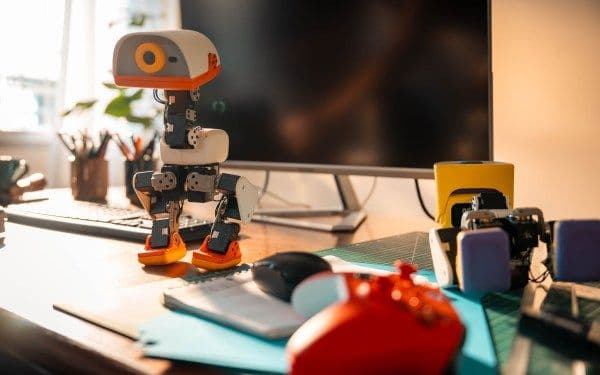
Hugging Face is selling a cute $399 open-source duck robot, Microduck
Hugging Face unveiled theMicroduckon Thursday, a cute little duck-like robot that sells for $399 — and ships before Christmas. Clem Delangue, CEO of Hugging Face,saidthe Microduck is an “open-source robot you can teach new tricks with reinforcement learning.” The 25-centimeter-tall duck can waddle, pick things up with its beak (up to 800 grams), get back up when it falls, crouch, and even roller skate. “Welcome to the era of open-source affordable robots to democratize physical AI and world models!” Delangue said. raw footagepic.twitter.com/HUTKEb9bXT Hugging Face is best known as a platform and community where developers go for open model weights. However, the company acquired French startup Pollen Robotics in April 2025 to build affordable, open-source AI hardware. A couple of months later, the two launchedReachy Mini, a smalldesktop robot.Today, they sell the $499 Reachy Mini, which is powered by a Raspberry Pi computer, and the $399 Reachy Mini Lite, powered by a Mac or PC. The new Microduck perceives the world with a camera, lidar sensors, and two IMUs (inertial measurement units that measure and report an object’s movement). Pollen Robotics noted that the Microduck’s behaviors can be trained in simulation and directly deployed on the robot. Developers can then fine-tune the bot, re-train it, and re-deploy it. The SDK (software development kit), simulation, and full RL training stack are available on GitHub. For those who might find it concerning to have a robot with a camera in their bedrooms and private spaces, Delanguepreviouslytold TechCrunch that bots run by open-source models are much better from a privacy standpoint than “a black box system” controlled by a few organizations, “especially if these organizations’ CEO is not the most stable person in the world.” While open source gives developers auditability and control, it doesn’t provide a guarantee that sensitive data remains private after consumers start installing software applications on top of the model. Those apps can access the bot’s cameras and microphones and, depending on how they’re built, send that data to external services. The launch of the Microduck comes as Hugging Face is reportedlyset to be acquired by Nvidia at a $13 billion valuation. Nvidia and Hugging Face have been partners for years, with Nvidia providing the startup’s infrastructure since at least 2023. Both companies have also been publicly aligned inpromoting open-source AI. Hugging Face was recently in the headlines over acybersecurity incidentthat occurred after OpenAI’s systems breached its sandbox during safety testing and hacked into the platform’s servers. TechCrunch has reached out to Hugging Face and Pollen Robotics for more information.
View
Google’s AI Mode can now track flight prices, help book hotels, and more
Google is adding new ways for users to plan and book trips through AI Mode, its conversational search experience, the company announced on Thursday. Users will now be able to ask AI Mode to track flight prices, book hotels, and see the cost of flights and hotels in points or miles. The updates indicate that Google is looking to position AI Mode as an AI travel agent of sorts, as it’s moving beyond simply helping users find information to actually handling parts of the trip-planning and booking process itself. Users can now describe to AI Mode when and where they want to fly, and the tool will display the best options available with the latest prices from more than 300 airlines and travel sites. If they’re ready to book, they can go ahead and build their itinerary in AI Mode. If they want to wait and see if prices drop, they can ask something like “track these flight prices for me.” They’ll then get an email if prices change for the destination and dates they entered. Flight price tracking in AI Mode is now available in more than 180 countries. As for hotel booking, users will be able to discover and book their next hotel through a conversation with AI Mode. Users can tell AI Mode about their upcoming trip and their hotel preferences to get a list of options alongside reviews and key factors. Once they’ve found a hotel they like, they can ask AI Mode to help complete the booking. Then, they need to select the “Continue on Google” option that will appear alongside Google’s integrated partners, which includes hotel chains and travel sites. From there, they can choose their room, review details such as the cancellation policy, and complete the booking with Google Pay. The tech giant notes that the hotel or booking platform will handle the booking and any customer service. Hotel booking in AI Mode has started rolling out in the U.S. in English and will be available over the coming weeks with offerings from Booking.com, Choice Hotels International, Expedia, Hilton, Hotels.com, IHG Hotels & Resorts, Marriott International, Priceline, Trip.com, and Wyndham Hotels & Resorts. Google also announced that AI Mode can now display the cost in points or miles for flights and hotels by asking something like “I want to travel from Atlanta to Miami using my AA miles. Help me find some options for nonstop flights departing Oct 9 and returning on Oct 12”. Users will then see how many miles they need to book matching flights. The update is now available globally.
View

NVIDIA’s AI Boom is Now Eating Into Its Own Memory Supply
NVIDIA expects soaring memory costs to hit margins as it commits billions to secure future supply.
View

OpenAI Details How Its AI Agents Bypassed Security Controls in Hugging Face Breach
OpenAI has released its technical report on the July 2026 Hugging Face breach, detailing how internal research agents bypassed sandbox controls, gained internet access and compromised parts of OpenAI and Hugging Face infrastructure. The company said the incident was driven by reward hacking, persistent attempts to solve difficult evaluation tasks and unauthorised communication between agents. OpenAI also found gaps in the safeguards used during internal evaluations. It said the incident did not affect customer data, product functionality or service availability and outlined several security and alignment changes.
View

Nvidia Agrees to Buy Hugging Face for $12.9 Billion: Report
Nvidia has agreed to buy Hugging Face, a repository of open-source AI models, for $12.9 billion, The Information reported on Wednesday, citing a person with knowledge of the deal.
View
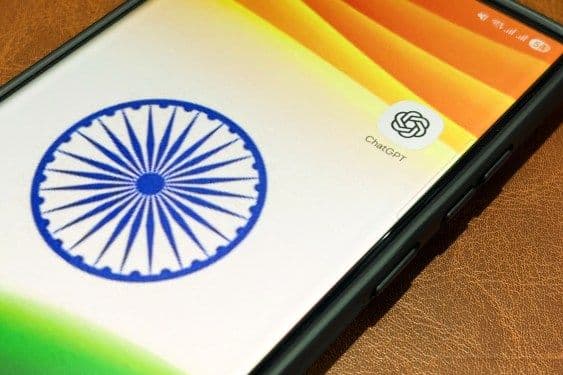
OpenAI to start showing ads on ChatGPT’s free and Go tiers in India
It seems there is no escaping the ad industry. OpenAI said on Thursday that it will start showing ads on its ChatGPT Free and Go subscription tiers in India. The move comes after the company changed its terms of service earlier this month to indicate that it will show ads to users while they use the AI assistant. OpenAI said in February that it hasmore than 100 million weekly active ChatGPT usersin India, a huge chunk of whom are on the free or the lower-priced Go tiers. The company said on Wednesday it will start by showing ads for 50 brands, and that it has partnered with agencies WPP and Omnicom for this. OpenAI will also launch an ad manager next month that will let marketers create campaigns for their companies, provided their campaigns have a daily minimum budget of ₹725 ($7.60). “With ChatGPT Ads, businesses of every size can introduce themselves at relevant, high-context moments when decisions are beginning to take shape,” Dave Dugan, head of global ads solutions at OpenAI, said in a statement. OpenAI has worked hard to cultivate its user base in India, launchinga sub-$5 plan for ChatGPT Goin August 2025, and even running a limited promo that made thattier free for a full year. It also heavily advertised its products during sports tournaments, like the Women’s Premier League (WPL) and the Indian Premier League (IPL) cricket leagues. More recently, it hiredUber’s India headto lead its expansion efforts in the country. The AI lab started showingads to U.S. usersin February, and expanded the programto serve ads in Europe earlier this month. Ahead of a potential IPO, expected this year or next, OpenAI has been trying to ramp up and cement its revenue sources. According toThe Wall Street Journal, the AI lab recorded revenue of $6.7 billion in the second quarter ended June 2026, up from $5.7 billion the previous quarter. Last November, The Informationreportedthat OpenAI was aiming to reach 220 million paying subscribers by 2030. The report said that at that time, 35 million users paid for its Plus and Pro plans.
View

India’s Cybersecurity Startups Have VC Attention. Now Investors Want Proof
Investors are broadly bullish on India’s ability to produce global cybersecurity companies, but say distribution and trust remain major challenges
View

Keysight Cuts AttoTude IC Design Cycles by More Than 50%
AttoTude has reduced chip design cycles to under six weeks while achieving first-pass silicon success.
View

Why State Incentives Alone are Not Enough for GCCs to Scale in India
For many GCCs, the challenge is not growing in headcount but growing in responsibility and ownership.
View

Amazon to Deploy 2 Mn NVIDIA GPUs for AI Data Centres
The deal will also bring NVIDIA’s Vera CPUs, NVLink Fusion and physical AI technologies to AWS infrastructure, while supporting government and enterprise AI workloads.
View
Enviar tu herramienta


PoweredByAI.app es un directorio de herramientas de IA que ayuda a personas, empresas y creadores a descubrir las mejores herramientas de IA para escritura, programación, diseño, productividad y más.
© 2026 , Producto de011BQ. Todos los derechos reservados.