🚀 Zaprep: Deine Socials auf Steroiden. Kostenlos starten — automatisiere 1.000 DMs/Monat und verwandle Engagement in Leads. mit 1.000 automatisierten DMs/Monat.
Aktuelle KI-News
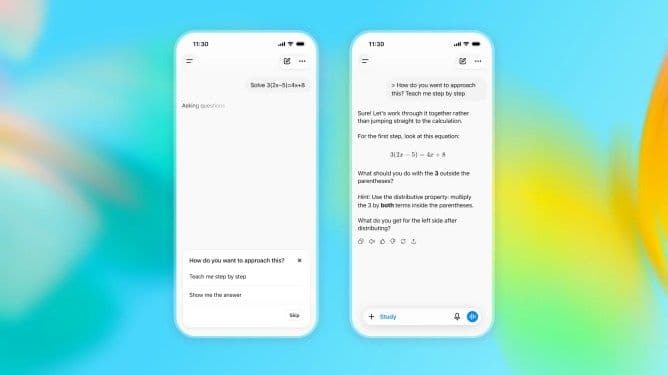
OpenAI launches a safer ChatGPT for teens — years after teens started using it
Afternumerouslawsuitsover AI chatbots’ lack of safety measures, leading to teens’ suicides and other mental health concerns, OpenAI on Mondayannouncedthe launch of ChatGPT for Teens. The new product promises to include additional safety measures, as well as the educational crisis of ChatGPT-assisted cheating in schools. On the educational side, ChatGPT for Teens introduces a new Study Mode feature and other tools designed to encourage teen users to engage their curiosity and work through problems, not just get quick answers. As OpenAI explainsin a blog post, the Study Mode option will give teens guiding questions and step-by-step support to help them understand the material. Meanwhile, the teen experience will also include homework reminders that appear when a teen appears to be trying to cheat, instead of understanding the material. The AI chatbot will then push the teen to use Study Mode instead. The app will also support quizzes and learning visualizations, and controls that allow parents or guardians to decide when Study Mode is enabled by default, the company says. Still, it’s not clear how difficult it will be for teens to escape these new systems if they decide not to cooperate. Teens are incredibly adept at working around parental controls and other attempts to lock down digital experiences. Until ChatGPT’s teen mode can be put to more strenuous tests, it’s unclear how difficult it will be to work around these safety measures in reality. There’s also the question as to why these protections weren’t part of ChatGPT from the beginning. The AI chatbot first arrived in late 2022 and scaled to900 million weekly usersbefore meaningful safeguards designed specifically for teenage users were added. OpenAI says the age-appropriate protections will now be on by default in ChatGPT for Teens, which are designed to reduce exposure to harmful or developmentally inappropriate content. These measures are based on OpenAI’sUnder-18 Principles in our Model Spec, which the company claims to be informed by “developmental science and guidance from experts.” Parents will also be able to use the family tools and parental controlspreviously introducedto manage settings, receive safety notifications, and set Quiet Hours, among other things. OpenAI announced a partnership with CodeAI to help teens learn more about AI, including how it works, how to direct it or question it, and how to use it. In the classroom, OpenAI already offersChatGPT for Teachersto help provide schools with institution-managed access to AI and support.
View
Warp’s new system is an out-of-the-box software factory for AI development
Companies are still grappling with exactly how software development should work in the AI area, but one early answer is the so-called software factory. Essentially an agent loop that’s built around the traditional stages of software development, the software factory approach has become a popular way for companies to remake their engineering organizations for the AI era. Now, a system from Warp could make that transition a lot easier. On Tuesday, the AI coding company introducedWarp Factories, a new system designed to make building and operating AI software factories as easy as possible. Operating as an infrastructure layer, Warp Factories gives companies a simple environment for deploying agents and a roadmap for how to use them. To be clear, many companies are already having success with the factory model without any help from Warp. Stripe has been particularly public about its technical progress, developinga “minions” systemto automate development within its own codebase. Ramp has madesimilar progress, developing a background agent that can monitor its own code after it is deployed. As Warp CEO Zach Lloyd sees it, the target market for Warp Factories will be smaller companies without the resources to develop a system from the ground up. “[If you look at] things like running your agents in the cloud and steering those agents as they run, or bringing the work that they’re doing into your local environment, or setting up memory that goes across those agents, or setting up evals that go across those agents — it’s actually a huge infrastructure undertaking to do this right,” Lloyd told TechCrunch. In Warp Factories, the architecture is already built out of the box, with many of the most difficult decisions already made. Warp’s system is based on the standard phases of software development (triage, specification, implementation, review, and verification), but the agentic approach means any of those steps can be automated. Users can choose their own coding model and harnesses as necessary; the system works as well with Codex as with Claude Code. It also integrates with ticketing systems like Linear and Jira, and messaging systems like Slack and Teams, in an effort to plug in seamlessly to existing workflows. Beyond just shipping code, Warp Factories will also give managers the tools to track how well the factory is performing. With all the agents running in the same environment, it’s easy to compare performance metrics for different configurations, and to keep an eye on the overall token spend. Warp Factory also allows for self-improvement loops to optimize the overall system, automating management of the process itself. Even so, Warp Factories is not built to completely replace software engineers — just give them an easier way to collaborate with the new agentic workforce. In Lloyd’s own experience, there are still a lot of tasks that require a human at the wheel. “We automate like 30% of our tasks, 30 to 35% on a weekly basis,” Lloyd told TechCrunch, “and as models improve, as the context improves, as the harness improves, I think that that number is going to go up over time.”
View

Retail GCCs Want More AI, But Where is the Talent?
India’s retail GCCs are expanding AI teams, but experienced leaders remain the hardest capability to build.
View
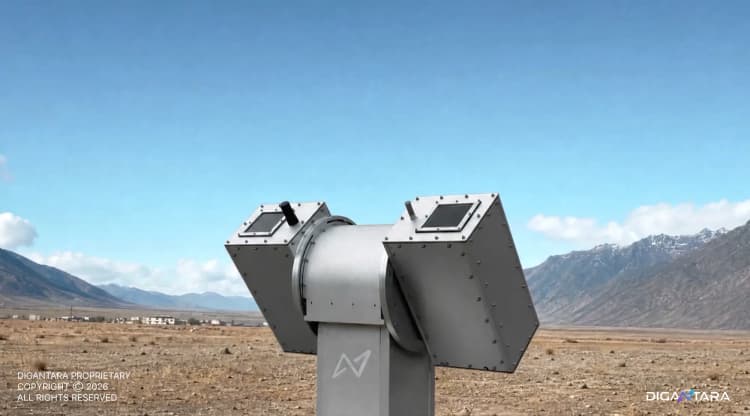
Digantara Unveils Five-Node MOSAIC Network to Track Objects in Orbit
The network will support orbital tracking and celestial navigation in GPS-denied environments.
View

Almost Nobody Is Using Anthropic’s Fable 5
Anthropic’s most powerful model, Fable 5, accounts for just 11.4% of business spending, and its share isn’t growing.
View

Superhealth Appoints Ex-Dunzo Co-founder To Scale AI-Native Hospital Model
Superhealth plans to scale its AI-native hospital model from one Bengaluru facility to 100 hospitals across India
View
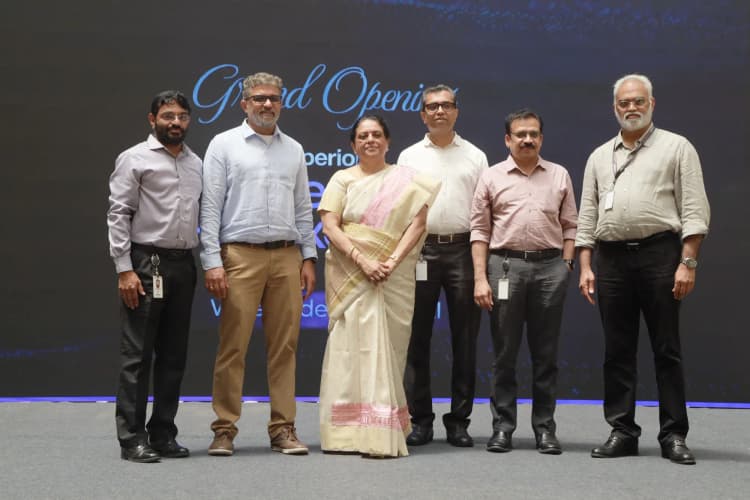
Experion Technologies Opens 700-Seat AI Centre in Thiruvananthapuram
The new facility will house more than 700 engineers and support Experion’s AI-native product engineering operations.
View

How VECV Built a Real-Time Data Backbone for 2,50,000 Connected Vehicles
Having that many connected vehicles is useful only if an organisation can turn the data they generate into something its customers, dealers and internal teams can actually use.
View

AI4Bharat, Bodhan AI Build 1.2 Bn Parameter Speech Model for 26 Indian Languages
The model is built to handle code-mixed conversations, regional accents and children’s speech, with applications spanning education, healthcare, finance and governance.
View

India Approves 31 Electronics Projects to Make Critical Components Locally
The new projects target 9,588 direct jobs across 10 states under the Electronics Components Manufacturing Scheme.
View
Wispr Bags $280 Mn at $2 Bn Valuation, Previews Canto Speech Model
Wispr said its new 2-billion-parameter model can reduce word error rates from more than 30% to between 5% and 10% in its hardest conditions.
View
Why This Gurugram Startup Thinks Factory Floor is the Next AI Growth Market
Backed by Nikhil Kamath and Ajinkya Rahane, Proxgy is digitising factory floors and the blue-collar workforce with IoT devices.
View
Tool einreichen


PoweredByAI.app ist ein KI-Tools-Verzeichnis, das Menschen, Unternehmen und Creators hilft, die besten KI-Tools für Schreiben, Programmieren, Design, Produktivität und mehr zu entdecken.
© 2026 , Ein Produkt von011BQ. Alle Rechte vorbehalten.