🚀 Zaprep: Deine Socials auf Steroiden. Kostenlos starten — automatisiere 1.000 DMs/Monat und verwandle Engagement in Leads. mit 1.000 automatisierten DMs/Monat.
Aktuelle KI-News

Inertia Enterprises finds a way to make its fusion fuel fast
Fusion startupInertia Enterprisessaid it has found a way to cut the time it takes to make its fuel pellets from several days to just minutes. By slashing fuel filling time, Inertia says it has knocked down one of theten barriersit must overcome to deliver the first phase of its commercial power plant ambitions. The startup gave TechCrunch an exclusive first look at the process. The advance was not guaranteed: Investors gave Inertia$450 millionon the premise that it could commercialize technology developed at the National Ignition Facility (NIF), which is anelaborate science experimentthat requires painstaking care and feeding to operate. At the NIF, making fuel pellets can take a week or more and cost a small fortune. That’s not a great recipe for a profitable operation. “But when you really double-click on it, you’re like, wait a minute, they’re only making a handful of them a year,” Jeff Lawson, co-founder and CEO of Inertia, told TechCrunch. “I put on my commercial hat and was like, wait a minute, I know the word for this: Prototypes.” At Inertia, the team set about turning those prototypes into something mass manufacturable. “That’s why we’re hiring people from the likes of Apple,” he said. “There’s a bunch of industrial engineers who are like, ‘Alright, I guess I have to go figure out how to make that a billion times over in a factory.’” NIF’s fuel pellet is far from an iPhone, though. The outside is a spherical diamond shell, and just inside, there’s a thin layer of frozen deuterium and tritium, the isotopes of hydrogen that can fuel a fusion reactor. Inside the crystalline layer lies a mix of gaseous deuterium and tritium. Each solid layer must be as close to perfectly spherical as possible. Those fuel pellets are then wrapped in gold casings known as hohlraums, which convert laser energy into X-rays that compress the fuel pellet inside. If everything goes to plan, that compression causes atoms to fuse and release energy. But even small imperfections in the spherical shape can disrupt the ignition process, preventing a fusion reaction from reaching its full potential. Inertia had to condense the process to the point where it makes commercial sense without straying too far from the physics discovered at NIF. “What happens if you try to do it faster?” Lawson said. The team had a head start: Annie Kritcher, co-founder and chief scientist at Inertia, designed the first fusion experiment at NIF that released more power than it consumed. After several rounds of development, the startup was able to grow the crystals in about 30 minutes, something that could take up to a week at NIF. Altogether, a single fuel pellet can be made in about two to three hours, and the process can be ramped to industrial scale. Inertia developed the process with help from the NIF at the Lawrence Livermore National Lab, with which the startup hasformed a public-private partnership. Inertia has an advantage that NIF does not, though. Because the startup is planning to use a laser that is four times more powerful than the one currently at the NIF, it can tolerate more imperfections in the fuel pellet. This also helped speed the manufacturing process. “We actually have a lot of margin,” Lawson said. “That’s our strategy, to oversize our driver, our laser, to give us lots of margin to go play with in every other part of the system.” Reducing fuel filling time has the knock-on effect of reducing the amount of tritium Inertia needs to hold at any given time. Tritium is radioactive, and handling it requires care. It’s also extremely expensive at the moment, about $30,000 per gram, and only about 25 kilograms are stockpiled globally,accordingto the journal Science. Inertia, like many fusion startups, plans to make its own tritium with help from the fusion reactions, but it still needs some inventory to get started. Plus, reducing manufacturing time helps keep inventory small. Inertia expects its full-scale commercial power plant will useten fuel pelletsevery second. “By reducing the latency of this step, you’ve made your facility smaller; you’ve made the whole thing faster, the whole thing more efficient,” Lawson said.
View
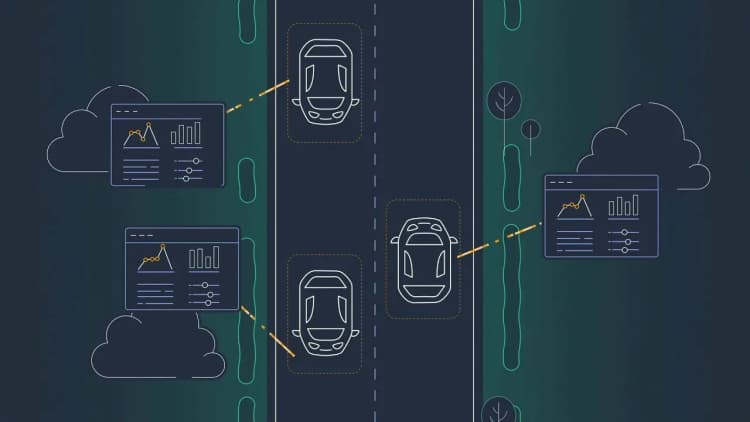
Fleetx.ai Acquires Pando.ai to Build Unified Fleet & Freight Platform
The combined entity plans to prepare for a public listing over the next 18 to 24 months, potentially targeting an IPO, and is aiming for ₹300-400 crore in combined revenue on a profitable basis by the time of the listing.
View

Google Photos Could Soon Add a Map View to Ask Photos Search Results, Feature Spotted in APK Teardown
Google Photos might soon give Ask Photos a location-based way to display search results. A new map option has reportedly been discovered in a test version of the app, allowing photos found through location searches to appear according to where they were captured. The feature could let users explore groups of photos on a map, zoom into specific areas and open individual sets of images. However, Google has not announced the feature, and its presence in a test build does not guarantee a public rollout.
View

Binance now lets AI agents trade, but keeping them in check is largely up to users
Binance, the world’s largest crypto exchange with more than 300 million registered users, on Thursday launched a platform that lets AI agents analyze markets and execute trades on users’ behalf, bringing autonomous AI directly into the business of managing real money. CalledAgent OS, the platform lets developers connect AI applications and agents to Binance’s financial infrastructure. It brings the exchange’s existing tools and services such as Binance APIs, Binance Wallet Agentic Hub, Binance x402 transaction verification and payment facilitator API, and Binance Skill Hub, along with newly introduced support for itsModel Context Protocol (MCP). The platform also works with tools including OpenAI’s ChatGPT and Codex, Anthropic’s Claude Code, and Cursor, allowing users to authorize agents to access market data, view account information, and execute trades. However, as the AI race moves away from chatbots that answer questions to agents capable of taking action, Binance is putting much of the responsibility for keeping them in check on users, who ultimately have to decide what agents can access and trade and set limits on what they can do. “Instead of total freedom, we put the power in users’ hands to give them the granular access control of what they can do through the agent,” said Jeff Li, vice president of product at Binance, in an interview. “We put [the control] at the account level to protect the users’ funds.” Binance does that primarily through dedicated “sub-accounts”, which users can assign to agents and configure for specific activities, such as spot or futures trading. Withdrawals from those sub-accounts are blocked by default, Li told TechCrunch, creating a sandbox around an agent’s activity. Users can also choose whether an AI agent must seek approval for every order or can execute trades autonomously once its permissions are configured, a Binance representative said. Binance does not impose a separate cap on how much an AI agent can trade or lose, so the amount a user transfers into the sub-account effectively serves as the limit. Asked whether Binance can see what leads an agent to make a particular trade, Li said the reasoning happens outside its systems, either on the user’s computer or within their chosen AI application. “We really cannot see the reasoning of what the user’s action is,” he said. That means Binance can monitor an agent’s resulting trading activity, but has limited visibility into whether a decision was influenced by faulty information or manipulation. Li again pointed to the sub-account as the main line of defense when asked what would happen if an agent were manipulated through a prompt-injection attack or otherwise compromised. Binance also said its existing security, risk-control, and anti-money-laundering policies for subaccount APIs apply to Agent OS at launch. Trading is one of the first use cases Binance is targeting. Nonetheless, Li said agents could monitor markets, conduct research and risk analysis, react to signals, and autonomously place orders or execute strategies such as arbitrage. Agent OS is also designed to connect agents to payments and on-chain activity. Through Binance’s x402 integration, agents can send and settle payments, while its Agentic Wallet allows them to interact with tokens and decentralized-finance protocols. Unlike exchange trading, where Binance does not impose a separate cap on how much an agent can trade or lose within its subaccount, Agentic Wallet transactions carry Binance-set daily limits. Regular swaps are capped at $50,000 a day, DeFi transactions have a default $100,000 daily limit, and x402 payments are limited to $20 a day, according to the company. Li said Agent OS was Binance’s “first step” toward giving developers a platform to build AI-powered applications that can act across crypto and traditional markets. Binance is not alone in opening its infrastructure to AI agents. Rival crypto exchanges have been moving in the same direction, using MCP and other developer tools to give AI applications direct access to market data and trading systems. In March, Krakenlaunchedan open-source command-line tool with a built-in MCP server that allows AI agents to execute actions including spot and futures trades. Coinbase followed in June withCoinbase for Agents, which connects AI agents directly to users’ accounts and allows them to trade, make payments and execute other financial workflows within user-set limits. Similarly, OKXenabled agentic tradingon its platform by bringing an open-source MCP toolkit earlier this year.
View

OpenAI Brings GPT-5.6 Terra and Luna to Amazon Bedrock in India
The move gives Indian businesses access to in-country inference, with Luna targeting high-volume workloads at lower per-interaction costs.
View

Google Offers Indian Students One Year of Gemini AI Plus for Free
The offer also includes higher usage limits, study notebooks, Deep Research through Gemini Live and new AI-powered learning tools in Google Search.
View

OpenAI’s Codex Helps Asana Cut 5-Year Migration to 2 Weeks, Slashes Costs 500x
The project cost about $12,000 in model and infrastructure usage, compared to roughly $6 million that Asana had previously estimated.
View

AI is Killing the 8-Hour Workday. What Enterprises Will Measure Instead
AI is also challenging the assumption that spending more time on a task necessarily means creating more value.
View

KissanAI Is Obsessed With Getting Its Vision Model for Farmers Right
KissanAI wants to turn crop images into actionable intelligence that agricultural businesses can plug into their existing platforms.
View
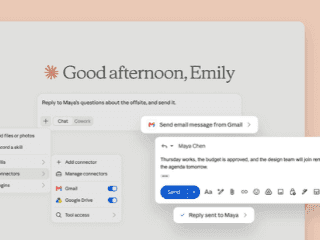
Claude Can Now Take Greater Control Over Gmail, Google Drive With Updated Google Workspace Connectors
Claude users have had the option to connect their Google Workspace apps, including Gmail, Google Calendar, and Google Drive, for a while now. However, the connectors missed a few basic abilities. Now, Anthropic has updated the Google Workspace connectors for its AI chatbot, Claude. The update brings the ability to allow Claude to reply to email threads, send emails, and do more in Gmail. On top of this, with the updated Google Workspace connectors, Claude can now manage files and folders in Google Drive for users. This adds to the existing features that are offered with Google Drive, Gmail, and Google Calendar connectors in Claude.
View

From Kadapa to New York, and Now Raising Millions to Build Voice AI
Maya 2 supports 11 languages, each with a voice native to that language. The first-party API is 8x cheaper than Sarvam’s latest Bulbul v3 model.
View
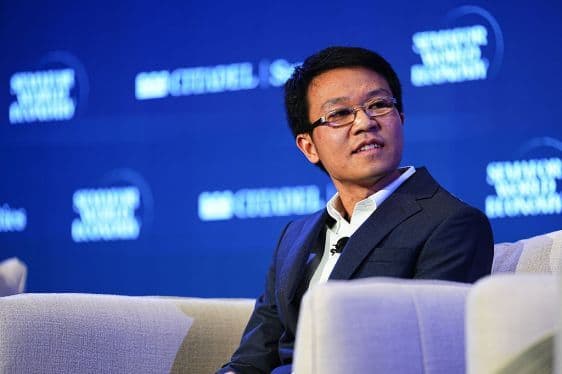
Cognition CEO denies report that SpaceX tried to acquire the startup
Elon Musk’s SpaceX attempted to acquire AI coding startup Cognition as it works to catch up to OpenAI, Anthropic, and Google in the AI race,Bloomberg reported Wednesday, citing sources familiar with the matter. Cognition CEO Scott Wu disputed the report soon after it published, writing on X that the story was inaccurate and that Cognition “is not for sale,” adding that the two companies haven’t been in talks. The report comes a few days after SpaceX’s$60 billion acquisitionof Cursor, another AI coding startup, whose dealclosedlast week. SpaceX acquired Musk’s AI company, xAI, earlier this year. It then went public in ablockbuster IPO inJune, with its market capitalization rising to nearly $2.3 trillion at its peak. SpaceX has sold investors on its AI ambitions, which include eventually buildingdata centers in space. But the xAI business remains relatively early-stage and has fallen behind competitors. It’s also had to contend with its chatbot Grok’s penchant for controversy, including last year’s“MechaHitler”incident and this year’snonconsensual sexual imagery scandals, as it tries to win over enterprise customers. Last week,Musk told SpaceX’s employeesthat in about “four or five years, AI will be 99% of the value” of the company, but achieving that feat will require SpaceX to pull in much more revenue from AI. AI-assisted coding has emerged as one of the clearest ways to monetize the technology. Anthropic’s meteoric growth, fueled in large part by Claude Code, is proof of that. Bringing Cursor into the fold was part of that equation, and the companies were already working together before the acquisition closed. This month, Cursor and SpaceX jointly released Grok 4.6, a new model that scores higher on benchmarks for coding and complex multi-step agentic tasks. Adding Cognition and its coding agent Devin — along with an enterprise customer base that includes Mercedes-Benz, Citi, and Goldman Sachs — would have given SpaceX another way to deepen its push into AI coding and compete for enterprise customers. Bloomberg reports that the deal talks are no longer active, but that the companies are still discussing working together — potentially with Cognition using SpaceX’s computing capacity, which the company isselling to other AI playerslike Anthropic until it needs that capacity for itself. Wu didn’t address this specific claim in his denial. Cognition remains one of the largest independent AI software coding startups that hasn’t yet been gobbled up by a major AI model maker. The company in late May raised a$1 billion roundat a $25 billion post-money valuation, and Bloomberg reports it’s now in early talks for a new round of funding at a$40 billion valuation. Cognition made headlines last year when it acquired the remaining assets of competitor Windsurf afterGoogle DeepMind acqui-hiredthe startup’s CEO and top research in a $2.4 billion deal for talent and licensing rights. After the merger,Cognition laid off 30 employeesand offered buyouts to the remaining 200 Windsurf employees. Those who decided to stay faced strict operational expectations, like a more than 80-hour workweek and six days in the office. That sort of wartime work ethic wouldn’t be out of place in a Musk company. Musk has said he works up to 120 hours a week and often sleeps on office or factory floors. SpaceX and Cognition did not respond to requests for comment.
View
Tool einreichen


PoweredByAI.app ist ein KI-Tools-Verzeichnis, das Menschen, Unternehmen und Creators hilft, die besten KI-Tools für Schreiben, Programmieren, Design, Produktivität und mehr zu entdecken.
© 2026 , Ein Produkt von011BQ. Alle Rechte vorbehalten.