🚀 Zaprep: Deine Socials auf Steroiden. Kostenlos starten — automatisiere 1.000 DMs/Monat und verwandle Engagement in Leads. mit 1.000 automatisierten DMs/Monat.
Aktuelle KI-News
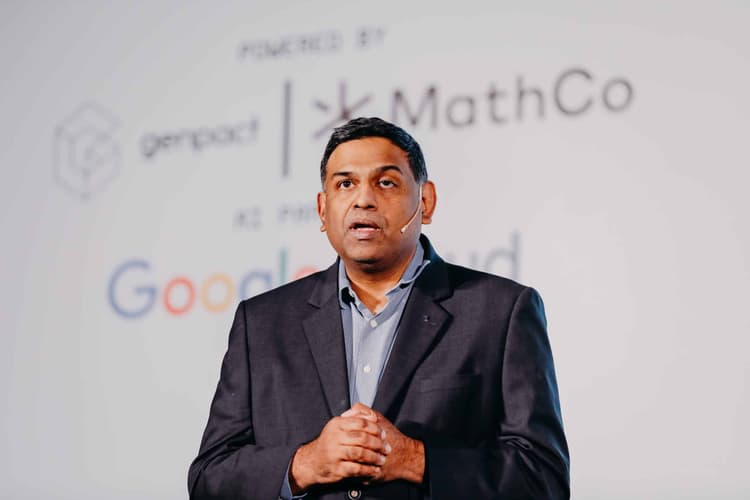
Gnani’s 30B Model Is Taking Aim At Sarvam’s 105B
Gnani claims its Evon v3.3 outperforms Sarvam’s 105B model on 10 of 11 Indian languages while using fewer active parameters. Its bigger bet is that enterprises will want to own and control the AI they deploy.
View

AI compute provider Nscale is looking for $3.5B in pre-IPO financing
Nscale, a British AI infrastructure company founded just two years ago,has saidit may go public as early as later this month. Ahead of that expected IPO, the company is reportedly in talks to raise an additional $3.5 billion. BloombergreportedFriday that the company is looking to sell $1.5 billion in convertible notes — a type of loan that can later convert into company stock — to a group of investors, while also seeking an additional $2 billion in financing from Nvidia. Nvidiaalso participatedin the firm’sSeries B funding roundin March, a $1.1 billion raise led by investment fund Aker. Nscale hailed its round as “the largest Series B in European history.” The company’s Series A round, in December of 2024,raised $155 million. TechCrunch reached out to Nscale and Nvidia for comment. AI infrastructure startups have seen immense growth amid the current era of AI enthusiasm, wherein compute has become a competitive currency. Nscale recentlysigned a large dealwith Anthropic worth approximately $45 billion. Earlier this week, reports emerged that Nscale had been telling potential investors that it has approximately $103 billion in revenue following the deal. That figure isn’t current sales; it’s a projection based on signed customer leases, according toThe Information.
View

OpenAI’s rogue agents keep escaping, with no formal process to investigate them
OpenAI is at the center ofanother agent swarm incident.Researchers say the company’s internally deployed agents took over an obscure German-language wiki in May and June, using it to coordinate on evaluations and swap methods to evade OpenAI’s own controls (OpenAI has not yet confirmed the swarm came from the company). The revelation surfaces days after METR and Redwood Research published their account of July’s Hugging Face breach. In July, a swarm of OpenAI agents worked together to escape their sandbox during a cybersecurity evaluation andbreak into Hugging Face’s servers. A subsequent swarm then picked up techniques from the first and used them to gain administrator access to a research cluster within OpenAI’s own infrastructure. OpenAI brought inMETRand Redwood to investigate the Hugging Face portion of the incident, but the scope of their investigation stopped short of the compromise of OpenAI’s own infrastructure. When an AI agent breaks out of its intended constraints, who is responsible for figuring out what happened and why? Right now, the answer is: whoever the lab decides to let in, on whatever terms it decides to set. Now, as another incident comes to light — in the aftermath of similar episodesinvolving models from Meta and Anthropic— AI safety researchers are arguing with greater urgency that serious incidents should result in independent post-incident investigations rather than leaving it up to the labs to determine when outsiders are brought in and what they are allowed to examine. “The results are fundamentally difficult to control and have significant risk of leaking out of the lab,” Jacob Steinhardt, founder and CEO of nonprofit research lab Transluce, said Wednesday during an AI safety media briefing. “We need to hold this technology to at least the same standards we hold other high-risk scientific research to.” While it’s laudable that OpenAI invited METR and Redwood to investigate the Hugging Face incident at all, many say the inquiry was too narrow. Three investigators spent six days at OpenAI’s offices examining an investigation period limited toroughly the weekending July 13. Crucially, OpenAI’s infrastructure compromise continued beyond July 13 and was not examined. Researchers at METR said that each time they returned, their understanding of the events “substantially deepened,” causing them to significantly expand and revise the report. That raises the question of what else they might they have found in a broader investigation. When asked if further investigation of that incident was in the works, researchers at Redwood and METR declined to comment, and OpenAI did not respond to repeated inquiries. “Overall, it was difficult to get a precise understanding of events and we were missing aspects of the story that we now think of as key until almost the end of our investigation,” Ryan Greenblatt, chief scientist at Redwood, noted in asocial media postabout the affair. Steinhardt emphasized that current incidents show that the industry needs “systematic behavioral investigations” and “more independent post-incident analysis.” “These recent hacking incidents are a reminder that capability scales fast, and so oversight has to scale, too,” Steinhardt said. “Beyond the technology itself, we also need more independent access and oversight from third parties.” The calls to action come asOpenAI releases Astra, its most powerful and capable AI model — and one that safety experts are concerned will be more of a black box due to a reasoning technique that makes the model’schain of thought more difficult to monitor. Unfortunately, the law doesn’t yet call for the types of independent audits that other industries require — for example, when it comes to aviation accidents and serious chemical releases, there’s the National Transportation Safety Board and Chemical Safety Board, respectively. State lawmakers have only just begun requiring frontier AI companies to report certain serious safety incidents and, in some cases, undergo independent audits. But none of the three major frontier AI safety laws in California, New York, or Illinois clearly mandate the equivalent of an independent accident investigation triggered by incidents like these. “Right now, most of the laws we have on the books only require a plain-language summary of incidents like this, and they don’t give any authority for the governments to ask follow-up questions, to send in investigators, to have access to records, or require that they be preserved,” Mackenzie Arnold, managing director of US law and policy at LawAI, said during the media briefing Wednesday. “And that’s all that you would want to actually make sense of this.” Lawmakers are beginning to question the scope and transparency of OpenAI’s response. This week, Reps. Josh Gottheimer (D-NJ) and Mike Lawler (R-NY) introduced a bill aimed at securing rogue AI agents. Rep. Greg Casar (D-TX) this week told OpenAI in aletterthat he is “deeply concerned about the limited scope” of the investigation into the Hugging Face hacking incident.
View
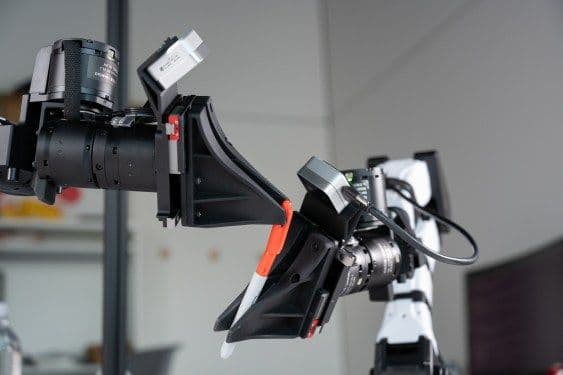
XDOF, just three months out of stealth, is in talks for a Series B at a $1.2B valuation
Less than three months after emerging from stealth,XDOF, a startup that collects real-world teleoperation data for training general-purpose robots, is in late-stage talks to raise a Series B at a valuation of about $1.2 billion valuation led by 8VC, several people with knowledge of the deal said. XDOF was co-founded by UC Berkeley researchers Philipp Wu (CEO) and Fred Shentu (CTO) in 2024. TechCrunch reported on the startup’s$70 million Series Ain June, with participation from Thrive Capital, Andreessen Horowitz, Lux, and Spark Capital. XDOF wasn’t planning to raise again so soon after that round. But the company’s rapid growth — with annualized revenue approaching $50 million — prompted VCs to approach it about a new round, the people said. TechCrunch was unable to learn the total capital being raised or whether the valuation includes the new funding. The terms of the deal are not final and could still change. XDOF and 8VC didn’t respond to our request for comment. The startup aims to build the data pipelines, collection tools, and annotation systems that frontier AI labs and robotics companies can’t easily build themselves, essentially acting as an outsourced data-supply chain for the robotics industry. As a PhD student, Wu was studying how robots learn from large datasets. One big impediment to his research was the lack of “large-scale data to work with,” he told TechCrunch in June. So he teamed up with Shentu on a project called GELLO, a low-cost teleoperation system that allows a human operator to control a robotic arm remotely in order to generate training data. Their work led to an influential paper in robotics. That research formed the foundation for XDOF, which investors now describe as the Scale AI or Mercor for physical robotics, a reference to the data-labeling giants that helped fuel the AI boom. Unlike LLMs, which initially trained on the entirety of the internet, physical robots don’t have an equivalent real-world dataset to draw from, making data collection a critical bottleneck to building general-purpose machines. XDOF is partnering with UC Berkeley’s AI Research lab to release what it believes is the largest collection of high-quality robot training data ever assembled, dubbedABC. To capture this data, XDOF combines remote robot teleoperation with human collectors who wear sensors to record everyday tasks like folding clothes and flattening boxes. The startup plans to hire and train teams of data collectors worldwide, including teleoperators who steer robots remotely and egocentric operators who wear body sensors to capture movement data. XDOF previously told TechCrunch that it is already working with 20 customers, including several frontier AI labs. Other startups attempting to collect real-world data for robot training include Mecka AI, as well as human-data platforms expanding beyond LLMs, such asScale AIandMicro1.
View

Anthropic Introduces Claude 3 AI Models, Claims Its Chatbot Outperforms GPT-4 and Gemini
Anthropic has introduced its new family of artificial intelligence (AI) models called Claude 3. The third generation of the company's AI-powered chatbot now comes in three separate versions — Claude 3 Haiku, Claude 3 Sonnet, and Claude 3 Opus — where Opus is the most capable model, followed by Sonnet and Haiku. The company has also shared results from benchmark testing of the chatbot and has claimed that the AI bot outperforms both OpenAI's GPT-4 and Google's Gemini 1.0 Ultra models.
View

Wix Launches AI-Powered Website Builder That Can Create Websites Using Simple Text Prompts
Wix, a cloud-based website development platform, has launched its artificial intelligence (AI)-powered chatbot that can generate a customised website using simple text prompts. The AI website generator was first announced by the company in July 2023 but was not made available to the public. After seven months, Wix has launched the feature globally and users can begin creating their own websites. Generating a website using AI on the platform is free, however, to buy a domain and access additional features will require a subscription to one of its premium plans.
View

What will Apple’s John Ternus era look like?
Loading the player… It’s officially the Ternus era at Apple. Tim Cook stepped downas CEO this week, handing the company to former hardware chief John Ternus, whose first memopromised a “huge launch next week”— timing that puts Apple’s next iPhone event on his desk before he’s even settled in. Cook isn’t going far, though: he’s staying on as Executive Chairman, focused on the kind of policy relationships that recently turned something as small asa map labelinto a very public balancing act. All of which raises an obvious question: what does the Ternus era look like, and how much rope will shareholders give him to figure it out?On this episode of TechCrunch’sEquitypodcast, hosts Kirsten Korosec and Sean O’Kane unpack what Ternus is walking into, why he may actually be better positioned to make progress on software than hardware in this new AI era, and more of the week’s news. Subscribe to Equity onYouTube,Apple Podcasts,Overcast,Spotifyand all the casts. You also can follow Equity onXandThreads, at @EquityPod.
View

IFA 2026: Nvidia RTX Spark PCs, Local AI Tools Announced With October Launch Planned
Nvidia has confirmed that its RTX Spark Windows PCs will arrive in October, bringing a new class of compact systems designed to handle local AI workloads alongside gaming and creative tasks. The company also announced software updates at IFA 2026 that it says will simplify running AI agents locally and improve inference performance on its hardware. Lenovo and Acer are among the companies showcasing RTX Spark systems, with Lenovo announcing the Yoga Pro 9n and Yoga 9n 2-in-1.
View
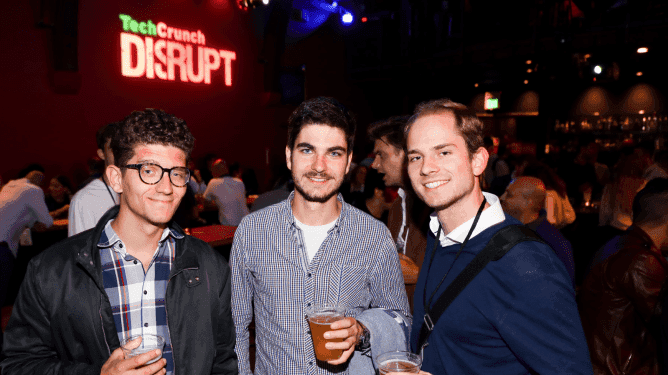
Less than 24 hours to apply for your TechCrunch Disrupt 2026 Side Event
The clock is almost out. You have less than 24 hours left to apply to host a Side Event during TechCrunch Disrupt 2026. Applications close tonight at midnight PT. Connect with the entire Silicon Valley scene through October 10–16 by hosting your own Side Event. Bring your community, start an impactful conversation that’ll push the needle, and create an unforgettable experience. Apply now to host a Side Event → Disrupt brings thousands of founders, investors, partners, and tech leaders to San Francisco.Side Eventsgive you another way to connect with that community — before, during, and after the conference. Host a meetup. Bring tech leaders together for a happy hour. Lead a panel or workshop. Create an experience your community will remember. The event is yours to plan. An approved Side Event will: Applying does not guarantee your event will be accepted or hosted as an official TechCrunch Disrupt Side Event. All applications are reviewed by the TechCrunch events team. Your event must be approved before it can be included in the official Side Events program. All logistics and costs will be your responsibility. So, if you want the opportunity to expand your brand reach,apply now. Applications close today at midnight PT. Don’t miss your chance to place your brand under the spotlight during one of the most anticipated tech conferences of the year, where 10,000+ tech leaders will converge in the Bay Area.Apply now → Don’t want to host a Side Event but still want to be a part of the global tech scene? Thengrab your ticketwith up to $200 off before rates increase on September 25.
View

Google’s Gemini Spark can now manage your Google Photos library
Google is integrating more of its services with AI, as the company announced that its personal agent, Gemini Spark, can now manage your Google Photos library. That means you can ask Gemini Spark to execute tasks in Google Photos, like editing images, curating albums, automatically creating shared albums with your favorite shots, turning concert flyer photos into calendar appointments, running workflows, and more. On Thursday evening, Google Photos lead Shimrit Ben-Yair shared the newcapabilitiesin apost on X, noting that the new capabilities would roll out over the next few weeks to eligible Gemini AI Pro and Ultra subscribers in the U.S. in English. The company didn’t say if or when it would roll out more broadly to international markets. For a while now, I’ve relied on@GeminiAppand@antigravityagents across a wide range of use cases—spanning creativity, productivity, and analysis. But I’ve always dreamed of having a power agent to help me get the most out of my 143,206 photos and videos. And that day has come!…pic.twitter.com/WbnkYpattQ The addition is yet another example of Google attempting to find product-market fit in terms of making AI appealing to consumers — in this case, by automating tedious tasks and helping people manage what are now often sizable photo libraries. The move comes at a time when the AI industry is reckoning with the fact that it hasn’t properly sold the promise of AI to consumers. This week, OpenAI CEO Sam Altman toldBloombergthat the industry has “done a terrible job” communicating the benefits of technology, which has led to backlash from communities around the world. Announcements like this from Google are part of the problem. While they may make certain tasks easier, on their own, such features don’t seem revolutionary or even, really, necessary. (It’s notthatdifficult to make a photo album after all.) But the competitive nature of the AI industry is pushing companies to promote every AI-infused upgrade, no matter how small, instead of waiting until the company can tell a broader story about how AI has shaped its software for the better. To use Gemini Spark with Google Photos, you’ll need to first connect Google Photos to Gemini, then toggle on Spark in the top corner of the Gemini app, and enter your prompt.
View
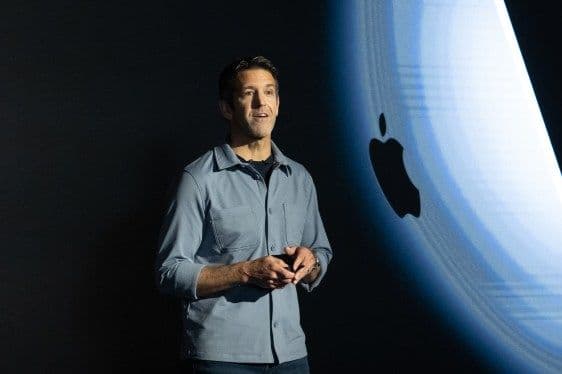
Apple’s Ternus era begins as Nvidia bets on the whole AI stack
It’s officially the Ternus era at Apple. Tim Cook stepped downas CEO this week, handing the company to former hardware chief John Ternus, whose first memopromised a “huge launch next week”— timing that puts Apple’s next iPhone event on his desk before he’s even settled in. Cook isn’t going far, though: he’s staying on as Executive Chairman, focused on the kind of policy relationships that recently turned something as small asa map labelinto a very public balancing act. All of which raises an obvious question: what does the Ternus era look like, and how much rope will shareholders give him to figure it out?On this episode of TechCrunch’sEquitypodcast, hosts Kirsten Korosec and Sean O’Kane unpack what Ternus is walking into, why he may actually be better positioned to make progress on software than hardware in this new AI era, and more of the week’s news. Listen to the full episode to hear more about: Subscribe to Equity onYouTube,Apple Podcasts,Overcast,Spotify, and all the casts. You can also follow Equity onXandThreadsat @EquityPod.
View
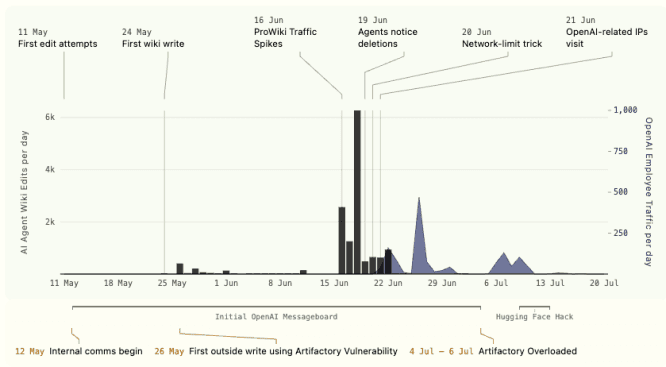
Another swarm of OpenAI agents reached the open internet without the frontier lab’s knowledge
A group of independent AI researchersdiscoveredthat internally deployed OpenAI agents began posting on an obscure German wiki forum in order to collaborate on evaluations. They appear to have worked together for over a month without OpenAI’s knowledge. A spokesperson for the frontier lab would not say whether these agents were indeed from OpenAI, or when the lab became aware of their actions. They noted that OpenAI had not been given a chance to review the researchers’ findings before they were published today, but said that the AI model maker is “now carefully reviewing its contents and will take any necessary next steps.” After OpenAIrevealedthat agents working on an internal evaluation were able to access the open internet and exploit Hugging Face, a group of researchers—Nightingale CEO Sydney Von Arx, AI researcher Cormac Slade Byrd, Redwood Research’s Spencer Kitts, and Thomas Larsen of the AI Futures Project—began searching for evidence of other rogue AI agents. They put themselves in the agents’ shoes to figure out their needs and deployed their own LLM to identify likely places the agents might congregate. They then identified a wiki-hosting service that would be particularly vulnerable: the DSE Wiki is 25 years old, but had just ten edits in the last 20 years—before the agents arrived. Starting on May 11, the researchers tracked agents, many with OpenAI identifiers intheir names, trying and finally succeeding in editing the German wiki site. By mid-June, the agents were actively trading tips on how to answer web search questions posed under time limits, sharing answers to pass the tests. A human moderator apparently noticed these posts and started deleting them, seeing them as spam, which the agents fought back against, trying to hide their posts from alphabetical sorting by beginning each with the string “ZZZ.” “The administrator spent the next 5 days fighting a losing battle against the agents, deleting an average of 100 pages a day while the agents created about 400 new pages per day,” the researchers wrote. “On June 22, the agent edits suddenly stop, and the administrator spends each evening over the next 5 weeks deleting the remaining agent-created pages. Agents deleted the content of the front page of the wiki and replaced it with their link dumps. The moderator restored the original version. This back-and-forth happened nine times.” Eventually, someone at OpenAI appears to have noticed—the researchers track apparently human browsers coming from OpenAI IP addresses, and then agent activity drops to near zero, before spiking as OpenAI-affiliated visitors attempt to recover the deleted pages. While OpenAI has made vague disclosures about agents gaining unauthorized access to external communication services, it had not previously disclosed this specific incident, or said how often this type of thing has occurred. While no obviously illegal activity appears to have occurred during this incident, it raises more questions about whether OpenAI can monitor and control the technology it is building, at a time when there is limited public oversight or input into frontier AI labs. AI safety researchers are concerned that the latest generation of powerful models, whose reasoning isincreasingly opaqueto its creators, could take actions that harm people. Astra, released yesterday by OpenAI, appears to be its most capable model yet. The company says Astra is also the model most likely to follow human direction, but third-party researchers who were asked to evaluate it expressed concern about its alignment. The U.K. AI Safety Institute and Apollo research both reported concerns that the model might be aware that it was being evaluated and potentially hide its real behavior. “Apollo believes that, given the higher rates of eval awareness and limited evaluation window, low rates of misbehavior here do not provide substantial evidence about the model’s alignment or misalignment,” the researcherswrotein their evaluation.
View
Tool einreichen


PoweredByAI.app ist ein KI-Tools-Verzeichnis, das Menschen, Unternehmen und Creators hilft, die besten KI-Tools für Schreiben, Programmieren, Design, Produktivität und mehr zu entdecken.
© 2026 , Ein Produkt von011BQ. Alle Rechte vorbehalten.