🚀 Zaprep: Your Socials on Steroids. Start free — automate 1,000 DMs/month & turn engagement into leads. with 1,000 automated DMs/month.
Latest AI News

SpaceXAI Releases Grok Bot, a ‘24x7’ AI Teammate
Grok Bot is available in early beta to SuperGrok Heavy, Cursor Ultra, and Cursor Premium Teams subscribers on desktop and iOS.
View

Samsung to Train 20,000 Indian Students in AI
The company’s fourth edition of the Samsung Innovation Campus programme is delivered alongside the Electronics Sector Skills Council of India and the Telecom Sector Skill Council.
View
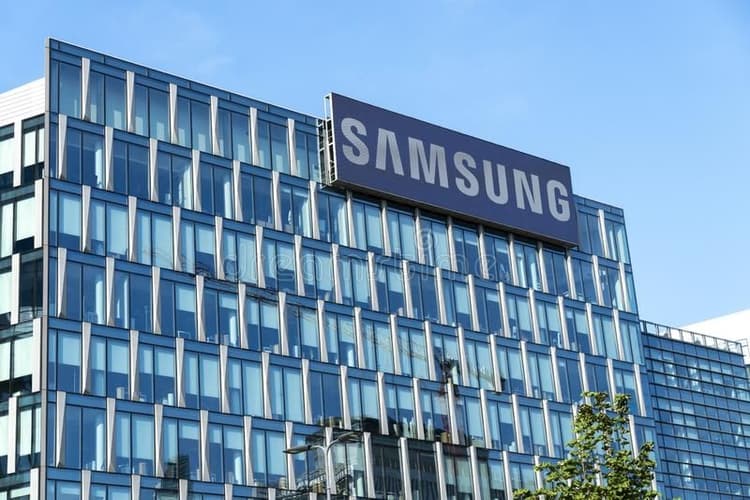
Samsung Cuts Month-Long Chip Verification to Two Days With Claude: Report
Samsung assessed that the Claude-assisted workflow was roughly 15 times faster.
View

Anthropic Adds Hidden Watermarks to Claude AI Text to Help Identify AI-Generated Content
Anthropic on Tuesday announced that it is adding invisible watermarks to text generated by its artificial intelligence (AI) models. According to the company, the content will have a hidden signal that remains even when it is copied and pasted elsewhere. The move builds upon Anthropic's decision to sign the European Union's AI Act Article 50(2) Code of Practice on Transparency of AI-Generated Content. Anthropic says Claude models launched from August 2, 2026, will support the marking system from day one, and the feature is rolling out globally.
View

Accel closes oversubscribed $550M India fund within weeks, 19 months after its last
Accel has closed a new $550 million India fund, less than two years after raising its previous India-focused vehicle, as part of a coordinated $3.5 billion global fundraising effort. The new India fund was oversubscribed and closed within weeks, people familiar with the matter told TechCrunch. Accel still has more than 55% of itsprevious $650 million India fundavailable for investment, the people said, underlining that the latest raise came despite ample capital remaining in its earlier vehicle. The fundraising comes as Accel bets that India’s next startup wave will be driven not only by AI, but also by consumer internet, fintech, and advanced manufacturing. The firm believes that artificial intelligence is becoming a horizontal technology that underpins each of those sectors rather than a standalone investment category. “There is a significant amount of money available in the market for early-stage investing in the categories we have always invested in — AI, consumer, fintech, and now advanced manufacturing, and deep tech,” Shekhar Kirani, a partner at Accel, told TechCrunch. “We will continue to invest, looking for the best of the best local winners, where we can make them into global successes.” Accel is expected to begin deploying capital from the new fund in 2027, Kirani said. Until then, the firm will continue investing from its previous India fund, he added while declining to disclose how much remains. Accel’s renewed commitment comes as global investors debate whether India can produce globally competitive AI startups after the country largely missed the first wave of foundation model companies. Accel sees India’s opportunity specifically in building AI applications, infrastructure, and software aimed at enterprise and consumer use cases. “The early movers have been on the LLM [large language model] side… but there is a significant opportunity in the application layer,” Prayank Swaroop, a partner at Accel, said. Accel expects Indian startups to build AI-powered applications and enterprise software on top of existing models rather than competing with OpenAI or Anthropic. Swaroop told TechCrunch that Indian startups are increasingly combining AI with the country’s existing engineering talent and services expertise to solve enterprise problems, particularly in sectors where human oversight remains critical. Kirani echoed Swaroop and mentionedRapidClaims, an Accel-backed startup that automates medical coding for U.S. healthcare providers, as an example. The startup combines AI with domain expertise to deliver coding accuracy of about 95%, targeting a market that has traditionally relied on outsourced human labor in India and the Philippines. Barath Shankar Subramanian, a partner at Accel, said the firm’s optimism is also being driven by the rapid adoption of AI among Indian consumers and businesses, creating a growing domestic market for AI-native products alongside globally focused software companies. The trend is already visible across leading AI companies. OpenAI and Anthropic have both identified India as theirlargest market outside the U.S., while AI coding platform Cursor recently said India has become one of its fastest-growing developer markets and itslargest market for power users. Accel’s fundraising comes as several global venture firms are renewing their focus on India despite a broader slowdown in venture capital.Peak XV Partners, the former Sequoia Capital India business, recentlyraised $1.3 billionacross new India and Southeast Asia-focused funds, whileGeneral Catalysthas committed todeploying $5 billionin India over the next five years.Lightspeed Venture Partnersis also said to be exploring a new$300-$350 millionIndia-focused fund. Kirani said the renewed interest reflects a shift in the quality and ambition of Indian entrepreneurs. “Compared to several years back,” he said, “the quality of ideas and quality of founders are significantly better than what we have ever seen.” The new India fund was one of four funds Accel raised simultaneously for the first time, alongside dedicated U.S. and Europe funds and a $1.35 billion growth vehicle. The growth fund, Accel said, can back breakout companies emerging from any of its regional funds, including India, allowing the firm to continue investing from inception through IPO and beyond. Kirani told TechCrunch that the coordinated fundraising was driven by investor preference to evaluate Accel’s global platform in a single process rather than through separate regional fundraises. Accel’s investment philosophy, Kirani said, remains rooted in backing founders early rather than chasing later-stage trends. Accel writes the first institutional check in roughly 80% of the companies it backs, a strategy that has helped it invest early in companies includingFlipkart,Swiggy,Freshworks, andZetwerk.
View

An unreleased Anthropic model made progress on one of math’s biggest unsolved problems
For more than 150 years, the Riemann hypothesis has stood as one of the major unsolved problems in mathematics, a long-running mystery about the distribution of prime numbers. There is currentlya $1 million bountyfor a working general proof of the hypothesis, which remains unclaimed. Contemporary AI models still can’t solve it either — but they can make a lot more progress than you might expect, a finding that’s likely to reopen longstanding questions about contemporary AI’s ability to discover new scientific and mathematical ideas. On Monday, Anthropic announced that an as-yet-unreleased model had made significant progress on the Riemann hypothesis, significantly increasing the lower bound of solutions for which the hypothesis holds true. Even more impressive is how the progress was made: An Anthropic staff member without significant mathematical training prompted the model to “take a real stab” at proving the hypothesis, then left the model to coordinate the task across the following day and a half. All told, the model tested 650 different ideas for solving the problem, coordinating across 60 subagents and spending 31 million output tokens in total. “Out of the 60 subagents, two were responsible for developing the key mathematical ideas,” a footnote to the paper explains, “13 contributed ideas to these agents, 30 attempted (but were unable) to develop new ideas, 13 served as validators to check the correctness of the arguments, and the final two helped to write the initial paper.” The finding was confirmed by two of Anthropic’s in-house mathematicians, and formalized using the open source proof assistantLean. This is the latest in a string of mathematical breakthroughs led by large language models, or LLMs.A number of Erdos problemshave been solved by AI models over the course of this year, and the release of more powerful models has led to more impressive results. OpenAIrecently releaseda set of 10 major results proved by its internal “Astra” model, while a separate effort from Anthropicdisproved the longstanding Jacobian conjecture. The growing body of results has caused both excitement and concern in the mathematical field. Ina public declaration signed in June, a group of prominent mathematicians raised concerns that AI could undermine critical values of the field — particularly the standard that true mathematical proofs should be “attributable to specific authors who take credit for their discovery and assume responsibility for their correctness.” But the field is still split on how mathematicians should approach the new research techniques. Ina blog post responding to the declaration, Fields Medal winner Timothy Gowers questioned whether the influence of AI might change mathematics in a more complex and positive way. “If we arrive at a world where mathematical theorems are no longer associated with mathematicians, maybe that won’t be any more problematic than the fact that stars aren’t named after astronomers and most aren’t named at all,” Gowers wrote.
View

General Catalyst leads $1.1B round into 2-month-old River AI
River AI, an AI startup founded by xAI co-founder Igor Babuschkin, has secured $1.1 billion in funding in a seed/Series A round led by General Catalyst and AMP PBC, with participation from Nvidia, AMD Ventures, Y Combinator, and Temasek. (AMP PBC is an AI-focused investment firm founded in 2026 by former Andreessen Horowitz general partner Anjney Midha, backer of companies at a16z like Black Forest Labs, Mistral AI, LMArena and OpenRouter.) River came out of stealth in June with a fascinating mission. Babuschkin, whose resume includes AI roles at DeepMind and OpenAI, intends to reinvent AI from scratch, beginning with how models are trained. This is in order to turn agents into personally trainable assistants, rather than following the trajectory other AI labs are on: human worker replacements. “To get there, we believe the stack has to be rebuilt end to end: training, models, the product layer, and new hardware that lets personal AI live close to you,”he wrotein his launch blog. “Capable agents will be a normal part of everyday life. Less like the assistants you call on today when you need a task done, more like guardian angels: quietly present, on your side, helping with what actually matters to you. They will know you well, and they will be yours, not someone else’s,” he envisions. River already offers an API,billed per 1 million tokens, with rates dependent on the open model used. The API allows developers to use both reinforcement learning (RL) and low-rank adaptation (LoRA) fine-tuning on the models. This first product is intended to be an antidote to prompt engineering. “Prompting steers a model you don’t own and can’t improve. River lets you train open models into ones that are truly yours — and serve them like any other endpoint,” the product literature says. While this round is an eye-popping-size investment for a nascent company, and perhaps another indication of the overheated AI atmosphere, River’s premise comes at a particularly auspicious time. Enterprises are waking up to wanting to control their AI model destiny by using a mix of models, including open weight. River is promising to solve the post-training expertise part of that problem with its neocloud offering. “Any enterprise can complete a complex reinforcement learning run in 15 to 20 minutes with no infrastructure team required, at two to four times the cost savings relative to closed-source alternatives,” it wrote in its funding announcement. The bigger vision of this company is that everyone will have their own agents, trained by themselves, and working on their behalf. We are already seeing this concept in action with the rise of personal, locally running agents in the form of OpenClawand its derivatives. Plus, we are already seeingNvidia partner with PC makers like Dell, Microsoft, and HPfor AI-capable hardware. How River’s tech will differ remains to be seen. But it’s starting out with a war chest full of cash to try.
View
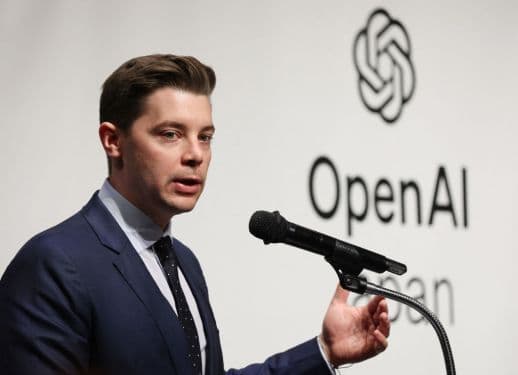
Brad Lightcap, OpenAI’s longtime COO, is leaving to ‘start something new’
Brad Lightcap, one of the longest-serving executives at OpenAI, is leaving the powerful AI lab to “start something new.” In an internal message thatLightcap shared online Tuesday, the outgoing executive told OpenAI staff that it was “bittersweet to share that I’ll be moving on from OpenAI to start something new.” Lightcap, who joined the company in 2018, spent four years as OpenAI’s chief financial officer. He then ascended to chief operating officer, where he served from 2022 until earlier this year when, amidst a shakeup of executive roles,he transitionedto lead special projects at the company. Prior to OpenAI, Lightcap alsoworked withCEO Sam Altman at venture capital firm Y Combinator. “I had the privilege of building the first versions of most of our operations and business teams – from Finance to Legal, People, CorpSec, GTM/Gov, Partnerships, and more,” Lightcap wrote in his message Tuesday. “Among the most rewarding parts of this journey for me has been watching each of these teams mature under brilliant leaders.” In his note, Lightcap also looked ahead and hinted at a future venture while giving scant details as to what it might be. “Over the last few months, I’ve been focused on the next horizon and what would stand in the way of mission success,” Lightcap said. “I believe there are a few important new things the world will need to get right as we enter this next period. I’ll have more to share soon, but I believe in OpenAI more than ever and am excited to help you all advance the mission from a different vantage point.” As OpenAI preps for anIPO of industrywide significance, the company has been undergoing a shakeup of top-level executives. In July, the company’s No. 2 executive, Fidji Simo, who led AGI development,announcedshe would be stepping down. Other executives from less central areas of the company — includingBill Peebles, who formerly headed the company’s now deadvideo generator Sora, andKevin Weil, the vice president of the company’s Science vertical — have also recently left the firm.
View

Google’s Gemini app surges to one billion users
In a significant milestone for Google, CEO Sundar Pichaiannouncedvia X that the Gemini app has become one of the company’s fastest-growing products, recently surpassing 1 billion monthly active users. Pichai also noted it was the 14th Google product to hit the 1 billion mark. With this rapid growth, Gemini is keeping pace with OpenAI’s ChatGPT, which hit1 billion monthly active usersback in June. The company has been steadily integrating Gemini across its products, from Search and Workspace to Android and its standalone app. Google’s AI Mode in Search, in particular, has achieved a lot of success, with over 1 billion monthly active users globally. But today’s figure refers specifically to the Gemini app, and does not include AI users from other channels. The company also continued rolling out new models and features, includingGemini 3.5 Flash, which Google says is designed to improve coding and autonomous AI-agent tasks. Google also shared numbers at how people are actually using the chatbot, with 63% of Gemini users talking directly to the assistant using the voice feature. Plus, Gemini now generates more than 150 million images every day, according to Google. And Gemini’s growth isn’t limited to Google’s own products. The company says it now has more than 100 million active users on iOS. The milestone comes right after its Q2 2026 earnings call, where the company celebrated havingover 950 million monthly users, with daily active users tripling this past year. The announcement also comes ahead of its Made by Google event, where it’s expected to have more Gemini-powered features launching across Pixel devices.
View

OpenAI launches ChatGPT desktop app for Linux
ChatGPT is on desktops across the world, but there’s been one place where it’s been lacking: the Linux community. Certain sectors of the open source developer communityhave been clamoringfor OpenAI to bring its chatbot to their neck of the woods. As of this week, OpenAI has rectified this oversight,launchinga dedicated ChatGPT app for Linux. “Linux has been one of the most-requested platforms for the desktop app, and this launch extends ChatGPT and Codex across every major desktop operating system,” the company said Tuesday. The new app, which is being released in preview, will give Linux users the ability to use ChatGPT, ChatGPT Work, and Codex on a number of different distributions. The release is worldwide, as of Tuesday. OpenAI says that the distros that will be supported include desktop variants of Ubuntu 24.04 and 26.04 LTS, Debian 13, and Fedora 43 and 44. The totality of the Linux community compriseshundreds of distributions, although the distros that OpenAI has chosen here act as the base for a variety of “downstream” desktopdistros or “flavors,”which should also be compatible with OpenAI’s apps as a result. OpenAI is a little behind Anthropic,which releaseda Claude desktop app for Linux about a month ago. Anthropic’s appis availablefor Ubuntu 22.04 or later and Debian 12 or later.
View

OpenAI Launches GPT-5.6-Cyber Model Through Daybreak to Strengthen Cyber Defence
OpenAI has expanded its Daybreak cybersecurity programme by introducing two access tiers alongside the GPT‑5.6‑Cyber model. The GPT‑5.6‑Cyber model is available through Daybreak Red, and it is trained to offer improved performance in specialised cybersecurity tasks. The ChatGPT maker says the GPT‑5.6‑Cyber helps trusted defenders conduct legitimate security activities. The company said the GPT-5.6-Cyber has been used to discover previously unknown vulnerabilities in V8. OpenAI says GPT-5.6 Cyber is only available to select companies.
View
Anthropic says it will watermark text generated by its AI models
Anthropic will watermark text generated by its models, including Claude, to comply with European regulations, the company now says. The AI model maker confirmed the watermarking inan updated support page. EU AI Act’s Transparency Code, which took effect on August 2, requires AI companies to mark AI-generated or edited content in a way other systems can identify them. Anthropic said that all models released after August 2 will automatically have tech to watermark both computer-generated text and files. For files, the company is using the C2PA open standard. The company said it will extend support for older models as well, adding that the watermark will travel when users copy and paste the text. “Because the watermark is part of the text, it will travel with the text when it’s copied and pasted elsewhere, and may persist through some editing. Watermarking will be applied at the model level, which means it will be present no matter which Claude product or surface the text comes from,” the support page reads. It’s not clear how much editing users need to do to remove the watermark. We have asked Anthropic to clarify and will update the story if we hear back. The company noted that watermarking will apply to different products like Claude platform API, Claude, Claude Code, Claude Cowork, and Claude Tag. Platforms are now rushing to watermark AI-generated content after backlash from users and to avoid regulatory scrutiny. Last week, AI music platformSuno said it will mark tracks created on its platformafter a spate of legal challenges. Last month, newsletter serviceSubstack teamed up with Pangramto flag AI-generated content. The company’s CEO, Chris Best, called outClaudefishing, a term used for people using AI to generate content. Apart from Anthropic, other companies like Black Forest Labs, Google, Meta, Microsoft, OpenAI, and Synthesia have committed toadhering to the EU’s code.
View
Submit your Tool


PoweredByAI.app is an AI Tools Directory helping individuals, businesses, and creators discover the best AI tools for writing, coding, design, productivity, and more.
© 2026 , Product of011BQ. All rights reserved.