Latest AI News

Nvidia has an OpenClaw strategy. Do you?
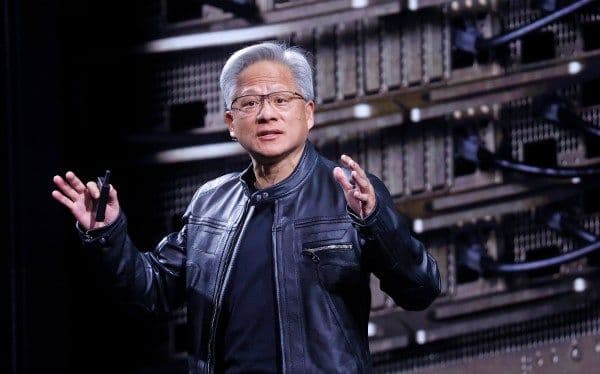
CEO Jensen Huang took the stage atNvidia’s GTC conferencethis week in his signature leather jacket to deliver a two-and-a-half-hour keynote, projecting $1 trillion in AI chip sales through 2027, declaring that every company needs an “OpenClaw strategy,” and closing with a rambling Olaf robot that had to get its mic cut. The message was hard to miss: Nvidia wants to be foundational to everything, from AI training to autonomous vehicles to Disney parks. On this episode of TechCrunch’sEquitypodcast, Kirsten Korosec, Anthony Ha, and Sean O’Kane break down what Nvidia’s growing web of AI infrastructure partnerships actually means for startups, and discuss more of the week’s headlines. Listen to the full episode to hear about: Subscribe to Equity onYouTube,Apple Podcasts,Overcast,Spotifyand all the casts. You also can follow Equity onXandThreads, at @EquityPod.
View

What happened at Nvidia GTC: NemoClaw, Robot Olaf, and a $1 trillion bet
Loading the player… CEO Jensen Huang took the stage atNvidia’s GTC conferencethis week in his signature leather jacket to deliver a two-and-a-half-hour keynote, projecting $1 trillion in AI chip sales through 2027, declaring that every company needs an “OpenClaw strategy,” and closing with a rambling Olaf robot that had to get its mic cut. The message was hard to miss: Nvidia wants to be foundational to everything, from AI training to autonomous vehicles to Disney parks. On this episode of TechCrunch’sEquitypodcast, Kirsten Korosec, Anthony Ha, and Sean O’Kane break down what Nvidia’s growing web of AI infrastructure partnerships actually means for startups, and discuss more of the week’s headlines. Subscribe to Equity onYouTube,Apple Podcasts,Overcast,Spotifyand all the casts. You also can follow Equity onXandThreads, at @EquityPod.
View

Microsoft rolls back some of its Copilot AI bloat on Windows
Microsoftannouncedon Friday a series of changes focused on improving the quality of its Windows 11 operating system, which notably includes dialing back the number of entry points to its AI assistant, Copilot. The company said it will reduce Copilot AI integrations in some apps, starting with Photos, Widgets, Notepad, and its Snipping Tool. Under the heading of “integrating AI where it’s most meaningful,”Pavan Davuluri, EVP of Windows and Devices, wrote on the company’s blog that Microsoft is becoming more intentional about “how and where Copilot integrates across Windows.” Its goal, he explained, is to focus on AI experiences that are “genuinely useful.” This “less-is-more” approach to integrating AI into existing platforms may reflect the growing consumer pushback against AI bloat. While many people today understand AI to be a useful tool, there are also concerns around trust and safety. For instance, aPew Research studypublished this month noted that half of U.S. adults are now more concerned than excited about AI as of June 2025, up from 37% in 2021. This is not the first time Microsoft has rethought its Copilot integrations. Earlier this month, the news siteWindows Centralsaid the company’s plan to ship Copilot-branded AI features across Windows 11 had been quietly shelved. This, the site said, included some system-level integrations within the Settings app, File Explorer, and elsewhere. Before this, Microsoft haddelayed the launchof its AI-powered memory feature, Windows Recall for Copilot + PCs, for over a year as it tried to address users’ privacy concerns. The Recall feature launched last April, but security vulnerabilities arestill being discovered. It’s clear that user feedback is influencing Microsoft’s moves around AI on Windows. Davuluri wrote that he and his team have spent the past several months listening to the community about how they’d like to see Windows improved. The Copilot rollback is just one of the changes being made. The company said it’s also introducing the ability to move the taskbar to the top or sides of the screen, giving users more control over system updates, speeding up File Explorer, improving the Widgets experience, updating the Feedback Hub, and making it easier to navigate its Windows Insider Program — a community that offers feedback about Windows’ future.
View

Trump’s AI framework targets state laws, shifts child safety burden to parents
The Trump administration on Friday laid out alegislative frameworkfor a singular policy for AI in the United States. The framework would centralize power in Washington by preempting state AI laws, potentially undercutting the recent surge of efforts from states to regulate the use and development of the technology. “This framework can only succeed if it is applied uniformly across the United States,” reads a White House statement on the framework. “A patchwork of conflicting state laws would undermine American innovation and our ability to lead in the global AI race.” The framework outlines seven key objectives that prioritize innovation and scaling AI, and proposes a centralized federal approach that would override stricter state-level regulations. It places significant responsibility on parents for issues like child safety, and lays out relatively soft, nonbinding expectations for platform accountability. For example, it says Congress should require AI companies to implement features that “reduce the risks of sexual exploitation and harm to minors,” but does not lay out any clear, enforceable requirements. Trump’s framework comesthree months after he signed an executive orderdirecting federal agencies to challenge state AI laws. The order gave the Commerce Department 90 days to compile a list of “onerous” state AI laws, potentially risking states’ eligibility for federal funds like broadband grants. The agency has yet to publish that list. The order also directed the administration to work with Congress on a uniform AI law. That vision is coming into focus, and it mirrorsTrump’s earlier AI strategy, which focused less on guardrails and more on promoting companies’ growth. The new framework proposes a “minimally burdensome national standard,” echoing the administration’s broader push to “remove outdated or unnecessary barriers to innovation” and accelerate AI adoptions across industries. This is a pro-growth, light-touch regulatory approach championed by “accelerationists,” one of whom is White House AI czar and venture capitalist David Sacks. While the framework nods to federalism, the carve-outs for states are relatively narrow, preserving only their authority over general laws like fraud and child protection, zoning, and state use of AI. It draws a hard line against states regulating AI development itself, which it says is an “inherently interstate” issue tied to national security and foreign policy. The framework also seeks to prevent states from “penaliz[ing] AI developers for a third party’s unlawful conduct involving their models” — a key liability shield for developers. Missing from that framework are any gestures toward liability frameworks, independent oversight, or enforcement mechanisms for potential novel harms caused by AI. In effect, the framework would centralize AI policymaking in Washington while narrowing the space for states to act as early regulators of emerging risks. Critics say states are the sandboxes of democracy and have been quicker to pass laws around emerging risks. Notably,New York’s RAISE ActandCalifornia’s SB-53seek to ensure large AI companies have and adhere to safety protocols that are publicly documented. “White House AI czar David Sacks continues to do the bidding of Big Tech at the expense of regular, hardworking Americans,” said Brendan Steinhauser, CEO of The Alliance for Secure AI. “This federal AI framework seeks to prevent states from legislating on AI and provides no path to accountability for AI developers for the harms caused by their products.” Many in the AI industry are celebrating this direction because it gives them broader liberties to “innovate” without the threat of regulation. “This framework is exactly what startups have been asking for: a clear national standard so they can build fast and scale,” Teresa Carlson, president of General Catalyst Institute, told TechCrunch. “Founders shouldn’t have to navigate a patchwork of conflicting state AI laws that impede innovation.” The framework was issued at a moment when child safety has emerged as acentral flashpointin the debate over AI. Certain states have moved aggressively topass laws aimed at protecting minorsandplacing more responsibilityon tech companies. The administration’s proposal points in a different direction, placing greater emphasis on parental control than platform accountability. “Parents are best equipped to manage their children’s digital environment and upbringing,” the framework reads. “The Administration is calling on Congress to give parents tools to effectively do that, such as account controls to protect their children’s privacy and manage their device use.” The framework also says the administration “believes” that AI platforms should “implement features to reduce potential sexual exploitation of children and encouragement of self-harm.” While it calls on Congress to require such safeguards and affirms that existing laws, including those banning child sexual abuse materials, should apply to AI systems, the proposal employs qualifiers like “commercially reasonable” and stops short of laying out clear prerequisites. On the topic of copyright, the framework attempts to find a middle ground between protecting creators and allowing AI systems to be trained on existing works, citing the need for “fair use.” That kind of language mirrors arguments AI companies have made as they face agrowing number of copyright lawsuitsover their training data. The main guardrails Trump’s AI framework seem to outline involve ensuring “AI can pursue truth and accuracy without limitation.” Specifically, it focuses on preventing government-driven censorship, rather than platform moderation itself. “Congress should prevent the United States government from coercing technology providers, including AI providers, to ban, compel, or alter content based on partisan or ideological agendas,” the framework reads. It also instructs Congress to provide a way for Americans to pursue legal redress against government agencies that seek to censor expression on AI platforms or dictate information provided by an AI platform. The framework comes as Anthropic issuingthe government for allegedly infringing on its First Amendment rights after the Department of Defense (DOD)labeled it a supply-chain risk. Anthropic argues that the DOD is designating it as such in retaliation for not allowing the military to use its AI products for mass surveillance of Americans or for making targeting and firing decisions in autonomous lethal weapons. Trump has referred to Anthropic and its CEO Dario Amodei as “woke” and a “radical leftist.” The framework’s language, which emphasizes protecting “lawful political expression or dissent,” seems to build on Trump’s earlierexecutive order targeting “woke AI,”which pushed federal agencies to adopt systems deemed ideologically neutral. It’s unclear what qualifies as censorship versus standard content moderation, so such language could make it difficult for regulators to coordinate with platforms on issues like misinformation, election interference, or public safety risks. Samir Jain, vice president of policy at the Center for Democracy and Technology, pointed out: “[The framework] rightly says that the government should not coerce AI companies to ban or alter content based on ‘partisan or ideological agendas,’ yet the Administration’s ‘woke AI’ Executive Order this summer does exactly that.”
View

WordPress.com now lets AI agents write and publish posts, and more
Web hosting platformWordPress.comis embracing AI agents, a decision that could change the look and feel of the web. The companyannounced Fridaythat it will now allow AI agents to draft, edit, and publish content on customers’ websites, as well as manage comments, update and fix metadata, organize content with tags and categories. All of this is controlled through an interface where the website’s owner explains what they want to do using natural language commands. With these new capabilities, websites could be almost entirely created and run via AI agents controlled by humans. This lowers the barrier to setting up and maintaining websites; it may also help fill the web with content no longer written by people, but by machines. As a publishing platform, WordPresspowers over 43%of all websites on the internet. The hosted version at WordPress.com represents only a small fraction of that total. Still, its network of websites has a sizable footprint,seeing 20 billion page viewsand 409 million unique visitors every month. The new AI capabilities follows the introduction ofMCP support on WordPress.comlast fall. MCP, or Model Context Protocol, is a newer standard that allows applications to provide context to large language models (LLMs). With WordPress.com’s MCP support, AI assistants have been able to connect to the platform to give customers visibility into their site’s content, settings, and analytics from their preferred AI app, like Claude Desktop, Cursor, VS Code, or others. Now, WordPress.com will allow AI agents to not only read the site’s content but also create posts, landing pages, and About pages, as well as make structural changes. At launch, the AI agents will also be able to approve, reply to, and clean up comments; create, rename, and restructure categories and tags across the site; and fix alt text, captions, and titles to improve the site’s SEO. These changes and others are all tracked through the site’s Activity Log, the company notes. Customers can author drafts for their AI agent to publish, tag, and categorize, along with a meta description. But they can opt to allow their AI agent to create a post or page by describing what they want to publish. The company says all changes require the user’s approval, and posts written by AI are saved as drafts by default. Even with these limitations, the expanded capabilities could greatly speed up the creation of websites where humans aren’t doing much of the content creation. The company also notes that the AI agent can search the site’s theme and design before it begins creating content, so it understands how to use the same colors, fonts, spacing, and block patterns. To enable the new functionality on their account, WordPress.com customers will go towordpress.com/mcp, then toggle on the capabilities they want to use. They can then connect their preferred AI client, such as Claude, Cursor, ChatGPT, or anyotherMCP-enabled tool, and begin creating. While there are likely going to be concerns about what this means for the state of the web’s content, it’s worth noting that AI-authored posts can give human readers insight into how these models write and engage. Meta recentlysnapped up a social network called Moltbook, where AI agents were allowed to post, reply, and connect with one another. Anthropic has also experimented withletting an AI write a blog, with human oversight.
View

The best AI investment might be in energy tech
Venture capitalists have placed increasingly bigger bets on AI startups, investingover half a trillion dollarsinto the sector over the last five years. But these days, the smartest AI investment might be in energy,accordingto a report by Sightline Climate. Researchers found that up to 50% of data center projects that have been announced might be delayed. One of the biggest culprits is access to power. Of the 190 gigawatts worth of data centers the company is tracking, only 5 gigawatts are under construction. About 6 gigawatts of data center projects in Sightline’s database came online last year. A far larger percentage — about 36% — saw their timelines slip in 2025. The delays may eventually trickle down and affect large enterprises and other companies that use AI for their businesses. That supply-demand squeeze is an opportunity for investors. Here’s why. Big tech companies like Google and Meta have devoted large parts of their balance sheets to develop solar, wind, and nuclear projects. These companies are also supporting emerging technologies likeForm Energy’s 100-hour batterythrough direct investments and working with utilities to accelerate their adoption. Dozens of startups are pursuing technologies that tackle the power problem. For instance, Amperesand, DG Matrix, and Heron Power are developingnew power conversion technologies, while companies like Camus, GridBeyond, and Texture arebuilding softwarethat can manage the flow of electrons. Power remains one of the most significant constraints for data centers, a shortfall that isn’t likely to change anytime soon. AI is expected to drive data center power consumption up 175% by 2030,accordingto Goldman Sachs. These shortages on the grid are unprecedented in modern times, and they’ve been driving up electricity prices around the country. That has pushed many tech companies to explore alternative ways of powering their data centers. (The Trump administration, sensing a looming political crisis, isurging tech companiesto build their own power source, pay higher rates, or both. Most had already made plans to do so, of course.) Amazon, Google, Oracle, and other large tech companies have been working to minimize their dependence on the grid. Several data centers are being planned using on-site power or a hybrid approach that blends on-site power with a grid connection. The biggest data centers are leading the charge. Less than a quarter of projects that have identified a power source will use on-site or hybrid; together they represent 44% of total capacity. The shift has been driven in part by shortages of power generation equipment — namelygas turbines— and an antiquated grid. That’s opened a path for alternative energy sources. Google’s latest deal to power a new data center in Minnesota shows one approach to tackling the problem. The company willblend wind and solar with a massive 30 gigawatt-hour batteryfrom Form Energy. Google also worked with Xcel Energy to devise a new rate structure that it says will help encourage the adoption of new technologies in the utility’s planning process. Form Energy’s battery isn’t the only example. Grid-scale batteries are poised to take a big bite out of the power market. By the end of this year, the U.S. should have nearly 65 gigawatts of battery storage capacity,accordingto the U.S. Energy Information Administration. Like many of its peers, Form Energy is looking to capitalize on the momentum byraising a $500 million roundin advance of an eventual IPO. Energy supplies are only part of the story. Once the power hits the grid or the data center, it needs to be managed, a task that mostly falls on the humble transformer. Most of today’s transformers use massive blocks of iron wrapped in copper wire, a technology that is about 140 years old. It’s reliable, but it’s becoming far too bulky as data center power demands ramp up. By the time server racks hit 1 megawatt in power density, the power equipment needed to run them will occupy twice as much space as the rack itself, one expert told TechCrunch. It’s why investors have beenflocking to back solid-state transformer startupsrecently, which are hoping silicon-based power electronics can supplant the ancient iron-and-copper tech. They’re more expensive than existing transformers, but they are also flexible enough to replace several pieces of equipment in a data center, which should make them cost competitive. Altogether, the scale of investments in battery and transformer companies has been much smaller than some of the blockbuster rounds we’ve seen in the AI industry. That’s not a bad thing — those rounds are more tractable for investors. Plus, as the world electrifies everything from transportation to heavy industry, the need for power is only going to grow, giving investors a hedge against an AI bust. Maybe the best AI investment isn’t in AI at all.
View

Wipro, NVIDIA Launch Solution to Make Legacy Data Centres AI-Ready
The solution integrates AI into core infrastructure, enabling secure, production-scale enterprise deployment.
View

Anthropic Study Finds People Don’t Really Want AI for Creative Work
Anthropic's new study has revealed that individuals don't really look at creative expressions as one of the skills they want from artificial intelligence (AI). The finding was derived from a large-scale survey with participants spanning more than 150 countries. All of the individuals were surveyed using the company's Interviewer tool, which was released in December 2025. The study aimed to find what people think is going well in AI and what worries them. It also asked them about the skills they want to see in the AI-powered systems the most.
View

Carl Pei Says ‘Apps Are Going to Disappear’ as Smartphones Become More Agentic
Nothing CEO Carl Pei predicted that in the future, apps on smartphones will be replaced by artificial intelligence (AI) agents. Speaking at South by Southwest (SXSW), the executive suggested that the current app-centric model is “boring” and largely unchanged for 20 years. He highlighted that using a smartphone to complete a task today feels like admin work, where different apps must be manually set to get to the final output. With the rise of agentic interfaces, he believes that soon, users will be able to tell an agent what they want, and it will be done autonomously.
View

These AI notetaking devices can help you record and transcribe your meetings
Digital meeting notetakers likeRead AI,Fireflies.ai,Fathom, andGranolahelp record and transcribe online meetings. But for in-person or more versatile options, many people prefer physical recording devices. These physical notetakers transcribe audio and give users summaries and action items of meetings using AI. Some of these devices are wearable — pins or pendants with dedicated mics for recording — while others are credit card-sized with dedicated mobile apps to transcribe and extract insights using AI. A few even offer live translation. Below is a non-exhaustive list of physical AI notetakers and transcription tools. This credit-card-sized notetaker has been around since 2023, with a newer, AI-poweredPro versionthat has a small screen, four mics, and records audio within three to five meters. It also can switch between in-person recording and call recording. The Plaud Note costs $159, while the Note Pro costs $179. They come with 300 minutes of transcription free per month. Mobvoi’srectangular notetaker is priced at $159and includes 600 free transcription minutes. The company claims the device shows real-time transcription and translation with support for more than 120 languages. The device offers 25 hours of continuous recording through its three microphones. In terms of software features, the TicNote offers automatic highlight extraction and the ability to create audio clips or summarized podcast versions of a conversation. Comulytic is a newer entrant in the hardware AI notetaker market. The company’s claim for differentiation is that its$159 Note Pro devicedoesn’t require any additional subscription for basic transcription. That means you can transcribe unlimited minutes by just buying the device. The device can record up to 45 hours of audio continuously on a single charge and has more than 100 days of standby time. The company has a $15 per month or $119 per year advanced plan that offers instant AI summaries, unlimited templates for summaries, an action item list, and chat with AI assistant without any limits. Plaud NotePin andNotePin Sare the smaller and more pocketable versions of the company’s larger Note and Note Pro devices. The NotePin has a versatile design: You can wear it as a wrist band, a pendant, clip it to your bag, or wear it on your shirt with a magnetic attachment. Notably, the lanyard and wristband are only available with the NotePin S. Both devices have two mics, and can record around 20 hours of audio continuously on a single charge. The NotePin S has a physical button to start/stop recording and capture highlights. Both are similarly priced to their credit-card-shaped counterparts. The NotePin is priced at $159, and the NotePin S is priced at $179. The Omi pendantis a cheaper alternative to other notetakers at $89. This is because the pendant has to be connected to your phone and doesn’t have any onboard memory. The device has two mics and can run for 10 to 14 hours on a charge. While Omi has its own app, you can use other apps, as the hardware and software are open sourced. Users have also built different connectors and apps for the device. Viaim’s earbudsallow for transcription during calls, with additional recording capabilities in the earbuds’ case. These buds are priced at $200 and Viaim claims they can transcribe audio in up to 78 languages in real time. The company’s app can also highlight key points in transcriptions. Anker’s Soundcore Workpin is a coin-sized AI notetaker with a puck-shaped battery pack. The $159 device can record for eight hours without breaks, or up to 32 hours if the pin is attached to its case, the company says. Anker claims that the device has a five-meter recording range. Users get 300 minutes of transcription free per month. Pocketis another credit-card styled puck that sticks to the back of your phone and takes notes. The company lists the gadget at $199, but it is often available on discount. Buyers don’t need to buy a subscription to use core features like transcription. The device supports over 120 languages. The puck weighs 52 grams, has 64GB of on-device memory, and can last up to four days on a single charge. The company says the Pocket has two mics that can record audio in the range of 15 meters. A $19.99 per month subscription gets you features such as unlimited cloud storage, more than 100 templates for different summary styles, AI-powered speaker labels, and home screen widgets.
View

Inside Razorpay’s Engineering Behind Billions of Successful Transactions
Razorpay controls only 30% of the payment stack—the rest sits with banks and networks. Yet, it is accountable for 100% of every transaction outcome.
View

Maharashtra Signals First Dedicated Tribunal for IT Employees
Labour Minister, Akash Pandurang Fundkar, said when rules are drafted in line with the new labour codes, special tribunals will be constituted.
View