🚀 Zaprep: Your Socials on Steroids. Start free — automate 1,000 DMs/month & turn engagement into leads. with 1,000 automated DMs/month.
Latest AI News

Claude Cowork finally remembers what you told the app in chat
A change to Claude’s memory system will eliminate one of the most annoying things about using agents — the constant need to rebrief the AI on things it already knows. On Tuesday, Anthropic announced it’s merging the memory system used by chat and Claude Cowork, which means that Claude will always remember what it learned in one area, even when you’re engaging with it in another. Anthropic is also exposing what Claude has retained in its memory, allowing users to read, edit, or delete information on any topic. The update will improve the experience for Claude’s users as it will allow them to more seamlessly move between the research phase and taking action. Before, you may have developed ideas for projects over time while chatting with Claude, but when it came time to actually enact the changes, you’d have to start over by telling Cowork all the details. This was incredibly frustrating. The update makes Claude now feel like one continuous assistant, rather than two separate products under one roof. Anthropic offers an example of someone needing to draft an update for their manager or an agenda for a conference, where Cowork would already understand the references because of the past conversations about the matter at hand. For instance, it would know the headcount, city, and speakers at the conference, so you wouldn’t have to re-input that information. In addition, Claude will now add topics to its memory as you chat, instead of summarizing a conversation when it ends. That makes it easier to move back and forth between chat and Cowork, as the new memories are more quickly updated and shared between the two experiences, even if the chat is ongoing. Anthropic says that, by default, Claude won’t store personal or sensitive information like your health data, race, ethnicity, religious beliefs, politics, gender identity, and more. However, users can opt to enable these things by toggling on “include sensitive topics in memory” if they prefer. The app will also notify users whenever a sensitive topic is saved in memory. However, the company says that Claude won’t ever save certain things, like government-issued ID and Social Security numbers, criminal history, immigration status, or other things that violate its acceptable use policy. The memory feature is enabled by default on Free, Pro, and Max plans across web, desktop, and mobile. On iOS and Android, users will need to update their app to the latest version.
View

Stability AI, maker of image generator Stable Diffusion, raises $76 million in fresh funding
Stability AI, the startup behind AI image generation model Stable Diffusion, has raised $76 million in Series B funding. The new haul brings the company’s fundraising total to $232 million. The companyannouncedthe round Tuesday, saying the new capital comes partly from a number of prominent entertainment industry organizations, including Universal Music Group, Sony Music Group, and Warner Music Group, and gaming giant Electronic Arts (EA). Two investment firms, AMD Ventures and Pacific Alliance Ventures, also took part. It’s an unusual roster and less a typical venture round than a lineup of the companies Stability now depends on for content licensing and distribution deals. Stability AI CEO Prem Akkaraju, who joined the company in 2024, called the funding “an affirmation of our vision where generative AI empowers every producer, musician, and storyteller.” Akkaraju joined the company in 2024. The company says it plans to use the money from its latest funding round to continue building out its “creative production” product suite while also expanding its professional services arm. Currently, Stability offers a variety of AI models that are designed for the purposes of AI music, video, and image generation. Stability, founded in 2019, has spent the past year signing deals to weave generative AI into entertainment companies’ creative workflows. It struck partnerships withUniversal MusicandEAlast October and withWarner Musiclast November, each giving those companies a hand in co-developing Stability’s AI tools rather than just licensing the output.. Stability has also had a mostly winning stretch in court. The company largely prevailed ina copyright lawsuitbrought by Getty Images in the United Kingdom, which had accused the company of infringing upon IP rights by using the company’s images in the training of its image generation model. A judge ruled largely in Stability’s favor in that case, but a similar lawsuit from Getty in the U.S. is stillworking its way through the courts. Stability was also sued in 2023 by the company’s co-founder, Cyrus Hodes, who claimedthat he was trickedby the other co-founder, Emad Mostaque, into selling his share in the company.
View

Accel-backed Keenable is indexing the web for AI agents
Search engines were built and optimized for people, who can’t spare the time or attention required to scan entire webpages. But as people increasingly use AI chatbots to search the web and do tasks, there’s a line of thinking that the Internet’s current infrastructure needs to be updated to cater to AI instead, as these bots can read and process much larger portions of information. Andrey Styskin, who previously led Russian search giant Yandex’s search, AI and cloud division, and German AI scientist Matthias Petri are working to solve that problem with their new startup,Keenable. The company recently came out of stealth $26 million in seed funding. Accel led the funding round, which also saw participation from Conviction Partners and some business angels. From Styskin’s perspective, AI chatbots tend to do much better if they canground their responseswith source documents. “This actually creates a new flywheel that is different from what Google learned from human behavior,” he told TechCrunch. Keenable says it has been building a web search index of more than 100 billion documents, and its API is already used in production at several AI labs and inference providers during both training and runtime. The startup wouldn’t disclose who its customers are, but it recently struck apartnership with voice AI company Gradiumto support live information retrieval. Drawing from his experience of 20 years building search at Yandex and Amazon, Styskin explained how Keenable’s product is different from enterprise search solutions that can break down and prove very costly at web scale. “If you do not fine-tune your index structures for a specific task, the cost of serving and scanning the whole internet is enormous because of the volume. That’s why you need to innovate on how you can narrow the search space based on your query very fast. This is what we are bringing to the table,” he said. According to Accel partner Zhenya Loginov, who led the investment, AI players have very few options when it comes to web-scale search infrastructure, especially with Google and Microsoft taking steps toshut downtheirexisting search APIsto avoid cannibalization. Instead, the tech giants are opting for a more bundled approach, and being selective about their partners. To Styskin, these decisions confirmed the opportunity he saw when he was at Amazon, working with Petri on web search infrastructure for AI applications such as Alexa. He’d seenCloudflare datathat AI crawlers were responsible for a growing share of search volume, and started realizing that there was an opportunity to develop web search infrastructure that is built with AI in mind. Armed with that experience, Styskin tapped into his network to hire a handful of former colleagues for his new startup, which is also building proprietary retrieval capabilities. This includes an upcoming product, Web Query Language, which would help AI systems answer questions by combining information from various web sources, even when none contain the full answer. Costs will be an important part of the equation. Styskin says while it is “extremely hard” to convince people to move away from Google for search, theinnovators’ dilemmameans that the U.S. giant is potentially “beatable” on agentic queries, and a smaller company like Keenable can innovate and offer a more cost-efficient solution to AI companies. Still, the costs of building a giant search index are real. “Don’t ask — it is painfully expensive,” he said. But, he says the startup is doing its best to keep costs in check and pace itself. With a team of 15 engineering staff across the U.S. and Europe, the company plans to use the fresh cash to double its headcount by the end of the year to build its go-to-market motion. There are many more steps before the startup can achieve its dream of becoming “the next Google for AI agents.” Other players have entered the space, such asBraveandExa; and Google itself is overhauling its search experience for the AI era. But this broader motion indicates that Keenable’s conviction is also shared at the Googleplex: whether it’s for humans or for agents,the era of the “ten blue links” may be coming to a close.
View

OpenAI’s Jalapeño chip is built for fast inference at scale, benchmarks show
At the Hot Chips conference on Tuesday, OpenAI shareda more detailed look at Jalapeño, including the first batch of benchmark results for the new system. Tested on SemiAnalysis’ InferenceX benchmark, Jalapeño registered both more tokens per user and more throughput per kilowatt than the currently available state-of-the-art inference processors. “The bottom line is that the results show a very, very significant performance advance over state of the art,” said Richard Ho, OpenAI’s head of hardware, in a press call. “Jalapeño can serve more AI work per unit of power, while also returning responses more quickly. It’s very efficient to serve a lot of customers, but it can also be very low latency.” Notably, that comparison is against an Nvidia Blackwell system — but by the time Jalapeño reaches full deployment, the competition may have advanced significantly. Ho estimated that Jalapeño would deploy at the end of 2026 “in very small volumes,” with more significant deployment coming in 2027. First announced last October, Jalapeño was developed by OpenAI in close collaboration with Broadcom, with OpenAI’s own models assisting in the development process. The company plans to make Jalapeño a multigenerational platform, allowing AI products, models, chips, and memory all developed in concert. Because of that full-stack approach, OpenAI was able to address specific phases in the inference process that often cause friction during inference processing. In particular, Jalapeño is designed to minimize delays during the prefill and communication phases of processing, which OpenAI says often act as bottlenecks. “We designed Jalapeño to minimize data movement and communication delays,” the company said in a blog post presenting the results. “This means that model state, including the KV cache used while generating a response, can be explicitly placed and kept local while the system activates the right combination of compute, memory, and networking for each inference phase.”
View
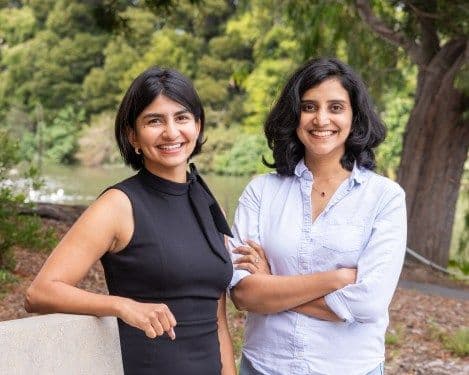
Gamma acquires Accel-backed design startup Lica
Presentation startupGammahas acquired Accel-backed design startupLicain a bid to build out its own design research lab, TechCrunch has exclusively learned. Lica’s co-founders will lead the effort. Lica started off as an app that could turn screenshots and recordings into project presentations and videos. Founded by Priyaa Kalyanaraman and Purvanshi Mehta in 2023, the company a year later raised $4 million from investors including Accel, South Park Commons, and Village Global. Over the past couple of years, it has focused on working with e-commerce sites to create marketing videos that adhere to brand guidelines. Kalyanaraman said Lica wanted to build AI models around communication methods, including video and design, and the founders were familiar with Gamma’s CEO, Lee Grant, as both companies are backed by Accel and South Park Commons. Those conversations eventually led to the acquisition. “We have a very similar North Star vision of wanting to make visual communication easy. We focused a lot on frontier research and making sure that became accessible to users. But that’s just one part of the solution. Gamma had focused a lot on building distribution, taking the application to 100 million-plus users. Given how fast things are moving, we decided to join forces,” Kalyanaraman told TechCrunch. Gamma will continue to focus on helping people build presentations, but like other design companies, it’s also started offering image generation. The company says it now wants to explore different formats of communication with the new research division. “Presentations for us are today a core use case, but how do we expand what presentations look and feel like, and how do people engage with them in the future? What visuals are possible? How interactive are they? These [questions] all require us to think deeply about the core responsibility of communication. This is why we’re excited to invest in this area, because we don’t think anybody else is thinking at that level,” Lee said. Lica’s Mehta said the new research division would work on customizing the presentation and communication styles of AI models for different audiences and tastes. “The point of the presentation is to communicate a large goal. We are thinking about building a platform where these two goals can be personalized to such an extent that you just get a really good output, and then you’re able to edit for different audiences,” she said. Gamma didn’t reveal what products it plans to build as a result of this acquisition, but it did say that it wants to create fluid, multimodal presentations and other communication modalities. AI presentation startups have received tons of investor attention and money over the last few years. Prezent raised$50 million in two rounds; Gamma raised$68 million at a $2.1 billion valuation; andPresentations.ai was also backed by Accel. We’re even starting to see some consolidation in this category: Earlier this month,OpenAI acquired NextSlide.
View

Why India’s IT Giants Need Mexico When AI Shrinks the Team
Indian IT services firms are using Mexico for customer-facing work as AI reshapes global engineering and delivery.
View

OrbitAID to Demonstrate Satellite Life Extension Mission in 2027
The Bengaluru-based company will test inspection, docking, refuelling and orbital repositioning in a single mission.
View

ChatGPT Gets New Sticker Maker for Personalised iMessage, WhatsApp Packs
OpenAI has introduced a new feature that lets ChatGPT users create personalised sticker packs for messaging. Users can turn their own ideas, photos and inside jokes into stickers and use the results in conversations on iMessage and WhatsApp. The feature adds another way to use ChatGPT for creating personalised images, with users able to customise the stickers before sharing them. It is available globally to mobile ChatGPT users, giving them a simple way to create stickers without relying on pre-made packs.
View

‘The world seems to be ready’: An interview with OpenAI head of product Thibault Sottiaux
Users of OpenAI’s software engineering tool Codex might know Thibault Sottiaux as the guy whoresets their token limitswhenever the product hits a growth milestone. Now, OpenAI is trying to bring that dopamine hit to the rest of us with ChatGPT Work, a platform for white collar workers to leverage AI agents. I spoke to Sottiaux forour feature on the productand its challenges, but we wanted to share more of that conversation with our readers. Here’s a lightly edited and condensed version of our interview about winning over skeptics, discovery as a product design philosophy, and the cost of intelligence. TechCrunch:I know you’re a member of the technical staff. Is it right to say that you’re the product lead for Codex and Work? Sottiaux:I lead all of core products—that is API, agent infrastructure, enterprise, all of ChatGPT, which includes ChatGPT Work, but also ChatGPT classic, and then everything that is Codex as well. Q: Am I right in thinking you report to Greg Brockman? Sottiaux:Yeah, Greg. I like to say that everyone reports to Greg at the end of the day. Q: Why is ChatGPT Work so important to OpenAI? Sottiaux:We wanted to bring the power of coding agents to everyone, and so this is an exercise in taking something that was made for technical people, and then packaging it in a way that is like safe and delightful to use, but also you can use on the go on mobile, on web, and making it available to as broad of a population as possible. This is why we launched it as part of the Plus plan as well, which is only $20 a month, and the amount of value you get out of it is quite incredible. So it’s like that’s like what we were pursuing. It’s like “make this technology available to the broadest population possible.” Q: Analysts say that there’s an important economic motivation here, that OpenAI needs to own the application relationship with the user. Sottiaux:The more value and the more utility that we generate for users, the more they will be willing to also pay for some part of that utility, and that’s how we’ve always seen ChatGPT as well. It’s like I’m bringing so much utility to you as a user that you just sort of sit there and you’re like, “of course I want to pay $20 bucks a month for this,” because you know the value that you get is so much more. Q: How important could this technology be, in terms of winning over public opinion towards AI? Sottiaux:The way that I view it is, we have a role in bringing everyone along with this technology, and so there’s this: how do you do diffusion? Codex was built for a forgiving technical audience, where we were making some of these capabilities available very early on, and now we are at a level of maturity of this technology where we feel it is the right step to diffuse it to a much broader audience, and then teach everyone … this is much more than getting help on writing or getting help on some personal advice. In this new factor, ChatGPT can actually do entire very complicated tasks for you all autonomously in a way that is delightful and safe. The mission of OpenAI is to bring everyone along. TC:How you think about that transition and when the moment is right to let the model take the lead versus putting buttons or a user interface in front of people? Sottiaux:The essence of what we’re trying to do is building extremely capable models, and then figuring out the most simple and delightful way to bring them into your life so that you get tremendous utility from it. And in order to do that, you need to get out of the way, almost, of the model, and you need to just let it express itself and be able to harness all of the utility that it can provide to you. … [A] minimal product surface, just delightful simplicity, a way to engage with humans that is very natural. We had text before, but now we’ve launchedChatGPT Voice, which has seen a lot of growth. It is super natural to just talk to it, right? The way that we’re talking now, just have an engaging conversation. The progression of this technology is going to become more natural over time. It adapts to humans. You don’t have to do the reverse, where you have to learn how to use this application. TC:Isthe model there? I was reading Ethan Mollick, who is a Wharton professor who studies these tools,sayingthat ChatGPT Work tries to be magic, and Claude Cowork puts A/B tests in front of you and has you make more choices. Do you think workers generally are ready for that level of magic? Sottiaux:We definitely see that the world seems to be ready. This is why we’ve had incredible adoption. We just announced, we hit 20 million users. We managed to launch it in a way that is … simple but powerful, simple but uncompromising. TC:My brain kind of breaks when I think about building a product that’s meant to do everything. Do you think about a minimum viable product? Do you think about discrete problems? What are you evaluating? Sottiaux:It is almost like a product of discovery as well. As we push on the frontier of capabilities of models, we also discover what it’s capable of, and we sort then lean into the things that it is the most capable of, and then you know build great products around it. There’s this element of discovery of the capabilities as well, including for us. And that’s always a very magical, fun experience. For example, GPT 5.6 was a step up in general work: being able to process a large amount of documents, generating quality slides, generating quality reports, doing deep research, things that a professional will do. We then lean into that, and then we capture feedback, and then we continue to improve. And this is also part of iterative deployment of these capabilities. It’s learning from the community, learning from real use, and then continuously improving it. TC:There’s a big gap between what I’m paying on the Plus plan and the amount of tokens I’m using. How do you think that plays out? Should I be worried about that? Should CFOs be worried about that? Sottiaux:We are working every day to push the frontier on efficiency. We announced major price cuts with Luna, 80% off. This is a permanent price correction… so the current level of frontier capabilities become cheaper and cheaper over time. This is something that will continue. Our goal is to, over time, include more utility in the same dollar amount. So if you want to do more, you know, it’s like of course you can pay more to do more, but in terms of what is capable today, it’s like you wake up six months from now, you should be able to do all of the same with less spend. TC:What do you say to someone who is stressed out about giving it access to their e-mail, giving itaccess to iMessages, which you just rolled out today? Sottiaux:It’s important to pick models that are safe and aligned. And a very, very big part of our investment is in the safety stack, the safety approach, publishing honest benchmarks on these things. And our models are world-class at these topics.
View

Can Mohali's Cost Arbitrage Put Punjab on the Global GCC Map?
Mohali and the greater Tricity region have attracted approximately ₹7,000 crore, or around 34% of new investment in Punjab, this fiscal year.
View

$203,000 H-1B Visa Fee? New Proposal Adds to Trump’s Separate Payment
US Department of Homeland Security proposes new $103,000 H-1B fee to recover immigration system costs
View

Alibaba Launches Wan3.0 AI Video Model as AI Investment Accelerates
The model can turn documents, spreadsheets, presentations and web pages into videos of up to 30 seconds, as Alibaba expands its multimodal AI capabilities.
View
Submit your Tool


PoweredByAI.app is an AI Tools Directory helping individuals, businesses, and creators discover the best AI tools for writing, coding, design, productivity, and more.
© 2026 , Product of011BQ. All rights reserved.