🚀 Zaprep: Your Socials on Steroids. Start free — automate 1,000 DMs/month & turn engagement into leads. with 1,000 automated DMs/month.
Latest AI News

InspeCity Raises ₹100 Crore to Take In-Space Servicing Systems to Orbit
The funding will support four orbital missions and the commercial deployment of propulsion and inspection systems over 12–18 months.
View

From Scans to Care: AI Rewrites India’s Diagnostic Playbook
AI is pushing India’s diagnostics beyond one-off reports towards personalised, continuous health monitoring.
View

Viral AI startup Instinct has raised $350 million at a $2.5 billion valuation
Instinct, a startup founded only last year and helmed by a 23-year-old, has managed to ride the wave of AI enthusiasm toward a gargantuan valuation over the course of the summer. The company, which offers an AI assistant that has inspired enthusiasm among its early users,told theWall Street Journal on Wednesday that it had raised $250 million in a recent Series B funding round. That new round brings the company’s total funding to $350 million and gives the startup a valuation of $2.5 billion. That new funding round was co-led by Index Ventures and Benchmark, the Journal reported. Instinct, which is offered by the company Spear Street Technology and led by founder Noah Shinn, is an agent that the company says can efficiently organize your life. Users connect it to their apps and devices and can communicate with it via texts and calls. “I’m thrilled with everything our early users are doing with Instinct,” Shinn wrotein a tweeton Wednesday. “They’ve told us they’ve planned cross-country road trips, bought weekly groceries and concert tickets, and cancelled hundreds of dollars of subscriptions. Someone’s even planning their wedding with Instinct.” Instinct, which rocks adecidedly lo-fi website, is currently in private beta, but it has already inspired a certain amount of controversydue to privacy concerns. Online, users have worried about the overly generous permissions that the app requires as well as its terms of use that has disturbed some users because of their invasive potential.
View
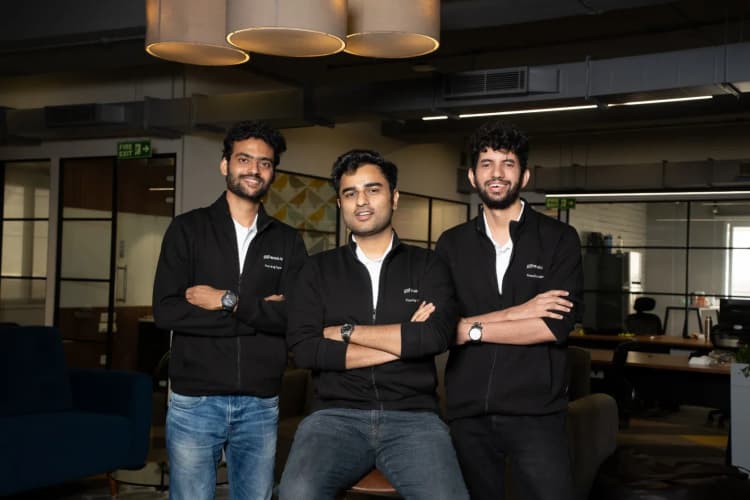
Bengaluru-Based AI Startup Ringg AI Secures $10 Mn in Series A Extension Led by Peak XV
The Bengaluru-based startup plans to use the funds to expand its AI agents and enterprise operations across India and international markets.
View

Gujarat Police Seeks AI System to Connect 80,000 CCTV Cameras
Participants will test their systems on about 50 cameras, tracking a designated vehicle and generating real-time alerts, movement histories, and GIS visualisation.
View

India’s Next Global Legal Services Opportunity is Hiding in Its Data
The country has already demonstrated that it can become a global centre for technology, finance and business-process services. Legal Tech outsourcing could be the next frontier.
View

Why Did Stripe Spend $8 Billion to Capture AI Spending?
“Would you keep production traffic on a gateway owned by the company that also settles your revenue?”
View

DN Solutions Opens First India Plant With ₹600 Crore Investment, Targets Physical AI Manufacturing
The Korean machine tool maker said that it has deployed its full Phase 1 investment in Bengaluru and plans to expand local manufacturing, supplier development and engineering talent.
View

Your Next Laptop Will Be Costlier, Thanks to AI Data Centres
Memory shortages are driving up prices for everything, from consumer electronics to NVIDIA AI servers, while squeezing PCs and smartphones.
View

SpaceX Announces Starbase Louisiana Launch Site
The site is expected to support frequent Starship launches and expand SpaceX’s launch operations beyond Texas.
View

Mystery Ox Alpha Revealed as GLM-5.3-Flash, Running Entirely on Chinese AI Chips
"This demonstrates that Chinese chips can support frontier-model inference efficiently and economically at scale,” said Z.ai.
View

Why India’s Classrooms Can No Longer Teach the Way They Used To
“The purpose of education is to be able to create something. This will help us in creating products and technology.”
View
Submit your Tool


PoweredByAI.app is an AI Tools Directory helping individuals, businesses, and creators discover the best AI tools for writing, coding, design, productivity, and more.
© 2026 , Product of011BQ. All rights reserved.