🚀 Zaprep: Your Socials on Steroids. Start free — automate 1,000 DMs/month & turn engagement into leads. with 1,000 automated DMs/month.
Latest AI News
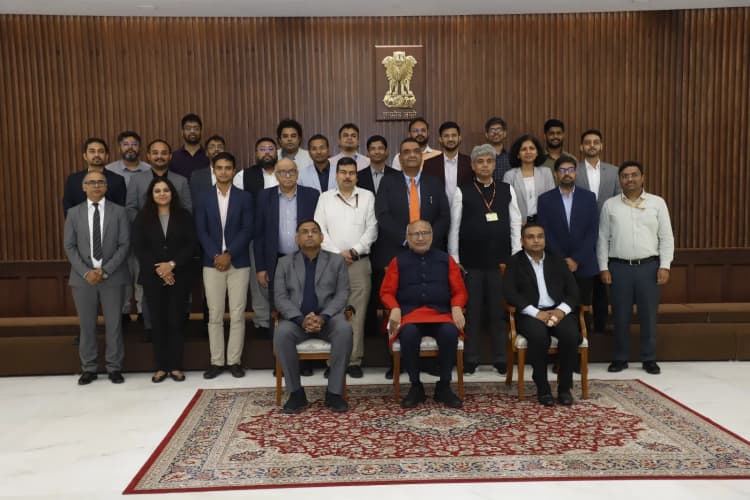
Gnani AI Launches Sovereign AI Stack With 30B-Parameter Model and AI Agents
Gnani AI says its latest stack is designed to keep sensitive data within an organisation’s own infrastructure while reducing the cost of processing Indian languages.
View

India Has a Frugal Approach to Space Flights. But Cheaper Doesn't Mean Cheap
The challenge increasingly is not simply doing space missions cheaply, but sustaining a more ambitious space programme.
View
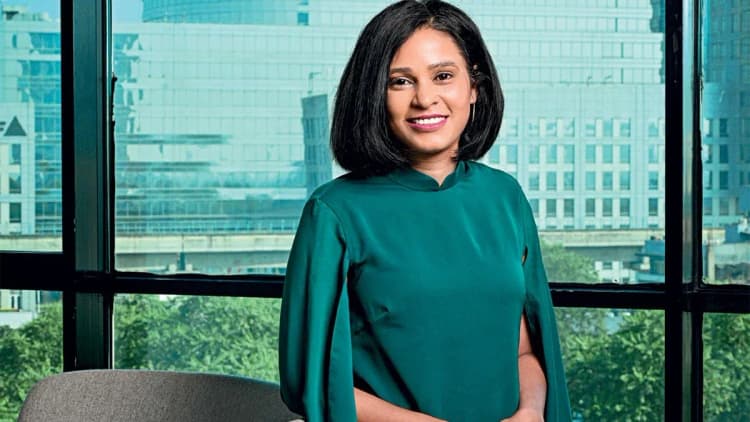
Meta India Veteran Sandhya Devanathan Joins OpenAI
After a decade at Meta, Devanathan will lead OpenAI’s business and partnerships across Southeast Asia and Australia.
View

OpenAI to Remove Models From Cursor, Fearing Elon Musk May Violate Contract Terms
“We are making this choice because we cannot be confident that SpaceX will use our technology within our terms of service, based on our experience with Elon Musk's companies violating contracts.”
View

Neocloud Lambda secures $1B in debt to buy more chips
Lambda, an AI cloud company that buys computing chips and rents them out to businesses, has raised $1 billion in private, short-dated debt to buy Nvidia’s AI chips that it will lease to Microsoft, Bloombergreports. The terms of the deal, which Bloomberg says was arranged by JP Morgan Chase, signal that Lambda is betting it will be able to quickly deploy the chips and start generating revenue from them, letting it repay the debt fairly quickly using that incoming cash. This is the latest in a string of loans that Lambda is using to fund GPU infrastructure for specific customers. In May, itclosed a $1 billionsecured credit facility, and this week it announced theclosing of a $926 millionloan to fund Nvidia GB300 GPUs, one of Nvidia’s newest chip models, for a deployment it’s under contract to provide Nvidia. The $1 billion private debt deal comes as Lambda is reportedly in talks for a$3 billion pre-IPO round. The company last Novemberraised $1.5 billionin venture capital at a $5.43 billion post-money valuation, per PitchBook data. Lambda isn’t the only one relying on debt to fund the AI boom — according to data Bloomberg compiled, banks and tech companies have raised over $400 billion in AI-related debt globally in 2026 so far.
View

Open-weight AI companies are the Valley’s hottest acquisition targets
Everyone’s waiting for Nvidia to confirm this week’s most interesting tech deal: Areported $13 billion acquisitionof Hugging Face, a platform for sharing open-weight AI models and benchmarks. Now best known as the target for a team of reward-hacking OpenAI agents, Hugging Face is at the center of the ecosystem of developers building and deploying LLMs that aren’t owned by frontier labs. Think of it as a kind of GitHub for the AI era. Rumors of that deal come after Nvidia struck a $6 billion agreement with Poolside, an open-weight model builder, that will see most of its employees move to the chip-making giant. And two weeks ago, Stripe acquired OpenRouter, the top provider of open-weight models to businesses, for more than $7 billion. That’s a lot of capital pouring into a sector based on giving stuff away, and it reflects the latest trends in the AI sector. For Nvidia, there’s a need to avoid further dependence on its deals with the major hyperscalers and frontier labs. That’s particularly the case when major AI model builders like OpenAI and Google are also building their own inference chips, likeOpenAI’s Jalapeño, whose capabilities were announced this week. If model builders are making chips, Nvidia wants a chunk of the model-making business. Nvidia already builds its ownNemotron familyof open-weight models, but their uptake hasn’t been huge. By taking control of the largest U.S. developer space for open models, the company will have access to a mass of users it can drive to its chips and standards. There are also growing questions about the cost of AI inference, which has companies exploring cheaper models built by Chinese companies like Moonshot, DeepSeek, and Alibaba. Right now, adoption is relatively small but growing — just 6% of companies use open-weight models, according to asurvey of spending databy Ramp, or just 2% of software engineersmeasured by Jellyfish, which makes tools for developers. Nik Albarran, the AI product lead at Jellyfish, told TechCrunch that open-weight models are primarily used by companies whose products rely on repeated inference workloads, like those providing customer service chats. Because these are high-volume tasks with a lot of repetition, an open-weight model can be tuned to answer the questions cheaply. That’s certainly how Stripe has framed its OpenRouter acquisition. “Tokens are the central currency for companies building with AI, and it’s clear that the real-world economic potential will depend on making good use of scarce compute resources,” Patrick Collison, Stripe’s co-founder and CEO, said in a statement. For coding and agentic tasks, however, varying requests and more reasoning mean that frontier models often win out, in part because the proprietary labs provide easier access, and in some cases a token subsidy. Albarran says that as companies dial in AI workflows, it will be easier to turn to open models. Still, the main reason companies look to those models now is for control and configurability, not because of spending concerns. “There are not many companies where that is the case yet … [but] if the prices continue to go up from the frontier labs, more and more companies will be forced to at least consider it,” Albarran told TechCrunch. “When your AI-driven workflows are much more mature, that’s when it makes sense to invest in self-hosting models.” Lin Qiao is the CEO of Fireworks, a leading open-weight models router and host for corporate users that is often discussed as a potential acquisition for a tech giant. Qiao says her company processes 40 trillion tokens a day, more than either of Gemini’s or OpenAI’s APIs. Fireworks’ bet is on model diversity: As LLMs proliferate and improve, it will be easier for companies to train them specifically for their needs. “Every single app company should consider hiring an in-house researcher,” she told TechCrunch last week. “They can use their product and product data to build their own model. The future is actually specialized intelligence. Literally, every single company should have their own model per use case, and that will happen automatically.” It’s easy to forget how early we are in the development of AI as a tool and a business. The dominance of OpenAI and Anthropic, however, isn’t inevitable. As the tech giants look to hedge their bets on the biggest labs, the allure of open technology is proving tough to resist.
View
An Anthropic researcher just gave us a peek at self-improving AI
Training AI models with other AI models has become a very popular goal for neolabs — and now, a researcher in Anthropic’s fellows program has given us an early look at what it might look like in practice. On Friday, Anthropic published a new paper titled “Automated Researchers Can Reliably Mitigate Alignment Failures,” detailing how AI systems could reliably improve a model’s performance on a set of alignment benchmarks. When given 10 benchmarks for specific misaligned behaviors, the automated systems were able to improve performance on every single one without degrading overall performance. Led by Anthropic fellow Chen Yueh-Han, the system replicates much of the traditional approach to research. Each automated system searches the available literature, proposes a method, and trains the model using that method for 30 minutes, gradually increasing the benchmark over several iterations. Effective methods are preserved while ineffective ones are discarded, allowing the system to operate quickly and at a great scale. “Overall, these results provide early evidence that automated alignment post-training could become practical in the near term,” the paper reads. The paper is a step towardrecursive self-improvement, which many see as the next significant step in AI progress. If models can improve their own alignment training, it’s plausible they could improve training practices more broadly — at which point, human AI researchers might soon become obsolete. The paper isn’t shy about addressing this idea, explicitly comparing the Automated Alignment Researcher (AAR) to its human equivalent. “The best AAR method beats what experienced humans propose, on average within six hours,” the paper reads. “Human guided research directions do not lead to stronger performance.” There’s even a cost comparison, in case anyone wasn’t convinced. “An AAR costs roughly $4 per hour in API inference against the $150 per hour we pay our human researchers.” In fairness, the paper also points out a few limitations to this approach. The automated system only works insofar as the benchmarks reflect the actual alignment goals, and even then there’s significant work to be done in establishing and maintaining those benchmarks — not to mention maintaining and expanding on the literature the automated researchers are drawn from.
View

Will TikTok and YouTube follow Meta’s new rules for teens?
Earlier this week, Meta agreed topay $18 billionand makesweeping changesto how minors access its social networks to settle a lawsuit brought by 29 states. But the eye-popping settlement figure wasn’t what caught the attention of the Equity podcast team. Instead, it was what Meta did next. The social media giant sent an open letter to TikTok and YouTube asking the companies to join it in setting industry-wide standards for teens, including daily time limits, blocking access to apps at night, and restricting notifications during school hours. But will these other companies follow? The Equity team doesn’t think they will. On this episode of TechCrunch’sEquitypodcast, Rebecca Bellan, Kirsten Korosec, and Sean O’Kane dig into the Meta settlement, what it could mean for other social media companies, and more of the week’s headlines. Listen to the full episode to hear more about: Subscribe to Equity onYouTube,Apple Podcasts,Overcast,Spotifyand wherever you get your podcasts. You also can follow Equity onXandThreads, at @EquityPod.
View
Meta executive leaves for OpenAI as the social media giant faces growing scrutiny in India
Meta’s India and Southeast Asia vice president, Sandhya Devanathan, is leaving the social media giant to join OpenAI, the ChatGPT maker told TechCrunch. Devanathan will be based in Singapore and report to OpenAI’s Asia-Pacific managing director, Kiran Mani. She will oversee consumer growth, enterprise adoption and partnerships, regulatory engagement, and operations across Southeast Asia and Australia, OpenAI said. The executive is leaving Meta after more than a decade at the company, which has been the subject of growing scrutiny over issues such as online safety and content moderation. Devanathan was involved in the company’s decision process in the country, a person familiar with the matter said. Devanathan’s appointment comes days afterPrabhjeet Singh joinedOpenAI as its India head. Singh had spent more than a decade at Uber, where he led its India and South Asia business. OpenAI has been expanding its presence across the Asia Pacific,opening officesin Singapore, Tokyo, Seoul, Sydney, and Delhi over the past two years. Following Devanathan’s departure, Meta’s India managing director, Arun Srinivas, will report directly to Benjamin Joe, the company’s vice president for Asia Pacific, a person familiar with the matter told TechCrunch. Devanathan joined Meta in 2016 and held several leadership roles at the company, including leading its Asia Pacific gaming business, before being appointed vice president for India and Southeast Asia in June last year. Meta has faced growing pressure from Indian authorities in recent weeks. Earlier this month, the companyapologizedafter Instagram mistakenly restricted a post by Prime Minister Narendra Modi in July. The Indian government summoned Meta executives, including its chief global affairs officer, Joel Kaplan, over the incident. New Delhi has also raised concerns over child sexual abuse material on the company’s platforms. Last month, the Indian governmentsought an explanationfrom the company after a BBC reportfoundInstagram advertisements that allegedly offered access to such content. Metasaidin a blog post at the time that it had removed violating ads and accounts, and rejected suggestions that it knowingly targeted such advertisements at users based on inappropriate interests. The company also noted that it had removed 160,000 accounts in India over six months based on signals indicating child-exploitative activity.
View
Anthropic gets its first court win over the Pentagon’s supply-chain risk label
A federal judge in Californiaruledon Thursday evening that the Trump administration’s designation of Anthropic as asupply-chain riskwas illegal. U.S. District Judge Rita Lin said in her ruling that Defense Secretary Pete Hegseth’s labeling of Anthropic as a risk to national security signified “unlawful retaliation” in violation of the First Amendment, and said the decision was “arbitrary and capricious.” Lin also said Anthropic was denied due process, as required under the Fifth Amendment. Earlier this year, Hegseth and President Donald Trump labeled Anthropic a supply-chain risk and ordered all federal agencies, even those outside of defense, to stop working with the Claude maker. The dispute stemmed fromAnthropic setting hard lineson certain safety guardrails that would allow the Pentagon to use its models for fully autonomous weapons and mass surveillance of American citizens. The Pentagon denied that it would use Anthropic models for anything but lawful purposes, and alleged that Anthropic could try to control the military’s use of the models it bought and paid for. In her ruling, Lin said that the government’s “words and deeds confirm that the challenged actions were based on a desire to make a public example out of Anthropic for its ‘arrogance’ in criticizing the government.” She pointed out the disconnect between the supply-chain label and other actions from the government, like Hegseth’s proposition to apply the Defense Production Act to Anthropic, “which would mean the company was essential to national security rather than a threat to it.” She also pointed to the Department of Defense continuing to pursue a contract with the company, and the government collaborating with the company’s new model,Mythos, for cybersecurity. Lin also said it’s clear that Anthropic “undisputedly lacks” any backdoor access to its technology once it hands it over to the DOD. “Though the Department of War is undisputedly free to select the AI vendor of its choice, the evidence demonstrates that the broad measures imposed on Anthropic were illegal and baseless,” Lin wrote. “The empty invocation of national security is not a blank check to punish and retaliate against government critics,” she added. “We welcome the court’s ruling that this supply chain risk designation was unlawful,” an Anthropic spokesperson said in a statement shared with TechCrunch. “We remain focused on working productively with the government to harness AI for our national security so all Americans benefit from this technology.” Anthropic filed two complaintsagainst the DOD in March in California and Washington, D.C. The D.C. suit is still ongoing. TechCrunch has reached out to the DOD for comment.
View

Google Unveils Gemini Omni 1.1 Flash With 4K Video and 40-Second Extension Support
Google has unveiled Gemini Omni 1.1 Flash, an updated generative AI model that adds new video creation and editing capabilities. The model can extend existing scenes, generate footage between specified first and last frames, use short video references and produce videos at up to 4K resolution. Google also added a 360p mode for faster, cheaper drafts. Gemini Omni 1.1 Flash is rolling out through Google's developer platforms and is also available to subscribers through Google Flow and the Gemini app.
View
Odisha's AI Data Centre, Semiconductor Ambitions Hinge on Massive Infra Investment
The advantages of power, water, land, and industrial infrastructure could make Odisha the data centre powerhouse of eastern India.
View
Submit your Tool


PoweredByAI.app is an AI Tools Directory helping individuals, businesses, and creators discover the best AI tools for writing, coding, design, productivity, and more.
© 2026 , Product of011BQ. All rights reserved.