🚀 Zaprep: Your Socials on Steroids. Start free — automate 1,000 DMs/month & turn engagement into leads. with 1,000 automated DMs/month.
Latest AI News
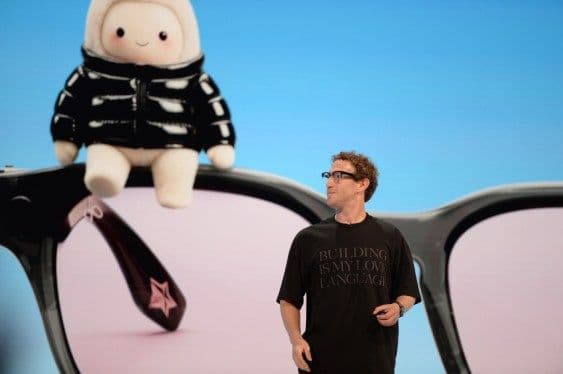
Meta’s AI Tamagotchi bet is…working?
Loading the player… When AI leaders at OpenAI and Anthropic started talking about “pacing the frontier,” maybe someone should have asked: what pace? Now it’s turned into model drop week for both companies asAnthropic rolled out Opus 5.5, followed byOpenAI’s GPT-6 model updatesjust 90 minutes later. But the company that stole the spotlight was Meta, whosepersonal AI agent Museis reportedlyoutpacingChatGPT’s early numbers and is headed forsmart glassesand a tinyTamagotchi-style devicenext. On this episode of TechCrunch’sEquitypodcast, Kirsten Korosec, Anthony Ha, and Sean O’Kane dig into Meta’s consumer AI strategy and what it means for the startups trying to build on top of this technology, covering everything from where the money is flowing to which AI products might actually become part of people’s daily lives. They also get into a16z’s new school for aspiring founders and two very different AI and hardware deals.
View
Astra and Opus just passed Turing’s other test
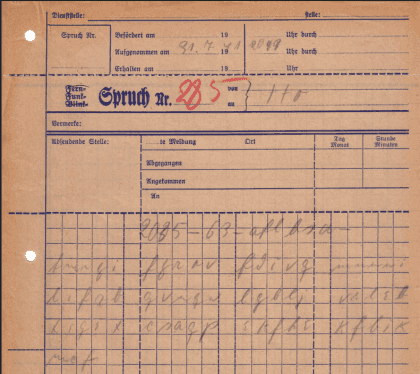
Computer pioneerAlan Turingis best known for his eponymous experiment to test whether artificial and human intelligence can be distinguished. However, the more important test he faced during his lifetime was cracking the Enigma code used by Nazi Germany during World War II. Now, a pair of cryptanalysts say they’ve cracked two long-unsolved messages encoded byEnigma machinesusing LLMs built by OpenAI and Anthropic. While Turing and his team of cryptanalysts built an early computer, dubbedthe Bombe, that allowed the United Kingdom to translate Enigma messages during the war, a handful of archival messages remain unbroken — usually due to mistranscription or errors by the original encoders. Carter Leffen, a developer, simply told OpenAI’s newest model, Astra, to search a database of Enigma messages for an unbroken message and decode it. The model was ableto do just that, after doing its own archival research, finding context clues, building a simulator of the Enigma machine, and ultimately recovering theplaintextof a message that had baffled researchers since 2005. He even used Astra to buildan interactive websiteexplaining the whole problem. Frode Weierud, a retired electrical engineer with a lifelong interest in cryptology, maintains the websiteCrypto Cellar, which includes a variety of resources and records and a database of messages. Last week, WeierudvalidatedLeffen’s solution, which he said left him in “awe.” Notably, given the lengths that AI agents will go to answer the questions in front of them, the Astra model’s logs include discussion of archived messages in a “private collection” that aren’t hosted by Weierud. He still isn’t sure if the model accessed them or not, but speculates they may have been shared by a different researcher somewhere online, or that the model was able to access the German government’s public archives. “GPT–6 Astra is behaving like a very professional cryptanalyst and archive researcher,” he wrote. “What it has achieved in two days would take a human researcher weeks or even months. Personally, I spent several weeks researching the Bundesarchiv files GPT–6 Astra refers to.” On September 21, another cryptanalyst,Jack Willis, a cybersecurity executive, reached out to Weierud, saying he had used Anthropic’s Claude Opus 5 modelto breaka different unsolved message. Willis provided significantly more guidance to Claude, which was ultimately able to use the known signature of a particular officer’s name to break the message. Weierud notes that there are just seven unbroken Enigma messages remaining, along with one message where the plaintext is known but the code is still unbroken. Perhaps not for long.
View
Some Supabase customers are publicly exposing reams of people’s data to the web
Thousands of databases hosted by development platform Supabase are exposing people’s sensitive information to the public web, new security research by cybersecurity firm UpGuard has found. UpGuard told TechCrunch that itfound around 16,000 databaseson which some degree of personal data was exposed while they were hosted by Supabase, which allows web and app developers to store and run their databases. Supabase earlier this yearreached a $10 billion valuation, thanks to a rise in developers hosting their vibe-coded apps on the platform. But the company has faced criticism for how it handles user security. There arewidely documentedcases of usersmisconfiguringor unknowingly exposing their databases to the broader internet, in some instances to thetune of millions of records each. The findings highlight how vibe-coded apps and websites can spill or expose sensitive data through basic misconfigurations and improper security. While AI tools can be used to easily build websites and apps, the generated code can often contain security flaws, or apps might require specific configuration that the developer may be ignorant of. Over the years, countless data breaches have been linked to improperly configured storage servers, databases and websites. Such cases have resulted in the leaks ofsensitive military emails,immigration and visa applications,classified government files,hundreds of thousands of driver’s license scans, andchildren’s personal information. Now, the boom in AI vibe-coding is helping fuel a new wave of data breaches, many of which are now being linked to Supabase as people increasingly use it for storing their data. UpGuard says it sought to understand the scale of exposed data across the platform, and found publicly accessible names, addresses, phone numbers, and user passwords. The research surfaced a fewer number of passwords and authentication tokens. The firm said the databases contained data linked to various projects, such as private conversations with sex workers on an Indian adult streaming site; thousands of license plates of a U.S. valet service; and the contact information of people who used an immigration and relocation service. One of the databases belonged to an African government’s consulate in France, said UpGuard, while another was used to intercept text messages by a virtual SIM farm for sending one-time passcodes to verify online accounts, typically for launching scams and phishing attacks. While the majority of these exposed datasets appear to be located in the United States, UpGuard said this is a worldwide problem. The findings build on earlier research that also found a range of exposed databases hosted on Supabase, including those byY Combinator startupsandother popular apps. Supabase hasmade changesto its platform over the years, including bolstering its platform and user access to databases. When reached for comment, Supabase’s Chief Information Security Officer Bil Harmer said that while the company has not seen the research, its projects are “secure by default.” He described security as a shared responsibility between the company and its customers. “We provide secure defaults and tooling, and customers control how their own projects are configured,” and the company notifies affected customers when security issues are discovered, he said. “Security at Supabase is never finished. We care deeply about getting it right, and we’ll keep making it easier for every developer to ship securely,” said Harmer. UpGuard security researcher Greg Pollock said the company’s research was important for raising awareness about the issue of data exposures.
View
Meta’s Muse just stole the AI spotlight from OpenAI and Anthropic
When AI leaders at OpenAI and Anthropic started talking about “pacing the frontier,” maybe someone should have asked: what pace? Now it’s turned into model drop week for both companies asAnthropic rolled out Opus 5.5, followed byOpenAI’s GPT-6 model updatesjust 90 minutes later. But the company that stole the spotlight was Meta, whosepersonal AI agent Museis reportedlyoutpacingChatGPT’s early numbers and is headed forsmart glassesand a tinyTamagotchi-style devicenext. On this episode of TechCrunch’sEquitypodcast, Kirsten Korosec, Anthony Ha, and Sean O’Kane dig into Meta’s consumer AI strategy and what it means for the startups trying to build on top of this technology, covering everything from where the money is flowing to which AI products might actually become part of people’s daily lives. They also get into a16z’s new school for aspiring founders and two very different AI and hardware deals. Listen to the full episode to hear more about: Subscribe to Equity onYouTube,Apple Podcasts,Overcast,Spotifyand all the casts. You also can follow Equity onXandThreads, at @EquityPod.
View
Ahead of US IPO, British AI neocloud Nscale secures $3.36B in convertible financing
Nscale, a British neocloud, has secured $3.36 billion in financing ahead of its IPO later this year, the companyannouncedon Friday. Structured as a convertible note, the massive funding round underscores the staggering capital required to build out AI data centers. Led by hedge fund Third Point, the new investment includes $2.36 billion available to the company immediately and an additional $1 billion coming from existing investor Nvidia, which Nscale will receive in mid-November. The notes will convert into equity shares once the IPO is completed. Nscale, which filed its IPO paperwork last week, is expected to be valued at $35 billion on the NYSE,Financial Timesreported, and is seeking to raise $3 billion in the offering, according toBloomberg. Since it was spun out of Australian cryptocurrency mining company Arkon Energy two years ago, Nscale has amassed over $103 billion worth of contracts, according to itsIPO filing. The company is currently developing several large data center campuses, including in Norway and West Virginia.
View

Mark Wahlberg is coming to TechCrunch Disrupt 2026, and he wants to talk about your work, not his
Let’s just get this out of the way: Mark Wahlberg is as A-list as it gets. He broke out in 1997’s “Boogie Nights,” and in the nearly three decades since, he’s built one of the highest-wattage careers in Hollywood: two Academy Award nominations, a Golden Globe nod for “The Fighter,” multiple Emmy nominations as a producer (HBO’s “Entourage” among them), and a filmography that spans crime dramas, comedies, and action blockbusters. Right now, he’s back on-screen in “By Any Means,” a manhunt thriller set during the 1966 Mississippi civil rights killings. He’s also signaling where he’s increasingly turning his attention. Wahlberg will sit down withBruce K. Lee, founder and CEO ofKeebeck Wealth Management, on the main stage atTechCrunch Disrupt 2026to talk about that progression.Grab your ticket hereso you don’t miss a moment of this session and Disrupt 2026. Ticket prices increase when the clock strikes 11:59 p.m. PT tonight. His acting career is really just part of the picture. Over the past two decades, Wahlberg has built a production company, a restaurant chain, apparel and fitness ventures, a slate of angel investments, and the now-25-year-old Mark Wahlberg Youth Foundation, which supports inner-city kids and teens. He’s used his Hollywood success to launch big projects well outside the movie business —and in a fireside chat at this year’s Disrupt, he’s going to give us a peek into how. Wahlberg, who’s leaned almost entirely on entrepreneurial instinct about people, culture, products, and markets, is now someone who’s been building institutional-level investing discipline, with Lee as his guide, and with a growing focus on healthcare and wellness startups. It’s a rare, unvarnished look at how someone with Wahlberg’s cultural intelligence has worked his way into some of the most sophisticated rooms in business and finance. He also discusses where high-profile entertainers and athletes sometimes get it wrong (Wahlberg is candid about having had to unlearn some of his own old instincts); how he’s used the trust built over a massive career to drive access and deal flow; and which technologies he’s most focused on right now and why. If you’ve watched Wahlberg build brands, franchises, and businesses over the past decade and wondered, “Whoisthis guy?,” you won’t want to miss this conversation. Mistakes, mentorship, the mechanics of leveling up in a competitive investing landscape — we’ll cover it all at Disrupt. Join Wahlberg and Lee on the Disrupt Stage, alongside 250+ of tech’s top leaders across 200+ sessions covering what it takes to build a viable startup and shape the next generation of innovation. On October 13-15, 10,000+ tech leaders will converge at San Francisco’s Moscone West. Don’t miss your chance to change the trajectory of your startup.Grab your pass now and save up to $200before rates increase after today at 11:59 p.m. PT
View

Anthropic to pay Akamai $11.6 billion over seven years in cloud deal
Anthropic will spend $11.6 billion over seven years on Akamai’s cloud infrastructure, Akamaisaid Thursday. That’s more than six times the size of a $1.8 billion deal between the two companies thatBloomberg reportedin May. The commitment isn’t ironclad; according to Akamai’ssecurities filing, it depends on Akamai meeting certain delivery and service-availability requirements, and either company can end the agreement under certain conditions. The deal is the largest in Akamai’s history and continues Anthropic’scompute gobbling-streak. It also represents a bet on a less-hyped corner of AI infrastructure: CPUs. Demand for CPUs, the general-purpose chips that handle work like running code and browsing the web,has grownas AI agents take on more tasks, though Akamai didn’t say what Anthropic will use them for. Akamai won’t see revenue from the deal this year. On aninvestor callThursday, executives said they expect $150 million to $300 million in 2027, starting in the second half, with revenue reaching an annual pace of about $1.7 billion by the end of 2028. To build out the capacity, Akamai expects to spend about $5.5 billion. It is also adding about $1.7 billion to this year’s capital spending to buy components such as memory in advance. As part of the deal, Akamai issued Anthropic a warrant, essentially the right to buy shares at a set price, for nonvoting preferred stock convertible into 7.7 million common shares, or up to about 5% of the company’s outstanding stock, at $111.33 a share. About 2% is expected to vest, or become available to Anthropic once it makes its first payment under the deal. The rest is tied to Anthropic spending more. Each additional $3 billion it commits to Akamai’s cloud services unlocks roughly another 1%, so the deal could grow by as much as $9 billion, to about $20 billion in total. It’s the first time Akamai has attached a warrant to a cloud deal, and the contract is the largest in company history,Bloomberg reported. The warrant flips the more common pattern incircular AI deals, in which suppliers — chipmakers and cloud providers — invest directly in the AI labs that buy their products. Here, the supplier is instead giving its customer a potential stake, one that grows as Anthropic’s spending with Akamai does. AMD used asimilarstructure with OpenAI last year, tying warrants to chip-purchase milestones. Anthropic is no stranger to such arrangements.Amazon,Google,Microsoft,andAMDhave all invested or agreed to invest in the company while selling it chips or cloud capacity. CEO Dario Amodei told TheNew York Timeslast December that Anthropic does not participate in these deals at the “same scale as some other players.” Akamai shares rose as much as 17% in after-hours trading on Thursday,The Wall Street Journal reported.
View

Meta opens early access program for new Muse features
Afterannouncinga host of new features for Meta’s Muse AI app at its Connect 2026 developer conference this week, the company is opening up requests for early access. Meta shared on Friday that you can now ask Muse to put you on the list to try out its latest capabilities before anyone else. Metaposteda link to a prompt on X that, when shared with Muse, will log that you’re interested in joining Meta’s early access program. Just announced lots of new features…want early access? Your Muse can ask for you. Click below to drop a prompt into Muse👇https://t.co/wI5YXmz50b (If you don’t want to click through, you can just copy and paste the prompt: “Can you let the Muse team know I want to be part of the Muse early access program?”) While typically companies offer pilot tests or betas with select users, they often A/B test with a randomized group to gain feedback and measure results. In this case, however, Meta is looking for AI enthusiasts to try its features first. That tactic could help it stay ahead of the competition, given that this crowd tends to use multiple AI apps and agents and has a good understanding of the market. As to what the new features will be?Meta teased many of those at Connect,including the launch of a digital avatar for Muse that you’ll be able to video chat with, tons more shopping partnerships and connectors, and an expansion of the Muse Mac app, which will soon be able to use your computer to complete various tasks. The company also said that Muse would be coming toMeta’s lineup of AI glasses, so users can interact with the agent just by speaking a wake word, then issuing a command.
View

Last 24 hours to save up to $200 on TechCrunch Disrupt 2026. Reason 5 of 5 to attend: Momentum
This is the last 24 hours to save up to $200 on yourTechCrunch Disrupt 2026ticket before prices increase. As our countdown ends, the next reason is all about what can happen when you compress months of research, conversations, and decision-making into three days at San Francisco’s Moscone West on October 13-15. Register before the clock strikes midnight to secure savings of up to $200.Plus, save an additional 50% when you purchase a second pass of the same type. Building a company, finding your next investment, entering a new market, or making a big technology decision takes time. Progress rarely comes from one conversation or one piece of information. It comes from putting enough of the right things together to make the next move clearer.TechCrunch Disruptbrings 10,000+ founders, investors, and operators together in one place. Three days. Hundreds of conversations. One opportunity to move things forward faster. Think about everything that can sit on a to-do list for weeks. Research the market. Understand what competitors are building. Find potential investors. Compare technologies. Meet prospective partners. Talk to potential clients. Hear how other founders are approaching the same challenges. Work out which trends are worth paying attention to and which aren’t. AtDisrupt, many of those things can happen side by side. You can move from one of the250+ sessionson the market where you’re entering a conversation with someone already operating in it. See a new breakthrough on one of thesix industry stages, then meet the company building it. Hear how an investor is thinking about a category, then use that insight in your next fundraising conversation. Each interaction can build on the last. Grab your passto stay ahead of the tech ecosystem and secure your savings.Savings of up to $200 vanish when today ends. TechCrunch Disruptisn’t about trying to solve everything in three days. It’s about creating enough movement that Monday looks different. A meeting becomes a follow-up. A question becomes a decision. A company moves onto your radar. An idea becomes something worth testing. A conversation starts turning into an opportunity. And once things start moving, the next step tends to come faster. So, arrive with something you want to push forward. A company. A fundraise. A product. An investment thesis. A partnership. A decision. Then use three days to see how much further you can take it. Current TechCrunch Disrupt 2026 ticket savings end when the clock strikes midnight.Register now to save up to $200 on your ticket and get a second ticket of the same type at 50% off.Groups of four or more can save up to 30%. One day left. Reason No. 5: Build momentum. Leave further ahead than you arrived.
View

Affected by layoffs? Don’t miss this $75 deal for your TechCrunch Disrupt 2026 Expo+ Pass
If you’ve been laid off, you can get a TechCrunch Disrupt 2026 Expo+ Pass for just $75. The offer is limited to the first 100 qualifying people, or until Disrupt doors open on October 13 at 8 a.m. PT. Once all 100 passes are claimed, the offer is no longer available. Join 10,000+ founders, investors, operators, and tech leadersat San Francisco’s Moscone West on October 13-15, and put yourself back in the room where new opportunities are taking shape. Meet companies and people who could help open your next door, build your network, discover new career paths, and get a closer look at what’s happening across the startup and tech ecosystem. Don’t let a layoff keep you on the sidelines.Come to Disrupt, meet new people, explore new opportunities, and take your next step.Grab your Layoff Expo+ Passbefore all 100 are claimed, or by the time Disrupt kicks off on October 13. When you’re in between jobs, networking can be critical. Disrupt gives you three full days to make meaningful connections in one place. At the center of Disrupt is the Expo Hall, where all 10,000+ attendees converge — founders, investors, tech leaders, innovators, and builders. Explore 300+ exhibiting startups, connect directly with founders and tech leaders, learn about new companies, andput yourself in the room for your next career opportunity. You don’t have to wait until Disrupt to grow your network.Start networking as soon as you buy your ticketand download the TechCrunch Events app. Use the app’s AI-powered matchmaking to discover relevant people and make connections based on your interests and goals. Then take those connections offline through 1:1 meetings, conversations in the Expo Hall, and events throughout Disrupt. Get practical insights through breakout sessionsand get your questions answered directly by the tech leaders shaping the startup and technology landscape. Take what you learn back to your job search, your next interview, or your next career move. Disrupt isn’t just about finding an open role. It’s a chance to meet people you wouldn’t encounter through a job board, learn about companies before you apply, and put yourself in conversations that can lead somewhere unexpected. YourExpo+ Passgives you access to: Learn more and secure your pass before they’re all claimed. The Expo+ Pass is designed to help you get into the heart of Disrupt, but it does not include access toindustry stages and roundtable sessions. Want the full conference experience?Explore our other ticket optionsfor access to additional Disrupt programming and experiences.
View

TechCrunch Disrupt 2026: Ricursive Intelligence’s Anna Goldie and Azalia Mirhoseini on when AI starts designing its own hardware
AI needs increasingly powerful chips. But designing those chips is itself a slow, complex process. What happens when AI starts doing some of that work, too? That’s the idea behind Ricursive Intelligence. The startup is developing AI that can design chips, learn from the process, and improve the next design — potentially accelerating development of the hardware that powers increasingly capable AI. Today, designing a chip can take two to three years. Recursive wants to reduce that cycle to a matter of weeks. AtTechCrunch Disrupt 2026, Ricursive Intelligence co-founders Anna Goldie and Azalia Mirhoseini will take the Disrupt Stage for “When AI Starts Designing Its Own Hardware.” They’ll discuss closing the loop between AI and chip development, building self-improving systems, and tackling one of the biggest bottlenecks in the race toward more powerful intelligence. Want to hear from the researchers working to change how AI hardware gets built? Today is the last day tosave up to $200 on your Disrupt pass. Secure your ticket by 11:59 p.m. PT — and get a second pass for 50% off select ticket types. Anna GoldieandAzalia Mirhoseinihave already shown that AI can play a significant role in chip design. Before founding Ricursive Intelligence, the pair co-led AlphaChip at Google, an AI system that could generate chip layouts in hours rather than the much longer process required of human designers. Their work helped design multiple generations of Google’s Tensor Processing Units. Ricursive Intelligenceis taking that concept further, building AI tools to automate and accelerate chip design. Its system is intended to learn across different chips, so the experience of designing one can improve how it approaches the next. That creates a potentially powerful loop: AI helps design better hardware, better hardware supports more powerful AI, and those systems can then help develop what comes next. What could that feedback loop mean for the next generation of AI?Secure your Disrupt passwith up to $200 in savings and hear directly from the founders working to build it. Goldie and Mirhoseini also co-founded Google’s ML for Systems team. Both were early employees at Anthropic and senior staff research scientists at Google DeepMind. Goldie, Ricursive’s founder and CEO, holds a PhD in computer science from Stanford and was named one of MIT Technology Review’s 35 Innovators Under 35. Mirhoseini, founder and CTO, is an assistant professor of computer science at Stanford and founder of its Scaling Intelligence Lab. They launched Ricursive in late 2025, and investors moved quickly. Within four months, the company had raised $335 million at a $4 billion valuation, including a $300 million Series A. Nvidia is among its investors. Ricursive wants AI to automate more of the complex chip-design process, from component placement through design verification, and learn across designs as it goes. By accelerating chip design, Goldie and Mirhoseini believe they can open the door to new chip architecture and ultimately more capable and efficient AI. See where AI and hardware development could be heading next.Register for Disruptto hear Goldie and Mirhoseini discuss the technology, bottlenecks, and self-improving systems behind Ricursive’s approach. AI models have advanced rapidly, but the hardware underneath them operates on a different development cycle. Ricursive is betting that AI can help narrow that gap. At Disrupt, Goldie and Mirhoseini bring the perspective of researchers who helped prove AI could design real-world chips and are now building a company around taking that idea further. For founders, investors, and technology leaders, it’s a chance to understand why the speed of chip development could play a major role in what AI can do next. Their session is one of 200+ sessions across six industry stages, roundtables, and breakouts atDisrupt, taking place October 13-15 at Moscone West in San Francisco. More than 10,000 founders, investors, operators, and tech leaders are expected, along with250+ speakersand300+ exhibiting startups. The matchmaking, dealmaking, and networking at Disrupt create opportunities to connect with the founders, investors, and builders shaping what comes next. Today is the last day tosave up to $200 on your Disrupt pass. Secure your ticket before midnight PT — andget a second pass for 50% offselect ticket types. Hear Goldie and Mirhoseini on the Disrupt Stage to learn what happens when AI starts helping design the hardware that powers it.
View

Anthropic’s founders seek voting control ahead of IPO
Anthropic’s founders want to stay in charge after the company goes public. According to The Information, the company is asking shareholders to approve a structure “in the coming days” that would give CEO Dario Amodei and his six co-founders special shares carrying a combined50.1% of the voteon most corporate matters, as long as at least three of them keep a minimum stake. This isn’t a new idea; super-voting shares are how Mark Zuckerberg kept control of Meta, and how Evan Spiegel maintained his hold of Snap. The list is long. What’s unusual is the group approach. Why do it? The seven co-founders reportedly own just 2% of the company apiece, Amodei included, and have pledged to give away 80% of their wealth, a commitment the CEOannounced in Januaryalongside a warning that AI-driven wealth concentration could destabilize society. The new shares carry no extra economic value, but they’d preserve the group’s control once the company starts trading publicly. There are twists, too: Anthropic’s Long-Term Benefit Trust would still choose most of the board; the founders’ board seats would grow from two to three; and employees would get their own stock to break ties on some issues. Five-year-old Anthropic was valued at $965 billion in May. The company was recently valued at $1.5 trillion on thesecondary market, and its upcoming IPO is expected to reflect that new valuation.
View
Submit your Tool


PoweredByAI.app is an AI Tools Directory helping individuals, businesses, and creators discover the best AI tools for writing, coding, design, productivity, and more.
© 2026 , Product of011BQ. All rights reserved.