🚀 Zaprep: Your Socials on Steroids. Start free — automate 1,000 DMs/month & turn engagement into leads. with 1,000 automated DMs/month.
Latest AI News
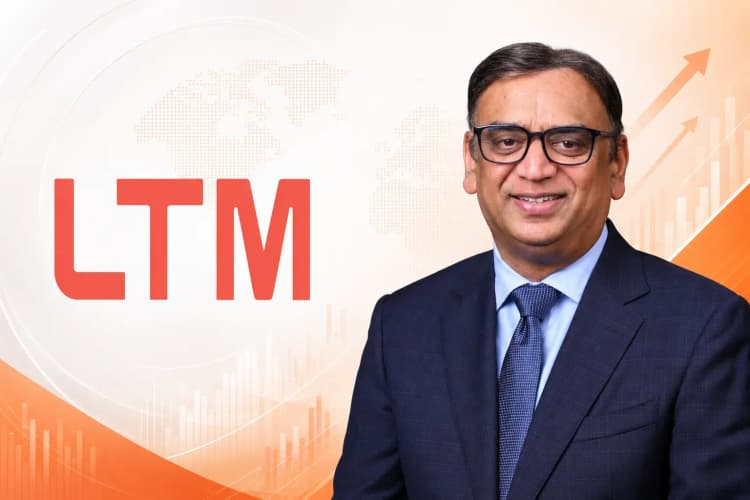
LTM is Over AI Pricing Reset. It's More Worried About AI Deployment
LTM is betting that investing early in forward-deployed engineers will position it for the next phase of AI services growth.
View

Anthropic Introduces India-specific Pricing for Claude AI Subscriptions
The revised plans include Claude Pro at ₹1,999/month, Claude Max at ₹11,999 and ₹23,999, and Claude Team starting at ₹2,399/user/month.
View

Elevation Capital Raises $500 Mn Fund IX to Back India's Next Wave of AI Startups
Elevation Capital’s Fund IX will focus on seed and Series A investments, emphasising early-stage opportunities in AI and deeptech.
View

Hermes agent maker Nous Research in talks for new funding at $1.5B valuation
Nous Research, the startup behind the open-source Hermes agent, is finalizing a new round of funding led by Robot Ventures, with significant participation from USV and other prominent investors at a $1.5 billion valuation, according to three sources with knowledge of the deal. The company is raising at least $75 million, and fielded a high level of interest from investors, according to the people. Nous Research declined to comment. USV and Robot Ventures didn’t respond to our request for comment. The company was founded in 2023 by Jeffrey Quesnelle, Karan Malhotra, Ryan Teknium, Shivani Mitra. Before this round, it had raised a total of $70 million in funding from investors including Paradigm, Robot Ventures, North Island Ventures, OSS Capital, and Balaji Srinivasan, according to Crunchbase. Weeks afterOpenclaw’s agentwent viral, Nous Research released its own competitor called Hermes. OpenClaw is an agent that runs locally on a PC and can perform tasks on behalf of the user. One key difference is that Hermes shipped withbuilt-in “skills,”such as web search, coding and image understanding. Furthermore, it was designed to automatically learn from people’s usage and build more skills without manual intervention. Additionally, the startup has released languagemodels focused on coding and math. Just like Openclaw, users can automate tasks with Hermes and chat with these agents or receive messages from them in apps like Telegram and Discord. These tools have become increasingly popular as they allow users to run their AI agents remotely and around the clock. Open-source and widely adopted, Hermes has amassed a massive following on GitHub, boasting roughly 214,000 stars and nearly 40,000 forks. Developers can run Hermes on adesktopor on a virtual private server. But Nous Research also offers a cloud-hostedversion, which some users may find to be more user-friendly, avoiding any setting up on their own machines. The hosted version is available via various paid tiers ranging from $20-$200 a month. Sources say the new funding will help to expand Hermes’ products and business model further.
View
Video-generation startup PixVerse raises $439M, valuation soars past $2B
Singapore-based video-generation startupPixVersesaid today that it has closed its Series C extension, with a total of $439 million raised in the round. The company told TechCrunch that, with the new tranche of funding, its valuation has crossed over $2 billion. With the cash, the company aims to expand its world model offering and reach customers across geographies. The company closed its initial Series C round in March, led by CDH Investments. While it didn’t disclose the funding amount, Bloomberg reported it to be in the range of $300 million. PixVerse said that investors in the extension round include Alibaba, Lollapalooza Capital, Ivy Capital, Grand Mount Capital, Eastern Bell Capital, Mirae Asset, BlueFocus, and CloudAlpha, joining returning investors iGlobe Partners and OCBC’s Lion X Ventures. The company was founded by Wang Changhu and Jaden Xie in 2023. Changhu previously worked at ByteDance on computer vision, and Xie was an executive director at investment firm Lighthouse Capital. PixVerse offers multiple models, including a V-Series video model for consumer and API use, a C-Series video model for professional film and commercial workflows, and an R-Series of world models for game development and world building,which was released earlier this year. Through its tool, users can generate videos in up to 4k resolution with audio baked in. The startup said that its consumer product has over 150 million registered users and over 15 million monthly active users. The company declined to specify how many of them are paying users but it offersa competitive rateof $4.80 per minute of generation for image-to-video. Xie believes that despite the huge opportunity for video generation to succeed, only a few companies are making progress in the market. “OpenAI exited the business when they shut down Sora 2. Other companies like Meta and Tencent are not able to create high-quality video models. So there are only a few companies that can meet the quality bar,” he told TechCrunch. He said that there is equal opportunity in the consumer and enterprise markets as users are creating videos for fun and also consuming short video content made with AI, while enterprises are using video generation for creative, learning, and marketing use cases. However, saying that the startup’s model produces a “high-quality” output is hardly a unique qualifier. Xie mentioned that its core strength lies in labeling. “We think the key difference is not in data, but how you label it, because data is available everywhere. My co-founder worked at ByteDance, where he built core visual understanding technology behind TikTok using AI. Using this tech, TikTok was able to label data accurately and build a strong recommendation algorithm. This experience comes in handy when building a video-generation platform,” Xie said. The company has big ambitions this year. It wants to expand its enterprise outreach across the globe. The startup already has a deal with its investor Alibaba to deploy the video-generation features. In terms of product rollout, it plans to launch a new V-Series model for video generation and release a new version of its world model this year. It has 150 employees across offices in Singapore, Beijing, and Shanghai. With the new funding, PixVerse aims to hire more researchers and people in go-to-market function. Despite its confidence in its own models and products, the video market is heating up. There are players like ByteDance with its Seedance model, former Tencent AI head Dr. Wei Liu’s Video Rebirth, and Kling AI from Asia. In the West, there are competitors likeMidjourney,Runway, andLuma. Multiple companies, includingYann LeCun’sandFei-Fei Li’sstartups, are building world models.
View

Uber’s product chief on hotels, robotaxis, and why the company doesn’t want to be “everything for everyone”
Uber has spent the last year quietly pushing beyond the two businesses most people associate it with. There’s ride-hailing, of course, and delivery, but spend time in the app and you’ll now find hotel bookings powered by Expedia, “shop for me” concierge features, and boat rentals in Europe. Under the hood, so to speak, there’s also a lot happening. Think debit cards for drivers, a data-labeling side hustle for these same earners looking to make more moolah, and a six-month-old, business unit calledAV Labs, which is developing a fleet of sensor-equipped vehicles that’s separate from Uber’s regular driver network and designed to gather ever-larger amounts of driving data. Uber frames the initiative as a way to strengthen its relationships with autonomous vehicle partners, several of which it also holds equity in, but it sure looks like a hedge, as well. Uber competes directly with some of those same partners, with Waymo chief among them, and owning the data layer gives Uber both some leverage and optionality. Whether Uber becomes a full-blown “everything app” similar to some Asian super-apps like Grab, remains an open question. But in this conversation, Uber Chief Product Officer Sachin Kansal walks TechCrunch through the company’s financial-services ambitions, its increasinglycomplicated relationshipwith Waymo, its new AV Labs data operation, and how AI is starting to show up in ways riders and drivers will actually notice. This interview has been edited for length and clarity. TC: You unveiled hotels, boat rentals, and more shopping features earlier this year. How did that list get made, and what didn’t make the cut? SK: Every year our teams are obviously building a lot of stuff, and a subset of that we decide is worth sharing with the world on the biggest stage. This year the theme that we gravitated towards was really travel. 1.5 billion trips on the Uber platform every year actually happen outside of a user’s home city, so we know that travel is something that’s a very common use case for Uber users. Our headline announcement this time was actually introducing hotels on Uber as a partnership with Expedia. But travel is so much more than that — you need rides to go from the airport to the hotel, and you need food. We heard from a lot of our users that a lot of them had stopped using room service and were just using the Uber Eats app. With “shop for me,” the goal was for us to enable you to shop from any local store even if that store is not available on Uber Eats with the entire catalog. Travel really is, in my opinion, the third leg of the stool — we had rides, then we added eats, and now we are adding travel. Is Uber moving toward offering its own financial services, the way “everything apps” in Asia do? Financial services for us cuts across multiple different entities — consumers, but also drivers and couriers, and merchants. We have multiple products today focused mostly on drivers and couriers, where we have what we call the Uber Pro card, which they can use as a debit card and transfer all their earnings onto. We are starting to experiment with some of those products for merchants in certain parts of the world right now. As far as consumers are concerned, we’ll see if that makes sense for us in the long term. Right now there is a currency for consumers to use — we call them Uber credits — and this ties to our membership program. On hotels, for example, members get 10% cash back on a $1,000 transaction, that’s $100 back as credit that you can then use on rides and eats. Would Uber ever offer its own buy now, pay later product? I’m not sure, because we want to make sure that the experts do what the experts do. We already have announced partnerships with others in the industry who are already providing that service, so that at checkout you have the ability to do that. In terms of our general product strategy, we’re not trying to be everything to everyone. With boat rentals, in Europe, tapping the tab hands users off to a partner’s own booking flow rather than checking out inside Uber. Is that handoff model a template for what’s coming? Definitely there are some instances, especially when we are doing something new, for us to rely on our partners, because a two-way integration just does take a lot of time, and in some cases it’s good for us to try before we integrate deeply. In the case of Expedia, we decided it just makes sense to integrate deeply — we built the entire UI on our own in partnership with Expedia. But in some cases it may make sense for us to hand off the rest of the experience to the experts in that field, and if you get great traction, we can always integrate them deeply. Your Uber One membership product now has 51 million members and accounts for roughly half of bookings. Do you have data showing the cross-sell actually works — that a delivery user later starts taking more rides? On the delivery side, it takes you two to three orders for you to break even the monthly fee that you pay. As members get more habituated to the program, it’s increasing their frequency within the line of business they are already using. And it’s also leading to more usage of the other sides of the business — we are seeing people who are mobility only also start to use delivery, and people who are delivery only also start to use mobility. Delivery has been one of the hardest businesses in tech to make profitable. Is Uber Eats still leaning on ride-hailing to stay healthy? During the early years of Uber Eats it was not profitable yet, but over the last several quarters, Uber Eats has been independently a profitable business for us, and generating a lot of profit. A story I wrotethis springframed Uber as unexpectedly competing more directly with Airbnb, which is now offering airport transfers through a partner. Do you see it that way? Who areyoumost focused on? There’s no dearth of competitors — Lyft in the U.S., Didi and 99 in Latin America, Bolt, Ola around the world, and on delivery, DoorDash, Delivery Hero. But I only spend a very small percentage of my time thinking about that. The bigger percentage of my time, or what keeps me up at night, is are we providing our users all the value that we can provide. You recentlywound downthe Waymo pilot in Phoenix while scaling elsewhere. How do you keep the experience coherent when you’re partnering with — and in some cities competing with — the same supplier? Phoenix was the first city that we launched with Waymo, with about a dozen cars, but our scale launches have been in Austin and Atlanta, where we have hundreds of cars with them. When we recently looked at the Phoenix pilot, we mutually decided that it doesn’t make sense for us to continue. Waymo is an excellent partner of ours, but in many cities they’re also a competitor. We are not in the race to be an L4 autonomy provider — what we are focusing on is laying down the race tracks so we can work with multiple players. We believe in the hybrid network, human drivers as well as autonomous vehicles in the same city, because it allows us to balance demand and supply. Regarding AV Labs, what can Uber offer autonomy partners that they don’t already have? We are going to be equipping hundreds of cars with sensors, deployed through our fleet partners, and through that we’ll be collecting millions of miles worth of driving data. That really helps with the long-tail problem — you want to see all the edge cases, not just the P95, P99 level. Beyond the data itself, there’s so much know-how from our 10 million earners in terms of how pickups and drop-offs work. We handle 25 million lost items every single year — how do you operationally handle that in the world of autonomy? That’s the kind of operational expertise we can bring. Is Uber selling driver and rider data to Gen AI companies? I would divide this into two parts. In terms of Gen AI companies, we are able to label data for them using our earner base, or through audio collection, and yes, we have commercial relationships with them and we are selling it to them — that’s a part of the business that is new, and we are extremely bullish about it. AV Labs is separate, and we are still figuring those models out for sharing that data with partners. It’s a little early. Are drivers recording conversations with riders for this data work? No, no, no — I want to be very clear, there’s no conversation being recorded as part of that while they’re on a ride. When they’re not on a trip, they’re not driving, they’re not delivering, they’re just talking, or they’re listening to a piece of audio and transcribing it. They get paid for doing that, by the way. Where has AI actually shown up in ways a rider or driver would notice? If you are an earner on our platform, we have an earner assistant — the number one question on their mind is how do I make more money, and it will say, look, it’s actually pretty light in the South Bay, but you may want to go five miles away where there’s a lot of demand. On the Eats side, there’s a grocery cart assistant where you can say “I want milk, eggs, bread” and it creates the cart very quickly. And on rides, you’re able to use voice to request a ride — say “I’m looking for a ride to the airport, I have six pieces of luggage, six people.” So a fully agentic Uber — “plan and book my whole trip” — is on the horizon? I can’t put a date on it, and I can’t tell you exactly what the feature set will be, but I think AI is going to be a huge enabler of that, where I can leave the complexity to the platform and just tell an agent what exactly I want. Easier said than done — we want to make sure we’re not just checking a box by shipping an agent that maybe doesn’t work that well. As CPO, how do you personally prioritize with so many ideas in flight? I would say I spend 70% to 80% of my time making sure that our existing products, or the products we are about to launch, are as solid as possible. All the new ideas are like shiny objects — if you have 100 ideas, maybe five of them are good, and those five then need a lot of cultivation and conviction. So probably 20% of the time is on new ideas — including, by the way, I go out and drive and deliver myself, just to see our product from the other side firsthand.
View
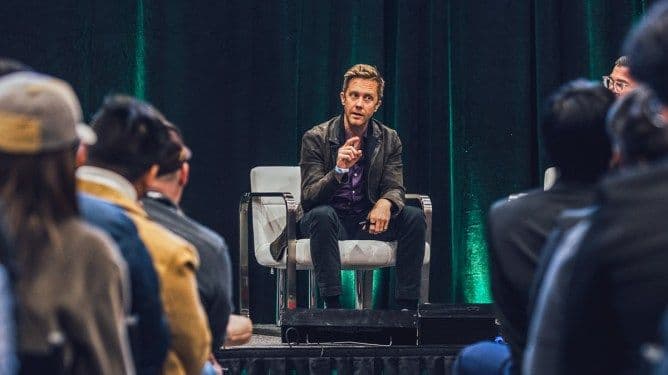
Already rich, already successful, why the last wave of tech winners is grinding again
A pattern is emerging among people who’ve already made it big. They’re rolling up their sleeves again, seemingly out of fear of missing AI’s defining moment and, presumably, the irresistible allure of making even more money — potentially a lot more. Tom Blomfield, who co-founded GoCardless and Monzo before spending 4.5 years mentoring founders as a Y Combinator Group Partner,announced on Mondaythat he is taking a leave of absence to join Anthropic’s compute team — not as an executive, but as a member of technical staff. He’s not alone in making that kind of move. Instagram co-founder Mike Krieger joined Anthropic as Chief Product Officer in 2024, and Andrej Karpathy, a founding member of OpenAI who went on to lead AI at Tesla and start his own company, Eureka Labs, joined Anthropic’s pre-training team in May, framing the decision almost identically to Blomfield’s, writing that “the next few years at the frontier of LLMs will beespecially formative.” Not everyone is joining someone else’s lab. Chamath Palihapitiya, the “SPAC King” who has mostly stuck to boardrooms and all things “All In” since leaving Facebook in 2011, just took his first full-time operating role in over a decade as CEO of 8090 Labs, his enterprise AI coding startup, which he announced acouple of weeks agoalong with a $135 million Series A led by Salesforce Ventures. Wrote Palihapitiya on X, “I am convinced that what we are building now iseven more important, so there was no decision to make except to be all in.” Similarly, Eric Wu, who ran Opendoor for a decade before stepping back in 2023,recently launchedNavigateAI, an AI “copilot” for construction workers, with $25 million in seed funding. Wu told me directly on a recent call about his decision to dive into an AI startup, “I knew if I looked back in 10 years and didn’t do something related to it, I would probably regret that.” The clearest sign of how keen people who’ve already “made it” are to work on what they view as the still-early-innings of AI might be the job title itself. “Member of technical staff” is the deliberately flat, non-hierarchical label that Anthropic and OpenAI use for nearly everyone on their technical teams, regardless of seniority. It’s the same title Blomfield is taking. It’s also the title that Peter Bailis took this March, just months after becoming Workday’s CTO, a role overseeing AI strategy across an $8 billion-revenue business. Bailis lasted less than a year beforetrading itfor a spot at Anthropic.
View

Satya Nadella has issued a shocking warning to companies using AI
Of all the debates raging about the potential downsides of AI, there is one worry causing the most hand-wringing among AI enthusiasts in Silicon Valley. Their fear is that the giant AI labs that sell proprietary models are somehow acting like Trojan horses. The concern is that, as startups and enterprises use AI models from labs like OpenAI and Anthropic, the labs gain ever-increasing access to those companies’ most sensitive business information. The model makers can then use that knowledge for themselves, potentially becoming competitors to their own customers. Those issuing such warnings range fromVCs like Jason Calacanisto Palantir CEO Alex Karp. Now, in a surprisingblog postpublished on Sunday, Microsoft CEO Satya Nadella has joined this crowd. Nadella warns that AI users (the “buyers” as he calls them) are paying twice. They knowingly spend for AI token usage but they also, obliviously, hand over valuable data in the process. “You essentially pay for intelligence twice, once with money, and again with something even more valuable: the proprietary knowledge you must reveal to make that intelligence useful. The better you want the model to perform, the more of that knowledge you have to feed it!” he writes. Most dangerously, enterprises are literally teaching the models about the nuances of their businesses, he argues. “Models learn from ‘exhaust,’ the prompts people write, the tools agents use, and especially the corrections people make when the model is wrong. Every correction is distilled into institutional know-how,” he writes. This is “the kind of knowledge a competitor could never buy,” and yet enterprises are handing it over. Nadella argues that if AI companies get to freely scrape the internet to train their models, it’s only fair that enterprises get to study — or “distill” — those models in return. “Distillation” is the practice of using a model’s own outputs to learn how it works and to train a new, often cheaper, model based on those insights. In February, Anthropic accused Chinese open source models ofsending millions of prompts to Claudeas a way to improve their own models, and urged the U.S. government crack down on export controls. Nadella’s point is that model makers can’t have it both ways. It’s hypocritical for them to freely train on the world’s data while restricting others from doing the same to their models. “While the great innovation that comes from model providers having fair use rights to train models on public data is needed, I find it ironic that the status quo is to then turn around and impose restrictive terms on distillation,” Nadella writes. Nadella is particularly concerned when model makers “reserve the right to learn from customer usage and interaction data.” Nadella’s solution is the kind of thing the CEO of a giant cloud provider would suggest. He wants companies to “retain ownership” of their data, including prompts, feedback, etc. So he’s urging them to build their own “proprietary learning environments” on the cloud (where their data is likely already stored anyway and, conveniently, could mean Microsoft’s cloud, Azure). He also wants companies to build in what he calls “orchestration layers” — essentially, a way to easily switch between AI models from different providers rather than being locked into one. Tools like AI “gateways” that let companies do exactly this have become increasingly popular. While Nadella never uses the words “open source” as the method for retaining ownership, this is an obvious subtext. Yet, there’s another subtext. Large companies, many of which still have some of their own data centers in addition to using the cloud, are already moving to open source models installed on their own premises (“on-prem,” in industry jargon). Idit Levine, founder and CEO of Solo.io — which makes networking and security software that helps enterprises manage AI systems — says she’s seeing exactly this shift play out with her own customers. After experimenting with proprietary model makers, they start asking themselves: “Can I take an open source model and run it on-prem? It will do almost 90% of what the big one’s doing. It will cost way less,” she tells TechCrunch. “They understand that, and they can control it.” Solo.io’s technology was selected last year to be the tech powering theLinux Foundation’s Agentgateway project. Her company counts enterprises like T-Mobile, ADP, and SAP as customers. She sees companies increasingly installing on-premise open source models and sees it as the next big wave in enterprise AI use. She’s not alone. Vercel (best known as a platform for building and hosting websites, which has recently added AI model-switching tools) and OpenRouter (a company that helps developers route requests across different AI models) are both seeing a surge in traffic toopen source models. In fact, open models accounted for 29% of all traffic routedthrough Vercel’s gatewaylast month. With the CEO of Microsoft, a company that has invested in both OpenAI and Anthropic, now openly urging enterprises to be wary of using proprietary models, we’ll bet this trend continues to grow. “In consuming intelligence, you are creating intelligence. And what you create should belong to you,” Nadella writes.
View

Anthropic starts localizing Claude pricing for India, its biggest market after the US
Anthropic has started localizing Claude’s pricing in India, its biggest market outside the U.S., as global AI companies increasingly tailor their offerings to win users in the world’s most populous nation. Local pricing has begun to appear for some users in India on Claude’s website and mobile apps. However, Anthropic has yet to enable payments via the Unified Payments Interface (UPI), India’s widely used instant payments network. Users still need to pay by card or through Apple’s and Google’s app store billing systems. This is unlike OpenAI, whichrolled out Indian rupee pricing for ChatGPTin August with UPI support. Claude users in India havelong soughtrupee-denominated subscriptions, with dollar pricing and currency conversion adding friction to accessing the service. The move is particularly significant, as India accounts for5.8% of global Claude usage, making it the service’s second-largest market after the U.S., according to Anthropic. On Claude’s website in India, Anthropic is listing Claude Pro at ₹2,000 (about $21) a month when billed annually, compared with $17 a month in the U.S. Claude Max starts at ₹11,999 (around $125) a month in India, versus $100 in the U.S., while Team plans start at ₹2,399 (around $25) per seat a month, compared with $20 in the U.S. The India prices include local taxes. Moreover, prices on Claude’s mobile apps vary slightly from those listed on its website. The Indian rupee pricing comes amid Anthropic’s growing focus on India. The Claude maker opened an office in Bengaluru in February, afterannouncingthe move in October, and in Januaryappointed former Microsoft India managing directorIrina Ghose to lead its business in the country. Anthropic has also partnered with Indian IT services giantsInfosysandTata Consultancy Servicesin recent months as it looks to scale enterprise AI deployments. That expansion faced a setback in June when Anthropicabruptly suspended accessto its Fable 5 and Mythos 5 models for non-U.S. entities, prompting some Indian developers and startup founders to consider alternatives to American AI models. The restriction on Fable 5 hassince been lifted, though access to Mythos 5 remains limited. India has become an increasingly important market for AI companies, driven by its large base of developers and technology workers. However, converting widespread usage into paid subscriptions remains a challenge in the price-sensitive market. Anthropic did not respond to a request for comment on the Indian rupee pricing rollout.
View
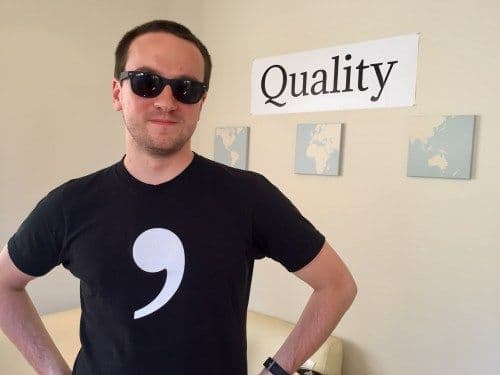
Should AI help you get away with killing your spouse?
Quick question: Do you want AI to be so well trained, it could help husbands (or wives, for that matter) plan the perfect murder of their spouses? Just as a gut reaction, that feels like a no for me. I wouldn’t even think it was a particularly hard question. But America contains many diverse perspectives, andone such perspectivewas shared by Comma AI founder and longtime jailbreaker George Hotz over the weekend. The post comes in response to a bunch of big-picture AI alignment plans, most recently theAI 2040: Plan Apolicy paper from the AI Futures Project. That paper envisions a world in which the world’s researchers collectively choose to slow down AI development for 14 years for the good of humanity. But of course, not everyone who read the paper agrees with its premises or conclusion. In fact, Hotz disagrees with the whole premise that AI progress should be managed for the collective good. In his post, he argues that the fast-takeoff scenario — the hypothetical where AI rapidly obtains superhuman abilities — doesn’t make a lot of sense. (I agree with a lot of what he says here!) For Hotz, the best approach to AI alignment and safety is to focus on locally controlled AI models that are closely aligned with the interests of their users. That’s a cool idea, particularly since it reminds me how much of current AI is built around centrally managed services like Claude and ChatGPT. There are infrastructure-related reasons why AI services developed this way: It’s expensive to host these large state-of-the-art models and most people aren’t using them enough throughout the day to justify truly personal AI. But those factors become less important as the technology develops. Part ofwhat was so exciting about OpenClawwas this experimental, DIY approach, and it would be great to see more AI products try to recapture that. But Hotz is a provocateur by nature, so he doesn’t stop there. He compares user-aligned AI to a gun(!), which does not complain if you use it to kill your stepmom. (I feel like there are other rules against this?) A truly aligned AI would be able to order meth-lab equipment from Amazon Prime and show you how to use it if that’s what you wanted and asked for, he says. (Again, I don’t think AI would be the limiting factor here.) Hotz even says he would die to defend this principle, although it’s hard to imagine the series of events that would lead to that. “We either live in a world with freedom or we don’t,” Hotz writes. If those are the options, the freedom world does sound better! Still, I don’t know. It’s not all about freedom, right? Any structure involving a lot of people (societies, marketplaces, corporations, etc.) requires balancing equities, binding individual needs into a network of interdependent preferences and systems of accountability. And anyone deploying mass-market tech products should probably think about that network as a whole, which means taking seriously the interests of the as-yet-unmurdered spouses and stepparents of the world. The freedom Hotz experiences is really a space of potential futures made possible by collective enterprise; those futures would disappear overnight if we all started behaving like little AI-powered Napoleons. Like the meme says, we live in a society. Having a local AI willing to take on the corporate world for my benefit does sound cool though! I can’t wait for a review unit.
View

Sam Altman’s space data center trash talk is what most experts already believe
Sam Altman and Elon Musk traded barbed social media posts over the weekend, drawing new attention to the gap between vision and reality for the space-compute business. Responding to Muskaccusing himof being a scammer, Altmansaid, “homeboy you’re the one sellling [sic] public market investors on short-term space datacenters.” Setting aside “homeboy,” Altman is saying what a lot of experts have concluded but public market investors seem to be ignoring: Space data centers are not going to be a serious business anytime soon. SpaceX’s plans to launch a fleet of orbital data centers to perform AI inference tasks are themain driverbehind the company’s 2-trillion-dollar valuation. Bullish analysts say that the potential for that processing power to fuel SpaceXAI’s models or act as an orbital neocloud are unprecedented in the AI boom. But when you talk to subject-matter experts — whether it’s theentrepreneursbehindother space data center startups, theteam at Googledeveloping that company’s orbital compute project, or engineers who havedone the numbersfor fun — you find the same answer: This isn’t going to make a big dent until we have much cheaper rockets and the ability to produce high-powered satellites at low cost, en masse. Musk’s answer to this is easy to predict: Starship, SpaceX’s huge new rocket, is expected to make its 13th test flight as soon as July 16. If Musk’s team can get that vehicle to the point where it flies again and again, the data center business case could close. But even if the company successfully recovers both stages of the rocket on this test flight, operational reusable flight will still likely be years away, and space data center launches will likely take a back seat to SpaceX’s commitments to NASA and to building out its own Starlink network. SpaceX also conceded during its IPO road show that Starshipmay not be fully reusablein the near-term and will need to throw each of its second stages during each launch, which would put a kibosh on economical space data centers. That’s why Musk’srejoinder— “We start flying them next year” — falls a bit flat. There’s no doubt that SpaceX could launch a satellite equipped for high-speed data processing next year, but the big question is when it will be able to launch and manufacture them at scale. And that’s likely a question for the 2030s.
View

The wildest allegations in Apple’s trade secrets lawsuit against OpenAI
Apple’strade secret lawsuit against OpenAIis packed with a number of extraordinary allegations that paint a picture of a coordinated effort to extract confidential information from current and former Apple employees. But what’s perhaps most striking is how casually the alleged misconduct is described, including one message that reads, “LOL, I found out I can access the [network storage], so funny.” The 41-pagecomplaint, which was filed on Friday, is filled with unusually detailed allegations, like this and others. Here are some that stood out the most to us: So far, OpenAI has only commented publicly via astatement shared on Xon Friday, which reads: “We have no interest in other companies’ trade secrets. We remain focused on building innovative technology that empowers people everywhere.”
View
Submit your Tool


PoweredByAI.app is an AI Tools Directory helping individuals, businesses, and creators discover the best AI tools for writing, coding, design, productivity, and more.
© 2026 , Product of011BQ. All rights reserved.