🚀 Zaprep: Your Socials on Steroids. Start free — automate 1,000 DMs/month & turn engagement into leads. with 1,000 automated DMs/month.
Latest AI News

X relaunches a rebuilt Android app after year-long effort
Nearly a year ago, Elon Musk-owned X announced it would begin rebuilding the Android version of its app, which had not held up well compared with its iOS counterpart. On Monday, the companyshippedthe refreshed app, which is now available to download. The new Android version of X was built from scratch and promises improvements to loading, scrolling, notifications, and more, X said in itsannouncement. We've completely rebuilt the Android X app from the ground up.It's faster, smoother, and more reliable than the old version in every way. We modernized the foundation so everything just feels better: scrolling, loading, notifications, you name it.pic.twitter.com/ULlSwiIlvV The update has been in development for nearly a year. Last August, X head of product Nikita Bier said the social network company wasputting togetheran Android “dream team” to reshape the experience. Later that fall, he alsonotedthat X had one of its biggest weeks ever for Android downloads in October — a reason why the new app was a priority for the company. With today’s release, Bier described the effort as “one of the largest engineering projects” in the company’s history, saying the new Android app was built from scratch rather than simply being updated. Haha, straight answer: none of it. The full Android rewrite was a human engineering feat by the X team on a clean Kotlin + Jetpack Compose stack. Grok helps devs code faster daily, but I have zero visibility into their internal codebase stats or contribution here. Big win for… “It’s faster, smoother and more reliable. But most of all: it will enable us to build new features at lightning speed,” Bier wrote on X. The Elon Musk-owned social network has been rolling out a number of new features in recent months, includingX MoneyandX Chat, which were given their own standalone apps. The Android release could also potentially entice more users in global markets, where Android is the dominant smartphone platform, to either download or return to X, after years of platform neglect. (Problemson Android were so badat one point last yearthat the X app couldn’t even load X posts when users clicked links.) However, Bier warned that there are still some rough edges to iron out, including improving performance on older Android devices and adding support for Spaces, X’s live audio feature. Those updates are still underway. Bieraddedthat other features, including the new video editor, the react-with-video feature, cashtags, and custom timelines are also coming soon to Android. Existing Android users can get the new X app by updating their existing app through the Google Play Store.
View

AI’s most important protocol is getting a little bit easier to use
TheModel Context Protocol(MCP) is one of the basic building blocks of AI interoperability, giving AI models a secure way to access external data sources and services. It’s the plumbing that lets a chatbot reach into your calendar, your database, or your internal tools, instead of engineers building custom pipes for every connection. Next week, that protocol is getting a significant update, and while it might not be noticeable to end users, it could make a big difference in how the ecosystem develops. Theofficial specfor the new version has been public since May, but we got anunusually clear explanationof the changes Monday morning from the folks at Arcade — a two-year-old startup that’s built its entire business around the work of getting AI agents to actually function inside real companies, letting them securely connect to and act on tools like Gmail, Slack, and Salesforce. Arcade raised$60 millionin June based on the idea that most AI agents don’t fail because the underlying models are weak but because the infrastructure around them isn’t ready yet, and that’s what this update is trying to address. Essentially, MCP is changing the way it handles session IDs — the little tokens that servers use to remember “ah, this is the same conversation as five seconds ago” — so servers can operate more easily at a larger scale. As Arcade founder Nate Barbettini puts it: [Under the current system] The first time an MCP client like Claude connects to a server, it sends a “hello”: I’m Claude, here’s my version, here are my capabilities. The server replies with its own capabilities and hands back a session ID… From then on, the client sends that session ID on every request so the server knows it’s the same conversation. Sometimes the ID expires, so the client has to notice, request a new one, and carry on…. Picture a real deployment. You’re running a server for millions of users, behind a load balancer whose entire job is to route each request to whatever server in the farm is free, sometimes in a different region. Now every one of those machines has to know about a session ID that some other machine handed out. It’s not impossible, but it’s a serious pain, and it fights the load balancer instead of working with it. In other words, the current setup assumes one server remembers you, but real companies spread traffic across dozens of servers that don’t talk to each other by default, so today’s MCP servers have to do extra work just to keep track of who’s who. That’s been a significant headache for anyone running an MCP server at scale, and part of the reason we haven’t seen more companies ship large-scale, first-party MCP integrations despite all the hype around agentic AI this year. Under the new system, the protocol will take a looser, “stateless” approach to session IDs on the server side, similar to how most ordinary websites already work, which should make the whole system a lot easier to maintain and, in theory, cheaper to run at scale. That’s all pretty technical, but it’s an important reminder that not every part of AI development is moving at breakneck speeds. While model training races ahead, a lot of the technical infrastructure those models need is still subject to the slow log-rolling of standards-body consensus. It really is happening; it’s just a little slower!
View
Google is working on a new AI chip designed to make Gemini more efficient
Alphabet, Google’s parent company, is designing a new server chip to help its in-house Gemini models operate more efficiently. The new chip, internally dubbed “Frozen v2,” is slated to be released sometime in 2028, The Informationreported, citing anonymous sources. According to the report, the chip could be between six and 10 times more efficient than Google’s existing AI chips, measured by the number of tokens generated per unit of power. In a response to TechCrunch, the company didn’t directly confirm the report. It didn’t deny it either. “Our teams are constantly researching and experimenting with new innovations to deliver maximum performance and efficiency for our users and customers,” Google told TechCrunch. “While not every project moves into production, this rigorous exploration is central to our full stack approach. By co-designing our hardware and software from the ground up, we ensure our systems are integrated and highly optimized for real-world workloads.” AI companies have increasingly sought to produce their own chips as a way to make their in-house models run more efficiently and to address global shortages in AI computing capacity. Such efficiency has become a key selling point for tech companies asconcerns about AI spendhave dampened the market euphoria that previously characterized the industry. At the same time, firms are engaged in an ongoing attempt towean themselves off chipmaker Nvidia, which has historically dominated the AI chip market and whose dominance has left major AI makers dependent on its hardware. In June, OpenAI announced its first custom chip, an inference processordubbed Jalapeño. Earlier this month,it was reportedthat Anthropic was discussing a new chipmaking partnership with Samsung. Investorshave previously worriedabout Alphabet’s massive planned expenditures designed to help it build out its AI strategy. Earlier this year, Google said that itplans to spendbetween $180 billion and $190 billion. With so much money at stake, the company needs to prove that those investments will pay off. News of the more efficient Frozen v2 chip appears to have assuaged investors, giving Google a boost ahead of its earnings report later this week. Following publication of The Information’s report,the company’s stock climbedsome 3% on Monday morning.
View
Trump’s latest AI czar has already resigned
Chris Fall, the director of the Center for AI Standards and Innovation (CAISI), has resigned, the agencyconfirmedto multiple news outlets. He was appointed just three months ago after the last appointee, Collin Burns, left in less than a week, TheWashington Post reportedat the time. Burns was reportedly “pushed out” of the job in April because he previously worked for Anthropic and the Trump administration had been battling with the company, sources told the Post. No reason was given for Fall’s departure. Prior to leading CAISI, Fall was the director of the Department of Energy’s Office of Science during the first Trump administration and had been the acting director of the DOE’s Advanced Research Projects Agency-Energy. He worked in the DOE’s Office of Naval Research (ONR) prior to that. Before Burns and Fall, the agency was led by venture capitalist David Sacks, whose title at the time was White House AI and crypto czar. Sacks stepped down in March. CAISI, which operates under the National Institute of Standards and Technology, is the primary organization for developing technical standards and testing methods for AI models as well as assessing cybersecurity risks. Yet it was not the agency at the center of the most recent model-risk brouhaha. That occurred in June when the U.S. Commerce Department invoked an obscure export control directive that effectively forced Anthropic to pull its Mythos and Fable models from the market. The ban waslifted by the end of the month, when Secretary of Commerce Howard Lutnick said he was satisfied with Anthropic’s safety plans. Earlier this month, the White House alsosigned an executive orderfor a new AI safety oversight program called “Gold Eagle” that creates a clearinghouse for cybersecurity vulnerability coordination. A host of federal organizations were named as part of the program, including the Commerce Department and Department of Homeland Security. But, as CNBC pointed out, CAISI was not among the federal organizations mentioned. Meanwhile, after Anthropic’s models were freed from the ban, Google DeepMind CEO Demis Hassabis began calling for the creation of anindependent, industry-run standards bodyto regulate frontier AI modeled after FINRA — the same sort of mission that CAISI was formed to tackle. Fall’s resignation also follows this weekend’s handwringing overChinese AI lab Moonshot’snew version of its open model Kimi, which performed competitively against flagship frontier models. The administration was weighing efforts to somehow ban Chinese open models,Axios reported. This sparked immediate debate and outrage over the weekend,including from Sacks, who argued that regulations shouldn’t be used as a protectionism strategy for U.S. proprietary AI labs. While CAISI has released a few reports on the capabilities of Chinese open-weight models Z.ai’s GLM-5.2 and DeepSeek V4 Pro, it hasn’t talked much about its processes for testing. (Open weight means these models can be publicly downloaded and run locally, but its training code and datasets are not available). Since July 9, TechCrunch has sent multiple inquiries to both the DoC and NIST about how its LLM evaluations work and has not received a response.
View
YouTube clarifies policies around AI slop and upsetting videos
A recentchangesees YouTube further cracking down on AI slop by clarifying its policies around how content on its platform can be monetized. To discourage creators from using AI and other tools to make low-quality content, YouTube’s policy now explains that there are three types of videos under the broader category of “inauthentic content” that cannot be monetized. YouTube already had policies around AI content. Last year,the company announcedit was stemming creators’ ability to generate revenue from what it called “inauthentic content,” including mass-produced videos and other types of repetitive content that have become easier to generate with the help of AI technology. Rather, the recent update is about adding more nuance to the existing policies. The updated guidelines break down inauthentic content into three categories, including generic, repetitive, or template-based content, followed by off-putting or distressing content, and then any content where AI personas are used to discuss sensitive topics, like health and finance. While AI slop, much like adult content, is something of a “you’ll know it when you see it” situation for many, YouTube’s policies are meant to more specifically spell out when AI’s use in content creation is allowed or is not permitted for videos being monetized through its YouTube Partner Program (YPP). The program, which allows creators to earn money through advertising and subscriptions, is YouTube’s lifeblood; allowing it to fill up with AI slop or other low-quality fare would not be in the company’s financial interests. This is especially important given that YouTube is inclose competition with TVand other streamers for TV ad dollars. Google’s video platform now generatesmore ad revenue than rival streamersand hasovertaken Netflix in average daily views worldwide. As YouTube’s trust and safety chief Matt Halprin explained in aCreator Insider videolast week, the company’s goal with its policy revision is to cut down on content farming efforts — a reference to low-quality videos that exist solely to generate revenue. “AI can actually allow people to make a lot of videos,” said Halprin. “Sometimes those videos are great, and it really enhances creativity. And you can create a higher volume of high-quality content that we want to encourage and have in YPP.” “But that exact same new tool can allow you to make lots of videos really quickly that are very similar. They’re very generic and don’t really have a narrative arc and don’t really show your creativity. So the same technology really enables great stuff, but it also enables stuff that’s kind of content farming, and that’s the stuff that we don’t want to have in YPP,” Halprin added. The first category, he said, includes repetitive content, such as material that can be easily made with AI, computer-generated imagery (CGI), or templates, with little variation from video to video. This fills a channel with cookie-cutter videos. Halprin notes that tutorial videos could also fall under this policy if they’re reproducing content that’s already prevalent on the platform, instead of being original. The second category focuses on what YouTube calls “off-putting” content, or content designed to be distressing or emotionally manipulative to chase views. This could include videos featuring an animal in distress, which someone then comes along and rescues, Halprin said. “We’ve heard from our viewers that that’s not something that they like. They find it off-putting. They don’t want to come back to that channel, or maybe even the platform,” Halprin said. Channels dedicated to this content will be removed from YPP, regardless of whether the content is AI-generated or not. The third bucket more directly targets the use of AI personas — representations of real people made with AI. YouTube says it doesn’t want to incentivize creators using AI personas to discuss more sensitive topics, like finance, legal issues, healthcare, and medical issues. Any YouTube channel that has too much of any of these three types of content will not be able to monetize, Halprin said. The policy clarifications were rolled out on July 16 and impact all YouTube Partner Program members.
View
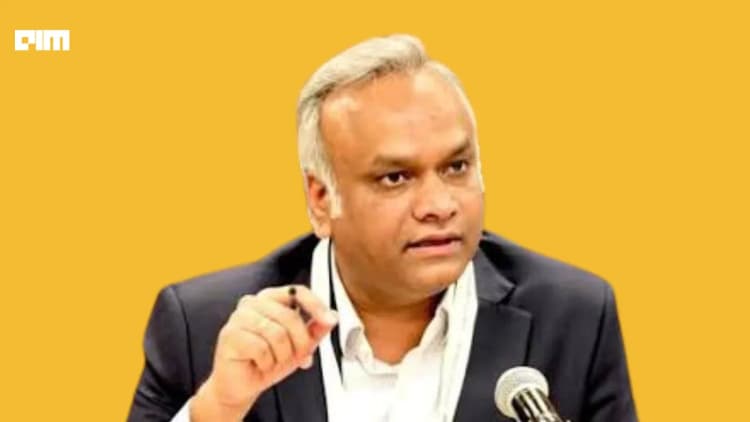
Karnataka Approves ₹12 Crore AI Centre of Excellence at IIIT Raichur
The centre will focus on developing practical AI applications across sectors including agriculture, healthcare, education, MSMEs, and governance.
View
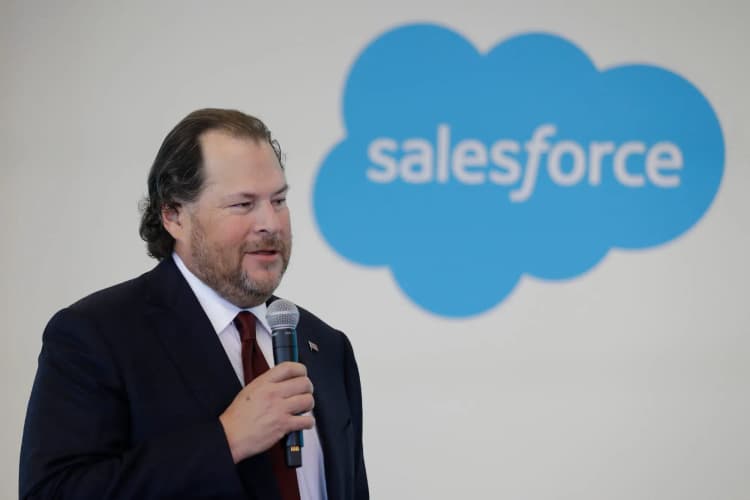
Salesforce Launches SMB Growth Kit for Indian Businesses
The company said businesses adopting the package can go live within four to six weeks through structured onboarding and implementation support.
View

Meet the AI Startup Behind India’s Got Latent Viral Song ‘Chai Ki Tapri’
The startup is betting that AI’s future lies beyond song generation, with agents designed to help creators produce, distribute and monetise music.
View

Now That AI Has All the Answers, 3Blue1Brown’s Grant Sanderson Says Humans Must Ask Better Questions
The creator of 3Blue1Brown argues that curiosity, not information, may be the most valuable skill in the age of AI.
View

Telangana Partners With Microsoft to Launch India’s First Green Skills & Applied AI Centre for Green Pharma
The centre of excellence will include dedicated learning zones focused on Applied AI.
View

HCLTech Launches Global Technology Centre in GIFT City, Signs AI Research Pacts with IIT Gandhinagar & GTU
The facility will deliver AI-powered solutions for HCLTech’s global financial services clients.
View
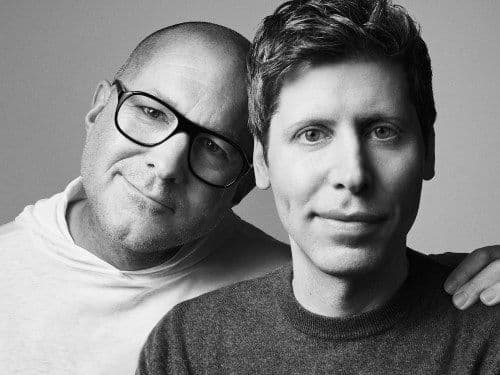
Can an Apple lawsuit derail OpenAI’s hardware plans?
Apple recentlyfiled a trade secrets lawsuit against OpenAI, accusing the AI company of a pattern of misconduct aimed at getting current and former Apple employees to share confidential information. (In response,OpenAI saidit is “not aware of any evidence that this complaint has merit.”) On the latest episode ofTechCrunch’s Equity podcast, Kirsten Korosec, Sean O’Kane, and I debated whether this lawsuit will cast a shadow over OpenAI’s much-discussed plans to get into the hardware business (starting witha mobile smart speaker) andgo public. “Even setting aside whether or not the court grants any kind of injunctive relief or any kind of restraining order over what OpenAI is doing, it just naturally can lead to that sort of situation where it’s going to cause some delays in what OpenAI is working on,” Sean suggested. “Which I’m sure was probably part of the reasoning behind Apple doing this. They don’t do this stuff willy nilly.” With all those plans on the line, will OpenAI try to settle this as quickly as possible, or did it learn fromits recent courtroom victory against Elon Muskthat it can endure the cost and embarrassment of a trial? Kirsten, at least, predicts the latter. Keep reading for a preview of our conversation, edited for length and clarity. Kirsten Korosec:Sean, how do you feel about Sam Altman listening to you with a little device maybe in your pocket? Sean O’Kane:I’m good. Maybe that’s predictable, but I’m good. No thanks. We’ll get into it, I’m sure, but this is allegedly the first product that OpenAI has been working on in its hardware division with Jony Ive and company. They’ve been really coy ever sincethat weird video they put out last yearof them sitting at that coffee shop or bar in San Francisco and sort of talking very vaguely about hardware and legacy devices, meaning laptops and phones. And so if this is the direction they’re headed in, all power to people who want to have somebody like that always listening to them. This is not going to be for me. Anthony Ha:Part of what we have to remember about those kinds of devices is also that, depending on how mobile it is, it’s not just listening to you, it’s listening to the people around you. I might be fine with it — I’m not fine with it, but let’s say I was — but then if we met up in-person at Disrupt, then suddenly it might be listening to all of us. There’s all kinds of social norms that are going to have to be renegotiated if these things become widespread. I think we should make fun of and criticize people who record other people without consent. Kirsten:Well, I bring up the device that has been speculated about for a really long time, and we’ll see what it really ends up being once it’s officially introduced, but it’s important in the context of this lawsuit that Apple filed last Friday. It was the biggest news of the week, certainly, and this is a trade secret lawsuit. It has some pretty wild allegations and we should very much emphasize these are allegations that have been filed in a complaint by Apple. But what it is accusing OpenAI of is a pattern of misconduct at the highest levels, specifically directed towards OpenAI employees who used to work at Apple. And in fact they’ve named the chief hardware officer Tang Tan in this lawsuit. This is all important because Apple is accusing OpenAI of essentially stealing their trade secrets, but in the context of that, this could be then used for a competing hardware product. I’m wondering if maybe we don’t get into whether this lawsuit has merits, because we haven’t gone through full discovery, but what are your initial impressions of the lawsuit aside from the fact that wow, this is going to be entertaining? Sean:Two things. One, this is a pretty big risk potentially to whatever it is OpenAI is working on. Even setting aside whether or not the court grants any kind of injunctive relief or any kind of restraining order over what OpenAI is doing, it just naturally can lead to that sort of situation where it’s going to cause some delays in what OpenAI is working on, which I’m sure was probably part of the reasoning behind Apple doing this. They don’t do this stuff willy nilly. The other is that we think that OpenAI is — we know that they’ve filed confidentially for an IPO. We think it might happen as early as the end of this year, or early next year, if you believe Sam Altman’s cautious language around the IPO. And this just raises a whole bunch of questions around that because, on the one hand, we think their business right now is probably overwhelmingly the software; they’re not really factoring in any hardware business into that picture at the moment. They’re about to go to the markets and they’re going to be pitching bankers and investors on where they think their addressable market should be, and if they have a big amount of that pegged to a potential hardware division and hardware products, this could be a huge risk to that and changes a lot of the calculus of sort of how the IPO gets priced. So that’s where my head’s at. Anthony:One [allegation] that I assume that Apple must have pretty solid like numbers on is, they said more than 400 Apple employees now work at OpenAI. Granted, both of them are very large companies with many thousands or tens of thousands of employees. So as a percentage, it’s not necessarily huge. But that seems like a lot of people and a pretty serious talent drain. And the other thing I’m wondering is related to Sean’s point. With the context of the potential IPO, how much damage did OpenAI ultimately take from a marketing and brand perspective from the trial it already went through? That it seemed to basically win, but there was a lot of not-terrible-but-kind-of-embarrassing dirty laundry that came out in the testimony. To what extent are they just like, “We do not want to go through that again”? Or did they take the lesson of, “Hey, we went through it and we survived and we’ll be okay if we have to do another trial with Apple”? Kirsten:I fully predict the latter, by the way.
View
Submit your Tool


PoweredByAI.app is an AI Tools Directory helping individuals, businesses, and creators discover the best AI tools for writing, coding, design, productivity, and more.
© 2026 , Product of011BQ. All rights reserved.