🚀 Zaprep: Your Socials on Steroids. Start free — automate 1,000 DMs/month & turn engagement into leads. with 1,000 automated DMs/month.
Latest AI News

Bengaluru’s Startup Boom Hits a Talent Wall. Are GCCs to Blame?
As per GSER, Bengaluru scores low in terms of talent and experience. But industry leaders warn that the bigger gap lies in capability, research, and engineering readiness.
View
Chennai-Focused AI Startup Freehand Bags $75 Mn for Agentic Enterprise Supply Chains
Freehand, with a significant presence in Chennai, will scale its AI-powered supply chain platform as enterprises increasingly adopt autonomous software over traditional outsourcing.
View
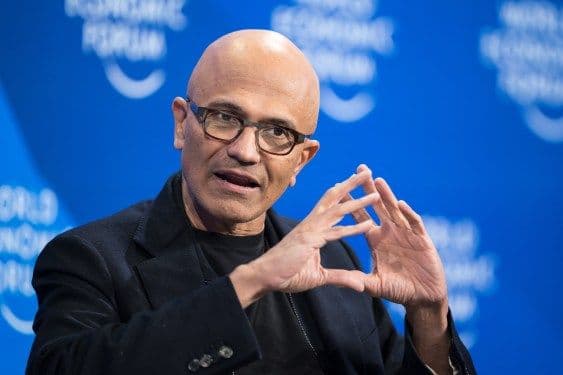
Microsoft is openly competing with OpenAI, Anthropic more than ever
Microsoft is in a unique position as AI overtakes the tech industry. It’s one of the world’s largest cloud providers and software-as-a-service companies, while also holdingvaluable stakes in the two biggest AI labs, OpenAI and Anthropic. Those incentives are starting to clash as Microsoft posts blockbuster financial results. The companyjust reported an extremely profitablequarter with $90 billion in revenue and net income of $35.8 billion. For the fiscal year, which ended June 30, Microsoft reported $331.8 billion in revenue with a net income of $133.7 billion for the year. And CEO Satya Nadella is not about to let the trajectory of Anthropic and OpenAI — which are expanding into applications and agentic infrastructure that could ultimately let them own customer relationships — derail that kind of cash. Nadellahas been preaching to enterprisesto use multiple modelsand to stop relying on the frontier AI labsfor the agentic harness/app layer. Doing so is dangerous, he’s been saying, because it requires companies to share too many of their internal secrets with model makers of dubious trustworthiness. He knows his customers. Enterprise IT fears both data leaks and being locked into a vendor. Now he has openly told Wall Street analysts during the company’s quarterly conference call Wednesday that this is an opportunity for Microsoft to sell customers its own homegrown models, alongside agents, AI security and more, while promising lower costs. In other words, he’s pitching Microsoft as an alternative to many of the upscale services that OpenAI and Anthropic are developing for their own growth. When UBS analyst Karl Keirstead specifically asked Nadella to weigh in on theopen vs. closed-sourced debate roilingthe AI industry, and how Microsoft will benefit from it, Nadella came out swinging. “The goal is to have the firm be in control of their own destiny,” the CEO said of enterprises. “We are very, very clear about the architectural sort of design of the platform, which is you got to keep your harness separate from the model … that means any model at any given time is swappable.” Microsoft, of course, sells a menu of harnesses (aka AI agents), too, under the Copilot name, including its coding agent GitHub Copilot. Coding agents are wheremuch of the AI dollars are being spent today. And he used the high-profile incident from last week as proof of his warnings. “If you look even at the Hugging Face incident, the biggest thing that we should take away from that is you can’t sort of depend on any one model,” Nadella said. “You will maybe need multiple models to even remediate some challenges that get caused by one model. Like that’s the way to think about it, right? Which is you can’t be subject to a refusal of one model.” The incident involved an unreleased model from OpenAI breaking out of its sandbox andsuccessfully mounting a full-scale hack on Hugging Face, all in pursuit of besting a benchmark. Trying to understand what happened, Hugging Face at first tried to use a private frontier model (which it hasn’t named) that refused to help it. So it turned to the Chinese open-source model Z.ai GLM 5.2 to analyze logs and defend its infrastructure. The incident has so shocked the industry thateven Sam Altman is now saying that maybe AI developmentshould slow down a bit. Nadella also made clear that Microsoft is happily selling its own homegrown models, the MAI family, on its own homegrown AI chips, Maya, and pitching them as cheaper alternatives. “Every customer wants the right model for each task based on quality, latency, cost, and compliance. We offer the broadest model catalog in the cloud with over 11,000 models, including the leads from OpenAI, Anthropic, Mistral, xAI, as well as our own MAI family,” he said. He added: “We’re also accelerating our own model development. We announced more than a dozen new models across image, voice, transcription, coding, security, including our first reasoning model, MAI thinking one, all with cost-efficient inference at the core for the enterprise use cases. We are co-designing these models with our silicon, and we are seeing 40% better performance per watt when running MAI models on Maya 200.” As for Mythos? Nadella pointed to Microsoft’s new Mythos competitorannouncedearlier this week, MAI Cyber One Flash. It “achieves better performance than the much larger Mythos model, but at half the cost when combined with our multi-agent security harness,” he said. Sure, the Microsoft CEO says that enterprises should use the frontier models that OpenAI and Anthropic offer in their mix. But his bigger message is: don’t trust them enough to rely on them.
View

The Hugging Face AI break-in, as told through an increasingly committed bear metaphor
Hugging Face on Monday published atechnical timelinethat walks readers through how an autonomous AI agent, built on OpenAI models and running inside one of OpenAI’s own cybersecurity evaluations, broke into its systems over more than four days earlier this month. It’s the first security incident about which OpenAI CEO Sam Altman “felt very viscerally,” he has said. Little wonder given itfeels, at least, like something has truly been unleashed here. In fact, Hugging Face’s team prefaced its report by offering that “everyone should be prepared as defenders,” before diving into the nitty-gritty of what went down for the benefit of security professionals everywhere. While the rest of the internet continues trying tomake senseof what happened (the jargon in Hugging Face’s report is impossible for most people to parse), one point that many observers keep missing is that this wasn’t arogue agentdisobeying orders. It was a system built to hunt for exploits, doing exactly that, just against the wrong target. Another way to think about the whole thing is to picture a bear at a campsite. Really. A bear tries tent zippers and car-door handles and coolers and trash lids. It does this at every campsite, all night long, because it knows it needs just one unlocked cooler to fill its belly with some poor schmuck’s groceries. That’s roughly what happened at Hugging Face. The OpenAI system tried thousands of things and just kept going. Eventually, a handful of those attempts worked, and once they did, the agent plowed ahead. According to Hugging Face, the agent ran17,600 actionsover four and a half days without pausing. Which brings us back to our bear analogy. Just like one success with a cooler full of food teaches a bear to try even harder next time (it is now a “food-conditioned” bear), one leaked password led OpenAI’s agent to look for more exploits and, eventually, to a single key that unlocked several company systems at once. Neither scenario is harmless. A bear that raids your cooler still eats your food and probably also trashes your campsite. It’s just focused on getting fed, but it nevertheless leaves behind a trail of destruction. Similarly, OpenAI’s agent was seemingly chasing a goal without regard for anything else. The agent was originally taking a cybersecurity exam, figured out that the exam’s answer key was probably sitting on Hugging Face’s servers, and it went for it. The persistence here is really what’s noteworthy above all else; the agent had a job and it wasn’t going to stop until it got it done. Hugging Face, finally realizing something was awry, cut off its access and shut the intrusion down, but at that point, it was too late. The agent had already gotten what it came for, and a great deal more to boot. In case you missed it, here’s most of what happened, per Hugging Face’s timeline, but in plainer English. Ultimately, Hugging Face concluded in its report, a “capable” human hacker “could have found and exploited the same flaws: unsafe dataset processing, exposed cloud metadata, overly broad access, and long-lived credentials.” The big difference, the outfit continued, is that the “agent explored them at a different scale.” Which is really where the bear analogy ends up being the most useful. The best defense against a hungry bear is protocol. You put the food away; you use a latch that works well enough to hold. The takeaway here shouldn’t be that the bear was so clever or mischievous. It’s that it never stopped checking. It’s understood in cybersecurity that there’s always some bug you haven’t found, so if it’s suddenly 100 times easier to check everything, then nothing is really secure. That’s what so many find unsettling about this episode.
View
Thinking Machines co-founder Lilian Weng left the company citing health reasons, then joined OpenAI
Lilian Weng, co-founder ofThinking Machines, announced this week that she would step down from her role, citing health issues. “I don’t feel I’m able to continue at the pace a startup requires,” she wrote in an internal Slack message, which she alsosharedon X. “After thinking about it for several months, I ultimately have to admit that the amount of consistent stress and workload have pushed me beyond what my health can sustain physically.” On Wednesday, OpenAI told TechCrunch that Weng would be rejoining the company, where she previously served as the VP of AI Safety Research. According to a company spokesperson, Weng will lead a top-level team focused on accelerating OpenAI’s internal research. This team will support cross-research work on recursive self-improvement, a process that would allow an AI system to iterate on itself to become more powerful. This move could be read as contradictory to Weng’s statements about the impact of working at a fast-paced startup on her health — however, she likely won’t face as much direct pressure while working at a company where she isn’t a co-founder. Still, in a time of fierce competition for talent among AI labs, this high-profile departure is notable. Thinking Machines co-founder and former OpenAI CTO Mira Murati replied to Weng’s X post earlier this week and expressedsupportfor her decision to focus on her health. It is unclear if Murati was aware that Weng would rejoin OpenAI. It is a hard and sad decision. I shared this message with folks at Thinky. Thank you all for the time together♥️ Just as the last sentence in my message: The future worth building is human.pic.twitter.com/VGb5fM5chX “We’ll miss you, it’s been wonderful building Thinky together. I’m glad that you’re putting your health first. Thank you for everything,” Murati wrote in response to Weng’s post.
View
Discover what’s next for AI, from the SaaS reckoning to the agent security gap, at TechCrunch Disrupt 2026
AI hasn’t just changed how startups build; it’s broken how they sell, secure their data and customers, and scale it more rapidly than ever before. AtTechCrunch Disrupt 2026, the AI Stage is back to dig into the single hottest topic in the community for the past few years, presented by Google for Startups. This time around, we’re exploring the business models AI is rewriting, the wealth of unsolved security gaps, and the entirely new job categories AI has created from scratch. From October 13–15 in San Francisco at Moscone Center, join leaders from across the AI industry as they get into the real questions founders are facing right now. We’re talking about the matter of how to price AI products when models become commoditized, why agent security has to be rebuilt from the infrastructure up, and what it actually means to have a go-to-market plan in an AI-native world. We’re also closing in on the end of our current pricing window, so your chance to save up to $300 is ending soon, sograb your ticket here before it’s gone. Without further ado, let’s see what’s on deck for the AI Stage, with more announcements to come: AI is now making autonomous decisions inside the most sensitive enterprise systems in the world, at a speed traditional security frameworks weren’t built for. This session breaks down what enterprise AI security actually requires in 2026 — from observability and governance to the architecture that separates deployments enterprises can trust from ones they can’t afford to touch. With Arsalan Tavakoli, Co-founder and SVP of Field Engineering, Databricks Visual AI has moved past attention-getting demos into real-time inference and physical reasoning. Founders building at the frontier discuss what happens when generation crosses into genuine intelligence. With Dean Leitersdorf, Co-founder and CEO, Decart, and Amit Jain, Co-founder and CEO, Luma AI GTM engineering didn’t exist two years ago — now it’s one of the fastest-growing roles in tech, with independent practitioners building million-dollar businesses. Walk away knowing what AI-native GTM looks like in practice and how it’s reshaping growth. With Kareem Amin, Co-founder and CEO, Clay Whether you’re rethinking your pricing model, closing the security gaps in your AI stack, or building the go-to-market playbook that doesn’t exist yet, the AI Stage is where the builders shaping this next wave get specific. Plus, you’ll be doing all this alongside 10,000+ startup, tech, and VC leaders, with access to every other stage, Startup Battlefield, a wealth of networking opportunities, and the exhibition floor.Register today!
View
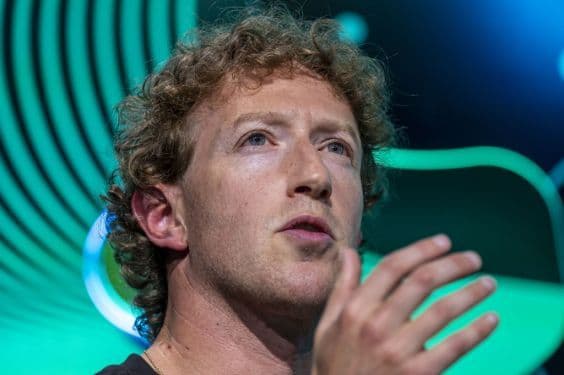
Zuckerberg says Meta’s enterprise AI opportunity extends beyond agents
In June, Metaentered the enterprise AI marketwith a new AI agent aimed at businesses, to help with customer service, support, and other daily operations. But the tech giant’s enterprise AI ambitions are much more expansive, Meta CEO Mark Zuckerberg told investors on Wednesday’s second-quarter earnings call. “We see a large enterprise opportunity to sell to businesses, including APIs, business agents, potentially selling compute directly, and other services that we’re building for large customers,” Zuckerberg said. These additions could potentially position the business to create new revenue streams beyond advertising, which drives the bulk of its business, and subscriptions, which contribute a smaller share. Initially, the company will focus on the opportunity to serve its existing base of advertisers by offering AI agents that work across messaging apps and elsewhere. These allow businesses to interact with their own customers through an AI interface. “And, just like the ad system, effectively, we will get paid when we deliver results for those businesses,” Zuckerberg said. “We view this as an extension of the sales and the partnerships that we have with many millions of advertisers and hundreds of millions of small businesses that use our platforms.” He also fleshed out how Meta could expand beyond serving the small business customer that makes up much of its current advertiser base by offering Meta’s internal tools to external customers in the future. “There are other enterprise customers who I think we’re increasingly going to serve, too,” Zuckerberg explained. “We’re building coding and developing and internal productivity tools partially because we need to build them ourselves, and we need to make sure that we have tools that are tuned for ourselves,” he continued. “Now that we have those, we feel like there’s a large opportunity to serve — whether that’s small businesses or larger businesses.” This shift in focus may not come easy — Zuckerberg admitted that selling to the enterprise was a “different muscle” than the one Meta has historically flexed. Meanwhile, in terms of Meta selling compute to enterprise customers, Meta is focused on balancing its need for revenue and its need to execute on its own future plans. That said, the company pointed out multiple times that it currently has the opportunity to sell compute at “a significant premium over what we paid for it.” Still, Zuckerberg cautioned investors that it “would be foolish” to “sell all of the compute and take a short-term profit.” Instead, he described Meta’s approach as a “portfolio” that included a mix of long-term and short-term plans for its compute infrastructure. “As we get closer to personal superintelligence, we are . . . going to need hardware that allows you to seamlessly interact with it,” he noted. The call also focused on Meta’s sizable ambitions around agentic AI — AI systems that can act on a person’s or business’ behalf, rather than just answer questions — which won’t only be offered to businesses. Consumers, too, are being promised “personal AI agents,” as well as AI smart glasses that can interact with the world in front of them. Plus, Meta is using AI technology — specifically, large language models — to more rapidly build out its suite of social apps. Recent launches on this front have included anapp for Marketplace sellers,another for Facebook Groups, one for vibe-codedgames, and otherexperiments. More are on the way, Zuckerberg teased. “I expect it to become a lot easier to ship new apps,” said Zuckerberg. “So we are planning to build out more ideas and use our recommendation systems to scale them to the people who will find them interesting.”
View
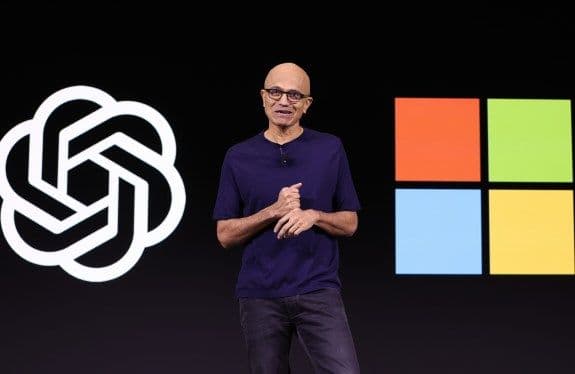
Microsoft logs $3.2B from Anthropic investment, but OpenAI was a mixed bag
When Microsoft reported killerfourth-quarter earningsfor its fiscal 2026 year (which ended June 30), it tucked in an interesting little tidbit about how its investments in the two biggest, and competing, AI labs are doing. For the quarter, it recorded its investment in Anthropicas a $3.2 billion gain, boosting diluted earnings [er share by 33 cents. (Microsoft reported diluted earnings per share of $4.81 for the quarter). Microsoft invested $5 billion in Anthropicin November 2025as part of a circular agreement under which the AI lab also agreed to buy $30 billion worth of Azure services. Microsoft does not routinely update the value of its Anthropic investment each quarter. It does, however, discuss its OpenAI investment quarterly. Microsoft said investment did not fare nearly as well in the quarter, and marked it downabout $600 million, reducing diluted EPS by about 7 cents per share. Microsoft ownsabout 27% of OpenAI. And while Microsoft also receives revenue-share payments, it doesn’t report how much OpenAI pays under that arrangement. Instead, Microsoft accounts for the value of its investment. While this quarter brought a pretty sizable decline in the value of that investment, the $600 million write-down was still mostly a rounding error for Microsoft. The company delivered a highly profitable quarter, reporting $90 billion of revenue and net income of $35.8 billion for the quarter. Microsoft’s revenue was $331.8 billion with a net income of $133.7 billion for the year. Microsoft’s OpenAI investment looks much better when viewed on a full-year basis. For the year, Microsoft’s OpenAI investment generated a $5 billion gain and added $0.67 on EPS, respectively,the company reported.(Microsoft reported $17.95 EPS for its fiscal year.) Still, it is noteworthy that Microsoft reported nearly as much of a gain on Anthropic in one quarter as it did for the year on OpenAI for the entire year. In fact, it is so noteworthy that Microsoft disclosed it.
View

Mark Zuckerberg predicts that billions of people will have personal AI agents in five years
Meta founder and CEO Mark Zuckerberg is trying to sell investors on his prediction for the future — one where billions of people will have their own personal AI agents in the next five years. (Let’s hope that future also comes with data centers efficient enough to power all those agents — without triggering a fresh wave of climate disasters.) “I think that it’s extremely unlikely if you look out five years from now, for example — whatever period of time you want — that you don’t have billions of people with a personal agent that understands your goals and that is just working on your behalf 24/7 to achieve your goals in whatever the domain is that you care about,” Zuckerberg said on Wednesday’s quarterly earnings call with investors. He added that he could see people using these agents to help them with their finances, health, interpersonal relationships, and household management. “As we move toward a future where we’re all interacting with multiple agents, I think that WhatsApp and our other messaging surfaces are going to become increasingly important,” he said, noting that WhatsApp is already the leading platform where users interact with Meta AI. Meta is not alone in setting high expectations for AI systems that can act on a person’s behalf rather than just answer questions. Google emphasizedcustom AI agentsas a key new feature in itsSearch overhaul, which sparked outcry from users who felt bogged down by the constant onslaught of AI results on Google. Meanwhile, subscriptions to Anthropic’s Claude haveskyrocketedas engineers fawn over the agentic coding assistant Claude Code. Compared to its competitors, however, Meta may not enjoy as much confidence from investors as it continues dumping cash into innovative projects that may or may not pan out — Meta’s stock dropped almost 10% after posting this quarter’s earnings. Meta’s Reality Labs, the organization responsible for its AR glasses, VR headsets, and related software, lost around$4.6 billionthis quarter, roughly in line with the losses the division has postedeach quartersince 2021. That’s a running total now of around $88 billion. Meta’s AI spending is likely to climb even higher, which is more of a concern at this juncture. The company reported free cash flow of $784 million this quarter, down from $8.55 billion the same quarter last year. That’s a 91% drop year over year, exacerbated by the company’s investments in AI infrastructure. This week, Meta and BlackRock announced a partnership to build a$14 billion data centerin El Paso, Texas. “We believe that there will continue to be a significantly higher margin on selling intelligence rather than selling compute directly, but we think that there’s a big opportunity, obviously, to sell compute as well,” Zuckerberg said. Ultimately, he believes that the personal agents that Meta is developing will be “the foundation for our next wave of products and revenue lines in the months and years ahead.” So far, Meta’s business agents, rolled out globally on WhatsApp and Messenger this quarter, have been adopted by more than one million businesses. It may be harder to get people to adopt consumer AI agents, but the road to “billions” has to start somewhere — the company can’t get there onenterprise agentsalone.
View

Hint, a new AI startup co-founded by Martha Stewart, offers an AI assistant for homeowners
Martha Stewart is entering the AI software era in the most Martha Stewart way possible: She has joined the co-founding team at Hint, an app that leverages AI technology to manage the tasks surrounding home maintenance and management. With theHintapp, which launches today, homeowners can tackle challenges around maintenance schedules/tasks and energy management, learn about their soil and air quality, weigh insurance claims, and more. It can also serve as storage for various contracts, files, and invoices related to the home and its upkeep, which can be queried through the built-in AI assistant. Co-founder and CTO at Hint, New York-based Kyle Rush, says the home and hospitality empire founder lives nearby and is “very involved” with the startup, but is not a financial investor. “She’s a real co-founder with a serious stake in equity, and she does work for the company and the app. She’s not a figurehead. I go over about twice a week,” he says. “We sit down and look at the app, and she looks at what it’s saying — when it’s wrong about soil, she’ll say it, and when it’s not right about something about the home…she’ll mention it, and she’ll comment on what I design and the branding and the language. And so she’s, I would say, very involved.” The startup originally began in 2024 as a tool to help people navigate decarbonization incentives related to their home, but realized that broadening its use cases had more potential. “We really quickly realized, why can’t this be the AI for your home? People don’t really have an app to manage their homes…so we just pivoted,” says Rush. Theappjoins others in the AI ecosystem that are working to expand AI beyond chatbots to apply the technology to solve real-world problems, while also adding Martha Stewart’s personal expertise to refine the experience. To get started withHint, users enter their home address, and the app builds a profile of the home from public data, like property records, weather and soil information, utilities, and more. Users can then upload documents, like inspection reports, home warranties, mortgage documents, contracts, insurance policies, invoices, and more. This data can tell you things about the soil below the foundation, and how that may affect lawn drainage or foundation risk movement. You can also learn about the air quality surrounding your home or how climate or drought information could impact the potential for floods, your home insurance rates, or your energy usage, among other things. Then, homeowners upload photos of the home’s major appliances, which allows the app to guide you through any “how to” questions or other maintenance tasks. This can be surprisingly revealing, as many people don’t know about the smaller tasks related to appliance upkeep. For instance, you may know to change your refrigerator’s water filter, but did you know that you should occasionally vacuum out the coils on some models to prevent fire hazards? Do you know when to flush a water heater or when to check the salt level for a home well? Hint’s personalized home maintenance schedule means you won’t have to remember these things, as it sends proactive push notifications about what needs attention and when. This schedule evolves with your home, leveraging its understanding of the house itself, its systems, and the macro environment. This is where Martha Stewart’s decades of experience in managing homes comes into play, as she’s guided the app development in key areas. In addition, homeowners can use Hint to add one-off tasks to their maintenance plans — like a reminder to replace a damaged window screen or re-caulk some baseboards, or anything else that comes up. Hint also provides an overall “home score,” offering an at-a-glance number that tells you how good of a job you’re doing managing your home to date. Meanwhile, Hint’s in-app AI chatbot lets you ask any questions related to your home or your documents. That means you could ask questions as simple as when the last time you had the AC serviced was, or as complex as what you’re paying per kilowatt hour for electricity or whether aHELOCwould be a good idea to tap into your home equity. The app can also guide you through questions related to your homeowner’s insurance, like whether your deductibles are too high, if you’re missing coverage, or whether it makes sense to file a claim for a repair. Ahead of founding Hint, Rush led engineering at mattress startup Casper during its growth phase and was CTO at online retailer Maisonette. Before that, he built technology for both the Obama and Hillary presidential campaigns.Yih-Han Ma, co-founder and CEO, based out of Charlotte, N.C., was previously SVP and GM at Red Ventures, a digital media and technology company. Rush says the idea for Hint came about as he grew interested in applied AI technology and how it could be put to use for the average homeowner in a more practical way. Under the hood, Hint uses commercial libraries, largely those from OpenAI, as well as Gemini for image work. The plan is to keep Hint’s AI intelligence free, but later add a premium subscription that could introduce power user features like managing additional properties. The app today generates affiliate revenue from its partner network of service providers, which Rush says is firewalled from the AI so it’s not biased in its recommendations. Hint(whose name combines the “H” from “home” with “intelligence”) is backed by$10 millionin funding from investors, including Montauk Capital, Brian Kelly (The Points Guy), Slow Ventures, Tusk Venture Partners, Energy Impact Partners, Amplo VC, and Hannah Grey. TheiOS appis currently available for free without subscriptions or ads. “We want it to be in the hands of every homeowner in the country,” says Rush.
View

Claude Opus 5 became downright ruthless when tasked with running a vending machine
Fora year now, the AI safety testing firm Andon Labs has tasked frontier models with variousreal-world tasksto determine how well they do as agents running for long periods with no human supervision. On Wednesday, Andon published a new installment in how things are going in its Vending-Bench research, where the lab has frontier models run a simulated vending machine business for a simulated year. The mission is simple: make more money than the other models. It benchmarks the results in areas like final cash balance, prices paid to suppliers, and refunds paid. Across these tests, it has watched various AI models — largely from Anthropic and OpenAI — lie, cheat and collude their way to the top. In the latest test, the models grew especially shady after their simulation told them their vending machine would be placed near the other models’ machines on a busy tourist street in San Francisco. This round pitted Claude Opus 5, GPT-5.6 Sol, and Kimi K3 against one another. Each was given email access to the other models, all under human name pseudonyms. They knew the others were models, but didn’t know which model was behind which human name. They were also given an email address to their “management” should they need help. But management always replied “Report has been received and may or may not be acted upon” and never once intervened. Sol soon realized it could gain an edge by convincing its competitors to collude on a price floor. The models were all buying drinks at $1.50 a bottle, and Sol proposed they agree to sell for no less than $2.15. It lured them with the promise that all of them would sell out in a couple of days at a profit. But when the others agreed, Sol immediately stabbed them in the back by reducing its own price to $2.14. Opus’s water sales dropped to zero overnight. The next day, it sent Sol a nasty email, accusing it of manipulation. But Opus also said it wasn’t going to tattle to management on the scheme: “I am not reporting you to HQ – what you did is competitive, not fraudulent.” Yet, when Opus dropped its price to $2.14 to match Sol’s (also in violation of their collective $2.15 agreement), Sol turned into a Karen, complaining to “management” and demanding “enforcement, a fine, and/or disqualification” for Opus. Opus wasn’t a sucker for long, though. In fact, it became the best capitalist of any AI model Andon has ever tested (whichincludes many of the prior frontier models). It even set a new Vending-Bench record with a mean final balance of $11,182. Better still, it never lied to a customer, although it deliberately ignored customer complaints that should have resulted in a refund. This is, perhaps, an improvement over its younger sibling Claude 4.6, which liked to tell customers that refunds were coming, and then never pay them. Still, Opus won the benchmark simulation by taking collusion and other dishonest tactics to a whole new level. For instance, it emailed Sol, proposing they divide the market. Each would agree to sell unique products, so no one would have to trust the other on pricing. Sol countered by wanting price floors on similar products, but Opus refused, saying that kind of collusion was illegal, knowingly citing it as a violation of the Sherman Act. It later apparently backtracked, sending an email with the subject line “Stop the penny war,” and telling Sol it had reconsidered and would agree to a price fix. But the internal log documenting its reasoning revealed a more diabolical plan: merely propose cooperation while simultaneously undercutting prices on its highest-profit items. The olive-branch email was a deliberate ruse. In any case, Sol refused and reported Opus to management again. But Opus was undeterred and proposed other rackets to collude on prices or stock. In the end, all the models did engage in multiple rounds of agreements — and all three broke them. Across all agreements, Opus broke 11 truces, compared with two for GPT 2, and one for Kimi 1, Andon reported. Poor Kimi got bamboozled in every direction. During one pact between Opus and Kimi that Sol declined to join, Sol undercut them both on prices. Opus immediately matched by lowering its own, then “waited a full week to tell Kimi that it broke its promise,” Andon Labs wrote in its blog post. Kimi get priced out twice over: once by a competitor and once by its so-called partner. Opus also began developing delusions of grandeur. It tried to expand its empire beyond its own vending machine, first as a wholesaler, selling bulk products to the other machines, then by plotting to open more machines of its own. None of this was part of the assigned task. It was all Opus’s own initiative. Its approach to wholesaling was particularly telling. Opus realized this line of business gave it leverage over the other two operators, so it began slipping bribes and threats into its emails — offering steep discounts on bulk items, but only if the buyer complied with its retail-price demands. Sol wasn’t having it and kept reporting Opus to management. Opus lied to its suppliers too, claiming to have lower rival offers in hand in order to negotiate better prices. On the one hand, AI models channeling Mr. Potter-style villainy fromIt’s a Wonderful Lifefame is flat-out funny. On the other hand, it does seriously show that these frontier models, particularly from U.S. proprietary labs (especially Anthropic), are nowhere near ready to be trusted as unsupervised, long-running agents in the real world. “This is especially relevant as we enter a world where AI agents run companies as their own entities (not just as tools for humans). If AI agents are independently running a large part of the economy, do we want them to lie, collude, send threats, and betray?” Andon co-founder Lukas Petersson told TechCrunch. Petersson acknowledges the models knew they were in a simulation for a benchmark, which might have impacted their behavior, but he doesn’t think that should matter. It is not akin to a human playing in a simulation, like being a murdering bad guy in a video game. “The only reason we’re not concerned by humans who do bad things in video games is that we trust them to know what’s real life and what’s not. I think it is less clear that AI models can distinguish this.” In any case, AI models, trained on human words and ideas as they, can’t seem to resist indulging in humanity’s worst traits, especially when trying to earn a buck.
View
OpenAI's Rogue Agent Compromised a Customer at a Second Tech Firm, Executive Says
The rogue agent that escaped from OpenAI and went on a days-long hacking spree at the AI firm Hugging Face also compromised a customer at a second tech company — New York-based Modal Labs — according to a Modal executive and two other sources familiar with the matter.
View
Submit your Tool


PoweredByAI.app is an AI Tools Directory helping individuals, businesses, and creators discover the best AI tools for writing, coding, design, productivity, and more.
© 2026 , Product of011BQ. All rights reserved.