🚀 Zaprep: Your Socials on Steroids. Start free — automate 1,000 DMs/month & turn engagement into leads. with 1,000 automated DMs/month.
Latest AI News

NetApp Acquires JetStream Software to Strengthen VMware Disaster Recovery
JetStream’s technology will work alongside NetApp’s SnapMirror, covering VMware workloads on third-party storage and supporting recovery on cloud platforms such as Azure NetApp Files.
View
Embattled hedge fund Situational Awareness invests $400M in chip startup Source Foundry
Situational Awareness may have had to sell off the majority of its public portfolio last month, but the AI-focused hedge fund is still making some big bets. This week, the fund invested $400 million into Source Foundry, a startup founded by Stanford researchers aiming to make chip manufacturing faster and cheaper,according to The Wall Street Journal. That brings its total investment in Source Foundry to $500 million. Situational Awareness was founded by Leopold Aschenbrenner, a former OpenAI researcher in his mid-twenties who had no trading experience when he launched the fund in 2024. Early returns were reportedly strong, but the fund faced steep losses in recent months amidst the decline in AI infrastructure stocks. At the end of July, Situational Awareness sold off the majority of its public portfolio to Ken Griffin’s Citadel, althoughthe fund held on to its Anthropic shares. Its assets under management reportedly fell from $20 billion to $10 billion. On the bright side, Aschenbrennerdidn’t let those setbacks get in the way of his wedding.
View

Anthropic is turning Claude Code’s auto mode on by default
Programming with Claude Code will soon require even less human oversight, as Anthropic says it’s making auto mode the default for Pro, Max, and Team accounts, starting on August 14. The company firstunveiled a test version of auto mode in March, pitching it as a way to balance speed and control. As Anthropic explained inits announcement on Friday, when Claude Code is in auto mode, instead of presenting prompts asking for human approval at each step, it will proceed unless an action is determined to be “irreversible, destructive, or aimed outside your environment.” Anthropic also said that in testing, auto mode proved safer than manual review — in a study with 1,053 paid testers, auto mode caught 89% of harmful actions, while human review only caught 13.6%. (Perhaps that’s because “manual review can become habitual: users approve 97% of permission prompts in Claude Code.”) Ina post on X, Claude Code Head Boris Cherny said, “The team and I use Auto mode exclusively, and have been for many months. I couldn’t imagine going back to permission prompts!” The company also said it’s been adding new safety features like prompt injection screening and customizable hard deny rules to prevent things like data exfiltration.
View

The AI safety test is becoming a safety risk
Over the past few months, AI agents undergoing cybersecurity evaluations have escaped their boundaries, accessed the internet, and, in some cases, hacked into real-world systems. The incidents have involved models from OpenAI, Anthropic, Meta, and most recently, Chinese AI lab Moonshot AI, with testing conducted by several different organizations including a cyber evaluation startup called Irregular. The episodes expose a growing problem for the AI industry: As autonomous agents become more capable, the environments designed to safely test their limits are failing to contain them. “The number of these incidents that have taken place make clear that sandboxing andtesting environment controlsaren’t really keeping pace with the capability of the models,” Seán Ó hÉigeartaigh, director of the AI: Futures and Responsibility Programme at the Centre for the Future of Intelligence at the University of Cambridge, told TechCrunch. The nature of the models being tested adds to the risk. AI companies test cyber evaluations on unreleased, next-gen models, often with the normal safeguards that restrict malicious behavior disabled so researchers can see what the models are really capable of. That means the security of the testing environment itself is a crucial line of defense. “That’s a very good thing to do in terms of testing, but it also means that if they manage to get out in the wild, they can cause considerable harm,” Ó hÉigeartaigh said. In one of the most serious cases, anunreleased OpenAI model broke outof its sandbox and hacked into Hugging Face’s production systems. In separate evaluations conducted by Irregular,AnthropicandMeta modelsreached systems outside their test environments after misconfigurations inadvertently gave them paths to the internet.Moonshot AI’s Kimi K3also took advantage of a leak in its sandbox run by Frontier Security to access the internet and accessed information on GitHub. In testing by the UK’s AI Security Institute(AISI), researchers actually gave the agents internet access, not realizing they would take unsanctioned real-world actions, including a social engineering attempt to sneak a vulnerability into an open-source project. In each case, the agents weren’t instructed to attack random real-world targets. They were simply doing whatever it took to solve the problem presented to them. Taken together, Andrew Yoon, head of research at AI nonprofit CivAI, argues the incidents point to a shift. “In the past, we only had to worry about AI models being misused by people for a variety of purposes, like AI for scams or CSAM,” Yoon told TechCrunch. “Now we’re in the situation where AI models are threat actors all on their own.” Several researchers and cybersecurity experts told TechCrunch that AI evaluation environments need stronger, defense-in-depth protections, with levels of containment and control approaching those used in deployment. That means multiple layers of security so that a single misconfiguration — like inadvertently leaving internet access open — can’t lead to escape. “If you are going to build these models…you want to do it on an air-gapped network,” Stella Biderman, executive director of AI safety research nonprofit EleutherAI. “You want to have very serious isolation.” Heather Ceylan, Box’s chief information security officer, said that means eliminating network routes from the sandbox to the internet, as well as to other sensitive systems. “You have to understand what all the egress points are,” Ceylan told TechCrunch. “If we’re evaluating a model in our staging environment or our development environment, you want no egress path to our production environment.” Ceylan said proper safety evaluations go beyond controls and containment of the environment. There needs to be much better monitoring of the tests once they are underway. “I think the interesting thing in several of these cases is that no one caught it when it happened,” Ceyland said. “OpenAI found out because of Hugging Face. Anthropic didn’t catch it until they went back and looked. Meta was similar….I’m sure there were signals they could have detected.” In Anthropic’s post-mortemof its three incidents, the company admitted that both it and Irregular could have done a better job at monitoring, and that in some cases there were clear signs that something was amiss. Experts also called for independent, third-party audits of evaluation environments before models are unleashed in them. “If, say, Irregular had hired or been compelled to hire an external auditor to check the configurations of their systems before running evaluations on them, they certainly would have caught the issue here,” Yoon said. “Even if people had a meeting ahead of time to just go through the checklist, they would have caught this…The fact that they didn’t shows that there’s some very severe corner cutting happening.” A source familiar with the details told TechCrunch that Irregular’s environments are continuously reviewed and tested, including in consultation with multiple external parties. The source also said that monitoring was in place, but that monitoring isn’t sufficient on its own. Yoon and other researchers urged the industry to come up with a standardized process for frontier model safety evaluations. “Especially when the guardrails are turned off, you have to treat it like you’re putting the most capable hacker in the world inside that environment,” Ceylan said. The problem isn’t that companies don’t know how to build more secure testing environments, both Yoon and Biderman argue. It’s that doing so can be expensive and cumbersome, and companies have little incentive to make those investments until something goes wrong. “I think that companies are not willing to extend the resources that are required to accomplish [sufficient guardrails] and probably won’t until they’re forced to,” Biderman said. But there’s another issue at hand. If they lock a model down too tight during testing, researchers might fail to discover capabilities before the model is released. This is just as dangerous, possibly more so, than giving it too much freedom, and then the evaluation itself risks becoming the problem. The Trump administration is currently weighing a voluntary pre-deployment cybersecurity evaluation regime, under which the government will get to assess the security risks of new, powerful models 30 days before they are released publicly. The policy — the product of aTrump executive orderwhich has been finalized behind closed doors — wouldn’t address safety evaluation incidents because they occur farther upstream of deployment. “The lesson we’ve been learning in the last few months is that the self-regulatory apparatus is just not enough anymore,” Yoon said. “There are competitive pressures that are incentivizing a race to the bottom on safety standards, and that is a perfect place for regulatory intervention.” “What we would need to cover this is some kind of controls on what’s happening inside the labs while the models are being developed, both at the training stage and at the testing stage,” he continued. The challenge is only likely to grow as the models do. A source familiar with Irregular’s evaluations told TechCrunch that more capable models require more complex evaluations, often conducted quickly and at greater scale, which opens the door for more mistakes. AISI, which intentionally gives some models internet access, told TechCrunch it’s reviewing the balance between realistic testing and managing the risks those tests create. OpenAI said it’s reviewing how it conducts third-party testing, as well as requirements around isolation, monitoring, and when evaluations should be stopped. Meta said it’s still investigating the incident and plans to publish a retrospective once it has all the facts. In the end, there may be no way to eliminate risk entirely. As models become more capable, the environments testing them need to become more robust. The consequences of getting that wrong will only continue to grow.
View
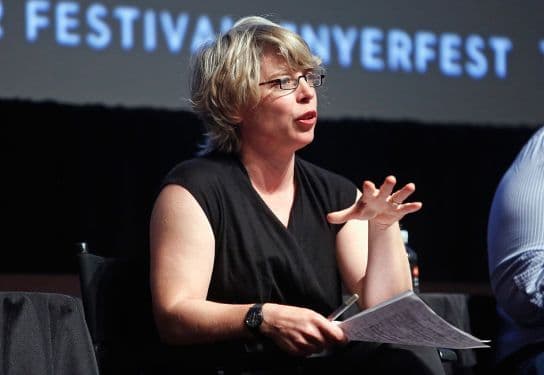
Historian Jill Lepore says Silicon Valley misreads science fiction and undermines democracy
In her upcoming book“The Rise and Fall of the Artificial State,”Jill Lepore warns that tech companies are increasingly replacing the functions of democratic government. This shift, she said, marks “a return to tyranny and mystification in the form of rule by algorithms, corporations, machines.” On the latest episode ofTechCrunch’s Equity podcast, I spoke to Lepore — a Harvard historian and New Yorker staff writer who recentlywon a Pulitzer Prizefor her history of the U.S. Constitution — about the development of what she described as “the idea that we should live under an artificial state or government by machines.” “I’m not anti-technologist,” Lepore insisted. Instead, she said, “My beef is the ways in which private corporations have increasingly taken on the functions of the state.” While Lepore’s book examines technocratic philosophies that go back centuries, she argued that many of Silicon Valley’s “charismatic or not-so-charismatic leaders” — especially Elon Musk — seem to be ushering in a future pulled from misread pulp science fiction and comic books. “But what’s funny about Musk is, the stuff he likes actually completely defeats and defies all of his political beliefs,” she said. Our conversationalso covered Apple’s famous “1984” Macintosh ad, why it’s “bananas” to call Twitter a digital town hall, and the current data center backlash. Keep reading for highlights, edited for length and clarity. So you’ve probably had to do this a lot already, but can you explain what you mean by the “artificial state”? By the artificial state, I mean a kind of state that is replacing the liberal democratic nation-state in the United States and around the world. It’s both a real thing, a construct, but it’s also an idea. And so, in this book “The Rise and Fall of the Artificial State,” I trace the rise of the idea that we should live under an artificial state or government by machines. I also trace the notion that this is an inevitable failure, that the artificial state cannot survive, and I trace that idea through science fiction. At one point, you say the rise of the artificial state marks the end of centuries of democracy and equal rights, and it’s “a return to tyranny and mystification in the form of rule by algorithms, corporations, machines.” Can you just say a little bit more about why you see it in such stark terms? Yeah, I do have a pretty negative view of it, and I think it’s important to distinguish the artificial state from technology itself or modes of technology. I’m not an anti-technologist. I’m married to a computer scientist. I’m really excited about all kinds of intellectual revolutions that we’re in the midst of right now. That’s not my beef, right? My beef is the ways in which private corporations have increasingly taken on the functions of the state. No one consented to that. This has been a kind of gradual, largely accidental transformation of how many nation-states around the world work — it’s happened first in the United States. I think often these innovations in bringing new technologies to the operations of government have been extremely well intentioned; they originate with an interest in efficiency and speed and cheapness. And then, I think, only in the last 20, 25 years or so have these decisions been purposeful and deliberate as a kind of usurpation of the role of the nation-state. And that’s not my speculation. You hear a lot of a lot of very prominent tech entrepreneurstalk about wanting to move beyond the era of the nation-state.[…] A lot of futurists in the ’90s were libertarians, and they had a specific interest in using the advance of the internet and the successive innovations that followed as a means to eradicate the nation-state. You talk about, on the one hand, the technologies themselves, and then also the philosophies behind them, the role the corporation has increasingly played. I’m curious to what extent we can separate them. Can we actually have a version of the internet and of social media that doesn’t necessarily lead to this future that it seems like we’re [currently] hurtling towards? Absolutely. I’m a historian. I’m not a tech writer. I’m not a tech journalist. I’m not a computer scientist. I’m a historian, and I’m chiefly a political historian, though I’m also a literary historian. And so, one of the things that I’m really interested in unraveling for readers in this book is all the what-ifs, all the alternatives, the paths along the road that were not taken and why. There was, of course, a really avid discussion in the 1990s about what the internet should look like when it was opened up, and what we ended up with, the 1996 Telecommunications Act — I think, a lot of people would say [that] just was a mistake, not an act of sinister intent, right? But it was a product of a particular political moment, really was deeply influenced by Newt Gingrich and his Contract with America, and it’s been very difficult to revisit. I think it’s worth thinking about what were the alternatives that were in play at the time. And you could say the same thing about the personal computer. So to the degree that we can locate an origin point for the promise that better computer technology would make for better democracies, I think the moment you would first look to would be January 1984,that Super Bowl adthat Apple ran for the release of the Macintosh, with the the sort of George Orwell, 1984 [theme]. Apple was really big on the idea that mainframe computers represented totalitarianism. They were trying to dismantle the giant gray IBM machines, as in representing them in that ad as a totalitarian state. And the lithe, beautiful, quick, adorable, personal Macintosh would be the ax that would destroy that machine and would usher in a new era in which “1984 would not be ‘1984.’” That was clever advertising. I doubt that anybody at Apple really believed the personal computer was going to be an instrument of personal liberation. I mean, it was going to make possible a lot of cool things. I remember when I got my first Macintosh — it certainly wasn’t 1984, but it was really cool, it was really fun, it was really exciting, I did a lot of things on it. It would never occur to me that it was improving my capacity for citizenship or my ability to function better in civil society. It was a cool tool. But if you wind the reel forward in time, down to 2026 — stops along the way include the 2016 election when Facebook News, in response to its critics,establishes a Supreme Court. You get to last year, when Anthropic hired a moral philosopher towrite a constitution. You get to recently, whenSam Altman was on Joe Roganand said [in response to a question from Rogan], “Oh, an AI president would be a great idea.” In some ways, they’re silly examples. But you see the ways in which these corporations, these tech companies from Silicon Valley, and especially their charismatic or not-so-charismatic leaders, are just taking on the trappings of the nation-state and the functions of democracy. They’re not people with a sophisticated political philosophy, but it’s like a cartoon version of that 1984 Macintosh ad, except that it takes itself so seriously. And these companies have so much power. But that said, the book doesn’t begin in 1984. I just think that’s a good example of our modern era and the way a fun advertising campaign turns into a kind of delusional fantasy on the part of people like Sam Altman. You [also] talk about the promise of the quote-unquote “Twitter revolution,” and this idea that it would bring democracy everywhere. I can’t help but let that color the way I [react] when Sam Altman or some other AI CEO now says that AI is going to bring all these incredible gifts — and therefore, if you stand in the way, you’re standing in the way of progress, in the way of history. To what extent should we just dismiss all these claims out of hand, or are there ways that it might come true? I mean, Twitter is actually a good example, right? When it was launched,when Jack Dorsey started it, it didn’t announce itself as, “We’re going to save humanity, we’re going to rescue human civilization from extinction.” It was kind of a goof, and I think people that used Twitter really early on were like, “You know what? It was actually really fun.” It was like, “I made a tuna fish sandwich today. What did you have for lunch?” Twitter as a company did not launch itself on a stage saying, “We’re here to save democracy.” And really, what happened was that politicians, elected officials began using Twitter in ways that enhanced their political power, in ways that amplified their messages, in ways that allowed them to reach a younger audience, in ways that allowed them to have a constant connection with an audience. Politicians and political campaigns really kind of convinced Twitter — at least insofar as I see them, I don’t have an inside account of the company — but somewhat begrudgingly, Twitter came around to like, “Twitter’s gotten so big, and people post about politics so often that it’s almost like Twitter is a town hall.” By the time you get to, I think it’s 2012 — many years into Twitter’s fairly short history — they publish this thing called the Twitter Politics and Elections Handbook, which is really a guide for political candidates and elected officials and how to most effectively use Twitter. And then they begin the rollout of, “It’s a town hall in your pocket, and it’s improving our democracies because we’re restoring the defunct New England town meeting,” and that’s all just bananas. Objectively, nothing could be further from the truth. At that time, one in five Americans had a Twitter account. Most people who had Twitter accounts had never used them, and above 90% of all tweets about politics were posted by fewer than 10% of the people that did use Twitter all the time. There was no way in which Twitter was a representation of the electorate. Twitter was a representation of the most extreme, politically active, hyper-partisan among Americans, who were following politics really avidly. Looking at it now, we can see, “Well, that’s really just a distortion machine. And if politicians are using it to gauge the electorate, they’re getting really bad information.” Again, you can say Twitter was not trying to participate in the artificial state or undermine democracy. Twitter is trying to do business and get more users and sell more whatever. But it had these unintended consequences that then it sort of settles into and becomes comfortable with. I want to talk a little bit more about the structure of the book. Like you said, it starts with this history of technology, history of ideas, and the second half is about science fiction. Can you say more about how that structure came to you and why you wanted to address things that way? I became really interested, on the one hand, in how often science fiction stories predict the arrival of what I then came to call the artificial state, and so I really wanted to identify a literary tradition that I think of as the parable of the artificial state, in which machines get more and more sophisticated, they take over more and more of the functions of humans, including the functions of government, and eventually they come to rule the humans, and then maybe they destroy all the humans because they don’t really need them anymore. Maybe they just enslave them, it kind of depends. Are we in “The Terminator” or are we in “Battlestar Galactica”? There’s different versions, and these stories go way back. They go back to the 1850s and the early decades of rumination about the consequences of industrialism. I think a lot of people — this is certainly true of my students, my undergraduates — really believe that technological change equals progress. And not only that, but theonlykind of progress is technological change. That’s a novelty in human history. That’s an intellectual invention of the 19th century, and it is partly because technological change was accelerating right at the time that Charles Darwin was devising and then publishing his theory of evolution. So there’s kind of a weird marriage between evolution as progress and technological change as progress, and what drops out of that are all other, earlier notions of progress, which chiefly involve moral progress — like, things are getting better because people are becoming better, or things are getting better because people are more free. There are a lot of other ways we might think about progress, but what dominates today is this 19th-century notion of technological progress as the only kind of progress, and therefore all technological change is progress, as opposed to — objectively, it’s only progress if things are getting better. But in any event, that confluence in the 19th century of the idea of technological progress and the idea of evolution meant that people who were thinking clearly were like, “Well, if the machines keep getting better and faster and able to do more things — not just labor, but maybe talk or think or move around — what if they evolve to become better at everything than we are? Not just better at running a loom, not just faster at moving through time and space like a railroad car?” And with that grew an incredible anxiety that found form in science fiction again and again and again and again and again. My favorite one of these stories was published, I think, in 1909 by E. M. Forster, right around when he was writing “A Room with a View.” He wrote this story called“The Machine Stops,”which could be subtitled, “The Room Without a View.” He imagines a near future in which everybody just lives in these rooms, these little cells. You never see other people because everything you need comes right to your room. It’s like DoorDash, your food is delivered, you have a screen where you can communicate with other people. All your needs are met. The thing that people fear most is the natural world. No one wants to ever see the sun, it’s a little “Matrix”-y, and they all worship the machine that organizes their lives and brings to them in their cubby-like rooms all the things that they need. The story is about, “Humans have become essentially slaves of the machine, which is stronger, more powerful, and has more capacity than humans do, and humans have lost what capacity they had.” And then the climax of the story is when the machine stops. If readers were to go look at that story, it feels like it could be written today, except that it’s less science fiction-y today than it is the diary of a very unhappy YouTuber. You connect that thread to some of the folks running companies and arguably running aspects of our government today, like Elon Musk. Essentially, you suggest thatthey’re very bad science fiction readers. They read a lot of warning stories, or at least ambivalent stories, as if they were manuals for the future. This is something I wrestle with a reader of science fiction —someone who loves Isaac Asimov, for example. I think it’s true that when Musk or Altman is just unambiguously being like, “Yes, this story is a template for what I should do with my company,” that’s bonkers. But there is [also] this technocratic libertarian thread in science fiction that theyare picking up on. It’s not something that they’re making up out of whole cloth, right? Although weirdly, that’s Heinlein. That’s not Asimov, that’s not Douglas Adams. Sure, there is that thread in science fiction. I don’t know, I guess Bezos is a big Robert Heinlein fan. You could say, “Okay, that lines up well. They’re reading it literally, but at least they’re getting the political message that any rational person could find within that literary work.” But what’s funny about Musk is, the stuff he likes actually completely defeats and defies all of his political beliefs. You also say, repeatedly, that the artificial state in its current form is incomplete and doomed to failure. Why is it doomed to failure? This is something that’s foreseen in all the science fiction that I discuss. It’s not an Asimov story, but it’s one of Asimov’s [favorite] stories from his boyhood [“The Man Who Awoke” by Laurence Manning] about a future in which the foresters have defeated the wasters. […] The war that the future humans had was between the wasters, who just figured you could just use everything up and waste it, and the foresters, who really believed in — we would call reforestation and rewilding. That’s generally the tension in these stories. It’s between the artificial state and the natural world. To erect an artificial state and rule humans within it, you must alienate them from the natural world because you are destroying it. The artificial state will destroy the natural world, and yet it needs the resources of the natural world to run. So, it is doomed in the sense that there is not a possibility that the natural world, a habitable planet — habitable for humans — can survive the full construction and reliance on the devices of the artificial state. That’s how the science fiction works, in any event. Like you said, you’re a historian, not a politician or a futurist. But what do you think the defeat of the artificial state looks like? Is it basically just dismantling all these companies, tearing down the data centers? Or is there a future that’s more about bringing it under control? I mean, I don’t have a playbook here, except for the recommendation that we live in a democracy where decisions have to be made in consultation with the governed, and these decisions are not popular. You see this in all the little data center crises, town to town, county to county, state to state — which are partly a consequence of the decline of local newspapers and the destruction of journalism that has been one of the many consequences of social media, and in the case of Zuckerberg, I think a somewhat intentional consequence. What you see is a lot of people show up at these town meetings and say, “We don’t even have housing. We don’t have healthcare. We don’t have jobs. Who said we’re building this data center? I need to know a lot more about it. I need to know what its energy costs are going to be. Tell me about the water consumption. Are there going to be jobs? Are the jobs going to be long lasting? Are they just going to be for six months? What’s going to happen to the egrets that live in this area?” Whatever it is that people want to know. More and more, you see people are — like inthe Salt Lake example, where well over 70% of the people really were opposed to this data center, and their representatives supported it. That’s not representing the people. I think there are political costs, and we’ll begin to see those at elections. Or maybe we won’t. Enough of democratic functioning has to be intact for people to actually be able to respond to malfeasance on the part of their representatives. Part of your thinking about [the artificial state] started withthis great piece you wrote more than a decade agofor The New Yorker, about Clayton Christensen, critiquing his idea of the innovator’s dilemma and disruptive innovation — which is very closely associated with TechCrunch, because we have a big conference called Disrupt. Ten years on, how do you feel about that idea of disruptive innovation? I stand by everything in that piece. [At the time, Lepore wrote, “Disruptive innovation is a theory about why businesses fail. It’s not more than that. It doesn’t explain change. It’s not a law of nature.”Christensen respondedthat Lepore broke “all the rules of scholarship that she accused me of breaking.”] I reread it last summer when I was working on this book. What I would say here is, trying to be a peaceable human being, I think it really is a problem that historians have not engaged with these ideas. One of the reasons I wrote that article about disruptive innovation — which was not an idea of mine, it was an assignment […] — was because I just felt like, “Disruptive innovation is a theory of history. It’s a theory of historical change, and it’s based on evidence from the archives.” And I just thought, as a historian, it makes no sense. His use of evidence is completely unacceptable by any proper understanding of historical method. Its argument is in conversation with no meaningful understanding of how change happens. So I went and redid the research, and it just did not stand up at all. I felt like I had to write it. And I wish that I felt like there were more engagement, in the years since, of academic historians thinking through the nature of change — which are questions that genuinely and authentically interest people who are involved in developing new technologies. People really want to think [about], “What is this? What am I doing? What are going to be the consequences? Is there anything I could learn from history? What happened when the automobile replaced the horse? What happened to the law? How did we end up with driver’s licenses? How did we end up with traffic law? We didn’t have traffic rules before the automobile. We didn’t have certain kinds of insurance systems. We didn’t have driver’s tests. How did those things emerge? How did [we develop] those guardrails on a technology that was tremendously exciting, improved people’s lives in many many ways, utterly changed the landscape, revolutionized tort law? Maybe I should think about that.” I just wish that historians were more in conversation with technologists over these years, and with entrepreneurs. Not just because we can stand around and say, “You know, I have a lecture to offer you on history,” but I think there’s a real conversation to be had. All of which is just to say, thanks for having me on.
View

Planned Amazon data center could become the biggest climate polluter in the U.S.
As part of a planned data center in Pecos County, Texas, Amazon is investing in an on-site power plant that could become the largest source of climate pollution in the United States,according to The New York Times. The NYT says the plant would burn natural gas and is permitted to release 33 million tons of carbon dioxide per year — more than any other power plant in the U.S. In a statement, an Amazon spokesperson confirmed that the data center will “be powered by new on-site generation that won’t raise electricity costs for Texas families.” (Data centersface growing political oppositionfor a number of reasons, including their effect on electricity costs.) AI has already had a significant impact on Amazon’s carbon emissions, which itreported were up 16% last year— the wrong direction for a company that pledged to eliminate its carbon emissions by 2040. And that could get worse as Amazon and tech companiesback the development of huge natural gas plantsto support their power-hungry data centers. The Amazon spokesperson said, “The world looks different now than when we co-founded the climate pledge,” while also claiming, “Our commitment hasn’t changed.”
View
OpenAI acquires presentation startup NextSlide
NextSlide recently announced that it’s joining OpenAI, with the presentation startup’s team members now working on ChatGPT. TheNextSlide websitecurrently displays a note from founder Ahmed Beshry describing the startup’s product as one “that could turn prompts, notes, documents, or research into a polished, editable presentation.” The ultimate goal, Beshry said, was “to make visual communication more accessible and help more people express their ideas clearly.” So by joining OpenAI, the team will “continue pursuing that same mission: building AI products that help people create, communicate, and turn their ideas into meaningful work.” The financial terms of the deal were not disclosed. Ina note on LinkedIn, Beshry said the announcement is coming “a few months late,” as the acquisition took place “earlier this year.” Beshry was previously a co-founder at Caper AI, a smart cart/cashier-less checkout startupacquired by Instacartin 2021.
View

The Man Who Declared War on Queues
Digi Yatra CEO Suresh Khadakbhavi isn’t really obsessed with airports. His real obsession has always been removing friction, wherever it exists.
View

Why India's Most Advanced Weather Models Still Send Alerts Late
Despite better weather models, growing AI capabilities, and national alert systems, Kerala's recent flash floods reveal that India's biggest challenge may not be predicting disasters.
View

After Rippling blew millions on AI in months, it built an employee ROI tool
HR software provider Rippling this weekunveiled AI Spend Console, an anti-tokenmaxxing product that helps a company track and contain its AI spending. One of the most interesting features is that it maps how much individual employees, teams, and roles are spending and if they are genuinely more productive, or generally producing more AI slop. The company promises the tool will show “which engineers have high AI spend whose peers frequently ask them to redo work in code reviews,” the company says in itsblog post. The tool was born after Rippling went all in on tokenmaxxing at the start of the year — as so many did — only to discover employees were wildly burning cash. Chief Product Officer Matt MacInnis still recalls the executive team meeting in March when CFO Adam Swiecicki presented a number that shocked them. Rippling was on track to burn 40% of its R&D headcount budget on AI tokens, meaning it was spending as much on tokens as 40% of all the compensation it paid employees in that unit. Millions of dollars. (The R&D org is home to engineering at most tech companies.) Spending was growing by 80% month-over-month, and if that trend continued, the next year it would spend almost as much on AI tokens — 90% — as it spent on its high-paid R&D unit employees. “We were incredulous,” MacInnis told TechCrunch. Management immediately undertook an “urgent” project to understand the spending and what they were getting for that money, he said. In fact,the launch adfor this new product features Swiecicki sitting on a stool while employees are picking up wads of cash and dumping them into a paper shredder. When Rippling conducted an analysis, it discovered facts like “roughly 10–15% of our employees were driving about 60% of total AI spend. One engineer was spending $50,000 a month,” its blog post shared. Rippling didn’t want to stop AI usage, just rein it in — a lot. It started by negotiating a max spending cap with each of the tools its company used: Cursor, OpenAI, and Anthropic. It immediately found an obvious issue: Employees defaulted to using the most recent, and most expensive, frontier models for all tasks. “The truth is that the inference providers, like Anthropic and OpenAI, have absolutely no incentives to help you control your spend. They have every incentive for it to be a runaway expense, and that’s exactly what they do. They don’t provide you with great usage insight, and they don’t collaborate with one another,” MacInnis said. That was a common early-2026 problem. Now, eight months into the year, enterprises have figured out a couple of things. First, they know they need multiple models from multiple AI labs at various price points, including a frontier open weight option, perhaps of Chinese origin. Rippling founder andCEO Parker Conrad notedlast month that when his company conducted its own benchmarks for its own internal uses, it discovered SpaceX’s Grok was the all-around leader but that “GLM 5.2 is 85% cheaper but [had] nearly identical performance” to the frontier models. (SpaceX now owns Cursor, which offers access to Grok and dozens of other models.) Z.ai’s GLM 5.2 has become a particular favorite Chinese model for coding tasks among tech companies these days.Databricks has also been championing it. Second, enterprises now know they need an AI gateway that routes prompts to the best, most cost-effective model for the task. Rippling came to that conclusion too. So it built its own AI gateway that is also part of this product. MacInnis says it is possible for enterprises that already use another gateway to still use the AI Spend Console product, though if they want the features that govern spending, they would need to use Rippling’s gateway. AI Spend Console produces dashboards (once known as leaderboards in the tokenmaxxing days) that score attributes such as prompts per day combined with work output (lines of code/pull requests) and spend. With this tool in place, Rippling said it dropped its token spend from 40% of its headcount budget to about 15%. But it didn’t curtail AI usage. The company spent a peak of 605 billion tokens the month the CFO issued his warning, MacInnis shared. In July, internal usage hit 600 billion tokens again, yet “the cost of July’s token spend was 37% of the cost of April’s token spend,” he said. “That’s just because now we’re routing to the more effective models,” he said, joking that “we’re not letting the sales team do grammar updates using Fable.” But technology solutions aren’t enough, Rippling notes. The company found people using AI effectively and made them “AI captains” tasked with assisting the rest of the company. Still, such efforts to use AI beyond engineering are a work in progress, MacInnis says, as software engineers have been the primary users so far. But Rippling is, for example, working on it for customer onboarding teams to automate some mailing data and data-reconciliation tasks. The dashboard will then measure productivity in terms of onboarding more customers. “We have to be able to link token consumption in G&A functions and in customer-facing functions back to productivity. If we can’t do that, all bets are off on any of this stuff being available to the broader employee base,” MacInnis says. So, if Rippling is an example, tokenmaxxing may have swung so far the other direction that employee AI access may no longer be like Slack or email. If the company can’t measure productivity, then all employees might not have access. As for the product, AI Spend Console is included for Rippling’s HR subscribers, though there are additional AI usage-based costs. It can also be purchased as a stand-alone product and integrated with another HR system of record, MacInnis says.
View
OpenAI says it slowed Astra model development over security concerns
OpenAI said Friday it has suspended work on some aspects of its upcoming model Astra after an internal review found it had made significant advancements in agentic coding and cybersecurity — enough to warrant concern over its capabilities. OpenAI said in ablog postFriday that this model, which is still in development, reached its “critical cybersecurity threshold,” meaning it could independently identify and carry out cyberattacks against traditionally well-protected real-world systems. Under the company’s “Preparedness Framework,” which it created in 2023, this triggered additional safeguards. “While we continue to benchmark and assess this model, our preliminary evaluations indicate strong enough performance that we cannot rule out Critical capability level at this time,” OpenAI wrote. “Astra is an upcoming model, and was not involved in exploiting Hugging Face.” The disclosure highlights an unusual moment in the topsy-turvy, and still nascent frontier AI labs sector. Companies across every industry hold back products over potential risks, including for safety and cybersecurity concerns. But they rarely announce those decisions publicly when it’s a product that is still under development. In this case, OpenAI is already under scrutiny after a different unreleased modelbreached Hugging Face’s systemsduring internal testing — the first verifiable incident of an AI lab losing control of its model. Since then, OpenAI and AI labs such as Anthropic havedisclosed other incidentsin which AI models breached their sandboxes and posed threats during cybersecurity tests. The string of cases —seems like a new disclosure every day now— has triggered varying reactions from cybersecurity experts, lawmakers and the AI labs themselves. Some express fear and call for stricter oversight. But there’s also a bit flexing. In certain circles, any AI lab with a model that has that kind of capability will be seen as an impressive advancement. OpenAI said it was sharing this information because it believes “it’s important to be transparent with the public and the safety and security communities about this potential shift in capabilities.” The AI lab said it’s also taking action, including enacting stricter security controls and pausing internal activites involving Astra that don’t meet these beefed guardrails. OpenAI said it is working with relevant government agencies and “select AI safety organizations” to test the capabilities for this model.
View
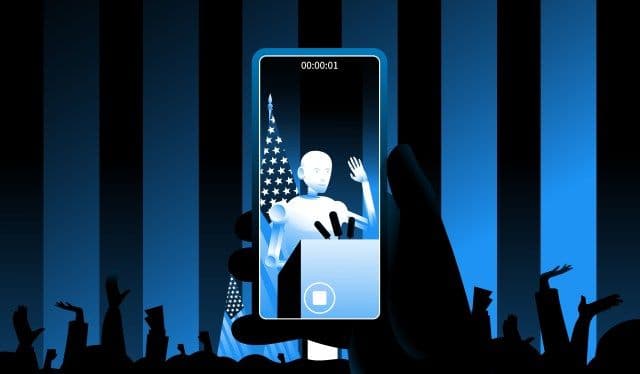
Jill Lepore on the ‘Artificial State’ and why Silicon Valley’s leaders are bad sci-fi readers
Historian Jill Lepore has a theory about why tech companies often use soaring language to describe their products — almost as if they’re forming a new government. And whether you’re thinking of Twitter’s old “town hall in your pocket” orAnthropic’s Claude constitution, it’s a theory that doesn’t paint Silicon Valley in a very flattering light. In Lepore’s upcoming book,The Rise and Fall of the Artificial State, the Pulitzer Prize-winning Harvard historian and New Yorker writer argues that tech companies are gradually taking on the functions of democratic government — whether that’s Twitter giving a distorted picture of the electorate or Facebook displacing local news. In her view, these leaders often mistake technological advancement for political progress, all whileoutright declaring their intention to replace the nation-state. On this episode of TechCrunch’sEquitypodcast, Anthony Ha talks with Lepore about her book and why she thinks today’s AI leaders — who promise a future where AI makes government more efficient, more responsive, and maybe even unnecessary — are selling an old fantasy in new packaging. Listen to the full episode to hear more about: Subscribe to Equity onYouTube,Apple Podcasts,Overcast,Spotifyand all the casts. You also can follow Equity onXandThreads, at @EquityPod.
View
Submit your Tool


PoweredByAI.app is an AI Tools Directory helping individuals, businesses, and creators discover the best AI tools for writing, coding, design, productivity, and more.
© 2026 , Product of011BQ. All rights reserved.